Tank Cleaning + Maintenance Protocols by Service: Acid vs Caustic vs Solvent vs Sanitizer Schedules
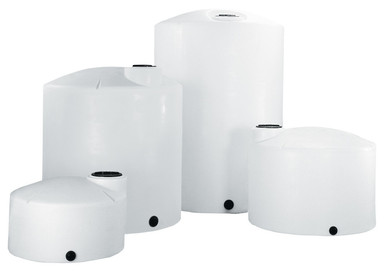
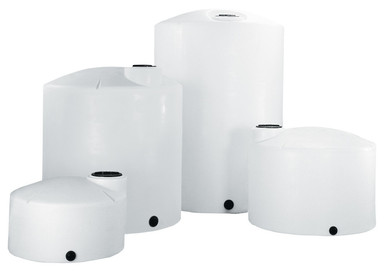
Every storage tank in active service requires a written cleaning and maintenance protocol matched to the chemistry it holds. A tank running 12.5% sodium hypochlorite needs a fundamentally different cleaning interval, neutralization procedure, and inspection regime than a tank holding 50% caustic soda, a solvent recovery vessel, or a CIP sanitizer day-tank. This pillar walks the four major service classes operators actually deploy on Norwesco, Snyder, Chem-Tainer, Enduraplas, and Bushman polyethylene tanks, and gives you the protocol matrix you need to keep tanks in compliant, productive service for the full 20-year design life.
The reference codes binding this work are OSHA 29 CFR 1910.146 (Permit-Required Confined Spaces), 29 CFR 1910.147 (Control of Hazardous Energy / Lock-Out Tag-Out), 29 CFR 1910.1200 (Hazard Communication), 29 CFR 1910.120 (HAZWOPER), API 653 (Tank Inspection, Repair, Alteration, and Reconstruction — adapted for poly), ASTM D1998 Section 11 (Inspection of Polyethylene Tanks), NFPA 326 (Safeguarding of Tanks for Cleaning), and the manufacturer cleaning bulletins from Snyder Industries (Bulletin SI-CM-101) and Norwesco. We also reference 40 CFR 112 (SPCC) for petroleum-service tanks and 21 CFR 110/117 for food-grade and sanitizer service.
The Four Service Classes
Industrial poly tanks divide cleanly into four cleaning-protocol classes. Knowing your class drives every other decision — frequency, chemistry, PPE, neutralization, waste disposal, and re-commissioning.
| Service Class | Typical Chemistries | Cleaning Interval | Confined-Space Rating |
|---|---|---|---|
| Acid service | Sulfuric 93%, hydrochloric 32%, nitric 67%, phosphoric 75% | 12-24 months | Permit-required (1910.146) |
| Caustic / alkaline | Sodium hydroxide 50%, potassium hydroxide 45%, sodium hypochlorite 12.5% | 6-18 months | Permit-required (1910.146) |
| Solvent / petroleum | Diesel, kerosene, mineral spirits, glycol, alcohols | 24-60 months | Permit-required + hot-work check |
| Sanitizer / potable | Peracetic acid, hypochlorite at use-dilution, quat ammonium, NSF 61 water | 3-6 months (CIP) / 12 months (potable) | Permit-required if confined |
Universal Pre-Cleaning Sequence (Applies to All Four Classes)
Before any chemistry-specific procedure, every tank cleaning event follows the same OSHA-driven sequence. Skipping any step has historically been the root cause of fatalities in tank-cleaning operations.
- Lock-Out Tag-Out (LOTO) per 29 CFR 1910.147: isolate every energy source feeding the tank — supply pump, agitator motor, level transmitter signal, blowdown valve, heat-trace circuit. Apply individually-keyed locks. The authorized employee retains the only key.
- Drain to legal disposal point: never drain to ground, storm sewer, or sanitary sewer without a written discharge permit. For chemistry tanks, neutralize first or transfer to a treatment vessel.
- Atmospheric monitoring per 29 CFR 1910.146(d)(5): oxygen (19.5-23.5%), flammability (under 10% LEL), toxics (under permissible exposure limit). Monitor before entry and continuously during occupancy. Calibrated 4-gas monitor minimum.
- Ventilation: forced-air ventilation at minimum 4-6 air changes per hour through the manway. Position blower at the entry to keep operator in the inflow.
- Confined-space entry permit: written permit per 1910.146(e) with attendant, communication procedure, retrieval system, and rescue plan.
- PPE matched to chemistry: chemical-resistant suit, full-face respirator with cartridges matched to the residue (acid-gas / organic vapor / particulate / multi-gas), boots, double gloves.
Tanks in OneSource catalog rated for confined-space entry have manways meeting 18-inch minimum-opening requirement: representative SKUs include MPN 41036 (1500 gallon Norwesco vertical with 16-inch lid), MPN 41530 (3000 gallon Norwesco with 22-inch lid), and MPN 44801 (5000 gallon Snyder with 22-inch lid).
Acid Service: Sulfuric, Hydrochloric, Nitric, Phosphoric
Daily checks (operator round)
- Visual: sidewall for blistering, crystallization at fittings, any wet spots in containment.
- Vent: confirm acid-gas vent dryer or scrubber is on-line.
- Containment: sump for any liquid; acid leak detection paper at low points.
- Hardware: 316 SS or Hastelloy bolt heads for surface corrosion.
Quarterly inspection
- Tank wall thickness: ultrasonic gauge at 12 marked points; record on inspection log per ASTM D1998 Section 11.
- Color check: clear or natural-color tanks reveal crystallization rings and chemistry stratification at the liquid line. Yellow tinting on PVC bulkheads indicates plasticizer attack — replace.
- Gasket inspection: Viton or PTFE only on concentrated acids. EPDM gasket on sulfuric is a six-month timer to leak.
- Fitting torque check: re-torque per Snyder Bulletin SI-CM-101, typically 25-35 ft-lb on 2-inch double-flange.
Annual cleaning protocol — concentrated acid
- Drain and neutralize: pump residual to neutralization tank; titrate to pH 6.5-8.5 using soda ash or 25% NaOH. Confirm with calibrated pH meter (paper insufficient for permit discharge).
- Triple rinse with potable water: each rinse 10% of tank volume minimum, agitate 5 minutes, drain to neutralization tank.
- Final flush with 0.5% sodium bicarbonate solution, recirculate 30 minutes, drain.
- Atmospheric verification before entry: verify acid-gas under 0.5 ppm (sulfuric, hydrochloric), 1 ppm (nitric), 1 mg/m3 (phosphoric mist).
- Manual scrub (if needed) with soft polypropylene brush. Never use stainless wool or wire brush on poly — gouges become stress concentrators.
- Final freshwater rinse, drain, air-dry minimum 4 hours.
- Inspection: photograph and document each manway, fitting, and 4 quadrants of sidewall.
- Re-commissioning: torque hardware, replace any suspect gaskets, fill to 25% with rinse water, leak-check 24 hours, drain, then refill with service chemistry.
Acid-service tanks should be on a 12-month internal inspection cadence, 24-month full cleaning cadence unless service produces sediment (some industrial sulfuric services lay down lead sulfate or similar that requires more frequent removal).
Caustic Service: Sodium Hydroxide, Potassium Hydroxide, Sodium Hypochlorite
Why caustic is more aggressive than people think
Caustic and bleach are the most common cleaning failures we see in field service. Operators treat them as "easier" than acids because the chemistry is less obviously corrosive on metal. But poly tanks running 12.5% bleach see hydroxide attack at the polymer chain ends, and the failure mode is gradual surface chalking that hides real wall thinning. Sodium hypochlorite also off-gases chlorine when contaminated with even trace acid (a common cleaning error).
Daily / weekly checks
- Visual: sidewall for chalking or stress whitening — both are wall-fatigue indicators.
- Vent: chlorine-vapor scrubber pre-filter loading. Caustic vent to soda-lime scrubber.
- Containment: pH paper test at sump quarterly minimum (catches slow weep before it pools).
- Specific gravity check: bleach degrades over time, dropping concentration. Document per chemical-feed system requirement.
Cleaning protocol — bleach / caustic service
- LOTO and confined-space entry sequence as above.
- Drain to neutralization: bleach must be reduced before disposal. Add sodium thiosulfate or sodium bisulfite at 1.5x stoichiometric, verify zero free chlorine.
- Caustic neutralize: titrate to pH 6.5-8.5 using citric acid or sulfuric (carefully, exotherm).
- Critical safety rule: never mix bleach residue with acid neutralizer in the same tank. Chlorine gas evolution is fast and lethal. Use separate neutralization vessels.
- Triple rinse with potable water, drain each rinse separately.
- Final rinse with 0.1% citric acid, recirculate 15 minutes, drain.
- Atmospheric verification: free chlorine under 0.5 ppm before entry. Use Drager tube or photoionization detector.
- Internal scrub: poly brush, soft cloth. Document any chalking, stress whitening, or wall thinning.
- Final freshwater rinse, air-dry, document and re-commission.
Caustic and hypochlorite service: 6-month inspection cadence on bleach (faster polymer degradation), 12-month on caustic. Full cleaning every 12-18 months.
Solvent / Petroleum Service: Diesel, Kerosene, Mineral Spirits, Glycols, Alcohols
The hot-work hazard
Solvent and petroleum tanks are the highest-consequence cleaning class because of vapor flammability. The cleaning sequence diverges from chemistry tanks at the atmospheric monitoring step: NFPA 326 requires LEL monitoring continuously during entire cleaning operation, not just at entry. Hot work (welding, cutting, grinding) is prohibited until tank is verified gas-free per NFPA 326.
Daily / weekly
- Visual: sidewall for hydrocarbon swelling — petroleum-induced swelling is reversible at low exposure, permanent at high.
- Bottom water check: most petroleum tanks accumulate bottom water from condensation. Drain monthly, sample for biological growth (FuelStat or equivalent).
- Vent: ensure flame arrestor is clean and unobstructed per NFPA 30 Section 21.4.
- Static bonding: bonding cable from tank to fill nozzle — confirm continuity at fill events.
Cleaning protocol — petroleum / solvent
- LOTO sequence, electrical isolation including any bonding straps that could carry current.
- Pump out residual product to recovery tank. Cap or plug all penetrations except vent and entry manway.
- Vapor management: pump-out vapors through vapor-recovery unit or carbon scrubber. Open-atmosphere vapor release violates 40 CFR 60 NSPS for many operations.
- Continuous LEL monitoring per NFPA 326. Lock out fuel arrival valves with separate keys.
- Inerting (large tanks): nitrogen purge to under 5% oxygen, then admit air to verify under 10% LEL before entry.
- Cleaning solvent (small tanks): hot water with 1-2% degreaser detergent (low-foaming for poly compatibility). Recirculate 30-60 minutes, drain.
- Triple rinse with potable water.
- Atmospheric verification: under 10% LEL, oxygen 19.5-23.5%, BTEX (benzene/toluene/ethylbenzene/xylene) under PEL.
- Internal inspection with intrinsically-safe lighting only. No incandescent or non-rated LED — vapor pockets persist in low areas.
- Document and re-commission per NFPA 326 Appendix B procedure.
Petroleum / solvent service: 24-month cleaning cadence is typical, extended to 60 months if quarterly bottom-water and microbial monitoring is clean. Tank Depot's competitor data shows shorter intervals on biofuel blends due to microbial activity.
Sanitizer / Potable Service: PAA, Hypochlorite Use-Dilution, Quat, Potable Water
The contamination hazard
Sanitizer and potable tanks have the opposite hazard profile: low chemistry aggressiveness, high contamination risk. NSF 61 listing of the tank itself doesn't survive contamination from a non-listed cleaning chemical. CIP-circuit sanitizer day-tanks running 200-2000 ppm peracetic acid or 1000 ppm hypochlorite at use-dilution need a different protocol than a high-concentration storage tank.
Daily / weekly
- Free chlorine residual log (potable: under 4 ppm per EPA SDWA; sanitizer day-tank: per use specification).
- Turbidity check: NTU under 1 for potable, document on rolling 30-day average.
- ORP (oxidation-reduction potential) for sanitizer service: target 650-750 mV for hypochlorite at use dilution.
- Visual at fill ports: any biofilm, slime, or color shift triggers immediate cleaning.
Cleaning protocol — sanitizer / potable
- LOTO and confined-space sequence as above.
- Drain to floor drain or sanitary (potable; sanitizer day-tank may need neutralization first).
- Pre-rinse with potable water, drain.
- Detergent wash: 1-2% caustic detergent at 130-145F, recirculate 20 minutes via temporary CIP loop or manual scrub. Drain.
- Acid rinse (mineral-scale removal): 0.5-1% phosphoric or citric acid, recirculate 10 minutes, drain.
- Triple potable-water rinse to neutral pH and zero conductivity rise.
- Sanitization: 200 ppm hypochlorite or 200 ppm peracetic acid, contact time 5-10 minutes, drain.
- Final potable-water rinse to under 0.5 ppm chlorine before re-commissioning to potable service.
- Verification: sample for total coliform and HPC per 40 CFR 141 if returning to potable service. Hold for results before service.
Sanitizer day-tanks (CIP service): 3-6 month cleaning. Potable storage: 12-month cleaning minimum, more often if regulatory inspection requires.
Maintenance Schedule Summary by Service
| Activity | Acid | Caustic / Bleach | Solvent / Petroleum | Sanitizer / Potable |
|---|---|---|---|---|
| Daily round | Yes | Yes | Yes | Yes |
| Wall thickness UT | Quarterly | Bi-annually | Annually | Annually |
| Gasket replace | 2-year | 3-year | 5-year | 3-year |
| Full cleaning | 12-24 months | 12-18 months | 24-60 months | 3-12 months |
| Hardware torque | Annual | Annual | Bi-annual | Annual |
| Vent / scrubber service | Quarterly | Quarterly | Annual | Annual |
Documentation Requirements
OSHA inspectors and EPA SPCC auditors will ask for written records on first walk-through. Maintain at minimum:
- Confined-space entry permit (1910.146 Appendix D format), retained 1 year minimum.
- LOTO authorization log (1910.147), retained per facility policy (typically 5 years).
- Atmospheric monitoring printout or log, retained 1 year.
- Cleaning chemistry SDS for cleaners used.
- Tank inspection report with photographs and ultrasonic gauge readings, retained for tank service life.
- Waste manifest for any disposal stream above hazardous-waste thresholds.
- Operator training records: 1910.146 confined-space, 1910.147 LOTO, 1910.1200 HazCom, 1910.120 HAZWOPER if applicable.
Common Cleaning Mistakes
Mistake 1: Skipping atmospheric monitoring
Most fatal tank-cleaning incidents start here. The tank "looks empty" or "smells fine." Oxygen displacement by inerted vapors is silent and instant. Use calibrated 4-gas monitor every entry, every time.
Mistake 2: Mixing acid and bleach residues
Cross-contamination during cleaning produces chlorine gas. Even trace bleach in a tank being cleaned with acid releases lethal vapor. Triple-rinse and document neutralization before chemistry switch.
Mistake 3: Wire brush or stainless wool on poly
Soft polypropylene brushes only. Steel wool gouges become wall-stress concentrators that fail later under load.
Mistake 4: Ignoring chalking on bleach tanks
Surface chalking on poly is hydroxide chain-end attack. The tank may have months, not years, of remaining wall. Document, monitor, plan replacement.
Mistake 5: LEL monitoring only at entry on petroleum service
Vapor stratification in poly tanks means low-LEL at top, high-LEL at bottom. Continuous monitoring during the entire cleaning operation, per NFPA 326.
Mistake 6: Incandescent or non-rated LED lighting in petroleum tanks
Intrinsically safe (IS-rated) lighting only. The cost difference is trivial against ignition risk.
Mistake 7: Re-commissioning to service without leak-check
After fitting service, fill to 25% with rinse water, leak-check 24 hours minimum. Quarter-volume catches gasket failures before chemistry exposure.
Mistake 8: Skipping coliform sample on potable
40 CFR 141 requires verification before service for potable. Hold tank in non-service status until lab clears the sample.
Internal Resources
- Tank Plumbing System Design Pillar
- Multi-Tank Manifolding Engineering
- Aboveground vs Belowground Storage Engineering
- Chemical Compatibility Database
- Sodium Hypochlorite Storage Pillar
- Sulfuric Acid Storage Pillar
- Sodium Hydroxide Storage Pillar
- Freight Cost Estimator
Source Citations
- OSHA 29 CFR 1910.146 — Permit-Required Confined Spaces
- OSHA 29 CFR 1910.147 — Control of Hazardous Energy (Lockout/Tagout)
- OSHA 29 CFR 1910.120 — Hazardous Waste Operations and Emergency Response (HAZWOPER)
- OSHA 29 CFR 1910.1200 — Hazard Communication Standard
- NFPA 326 — Standard for the Safeguarding of Tanks and Containers for Entry, Cleaning, or Repair
- API 653 — Tank Inspection, Repair, Alteration, and Reconstruction (steel reference adapted to poly)
- ASTM D1998 Section 11 — Inspection of Polyethylene Upright Storage Tanks
- 40 CFR 112 — Spill Prevention, Control, and Countermeasure (SPCC) Plan
- 40 CFR 141 — National Primary Drinking Water Regulations
- 21 CFR 110/117 — Current Good Manufacturing Practice for Food
- EPA Safe Drinking Water Act guidance
- Snyder Industries Cleaning and Maintenance Bulletin SI-CM-101
- Norwesco Tank Maintenance Bulletin and Manufacturer Guidance
Recommended Tanks for This Guide
Live pricing, updated automatically · estimate freight to your ZIP.