Tank Inspection SOP: 30-Day vs Annual vs 5-Year Visual + UT + ECT
An industrial storage tank is a long-life capital asset - 20 to 40 years of service is typical for properly inspected polyethylene tanks per ASTM D1998 Section 11; longer for steel tanks under API 653 in-service inspection programs. The asset only delivers that service life if it is inspected on a defensible cadence with documented findings and corrective action. The inspection regime that fails an SPCC audit, an insurance audit, an OSHA PSM audit, or - worst case - a post-incident root-cause investigation is the regime that has gaps in cadence, undocumented findings, or no escalation path. This pillar lays out the standard operating procedure for tank inspection at three cadence tiers (30-day, annual, 5-year), covers the three major NDT (non-destructive testing) methods relevant to tank work (visual, ultrasonic thickness, eddy current testing), and ties each interval to specific code citations from API 510, API 653, ASTM D1998, ASNT SNT-TC-1A, and EPA 40 CFR 112.
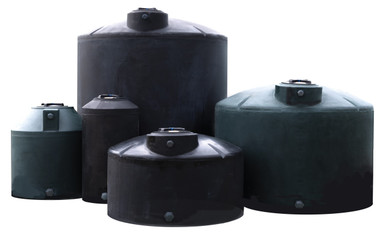
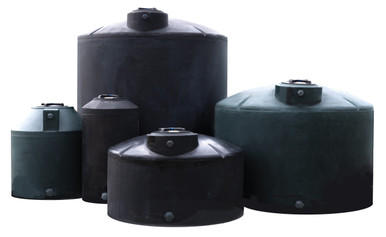
The cadence framework below applies to industrial polyethylene tanks (Norwesco, Snyder, Chem-Tainer, Enduraplas, Bushman) on chemical, fuel, water, and waste service. Steel tanks under API 653 follow a parallel but more rigorous schedule (typically 10-year external + 20-year internal); FRP tanks follow API 12P / ASME RTP-1. PSM-covered processes under 29 CFR 1910.119(j) and RMP-covered processes under 40 CFR 68 require additional Mechanical Integrity inspection cycles - the framework below is the foundation, not a substitute for site-specific PSM/RMP MI programs.
The Three-Tier Inspection Cadence
| Cadence | Method | Performed By | Code Driver |
|---|---|---|---|
| Daily / Walk-around | Visual exterior | Operator | Site SOP |
| 30-Day (monthly) | SPCC integrity test (visual + functional) | Trained operator + supervisor | 40 CFR 112.8(c)(6) |
| Annual | External + foundation + functional | Qualified inspector | SPCC + PSM MI |
| 5-Year | External + UT thickness survey + functional | ASNT Level II / III certified | API 653 / API 510 / NACE SP0294 |
| 10-20 Year (steel) / 20+ year (PE) | Internal entry + full NDT | API 653 Authorized Inspector | API 653 Section 6.4 |
Tier 1: Daily / Walk-Around Inspection
Cadence and authority
Performed by the on-shift operator at the start of each shift, no less than once per 24 hours during operating periods. Not formally required by 40 CFR 112 but universally adopted as best-practice; required by most insurance carriers and PSM programs.
What to look for (60-second walk-around)
- Tank wall: visible cracks, bulges, discoloration, ice formation, surface contamination indicating leak from above.
- Fittings: visible leakage at any bulkhead, vent, or instrumentation port. Drip on the bulkhead nut, sheen on the wall below the fitting, crystal formation indicating chemistry seepage.
- Foundation and pad: visible settlement, cracking, debris under the tank, water pooling against the pad.
- Containment: debris in the dike or pan, water accumulation displacing containment volume, visible product in the containment.
- Level instrumentation: readout matches expected level, no alarm conditions, no unexpected swings.
- Vents: screen intact, weather cap in place, no obstruction.
- Labels and placards: chemistry placard visible and legible, NFPA 704 diamond intact, contact information current.
Document in the daily log: tank ID, date, time, inspector, all observations, any escalation. Daily logs typically retained 12 months; longer if SPCC or PSM applies.
Tier 2: 30-Day SPCC Integrity Test
Code requirement
40 CFR 112.8(c)(6) requires regular integrity testing of bulk storage containers on a frequency consistent with industry standards. EPA guidance (Region 4 SPCC inspection materials) interprets "regular" as monthly visual integrity testing for aboveground containers under 30,000 gallons. Required for any facility subject to SPCC under 40 CFR 112.1 (more than 1,320 gallons of oil aggregate aboveground OR 42,000 gallons underground).
What the test covers
- Visual exterior inspection (more thorough than daily walk-around):
- Walk 360 degrees around the tank looking for any change since last month.
- Photograph any visible deterioration. Photograph file becomes part of the inspection record.
- Inspect every bulkhead nut for tightness (no torque measurement; visual confirmation of nut position relative to last inspection).
- Inspect every gasket and seal for visible deterioration.
- Inspect vent screen, weather cap, flame arrester (if present).
- Foundation inspection:
- Look for differential settlement (one side of the tank lower than another).
- Look for pad cracking or scour.
- Look for vegetation growth that is undermining the pad.
- Verify tie-down hardware (in hurricane / high-wind regions).
- Containment inspection:
- Verify containment is empty of standing water (or that drainage system is functional).
- Verify no visible product in containment.
- Verify containment liner / seal integrity.
- Verify drainage valve (if present) is closed and locked.
- Functional checks:
- Test high-level alarm (where installed).
- Test low-level alarm (where installed).
- Test interstitial-monitoring sensor (where installed - double-wall tanks).
- Verify all isolation valves operate (open and close fully).
- Documentation: SPCC-compliant inspection report including inspector name, date, tank ID, all findings, photographs, corrective action plan, follow-up date. Records retained minimum 3 years per 40 CFR 112.7(e).
Common 30-day findings
- Loose bulkhead nut (tighten under empty/isolated condition; do not tighten on pressurized tank).
- Vent screen blockage (clean or replace).
- Containment water accumulation (drain through engineered drainage valve only).
- Label fade (replace).
- Pad vegetation (remove).
- Settlement marker change (escalate to engineer).
Tier 3: Annual Inspection
Code requirement
SPCC 40 CFR 112.7(e) requires inspection records for "regular" intervals; most facilities adopt annual external inspection by a qualified person as the SPCC compliance baseline. PSM 29 CFR 1910.119(j)(4) requires Mechanical Integrity inspection at intervals consistent with manufacturer recommendations and good engineering practice; annual is common for atmospheric storage. RMP under 40 CFR 68.73 carries similar MI requirements.
Inspector qualifications
For polyethylene tanks: a qualified person with documented training in tank inspection. For steel tanks under API 653: an API 653 Authorized Inspector certification is required. For pressure vessels under API 510: an API 510 Authorized Inspector. Many facilities contract third-party inspection houses with ASNT Level II / III certified personnel for annual external inspection.
Annual inspection scope (in addition to monthly checks)
- Detailed external visual: Photograph every weld (steel) or shell seam (polyethylene). Map every defect on a tank-shell drawing. Compare to prior-year inspection map for change detection.
- Coating / lining inspection: Visual condition of any external coating (steel) or factory lining (PE liner inspection requires confined-space entry deferred to 5-year cycle for routine sites).
- Foundation engineering inspection: Survey-grade settlement check at minimum 4 reference points around the tank. Compare to baseline.
- Containment integrity: Concrete dike crack inspection. Polyethylene berm visual + flexure check. Liner seam inspection (if liner present).
- Cathodic protection inspection (steel UST): Per 40 CFR 280.31, every 60 days for impressed-current systems; annual for galvanic systems with documented confirmation of protection levels.
- Documentation review: Verify all monthly inspection records present and complete. Verify all corrective actions from prior year closed out. Verify inspector qualifications current.
- Functional testing: Full operational test of all alarms, sensors, leak-detection systems. Calibration verification on level transmitters.
Tier 4: 5-Year Inspection (UT + Documented NDT)
Code requirement
API 653 Section 6.3 requires external inspection (including UT thickness survey) every 5 years for steel atmospheric tanks. NACE SP0294 Section 6.4 recommends 5-year UT survey on polyethylene tanks in concentrated sulfuric acid service (similar cadence is generally adopted for other aggressive chemistry on PE). For PE on water service, the 5-year UT cycle is industry best-practice rather than code mandate, but is the threshold most insurance carriers expect.
Ultrasonic Thickness (UT) Testing
What it measures: Wall thickness at discrete measurement points. The UT sensor sends a pulse into the tank wall; the echo from the back surface returns at a time proportional to the wall thickness. Measurement accuracy: ±0.001 inch (±25 microns) on calibrated equipment.
Performed by: ASNT-certified Level II or III ultrasonic technician per ASNT SNT-TC-1A. Certification documents must be on file with the inspection record.
Measurement methodology:
- Pre-cleaned measurement points (paint, scale, surface contamination removed in a small spot).
- Couplant gel between transducer and surface (ultrasonic coupling).
- Calibrated transducer (verified against known-thickness reference block).
- Multiple measurement locations: 8 points around shell at low course, 8 at mid course, 4 at high course. Critical zones (under fittings, near seams) get additional points.
- Tank floor (steel) requires additional measurement using floor-scan robotic crawlers (per API 653 Section 6.6).
Acceptance criteria (steel per API 653 Section 4.3):
- Minimum acceptable shell thickness = 0.1 inch OR original thickness minus computed corrosion allowance, whichever is greater.
- Bottom plate minimum thickness = 0.1 inch.
- Localized thinning beyond acceptance triggers either repair (per API 653 Section 9) or accelerated re-inspection.
Acceptance criteria (polyethylene per ASTM D1998 Section 11): Polyethylene wall thinning is primarily from chemical attack and UV degradation; UT measurement compares to original-spec wall thickness. Loss exceeding 10% of original triggers engineering evaluation; loss exceeding 20% typically triggers replacement.
Eddy Current Testing (ECT)
What it measures: Surface and near-subsurface flaws in conductive materials. The ECT probe induces eddy currents in the metal; flaws (cracks, pits, inclusions) disrupt the current and produce a measurable signal change.
Where used: Steel tank shells for crack detection (especially weld seams and known stress-concentration points). Stainless tank fittings for chloride-induced stress-corrosion cracking detection. Aluminum tank components in marine / aviation service.
NOT used on: Polyethylene tanks (non-conductive). For PE inspection, visual + UT thickness + occasional infrared thermography is the standard NDT toolkit.
Performed by: ASNT-certified Level II or III eddy current technician.
Other NDT methods worth knowing
- Magnetic Particle Testing (MT): Surface and near-surface flaws in ferromagnetic materials. Used on steel weld inspection.
- Liquid Penetrant Testing (PT): Surface-breaking flaws on any non-porous material. Used on weld toe inspection, fitting flange inspection.
- Radiographic Testing (RT): X-ray or gamma-ray inspection of welds. Required on pressure-vessel construction per ASME Section V; rare on atmospheric storage tank inspection.
- Acoustic Emission Testing (AE): Real-time monitoring of crack growth during pressure-test or service. Used on FRP tank inspection per ASME RTP-1.
- Infrared Thermography: Visual identification of insulation defects, leak signatures, level inside opaque tanks. Useful adjunct, not primary inspection method.
Tier 5: 10-20 Year Internal Inspection
Internal inspection requires confined-space entry under 29 CFR 1910.146 with full permit, attendant, atmospheric monitoring, rescue plan, and isolation. Tank must be drained, decontaminated, and atmosphere-tested before entry. Internal inspection is the most thorough but most disruptive interval.
Performed by API 653 Authorized Inspector for steel; by qualified inspector for PE. Internal inspection covers:
- Floor-plate corrosion (steel) - the typical limiting factor on tank life.
- Liner condition (PE with internal liner).
- Internal fittings, baffles, heater coils, agitator components.
- Any internal coating condition.
- Sediment / sludge accumulation depth.
API 653 Section 6.4: maximum interval between internal inspections is 20 years OR computed corrosion-rate-based interval, whichever is less. For PE tanks on water service, internal inspection is rare (typically only at end-of-life evaluation).
Documentation and Record Retention
| Record Type | Retention | Code Citation |
|---|---|---|
| Daily walk-around log | 12 months minimum | Site SOP |
| Monthly SPCC integrity test | 3 years minimum | 40 CFR 112.7(e) |
| Annual external inspection | Life of tank + 5 years | API 653 Section 13 |
| 5-year UT survey | Life of tank | API 653 Section 13 |
| Internal inspection report | Life of tank | API 653 Section 13 |
| PSM Mechanical Integrity records | Life of process | 29 CFR 1910.119(j)(7) |
| UST corrosion protection inspection | 3 most recent + life of tank for installation | 40 CFR 280.34 |
Tank-Type-Specific Notes
- Polyethylene (Norwesco, Snyder, Chem-Tainer, Enduraplas, Bushman): Visual + UT thickness primary. ECT and MT not applicable. Internal inspection rare; most PE tanks are taken out of service rather than internally inspected. ASTM D1998 Section 11 service-life methodology applies.
- Double-wall PE (Snyder Captor MPN 1006600N43, waste-oil family MPN 5740102N95703 / 5780102N95703 / 5990102N95703): Continuous interstitial monitoring is the primary leak detection. UT survey of inner and outer walls at 5-year cycle. Sensor calibration check annually.
- Steel atmospheric (vertical / horizontal): API 653 governs. External inspection 5-year cycle, internal 10-20 year cycle, UT survey 5-year cycle, cathodic protection inspection annually.
- Steel pressure vessel: API 510 governs. Inspection cycle determined by computed corrosion rate; typically 5-year external + RBI (Risk-Based Inspection) per API 580.
- FRP (fiberglass-reinforced plastic): ASME RTP-1 + API 12P. Acoustic emission testing for crack-growth monitoring. Visual + ultrasonic thickness on primary load-bearing layers.
Common Inspection Mistakes
Mistake 1: Skipping monthly SPCC integrity test
The most common SPCC audit finding. EPA inspectors look for documented monthly tests; absence is a clear violation under 40 CFR 112.8(c)(6).
Mistake 2: Using uncertified UT technician
UT readings from an uncertified operator are not defensible. Use ASNT Level II / III certified personnel and retain certification documentation.
Mistake 3: Failing to map findings to tank-shell drawing
Year-over-year change detection requires consistent mapping. A bag of disconnected photographs is not a useful inspection record.
Mistake 4: Closing corrective actions without verification
An open corrective action from last year that says "tightened bulkhead" is not enough. The next inspection must verify the bulkhead is still tight; the closure record must include verification photo and inspector signature.
Mistake 5: Inspecting only the visible side
The hidden side of a tank against a wall, the underside of a horizontal tank, the floor-to-shell weld on a steel tank are the hidden corrosion zones. Plan inspection access to ALL surfaces.
Mistake 6: Skipping the foundation
Tank foundation failures (settlement, cracking, scour) cause more incidents than wall corrosion. Survey-grade settlement readings are part of annual inspection.
Mistake 7: Using the wrong NDT method for the material
ECT on polyethylene returns nothing useful (PE is non-conductive). Use the right NDT method for the right material.
Mistake 8: Inadequate confined-space program
Internal inspection requires the full 29 CFR 1910.146 program. Cutting corners on attendant, atmospheric monitoring, or rescue planning is the most common cause of fatal industrial incidents during inspection work.
Internal Resources
- Tank Storage Compliance Audit Checklist
- Tank Operator Training Curriculum
- Secondary Containment Requirements
- Plastic Tank Failure Mode Analysis
- Tank Replacement Decision Framework
- ASTM D1998 Service Life Estimation
- Freight Cost Estimator
Source Citations
- 40 CFR 112 - Spill Prevention, Control, and Countermeasure (SPCC); 112.7(e) record retention; 112.8(c)(6) integrity testing
- 40 CFR 280 - Underground Storage Tanks; 280.31 cathodic protection inspection; 280.34 reporting and recordkeeping
- 29 CFR 1910.119(j) - PSM Mechanical Integrity
- 29 CFR 1910.146 - Permit-Required Confined Spaces
- 40 CFR 68.73 - RMP Mechanical Integrity
- API 510 - Pressure Vessel Inspection Code
- API 653 - Tank Inspection, Repair, Alteration, and Reconstruction (Sections 4.3, 6.3, 6.4, 6.6, 9, 13)
- API 580 - Risk-Based Inspection
- API 12P - Specification for Fiberglass Reinforced Plastic Tanks
- ASTM D1998 - Standard Specification for Polyethylene Upright Storage Tanks (Section 11)
- ASME Section V - Nondestructive Examination
- ASME RTP-1 - Reinforced Thermoset Plastic Corrosion-Resistant Equipment
- ASNT SNT-TC-1A - Personnel Qualification and Certification in Nondestructive Testing
- NACE SP0294 - Design, Fabrication, and Inspection of Storage Tank Systems
- OneSource Plastics master catalog data, dated 2026-03-26 snapshot (9,419 products)
Recommended Tanks for This Guide
Live pricing, updated automatically · estimate freight to your ZIP.