Tank Operator Training: 5-Day Curriculum for New Tank Farm Operators
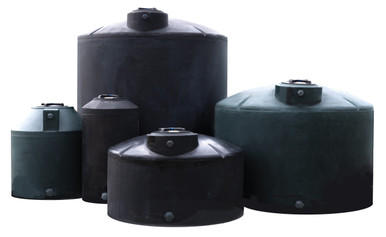
The most expensive incidents in industrial tank operations are not equipment failures - they are operator errors compounded by inadequate training. A new operator who opens the wrong valve during a fill, who skips the lockout-tagout sequence on a maintenance entry, who walks past a leaking bulkhead without escalating, or who attempts a confined-space entry without an attendant has the capacity to cause six- and seven-figure incidents in their first month on the job. This pillar lays out a 5-day, 40-hour structured curriculum that takes a new tank-farm operator from zero to baseline-competent. It is built around real OSHA, EPA, and DOT regulatory requirements - 29 CFR 1910.119 (Process Safety Management), 1910.146 (Permit-Required Confined Spaces), 1910.147 (Lockout/Tagout), 1910.120 (HAZWOPER), 49 CFR 173 (DOT bulk packaging), 40 CFR 112 (SPCC), and 40 CFR 264 (RCRA) - and uses real Norwesco, Snyder, Chem-Tainer, Enduraplas, and Bushman tank assemblies as the hands-on hardware platform.
This curriculum is the version we recommend operators of small-to-mid tank farms (under 50 tank assets, fewer than 10 operators) implement before turning a new hire loose on the floor. Larger sites with PSM-covered processes (40 CFR 68 / 29 CFR 1910.119) require additional process-specific operator training under those rules; the 5-day baseline below is foundational, not a substitute for site-specific PSM training.
Curriculum Overview
| Day | Theme | Hours Class / Hands-On | Key Regulations |
|---|---|---|---|
| Day 1 | Tank Anatomy + Site Walk | 5 / 3 | ASTM D1998, NFPA 30, SPCC 40 CFR 112 |
| Day 2 | Routine Operations + Plumbing | 4 / 4 | IPC, NSF 61, OSHA 1910.106 |
| Day 3 | Hazard Recognition + LOTO | 4 / 4 | 29 CFR 1910.146, 1910.147, 1910.1200 |
| Day 4 | Inspection + Maintenance | 4 / 4 | API 653, ASTM D1998, ASNT |
| Day 5 | Emergency Response + Sign-Off | 5 / 3 | 29 CFR 1910.120, 1910.38, NFPA 30 |
Day 1: Tank Anatomy + Site Walk
Morning classroom (5 hours)
Cover the eight fundamental tank concepts every operator must internalize before touching equipment:
- Tank classes by chemistry: water vs hazardous vs petroleum vs waste. Regulatory frameworks (NSF 61 for potable, NFPA 30 for petroleum, 40 CFR 264 for hazardous waste, 40 CFR 279 for used oil).
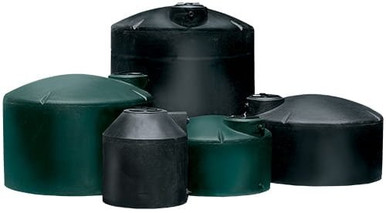
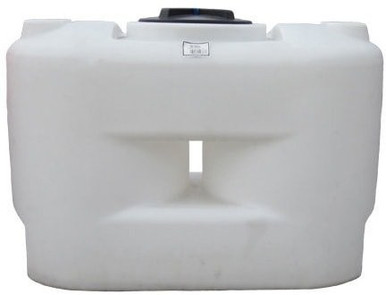
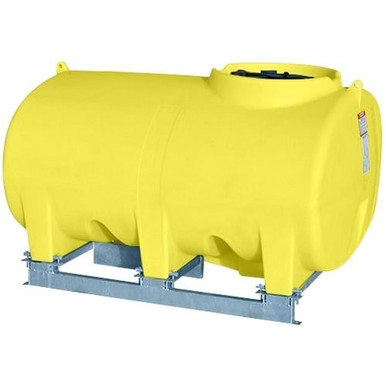
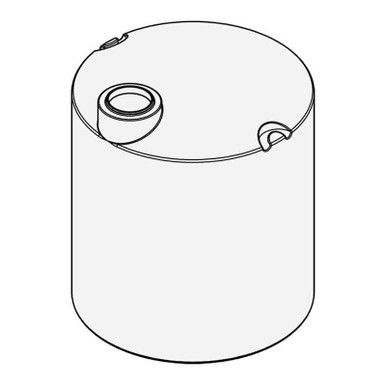
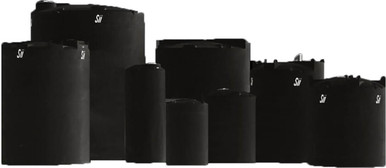
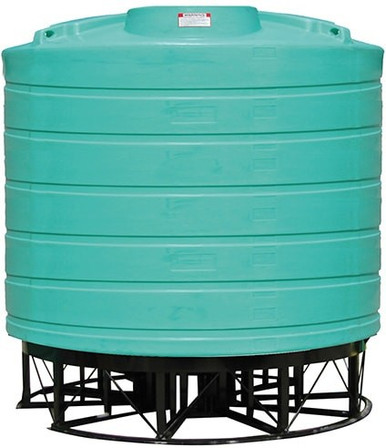
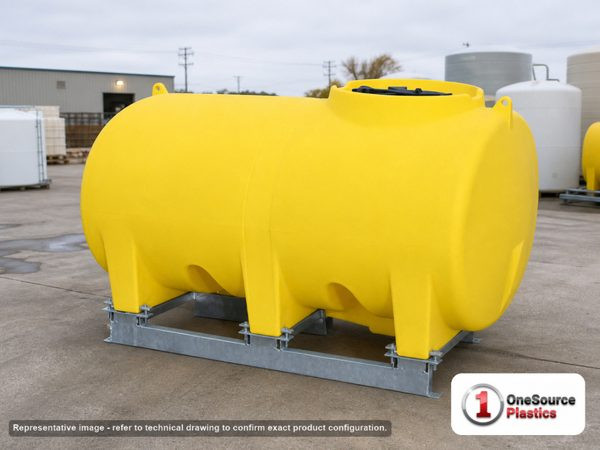
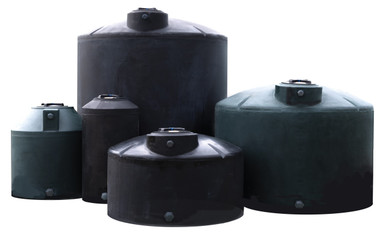
- Tank classes by geometry: vertical, horizontal, cone-bottom, dished-bottom, doorway, leg, transport. Why each shape is used and what the pump-out implications are.
- Material classes: HDPE, XLPE, FRP, steel, stainless. Where each fails. Reference ASTM D1998 service-life methodology.
- Capacity vs working volume: nominal capacity is the rated number; working volume is the volume held between low-low alarm and high-high alarm with adequate freeboard. Operators must read the spec sheet, not the brand label.
- Specific gravity (SG): tank rating and chemistry SG must match. A 1.5 SG tank cannot store 1.9 SG fluid without overstressing the wall. Reference ASTM D1998 Section 5.
- The eight-tab spec sheet: dimensions, capacity, material, certifications, fittings, weight, color/UV, warranty. Walk through a real spec sheet (a Snyder MPN 5490000N42 1,550 gallon double-wall is a useful classroom example).
- The six penetrations: inlet, outlet, vent, overflow, drain, instrumentation. Reference our plumbing system design pillar.
- Containment architecture: bare, lined, double-wall, boot. SPCC 110% rule from 40 CFR 112.7(c).
Afternoon site walk (3 hours)
Walk the new operator through every tank on site with a senior operator. For each tank:
- Identify the manufacturer, model, and capacity (read the OEM data plate).
- Identify the contained chemistry and the SG.
- Identify all six penetrations and trace the piping.
- Identify the secondary containment architecture.
- Identify the level-instrumentation type and where the local readout is.
- Identify the manual-shutoff valves on inlet, outlet, and drain.
- Identify the emergency stop / kill switches relevant to the asset.
- Note the last-inspection date posted on each tank.
End-of-day check: new operator must produce a hand-drawn site map identifying all tanks, capacities, and chemistry by the end of Day 1. The map becomes a permanent reference document.
Day 2: Routine Operations + Plumbing
Morning classroom (4 hours)
- The fill cycle: pre-fill check (verify destination tank, check level, verify line-up), open valves in correct sequence, monitor fill rate, close valves at target level. Common failure modes: wrong destination, overfill (high-level alarm exceeded), fast-fill vacuum-collapse on opposite tank.
- The draw cycle: pre-draw check (verify product compatibility downstream, check level above low-low), open valves, start pump, monitor flow, stop pump, close valves. Common failure: pump dry-run on low level.
- Plumbing material identification: PVC, CPVC, PP, PVDF, stainless. Color codes, schedule ratings, temperature limits. Visual recognition.
- Bulkhead fitting types: single-hole vs double-flange, body / gasket / hardware combinations. Reference Snyder bulkhead family (MPN 34100053 4-inch PP/EPDM, MPN 34400338 1-1/2 CPVC/EPDM, MPN 34700436 1-1/2 CPVC/Viton/SS, MPN 34700889 6-inch CPVC/Viton/Hastelloy).
- Vent classes: free vent, PVRV, conservation vent. Why undersize causes catastrophic failure. Reference our vent engineering pillar.
- Valve operation: ball, butterfly, gate, needle. How to identify each, how to operate (lever, handwheel, gear), how to confirm position (handle alignment, position indicator).
Afternoon hands-on (4 hours)
- Under senior operator supervision, the new operator performs a complete fill cycle on a designated training tank (water service). Document each step in the operations log.
- New operator performs a complete draw cycle on the same tank.
- New operator identifies and operates each valve in the manifold.
- New operator demonstrates use of the level-instrumentation readout (visual stick, sight glass, or HMI).
- New operator performs an emergency-stop drill: triggered by senior operator, the new operator must execute the shutoff sequence within 60 seconds.
Day 3: Hazard Recognition + Lockout/Tagout
Morning classroom (4 hours)
- Hazard categories: chemical (corrosive, flammable, toxic, reactive), physical (pressure, vacuum, height, slip), biological (sewage, agricultural waste), thermal (hot fluid, cold fluid, freeze).
- Hazard Communication Standard (29 CFR 1910.1200): SDS interpretation, label reading, the GHS pictograms, signal words ("Danger" vs "Warning"), hazard statements, precautionary statements.
- Permit-Required Confined Spaces (29 CFR 1910.146): identification of permit spaces, permit issuance, atmospheric monitoring (oxygen, LEL, H2S, CO), attendant requirement, rescue plan, retrieval equipment, communication. Most large industrial tanks ARE permit spaces; entry requires the full program.
- Lockout/Tagout (29 CFR 1910.147): energy isolation devices, lock and tag application, verification of zero energy state, group lockout, shift change, removal procedures.
- Personal Protective Equipment (29 CFR 1910.132): PPE matrix by chemistry. Eye protection, gloves (Viton for hydrocarbons, butyl for caustic, nitrile for general), face shields, respirators (filtering vs supplied air), chemical suits.
- Spill recognition: visual signs (puddle, sheen, color change), olfactory signs (chemistry-specific odors), pressure/level signs (unexplained loss of inventory), instrument signs (leak-detection alarm).
Afternoon hands-on (4 hours)
- SDS scavenger hunt: new operator must locate, read, and summarize the SDS for every chemistry stored on site. Quiz at end on signal words and hazard pictograms.
- LOTO demonstration: senior operator demonstrates a complete LOTO sequence on a designated valve / pump. New operator then performs the same LOTO on a different valve / pump under supervision.
- Confined-space awareness walk: identify every permit-required confined space on site. Discuss which entries are routine vs non-routine. Review the entry permit form.
- PPE fitting and donning: new operator is fitted for all required PPE (respirator fit-test under 29 CFR 1910.134 if applicable).
- Emergency-stop / spill-response walk-through: identify spill kits, eyewash stations, safety showers, emergency exits, assembly points. Locate and identify each on a printed site map.
Day 4: Inspection + Maintenance
Morning classroom (4 hours)
- Inspection cadence: daily visual, weekly walk-around, monthly SPCC integrity test (40 CFR 112.8), annual external inspection, 5-year external + UT, 20-year internal (where applicable). Reference API 653 for steel tanks; ASTM D1998 Section 11 for polyethylene.
- Visual inspection checklist: wall integrity (cracks, bulges, discoloration), fitting integrity (leakage, corrosion), foundation integrity (settlement, cracking), containment integrity (cracks, debris, water accumulation), label / placard integrity, equipment functionality.
- Ultrasonic Thickness (UT) basics: what it measures (wall thickness), when it is required (5-year cycle on hazardous service per API 653), who performs it (ASNT-certified Level II or III technician), what acceptance criteria look like.
- Eddy Current Testing (ECT) basics: what it identifies (surface cracks, sub-surface flaws), where it is used (steel tanks, conductive surfaces), ASNT certification levels.
- Documentation requirements: SPCC requires inspection records retained 3 years (40 CFR 112.7(e)). Records must include inspector, date, method, findings, corrective action.
- Defect classification: minor (cosmetic, no immediate action), moderate (planned repair within 90 days), major (immediate isolation and repair), critical (immediate take-out-of-service).
Afternoon hands-on (4 hours)
- Perform a complete daily visual inspection on a designated tank. Document findings in the inspection log.
- Walk-through of any current open inspection findings on site. Discuss disposition and corrective action plans.
- Witness (not perform) a UT thickness reading by a contracted ASNT technician if one is on site that week.
- Demonstrate routine maintenance: replace a vent screen, tighten a leaking bulkhead nut (with the tank empty and isolated), clean a sight glass, replace a degraded gasket.
- Practice the inspection-finding escalation procedure: who gets notified, in what order, on what timeline, with what documentation.
Day 5: Emergency Response + Sign-Off
Morning classroom (5 hours)
- Emergency Action Plan (29 CFR 1910.38): evacuation routes, assembly points, alarm signals, accountability, designated responders, training requirements.
- HAZWOPER 29 CFR 1910.120: awareness vs operations vs technician levels. New operators are minimum first-responder awareness; if they will perform spill response, they need 24-hour HAZWOPER operations training (separate certification).
- Spill response decision tree: when to attempt control vs when to evacuate. Reference our spill response playbook pillar.
- Fire response: tank fire vs surrounding fire. Cooling-water application, foam application, when to evacuate. NFPA 30 fire-suppression principles.
- Medical response: chemical exposure (eye splash, skin contact, inhalation, ingestion). Eyewash 15-minute flush per ANSI Z358.1. When to call 911 vs when to administer first aid only.
- Reporting requirements: internal (supervisor, EHS), external (911, EPA National Response Center 1-800-424-8802 for reportable quantity releases under CERCLA 40 CFR 302, state environmental agency, local emergency planning committee).
- Post-incident debrief: documentation, root cause analysis, corrective action, training updates, regulatory reports.
Afternoon hands-on + sign-off (3 hours)
- Tabletop spill-response drill: senior operator presents a scenario (e.g., "1,500 gallon Snyder MPN 5490000N42 sodium hypochlorite tank shows a 2-inch crack in the lower sidewall during morning walk-around"); new operator walks through their response plan step-by-step.
- Practice using the eyewash station and safety shower (water flush, no chemistry).
- Review the emergency-contact roster and confirm new operator can locate every number.
- Sign-off package:
- Signed acknowledgment of HazCom training (29 CFR 1910.1200).
- Signed acknowledgment of LOTO training (29 CFR 1910.147).
- Signed acknowledgment of confined-space awareness (29 CFR 1910.146).
- Signed acknowledgment of HAZWOPER awareness-level training (29 CFR 1910.120).
- Signed acknowledgment of Emergency Action Plan training (29 CFR 1910.38).
- Signed PPE fit / training records.
- Completed site map (handed in Day 1 + verified Day 5).
- Senior-operator sign-off on hands-on competency for fill, draw, valve operation, level reading, emergency stop, visual inspection, and PPE donning.
- Issuance of operator badge / authorization. New operator is now released to supervised solo work for the next 30 days, with full independent authorization granted at 90 days based on supervisor evaluation.
Refresher Cadence
| Topic | Refresher Cadence | Reference |
|---|---|---|
| Hazard Communication | Annual + on chemistry change | 29 CFR 1910.1200(h) |
| Lockout/Tagout | Annual procedural review | 29 CFR 1910.147(c)(6) |
| Confined Space (entrant) | Annual + permit changes | 29 CFR 1910.146(g) |
| HAZWOPER (operations level) | Annual 8-hour refresher | 29 CFR 1910.120(e)(8) |
| Respirator fit-test | Annual | 29 CFR 1910.134(f) |
| PSM operator training (covered processes) | Every 3 years minimum | 29 CFR 1910.119(g)(2) |
| Emergency Action Plan | Drill annually + on change | 29 CFR 1910.38(e) |
Common Training Mistakes
Mistake 1: Skipping the site walk in favor of classroom-only training
Operators must touch the equipment they will run. A classroom-only training program produces operators who can pass a test but cannot find the bulk-chemical isolation valve in an emergency.
Mistake 2: Failing to document hands-on competency
OSHA inspections in the wake of an incident routinely cite "lack of documented training." Every hands-on demonstration on Day 2-5 must be signed by the senior operator and dated.
Mistake 3: Treating HAZWOPER awareness as enough for spill responders
If your operators perform spill response, they need 24-hour HAZWOPER operations level training (29 CFR 1910.120(q)(6)(ii)). Awareness only authorizes them to recognize and report.
Mistake 4: Not refreshing annually
Most OSHA training requirements include an annual or per-event refresher. Skipping the refresher invalidates the original training.
Mistake 5: Using a generic curriculum that does not match site chemistry
A diesel-only site does not need the full sulfuric-acid response curriculum. A bleach-feed site MUST include chlorine-vapor response. Tailor the curriculum to the actual chemistries on site.
Mistake 6: Senior operator does not sign off
The competency sign-off must be from a verified-competent senior operator, not from the EHS manager or the safety officer alone. A senior operator's signature attests to the operational competency, which is what matters in the field.
Internal Resources
- Tank Storage Compliance Audit Checklist
- Tank Plumbing System Design
- Tank Vent Engineering
- Secondary Containment Requirements
- Plastic Tank Failure Mode Analysis
- Chemical Compatibility Database
- Freight Cost Estimator
Source Citations
- 29 CFR 1910.38 - Emergency Action Plans
- 29 CFR 1910.106 - Flammable Liquids
- 29 CFR 1910.119 - Process Safety Management of Highly Hazardous Chemicals
- 29 CFR 1910.120 - Hazardous Waste Operations and Emergency Response (HAZWOPER)
- 29 CFR 1910.132 - Personal Protective Equipment - General Requirements
- 29 CFR 1910.134 - Respiratory Protection
- 29 CFR 1910.146 - Permit-Required Confined Spaces
- 29 CFR 1910.147 - The Control of Hazardous Energy (Lockout/Tagout)
- 29 CFR 1910.1200 - Hazard Communication
- 40 CFR 68 - Chemical Accident Prevention Provisions (Risk Management Programs)
- 40 CFR 112 - Spill Prevention, Control, and Countermeasure (SPCC)
- 40 CFR 264 - Standards for Owners and Operators of Hazardous Waste Treatment, Storage, and Disposal Facilities
- 40 CFR 279 - Standards for the Management of Used Oil
- 40 CFR 302 - Designation, Reportable Quantities, and Notification (CERCLA)
- 49 CFR 173 - Shippers - General Requirements for Shipments and Packagings
- NFPA 30 - Flammable and Combustible Liquids Code
- API 653 - Tank Inspection, Repair, Alteration, and Reconstruction
- ASTM D1998 - Standard Specification for Polyethylene Upright Storage Tanks
- ANSI Z358.1 - Emergency Eyewash and Shower Equipment
- ASNT SNT-TC-1A - Personnel Qualification and Certification in Nondestructive Testing
- OneSource Plastics master catalog data, dated 2026-03-26 snapshot (9,419 products)
Recommended Tanks for This Guide
Live pricing, updated automatically · estimate freight to your ZIP.