Texas Underground Storage Tank Registration: TCEQ-00724 Form Walkthrough, 30 TAC Chapter 334 Compliance, and Construction Notification per TCEQ-00495
Texas regulates underground storage tanks (USTs) under 30 Texas Administrative Code (TAC) Chapter 334, administered by the Texas Commission on Environmental Quality (TCEQ). The state UST program is delegated authority from the federal EPA UST program at 40 CFR Part 280, with Texas-specific provisions on registration, financial responsibility, release reporting, and construction notification. Every UST in Texas containing regulated substances must be registered with TCEQ before it is placed into service. The current registration form is TCEQ-00724 (Underground Storage Tank Registration and Self-Certification Form), updated October 2025 with the new revision date 08/2025. Forms with revision dates prior to 08/2025 are no longer accepted as of November 1, 2025. Construction of new USTs requires a separate construction notification per TCEQ-00495 submitted at least 30 days before construction begins.
This guide walks the registration process, the construction notification requirements, the regulated-substances scope (which tanks must register and which are exempt), self-certification timelines, financial responsibility evidence, and how OneSource Plastics supports Texas UST owners with compliant Norwesco multi-use underground tanks and complementary above-ground bulk storage. The goal is a procedurally complete UST registration package that survives TCEQ inspector review.
What Is a Regulated UST in Texas
30 TAC 334.4 defines an underground storage tank as a tank or combination of tanks (including underground pipes connected to it) of which 10 percent or more of the volume (including pipes) is below ground. Regulated substances include:
- Petroleum (gasoline, diesel, used oil, jet fuel, kerosene, aviation gasoline).
- CERCLA hazardous substances per 40 CFR Part 302 Table 302.4 (excluding petroleum).
- Mixtures containing 10 percent or more by volume of any regulated substance.
Tanks NOT subject to TCEQ UST registration include:
- Heating oil tanks for consumption on the premises (used in residential or small commercial heating).
- Tanks used in agricultural activities for storage of motor fuel for non-commercial agricultural use, with capacity 1,100 gallons or less.
- Septic tanks for wastewater collection (regulated separately under 30 TAC Chapter 285).
- Tanks at facilities regulated under 40 CFR Subtitle C as hazardous waste TSD facilities.
- Storm water and wastewater collection systems.
- Flow-through process tanks.
- Underground tanks containing only water (potable, non-potable, or process water).
- Tanks of less than 110 gallons capacity.
The agricultural exemption is a frequent source of confusion. A 1,100 gallon diesel tank at a farm storing fuel for tractors and combines is exempt; a 5,000 gallon diesel tank at the same farm is regulated. The threshold is 1,100 gallons for the agricultural exemption.
The TCEQ-00724 Registration Form
TCEQ-00724 (current revision 08/2025) is a multi-page form covering owner and operator information, facility location, tank details, and self-certification. The form sections include:
Section 1 - Owner Information. The legal owner of the UST. May be the same as the operator (single-operator station) or different (lessor-lessee, parent-subsidiary, owner-contractor). Mailing address, phone, email, federal tax ID. The owner is the party held legally responsible for compliance under 30 TAC 334.7.
Section 2 - Operator Information. The party with day-to-day operational responsibility for the UST. May be the same as the owner. Operator certification per 30 TAC 334.51 requires Class A (overall responsible party), Class B (technical operations), and Class C (daily operations and emergency response) operators on each facility - this requirement is separate from the registration but referenced by the form.
Section 3 - Facility Information. Physical street address of the facility, number of USTs at the facility, type of facility (retail motor fuel station, fleet fuel, industrial, hospital, airport, etc.), county, latitude and longitude (decimal degrees per WGS-84). Latitude-longitude is verified by TCEQ during inspection.
Section 4 - Tank Information (One Subsection per Tank). Tank identification number (assigned by TCEQ at registration; for new tanks, leave blank), date placed in service, capacity in gallons, contents (regulated substance type), tank construction (steel, fiberglass, jacketed, double-wall composite), interior lining (none, epoxy, polyurethane), corrosion protection method (sacrificial anode, impressed current, polyethylene jacket, fiberglass), release detection method (automatic tank gauging, statistical inventory reconciliation, interstitial monitoring, vapor monitoring, groundwater monitoring), spill prevention equipment, overfill prevention equipment, tank installation date, contractor name and TCEQ license number.
Section 5 - Piping Information. Same data structure as tanks - construction type, corrosion protection, release detection, contractor information.
Section 6 - Financial Responsibility. Evidence of the owner's financial capacity to clean up a release. Acceptable evidence per 30 TAC 334.155 includes a financial assurance instrument from the Texas Petroleum Storage Tank Trust Fund (state fund), a private insurance policy with a TCEQ-approved carrier, a letter of credit, a surety bond, or financial test of self-insurance. The minimum coverage is $1,000,000 per occurrence and $1,000,000 annual aggregate (small operators) or $1,000,000 / $2,000,000 (large operators with 100+ USTs).
Section 7 - Self-Certification. The owner certifies under penalty of perjury that the information is true and complete and that the UST is in compliance with all applicable federal and state requirements as of the certification date. The certification must be signed by an authorized representative of the owner organization.
TCEQ-00495 Construction Notification
For NEW USTs, TCEQ-00495 (Underground and Aboveground Petroleum Storage Tank Construction Notification) must be submitted to TCEQ at least 30 days before construction begins. The form covers:
- Type of construction activity (new installation, replacement, upgrade, removal).
- Tank manufacturer and model.
- Installer name and TCEQ contractor license number.
- Inspection schedule (TCEQ inspector visit during installation, post-installation inspection).
- Tightness test plan and results timeline.
The 30-day notification window allows TCEQ to schedule inspector presence during installation. Installation without notification is a 30 TAC 334 violation subject to enforcement action.
Required Equipment per 30 TAC 334.45 (New USTs)
30 TAC 334.45 mandates the following for USTs installed after December 22, 1988:
- Corrosion protection. Steel tanks require cathodic protection (sacrificial anode or impressed current) plus interior lining (epoxy or polyurethane). Fiberglass tanks are inherently corrosion-resistant. Composite (steel-clad-fiberglass) and jacketed (steel-in-fiberglass-jacket) tanks meet the requirement through the combination of materials.
- Spill prevention. A spill bucket (containment manhole) at each fill port to capture overfills. Minimum 5 gallon capacity.
- Overfill prevention. One of: an automatic shutoff that stops flow when the tank is 95 percent full; an overfill alarm at 90 percent; a flow restrictor that reduces flow rate at 90 percent. Most installations use ball float valves or automatic shutoff devices in the drop tube.
- Release detection. Per 30 TAC 334.50, one of: automatic tank gauging, statistical inventory reconciliation (SIR), interstitial monitoring (for double-wall tanks), vapor monitoring, or groundwater monitoring. The detection method must detect a 0.2 GPH leak at 95 percent confidence, 5 percent false alarm rate.
- Spill, overfill, and release detection equipment must be tested or inspected on the schedule in 30 TAC 334.48 - typically annually for the active equipment with periodic functional testing.
Self-Certification Timeline
Per 30 TAC 334.7, the owner must self-certify compliance:
- At initial registration: Section 7 of TCEQ-00724.
- Annually thereafter: Re-submit TCEQ-00724 each calendar year, with updated tank status, equipment maintenance records, and financial responsibility evidence.
- Upon any change in ownership: Within 30 days of ownership change, the new owner must submit an updated TCEQ-00724.
- Upon facility closure: Submit TCEQ-00497 (Underground Storage Tank Closure Notification) at least 30 days before tank removal or in-place closure.
Failure to maintain current registration is a Class C misdemeanor under Texas Water Code Section 26.353 and is subject to administrative penalties up to $25,000 per day per violation under 30 TAC 70.7. TCEQ enforcement actions in 2024 averaged $5,000 to $50,000 settlements for registration deficiencies.
Texas-Specific Provisions Beyond Federal Minimums
Texas requires several elements that exceed the federal 40 CFR Part 280 baseline:
- Texas Petroleum Storage Tank (PST) Trust Fund. Texas administers a state fund to assist small operators with cleanup costs. PST Trust Fund evidence is accepted as financial responsibility for small operators (less than 12 USTs and less than 24,000 GPM throughput). Per 30 TAC 334.158, fund participation requires annual fee payment.
- Stage I vapor recovery (gasoline only). 30 TAC 115.241 in counties with ozone non-attainment status (Houston-Galveston-Brazoria, Dallas-Fort Worth, Beaumont-Port Arthur, El Paso) requires Stage I vapor recovery on gasoline tanks above 250 GPM throughput. The vapor recovery system captures gasoline vapor displaced during tanker truck delivery and routes it back into the tanker.
- Stage II vapor recovery exemption. Texas exempts Stage II vapor recovery (vapor capture during customer fill-up) statewide as of 2017 - federal Stage II requirements were sunset following Onboard Refueling Vapor Recovery (ORVR) implementation in passenger vehicles. Stage I remains.
- Operator training and certification. 30 TAC 334.51 requires Class A, B, and C operator training - Class A and B every 3 years, Class C upon hire. TCEQ-approved training providers issue the certificates.
Where Above-Ground Bulk Storage Fits
For Texas operators with combined UST and AST (above-ground storage tank) installations, the AST is regulated separately. AST registration is also required under 30 TAC 334 for petroleum storage tanks of 1,100 gallons or larger - but the registration form is different, the construction notification timeline is the same 30 days, and the financial responsibility requirements are similar.
For non-petroleum bulk chemical storage (sodium hypochlorite for water treatment, sulfuric acid for industrial use, sodium hydroxide for caustic service, fertilizer for ag bulk), the storage tank is generally NOT subject to UST regulation but IS subject to the Texas Hazardous Substance Spill Prevention and Control Act and SPCC 40 CFR 112 (federal) for oil-based chemistry. See our Snyder Captor SPCC compliance walkthrough for above-ground SPCC engineering.
For ag bulk fertilizer service, Texas regulates under Texas Agricultural Code Chapter 63 administered by Texas Department of Agriculture (TDA). UAN, anhydrous ammonia, and ag chemicals stored at retail facilities require registration and operator licensing through TDA, separate from TCEQ UST registration. See Texas state regulations pillar for the comprehensive Texas tank regulatory map.
OneSource Tank Options for Texas Compliance
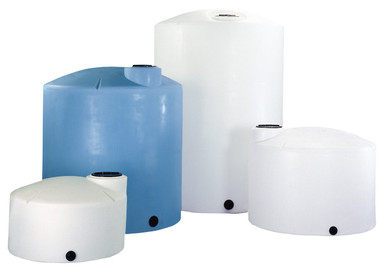
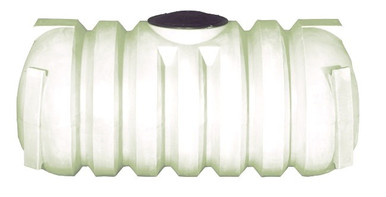
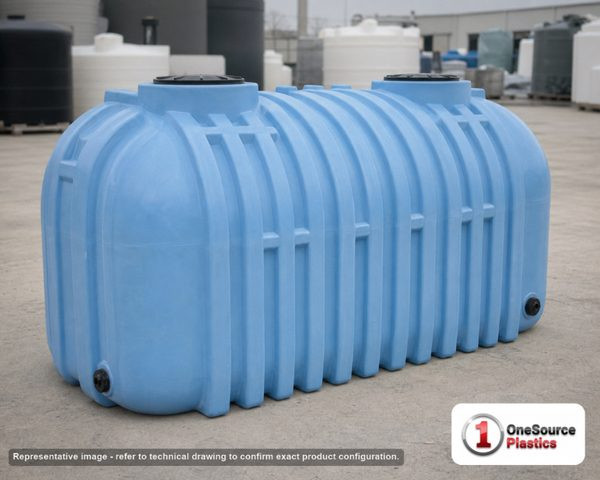
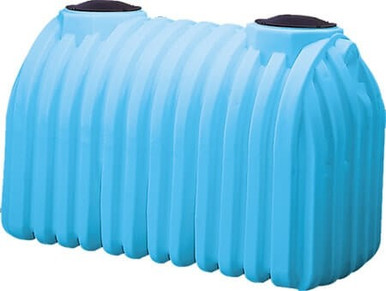
For Texas customers who need underground multi-use tanks for non-petroleum service (potable water, well water cistern, irrigation reserve, fire protection reserve), OneSource Plastics ships the Norwesco underground tank line including N-41772 (1500 gallon multi-use underground), N-41822 (alternate 1500 gallon underground), and similar SKUs through the 5,000 gallon class. These are NOT designed for petroleum service - they are polyethylene multi-use tanks for water, sewage, brine, and similar non-regulated chemistries. Per 30 TAC 334, water-only underground tanks are exempt from UST registration.
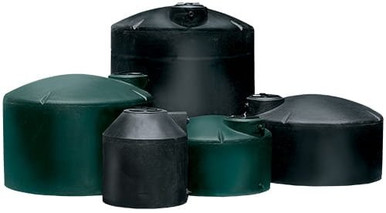
For ag bulk above-ground storage covered under TDA rather than TCEQ, the catalog includes Norwesco horizontal leg tanks (N-40089, N-40131 1025 gallon; N-41877 1325 gallon), Snyder Industries leg tanks (SII-1003600C26 125 gallon, SII-1120000C26 125 gallon), and similar SKUs. Color black is preferred for outdoor Texas service (latitude 26 to 36 N - high UV flux). See our UV service-life prediction guide for the latitude-based tank selection methodology.
For above-ground petroleum or chemical service requiring SPCC-compliant secondary containment, the Snyder Captor double-wall product line covers 1,000 to 10,000 gallon class - SII-5990102N42 1,000 gallon at $6,798.99, SII-1006600N42 10,000 gallon at $91,468.99. LTL freight to any Texas ZIP is quoted via the freight estimator.
Release Reporting Requirements
30 TAC 334.72 requires immediate release reporting to TCEQ for any confirmed or suspected release. The reporting timeline is:
- Within 24 hours - verbal notification to TCEQ Region office and to the Texas State Operations Center (1-800-832-8224) for any release that escapes secondary containment, threatens groundwater, or exceeds 25 gallons surface release.
- Within 30 days - written initial release report including release volume estimate, cause, immediate response actions taken, and proposed corrective action.
- Within 45 days of confirmation - corrective action plan submitted including site characterization, contamination delineation, and remediation approach.
- Quarterly thereafter - corrective action progress reports until TCEQ closure approval.
Failure to report a release is a separate violation from the underlying release and is subject to enhanced penalties. TCEQ has specific authority to issue administrative orders requiring corrective action, with penalties up to $25,000 per day for non-compliance with the order.
Tank Tightness Testing per 30 TAC 334.49
Existing USTs (those installed before December 22, 1988 and grandfathered) must demonstrate tightness through one of:
- Annual tank tightness test using a test method capable of detecting a 0.1 GPH leak at 95 percent probability and 5 percent false alarm rate. Common test methods include the Petroleum Equipment Institute PEI-RP100 protocols, with vendors providing certified testing equipment.
- Monthly inventory reconciliation per 30 TAC 334.50(b) - daily inventory readings reconciled monthly to detect 1 percent of throughput plus 130 gallons over 30 days.
- Statistical Inventory Reconciliation (SIR) - third-party statistical analysis of daily inventory data, with monthly reports showing pass/fail/inconclusive status.
- Interstitial monitoring on double-wall tanks - continuous detection in the annular space between primary and secondary.
- Vapor monitoring - sensors in vapor wells around the tank pit detect hydrocarbon vapor migration.
- Groundwater monitoring - monitoring wells around the tank pit sampled monthly for hydrocarbon presence.
For new (post-1988) USTs and replacement tanks, double-wall construction with interstitial monitoring is the dominant choice because the leak detection is continuous, automated, and produces a definitive primary-vs-secondary distinction. Single-wall tanks with monthly SIR are still permitted but operationally more complex.
Closure Procedures per 30 TAC 334.55
When a UST reaches end of service, two closure paths exist:
Permanent removal. The tank is excavated and removed from the ground. The tank pit is sampled for soil contamination. If contamination is found, corrective action is initiated. Tank is rendered unusable and disposed of at a TCEQ-approved facility (typically scrap metal recycler with documentation chain). Closure timeline approximately 60 to 120 days from notification of intent through final closure documentation.
Closure in place. The tank is emptied, vapor freed (rendered non-explosive), and filled with an inert solid (sand, slurry, foam concrete) so it cannot hold liquid. The tank is left in the ground; closure inspection still required. This option is used when removal would damage adjacent infrastructure (buildings, roadways) or where excavation cost is prohibitive. Closure-in-place is permitted by TCEQ on case-by-case basis.
For both options, TCEQ-00497 (Underground Storage Tank Closure Notification) must be submitted at least 30 days before closure begins. Soil and (where required) groundwater samples must be collected by a qualified person; analytical results submitted to TCEQ within 30 days of sampling.
Filing the Forms
TCEQ-00724 is filed via the TCEQ Storage Tank E-Permitting System or by paper submission to TCEQ Petroleum Storage Tank Registration Section, MC-110, P.O. Box 13087, Austin, TX 78711-3087. TCEQ-00495 construction notification follows the same channels. The TCEQ Petroleum Storage Tank Registration Program phone number is 512-239-2160. Most operators file electronically via the e-permit system; paper submission remains accepted but processes more slowly. Filing fees per 30 TAC 334.21 are $25 per UST per year for facilities with 1 to 12 tanks; lower per-tank fees apply at higher tank counts. Fees are remitted with the annual self-certification submission.
Call OneSource Plastics at 866-418-1777 for tank specification on Texas UST or AST projects. We will run the catalog against your TCEQ permit profile and recommend the right tank configuration. The form work and TCEQ filings remain the operator's responsibility - we provide the tank engineering. For the regulatory cross-reference, the official Texas Administrative Code Title 30 Chapter 334 is the authoritative source. For non-petroleum applications including ag bulk fertilizer governed by Texas Department of Agriculture, see our Texas state regulations pillar for the comprehensive Texas tank regulatory map covering UST, AST, ag bulk, and water tank installations across the regulatory portfolio.
Recommended Tanks for This Guide
Live pricing, updated automatically · estimate freight to your ZIP.