
Secondary Containment & SPCC
Secondary Containment & SPCC
Secondary containment is the backstop that catches what the primary tank cannot hold. Getting its size and form right is the difference between a contained spill and a reportable release.
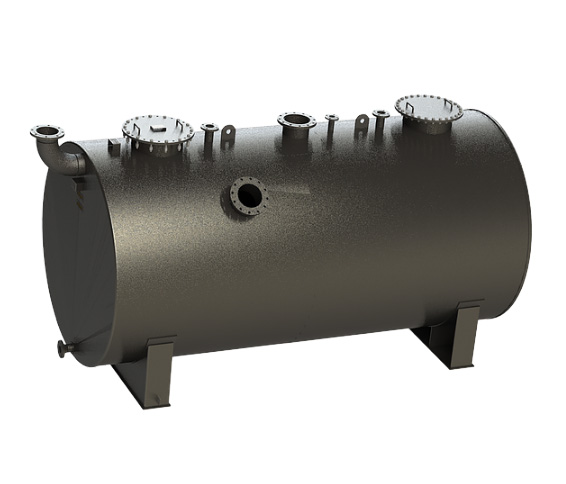
Why Secondary Containment Exists
Every storage tank is the primary container for its contents. Secondary containment is the second line of defense — a system that captures and holds the liquid if the primary tank, its piping, or a connection fails. The purpose is simple and serious: prevent a leak or rupture from reaching soil, groundwater, storm drains, or surface water, where the cost of cleanup and the environmental harm escalate dramatically. Containment converts a potential environmental release into a controlled spill that can be pumped out and managed on site, often turning what would have been a reportable discharge into a routine cleanup.
The economics reinforce the regulation. A spill that reaches the environment can trigger emergency response, soil and groundwater remediation, regulatory penalties, and long-tail liability, while the same volume caught in a containment structure is simply recovered. For oil and many regulated substances, secondary containment is therefore not merely good practice; it is required by federal regulation. Understanding the rule, the sizing logic, and the available containment forms is essential to designing a compliant tank installation rather than retrofitting one after an inspection finding.
The SPCC Rule and 40 CFR 112
The Environmental Protection Agency's Spill Prevention, Control, and Countermeasure rule, codified at 40 CFR Part 112, governs the storage of oil at non-transportation-related facilities. The rule applies to facilities that store oil above threshold quantities and that, because of their location, could reasonably be expected to discharge oil into navigable waters or adjoining shorelines. Covered facilities must prepare and implement a written SPCC Plan describing how the site prevents, contains, and responds to oil discharges, and they must keep that plan current as tanks and operations change.
Secondary containment is the heart of that plan. The rule distinguishes between two types. General secondary containment must be provided for areas where oil is transferred or handled — loading racks, transfer hoses, mobile refuelers — sized to contain the most likely discharge until cleanup occurs. Sized (specific) secondary containment applies to bulk storage containers and has an explicit volume requirement that the structure must demonstrably meet. The plan must be prepared in accordance with good engineering practice, and depending on facility size and oil volume, it may require review and certification by a licensed Professional Engineer rather than self-certification.
Sizing the Containment
The sizing rule for bulk storage containers is the part most often misunderstood. The containment must hold the volume of the largest single container in the contained area — not the sum of all tanks — plus an allowance for precipitation, known as freeboard. The logic is that a single tank is the credible worst-case failure, while simultaneous catastrophic failure of every tank in a shared dike is not the design basis. Sizing to the largest single tank is both the regulatory minimum and the engineering convention.
A worked example makes the logic concrete. Suppose a contained area holds three tanks, and the largest is a single vessel that sets the base requirement. The containment must hold that one tank's full volume, then add freeboard so a heavy rain cannot consume the capacity, then account for the volume the other two tanks occupy on the floor of the dike. The result is a containment volume larger than any single tank but far smaller than the sum of all three, which is exactly the balance the rule intends: protect against the credible worst case without over-building for a scenario that will not occur.
Freeboard matters because an open containment structure exposed to the weather will collect rainwater. If the dike were sized only to the tank volume, accumulated rain would steadily reduce the space available to catch a spill, or operators would be tempted to drain it carelessly and risk releasing accumulated oil sheen. Sufficient freeboard ensures the containment can hold the full tank volume even after a significant rainfall event, and any drainage valve must remain closed and locked except during a controlled, inspected release of clean rainwater. When multiple tanks share a single dike, the displacement of the other tanks within the contained area reduces the usable volume, and that displacement is added back into the required dike capacity.
- Identify the largest single tank within the shared containment area; its capacity sets the base volume the structure must hold.
- Add freeboard for precipitation, based on the local design storm event, so that rainfall cannot consume the containment over time.
- Account for displacement of other tanks and structures standing within the containment, whose footprints occupy volume the spill would otherwise fill.
- Verify drainage control so accumulated rainwater is released only when confirmed clean, keeping the design capacity available for an actual spill.
Forms of Secondary Containment
The rule specifies the performance — capture and hold the spill — not a single method. Several forms satisfy it, and the right one depends on tank size, chemistry, space, climate, and site conditions.
| Method | How It Contains | Best Suited To |
|---|---|---|
| Double-wall tank | An integral outer shell captures any leak from the inner tank | Compact installs; aggressive or high-value contents; tight sites |
| Dike or berm | An earthen or concrete wall around tanks forms a holding basin | Large bulk-storage tank farms |
| Containment pallet or basin | A molded basin under drums, totes, or small tanks | Drums, IBC totes, and small portable tanks |
| Lined remote impoundment | A graded, lined catchment that drains spills to a holding area | Sites where on-tank containment is impractical |
Double-wall tanks are increasingly favored because the containment is engineered, sealed, and integral to the vessel, eliminating the open basin that collects rain, debris, and snow. The interstitial space between the two walls can be monitored — visually, by pressure, or by a sensor — to detect a leak immediately rather than after it pools on the ground. Dikes and berms remain the standard for large tank farms where building an integral outer shell on every tank is impractical, but they demand ongoing attention to liner integrity, the condition of penetrations, drainage-valve discipline, and routine inspection of the contained area for cracks and accumulated water.
Fire Code and Practical Considerations
Secondary containment intersects with fire and building codes as well as environmental rules. Codes such as the International Fire Code and the standards published by the National Fire Protection Association impose containment, spacing, and drainage requirements for flammable and combustible liquids that may exceed the environmental minimums, particularly for fuels and solvents. A complete design reconciles both regimes: the containment must satisfy the larger of the environmental volume requirement and any applicable fire-code provision, and the two are evaluated together rather than in isolation.
Material compatibility is the final discipline, and it is one of the most common failure points. The containment surface must resist the stored chemical for the full duration a spill might sit before recovery, which means a polyethylene basin for compatible chemistries, a chemically resistant liner over concrete for aggressive acids and solvents, or corrosion-resistant alloy or fiber-reinforced plastic construction where the contents would attack ordinary materials. Concrete alone, for instance, is porous and is attacked by many acids, so it is typically coated or lined for chemical service. Containment that dissolves, swells, or cracks on contact with the spill it was meant to hold is no containment at all, so the wetted material is always selected against the actual stored chemistry and temperature, never assumed from a generic specification.
Inspection and Recordkeeping
Designing and building compliant containment is only half the obligation; the SPCC framework also expects ongoing inspection and documentation. Containment structures are inspected on a regular schedule for the conditions that quietly defeat them — cracks in concrete, deteriorated liners or coatings, settlement that creates low spots, vegetation or burrowing animals compromising an earthen dike, and accumulated rainwater approaching the freeboard limit. Penetrations through a dike wall, such as pipe sleeves, are a frequent leak path and warrant particular attention. Findings and corrective actions are recorded, because the inspection history is part of demonstrating that the containment remains functional, not merely that it once met the design on paper.
Drainage discipline closes the loop. Any valve that drains accumulated rainwater from an open containment area must remain normally closed and locked, and water is released only after it is visually confirmed free of oil sheen, with the event logged. An open drain valve turns a containment basin into a direct conduit to the environment, which is exactly the outcome the structure exists to prevent. Together, sound design, compatible materials, routine inspection, and disciplined drainage make the difference between containment that protects the site and containment that exists only in the plan binder.
Frequently asked questions
- What is the SPCC rule and who has to comply?
- The Spill Prevention, Control, and Countermeasure rule, codified at 40 CFR Part 112, is an EPA regulation governing oil storage at non-transportation-related facilities. It applies to facilities that store oil above threshold quantities and that could reasonably discharge oil into navigable waters because of their location. Covered facilities must prepare and implement a written SPCC Plan, and larger facilities may require certification by a Professional Engineer.
- How is secondary containment volume calculated?
- For bulk storage containers, the containment must hold the capacity of the largest single tank in the contained area, not the sum of all tanks, plus freeboard for precipitation. When multiple tanks share a dike, the displacement of the other tanks within the containment is subtracted. The largest single tank is treated as the credible worst-case failure, and freeboard ensures rainfall cannot consume the available capacity.
- Does a double-wall tank satisfy secondary containment requirements?
- Yes. A double-wall tank provides integral secondary containment because the outer shell is engineered to capture any leak from the inner tank, and the interstitial space can be monitored for early leak detection. It is often preferred over open dikes on tight sites and for aggressive contents because the containment is sealed and does not collect rain or debris. The design still must satisfy any applicable fire-code provisions.
- What materials should secondary containment be made of?
- The containment surface must resist the stored chemical for the duration of a spill. Polyethylene basins suit compatible chemistries, a chemically resistant liner over concrete handles aggressive substances, and corrosion-resistant alloy or FRP is used where the contents would attack ordinary materials. The wetted material should be selected against the actual stored chemistry rather than assumed, since containment that fails on contact provides no protection.
Scope your custom build
Send us your volume, service chemistry, dimensions, and finish or code requirements. We return a full engineering package, firm lead time, and a fixed quote — freight quoted separately to your ZIP.
Request a Custom QuoteCall 866-418-1777