
Sour-Water Strippers
Sour-Water Strippers
Sour water carries dissolved hydrogen sulfide and ammonia that no plant wants in its wastewater. A stripping column and a column of steam pull them back out.
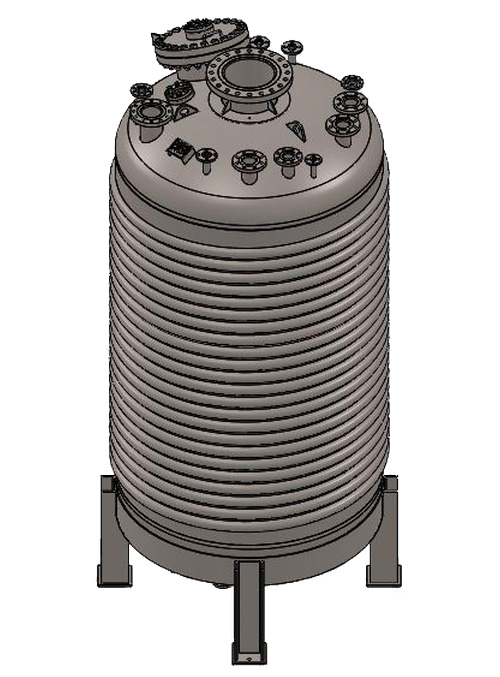
What Sour Water Is
Sour water is process wastewater contaminated with dissolved hydrogen sulfide and ammonia, along with smaller amounts of phenols, cyanides, and other compounds. It is generated wherever water contacts hydrocarbon streams that contain sulfur and nitrogen — condensate from distillation overheads, water from hydroprocessing units, steam injected into process equipment, and quench or wash water throughout a refinery or gas-processing plant. Left untreated, the dissolved hydrogen sulfide is acutely toxic and intensely odorous, and the ammonia is both a regulated pollutant and a nutrient that harms receiving waters by promoting oxygen-depleting growth.
A sour-water stripper is the unit operation that removes these dissolved gases so the water can be reused or sent to biological treatment, and so the stripped contaminants can be routed to a sulfur recovery unit or other downstream handling rather than escaping to air or water. Plants often distinguish between non-phenolic sour water, which is relatively clean and well suited to reuse after stripping, and phenolic sour water, which carries additional contaminants and is handled more conservatively. In either case the stripper is a textbook application of stripping: the inverse of absorption, in which a gas is driven out of a liquid instead of being dissolved into it.
How Stripping Works
Both hydrogen sulfide and ammonia are far more volatile than water and exist in equilibrium between dissolved and gaseous forms. That equilibrium shifts with temperature and with the partial pressure of the gas above the liquid: heating the water and lowering the concentration of the gas in the surrounding vapor both push the dissolved gas out of solution. A stripper exploits this by bringing the sour water into intimate, counterflow contact with a stripping vapor — almost always steam — inside a tall column packed with trays or media.
The sour water is typically preheated against the hot stripped water leaving the bottom, then enters near the top of the column and flows downward over the trays or packing, while steam rises from the bottom. As the hot vapor contacts the descending liquid, it heats the water and continuously sweeps the liberated hydrogen sulfide and ammonia upward and out of the top of the column as an overhead vapor. Stripped, clean water collects at the bottom. The column geometry — the number of trays or the depth of packing — sets the number of equilibrium stages, and together with the steam rate it determines how thoroughly the gases are removed. More stages and more steam drive lower residual concentrations, at the cost of a larger column and higher energy use.
The Role of Steam
Steam is the engine of the stripper, and it does two jobs at once. First, it supplies the heat that raises the water temperature and shifts the volatility equilibrium toward the gas phase, releasing the dissolved hydrogen sulfide and ammonia from solution. Second, as a flowing vapor it provides the carrier that continuously dilutes and removes the liberated gases from the liquid surface, maintaining the concentration gradient that drives stripping. Steam is normally introduced either indirectly by a reboiler at the base of the column or directly by injection of live steam into the bottom, and the choice affects water balance because direct steam adds condensate to the bottoms stream.
Operating conditions matter and the two target gases do not behave identically. Hydrogen sulfide is a weak acid and is stripped readily, while ammonia is a weak base whose volatility is strongly pH-dependent, so it is harder to remove unless the pH is managed. Many strippers handle both by careful control of temperature and pressure and, in some configurations, by pH adjustment or by using a two-column arrangement that removes the two contaminants in sequence. The overhead vapor — rich in hydrogen sulfide and ammonia — is condensed and routed to downstream handling, classically a sulfur recovery unit that converts the hydrogen sulfide to elemental sulfur, with the ammonia either recovered or thermally destroyed. The treated bottoms water is clean enough for reuse as wash or desalter water, which closes the loop and reduces fresh-water demand.
| Element | Function in the Stripper |
|---|---|
| Stripping column | Houses trays or packing for counterflow gas-liquid contact and equilibrium stages |
| Feed preheater | Recovers heat from hot bottoms to warm incoming sour water and cut steam use |
| Steam (reboiler or direct) | Heats the water and carries liberated gases out the overhead |
| Sour-water feed | Enters near the top and flows down against the rising steam |
| Overhead vapor | Concentrated H2S and ammonia, condensed and routed to recovery |
| Stripped bottoms water | Cleaned water for reuse or downstream treatment |
Process Integration and Reuse
A sour-water stripper rarely stands alone; it is woven into the water and sulfur management of the whole plant. The stripped overhead is a feedstock for sulfur recovery, so the stripper's steady operation directly affects how much sulfur a site can capture rather than emit. On the water side, the cleaned bottoms are valuable: reusing them displaces fresh water and reduces the volume sent to final treatment, which lowers both operating cost and the load on the plant's wastewater system. This integration is why strippers are treated as critical units and given redundancy and careful monitoring rather than being run to failure.
The design balance is between thoroughness and energy. Pushing residual hydrogen sulfide and ammonia very low requires more stages, more steam, and tighter control, all of which cost energy and capital. The right target is set by what the downstream uses and the discharge permit require, not by chasing the lowest achievable number, so the stripper is sized to the specification its bottoms water must meet.
Safety and Environmental Drivers
The reason a sour-water stripper is treated as a critical unit comes down to what it handles. Hydrogen sulfide is acutely toxic at low concentrations and can be fatal, and it deadens the sense of smell so that workers lose their early warning, which is why the entire system is designed to keep it enclosed and routed to safe destruction rather than vented. The same gas is flammable, adding a fire and explosion dimension to any leak. These hazards justify the conservative materials, the leak detection, and the maintenance discipline that surround the unit.
The environmental driver is equally clear. Ammonia discharged to surface water is a regulated pollutant and a nutrient that depletes dissolved oxygen and harms aquatic life, and oil-and-process wastewaters are governed under the Clean Water Act, typically through a discharge permit that sets limits the treated water must meet. By stripping the contaminants out and routing them to recovery — hydrogen sulfide to elemental sulfur, ammonia to recovery or destruction — the stripper keeps both pollutants out of the plant's air and water emissions at once. It is, in that sense, a pollution-control device as much as a water-treatment unit, which is why it sits at the heart of a refinery's environmental compliance.
Materials for Corrosive Service
A sour-water stripper operates in one of the more aggressive corrosion environments in a process plant. The combination of hydrogen sulfide, ammonia, dissolved acids, elevated temperature, and the presence of ammonium bisulfide makes material selection a safety-critical discipline. Ammonium bisulfide in particular is notorious for causing rapid erosion-corrosion in overhead piping and condensers, where it attacks metal aggressively above certain concentrations and flow velocities, and wet hydrogen sulfide environments can drive sulfide stress cracking and hydrogen-induced cracking in susceptible steels.
- Column and trays: Stainless steels and, in the most demanding services, higher alloys are selected for the column internals and shell or as cladding where carbon steel would corrode unacceptably.
- Overhead system: The overhead piping, exchangers, and condenser see ammonium bisulfide and require corrosion-resistant alloys together with conservative velocity limits to avoid erosion-corrosion.
- Cracking resistance: Where carbon steel is used, it is specified and fabricated to resist sulfide stress cracking, with controlled hardness limits, post-weld heat treatment, and inspection per recognized industry guidance for wet hydrogen sulfide service.
The discipline is the same one that runs through all corrosion-resistant tank and vessel design: match the wetted material to the actual chemistry, velocity, and operating temperature rather than to a generic specification. Because the consequences of a sour-water stripper failure include the release of a toxic, flammable gas, the conservatism in material selection, fabrication, and inspection is fully warranted, and these vessels are designed, monitored, and inspected on a defined schedule throughout their service life.
Frequently asked questions
- What does a sour-water stripper remove?
- It removes dissolved hydrogen sulfide and ammonia, the main contaminants in sour process wastewater, along with smaller amounts of compounds such as phenols. These gases are driven out of the water so it can be reused or sent to biological treatment, and the stripped contaminants are routed to downstream handling such as a sulfur recovery unit. This keeps toxic hydrogen sulfide and regulated ammonia out of the plant's water and air discharges.
- How does steam strip the gases out of the water?
- Steam does two things at once. It heats the water, which shifts the volatility equilibrium so dissolved hydrogen sulfide and ammonia move into the gas phase, and as a flowing vapor it sweeps those liberated gases up and out of the column. Sour water flows down over trays or packing while steam rises against it, providing the counterflow contact that drives the gases out, with the clean water collecting at the bottom.
- How is a stripper different from a scrubber?
- They are mirror images. A scrubber absorbs a gas out of a gas stream into a liquid, while a stripper drives a dissolved gas out of a liquid into a vapor. Both use the same column physics of trays, packing, and equilibrium stages, but the driving forces run in opposite directions: a scrubber relies on a liquid solvent, while a stripper relies on heat and counterflowing steam.
- Why does material selection matter so much for sour-water strippers?
- The service combines hydrogen sulfide, ammonia, dissolved acids, heat, and ammonium bisulfide, which together create a severely corrosive environment. Ammonium bisulfide causes rapid erosion-corrosion in overhead piping and condensers, and wet hydrogen sulfide can drive sulfide stress cracking in susceptible steels. Stainless steels and higher alloys are used for the demanding sections, and any carbon steel is specified to resist cracking, because a failure can release toxic gas.
Scope your custom build
Send us your volume, service chemistry, dimensions, and finish or code requirements. We return a full engineering package, firm lead time, and a fixed quote — freight quoted separately to your ZIP.
Request a Custom QuoteCall 866-418-1777