California Bulk Pesticide Storage Compliance: 3 CCR Section 6670 General Storage Requirements, CDPR Oversight, and Ag Retailer Containment Engineering
California regulates pesticide storage, handling, and use under Title 3 of the California Code of Regulations (3 CCR), Division 6, administered by the California Department of Pesticide Regulation (CDPR) and enforced at the county level by the County Agricultural Commissioner (CAC) in each of California's 58 counties. The general storage requirement appears at 3 CCR Section 6670, which states that pesticides, emptied containers, or equipment that holds or has held a pesticide must not be stored, handled, emptied, disposed of, or left unattended in a manner or location where they may present a hazard to persons, animals (including bees), food, feed, crops, or property. The regulatory text is intentionally broad - it sets the standard of care without prescribing specific tank specifications. The engineering standard is filled in by 3 CCR sections that follow (6672 security, 6678 contaminated equipment, 6700 series for restricted materials), federal SPCC at 40 CFR 112, the bulk fertilizer rules administered by California Department of Food and Agriculture (CDFA) under California Food and Agricultural Code Chapter 5 Article 5 Section 14591, and county ordinances that vary by jurisdiction.
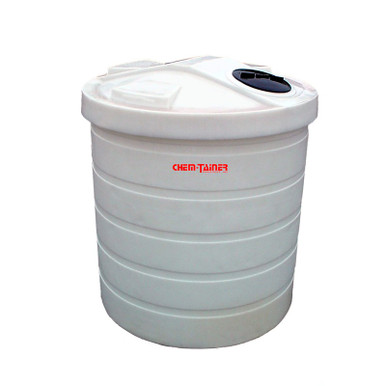
This guide walks the California regulatory framework as it applies to ag retailers, custom application businesses, and large farms storing bulk pesticide and ag chemical inventory. The focus is on the storage tank engineering required to satisfy 3 CCR 6670 in practice: tank material selection, secondary containment sizing, vent and overflow management, security, recordkeeping, and the supporting tank product specifications from Norwesco, Snyder Industries, Chem-Tainer, Bushman, and Enduraplas that OneSource Plastics carries for California ag retail and farm bulk storage applications.
The Regulatory Framework: Who Has Jurisdiction
California pesticide and ag chemical bulk storage is regulated by a layered framework:
- CDPR (California Department of Pesticide Regulation) - administers 3 CCR Title 3 Division 6 covering pesticide registration, restricted material permits, structural pest control, and storage/handling. CDPR licenses applicators and dealers.
- CAC (County Agricultural Commissioner) - enforces 3 CCR at the local level, conducts site inspections, issues use permits for restricted materials, investigates complaints. The CAC office is the operator's primary point of contact.
- CDFA (California Department of Food and Agriculture) - regulates fertilizer (bulk and packaged) under California Food and Agricultural Code Section 14591. Fertilizer is regulated separately from pesticide and falls under CDFA, not CDPR.
- EPA SPCC 40 CFR 112 - federal Spill Prevention Control and Countermeasure plan requirement for facilities storing oil-bearing chemistry above 1,320 gallons aggregate above-ground. Applies in California with no state preemption.
- Cal/OSHA - regulates worker exposure to pesticides under 8 CCR Title 8, including pesticide handler training, PPE, exposure monitoring, and emergency response.
- Local AHJ (city/county) - building codes, fire codes, hazardous materials business plans (HMBP) under California Health and Safety Code Section 25500 administered by Certified Unified Program Agencies (CUPA).
An ag retailer storing bulk pesticide and bulk fertilizer in California is interacting with at least 5 of these regulatory bodies simultaneously. Compliance is not a single permit; it is a portfolio.
3 CCR Section 6670 - The General Storage Requirement
The text of 3 CCR Section 6670 is short. The interpretive guidance is long. CDPR and CAC enforcement of 6670 covers:
- Hazard to persons - tanks must be secure against unauthorized access (locked storage, fenced yards, posted warning signs). Children, trespassers, or untrained personnel must be physically prevented from contacting bulk pesticide.
- Hazard to animals (including bees) - storage and rinsate handling must not allow runoff to surface water where livestock or wildlife drink. Bee hazard - empty pesticide containers and rinsate must not be left where bees can contact them. Some California counties require bulk pesticide storage at minimum distances from registered apiaries.
- Hazard to food and feed - bulk pesticide tanks must be physically separated from food/feed processing or packaging areas. Cross-contamination of food crops via shared handling equipment is a 3 CCR 6670 violation.
- Hazard to crops - storage in proximity to growing crops must consider drift, runoff, and spill containment. Tanks should be sited downhill from sensitive crops or with engineered containment that prevents lateral spread.
- Hazard to property - includes structural integrity of the tank and supporting equipment, fire safety, and protection against vandalism or vehicle impact.
Each element gets translated into specific engineering controls during the CAC site inspection. There is no single ASTM or NFPA standard that satisfies 6670 by itself; instead, a combination of physical controls, recordkeeping, and operational practices satisfies the standard.
Secondary Containment Engineering
Although 3 CCR 6670 does not prescribe a specific containment volume, the practical engineering standard for bulk pesticide storage in California aligns with EPA SPCC 40 CFR 112.7(c) - secondary containment must hold at least 110 percent of the largest single tank volume, plus precipitation accumulation for outdoor installations. For a 1,500 gallon Norwesco horizontal leg tank holding bulk herbicide, secondary containment must hold 1,650 gallons minimum. For a 6,500 gallon vertical Norwesco bulk tank, containment must hold 7,150 gallons minimum.
The two main containment construction methods for California ag bulk:
Concrete dike with chemical-resistant liner. Excavated containment area surrounded by a poured concrete dike wall, with a high-density polyethylene (HDPE) or chemical-resistant elastomer liner across the floor and up the dike walls. The liner must be compatible with the chemistry stored. Dike wall height calculated from the tank volume plus 6 inches freeboard plus precipitation allowance (12 inches for outdoor in most California counties). Concrete dikes resist vehicle impact and last 30+ years with maintenance.
Snyder Captor double-wall tank. Self-contained primary plus secondary containment in a single rotomolded HDPE or XLPE assembly. The primary tank is the inner shell; the secondary is the outer shell, sized 110 percent of primary volume. Annular space provides leak detection visibility. Captor double-wall products in the OneSource catalog include SII-5990102N42 (1,000 gallon XLPE), SII-5990102N45 (1,000 gallon), SII-1006600N42 (10,000 gallon XLPE), SII-1006600N43 (10,000 gallon HDLPE), and SII-5490000N42 (1,550 gallon XLPE). For California ag retail bulk where chemistries are typically below 1.5 SG, the HDLPE Captor variants are appropriate; for high-SG chemistry like sulfuric acid, the XLPE variants are required. See our Snyder Captor SPCC compliance walkthrough for the full engineering walkthrough.
Tank Material Compatibility for California Ag Chemistry
Common California ag chemistry classes and tank material recommendations:
- Glyphosate (Roundup) and other neutral herbicides: HDPE or XLPE adequate. Most California row crop applications. SG approximately 1.1. See glyphosate tank selection guide.
- 2,4-D amine and 2,4-D ester: HDPE adequate for amine; XLPE preferred for ester due to permeation resistance. SG approximately 1.1.
- Paraquat (restricted material): HDPE adequate. Restricted material status under 3 CCR Section 6400 series requires county permit, secured storage, and licensed applicator chain of custody.
- Atrazine: HDPE or XLPE adequate. SG approximately 1.0.
- Anhydrous ammonia: Steel pressure vessel ONLY. Polyethylene NOT compatible due to vapor pressure. See anhydrous ammonia 29 CFR 1910.111 storage requirements.
- UAN 32% nitrogen fertilizer: XLPE preferred. SG 1.32. Crystallizes below -1 deg C - heat trace required for winter storage in northern California.
- Liquid lime (calcium hydroxide slurry): HDPE adequate. SG approximately 1.3. Settling solids - tank with bottom outlet and recirculation pump preferred.
- Liquid sulfur (elemental): Specialty insulated tank with heat trace. NOT polyethylene - sulfur melt is 119 deg C, well above HDPE softening point.
- Aqua ammonia (ammonium hydroxide 19-29 percent): HDPE or XLPE adequate at ambient temperature. Vent sizing critical due to vapor pressure.
- Sulfuric acid (battery acid 33%, fertilizer-grade 50-70%): XLPE required. SG up to 1.6. See sulfuric acid tank selection guide.
For California ag retailers storing multiple chemistries on one site, dedicated tanks per chemistry are required - cross-contamination between chemistry classes is a 3 CCR 6670 violation and is also a Cal/OSHA violation under 8 CCR 5194 (HazCom). Color-coding the tanks (white for herbicides, blue for fertilizers, yellow for oxidizers, etc.) is a common operational control.
Security Requirements per 3 CCR Section 6672
3 CCR Section 6672 covers security of pesticides and pesticide containers. Engineering controls include:
- Physical barrier - locked building, locked compound, or locked tank cabinet. Tanks in open yards must be inside a locked perimeter fence at minimum 6 feet height with a locked gate.
- Lighting - illumination at the storage compound at night. Motion-activated lighting acceptable.
- Posted signage - "DANGER - PESTICIDE STORAGE" or equivalent in English and Spanish. Required on perimeter fence and on the storage building entry.
- Inventory control - daily reconciliation of inventory in/out, signed by licensed personnel. Discrepancy reporting within 24 hours to CAC.
- Restricted access - only licensed pesticide handlers and qualified applicators access the storage area. Visitors logged.
For restricted materials (3 CCR 6400 list), additional county permit requirements apply. Aldicarb, methyl bromide, paraquat, and the restricted organophosphate insecticides require county permits, monthly inventory reports, and specialized handler training.
Hazardous Materials Business Plan (HMBP)
California Health and Safety Code Section 25500 requires every facility storing hazardous materials above threshold quantities to file a Hazardous Materials Business Plan (HMBP) with the local CUPA (Certified Unified Program Agency - in most California counties this is the County Environmental Health Department or County Fire Department). The HMBP includes:
- Complete inventory of hazardous materials stored on-site, by chemistry, location, and maximum daily inventory.
- Site map showing storage locations, secondary containment, emergency response routes, and adjacent property uses.
- Emergency response plan for spills, fires, and releases.
- Employee training records.
- Annual update or update upon any material change in inventory, location, or process.
The HMBP is filed via the California Environmental Reporting System (CERS) - the state-wide electronic reporting platform that aggregates HMBP data for CUPA, CDPR, CalEPA, and emergency responders.
Tank Selection for California Ag Bulk Service
OneSource Plastics catalogs the following tank product lines for California ag bulk storage applications:
Norwesco horizontal leg tanks - 35 to 1,325 gallon class for distributed bulk storage at field tank locations or retail yards. SKUs include N-45223 (35 gallon), N-45191 (65 gallon), N-40298 (125 gallon), N-45209 (925 gallon), N-43675 (925 gallon black), N-40089 (1,025 gallon), N-40131 (1,025 gallon HDPE), N-41877 (1,325 gallon HDPE blue). Black coloring (N-43675 specifically) is preferred for outdoor California UV exposure - latitude 32 to 42 deg N - the higher UV flux compared to mid-Atlantic states accelerates degradation of unstabilized HDPE. See our UV service-life prediction guide.
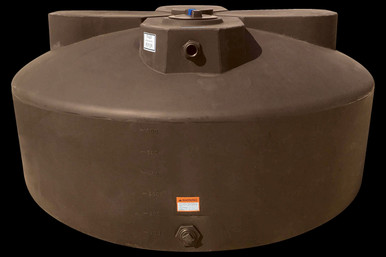
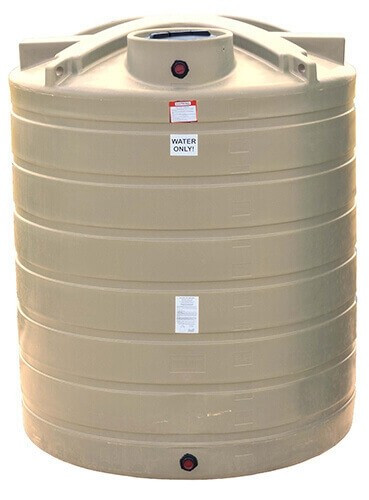
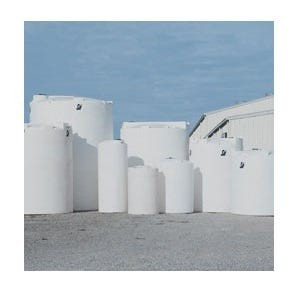
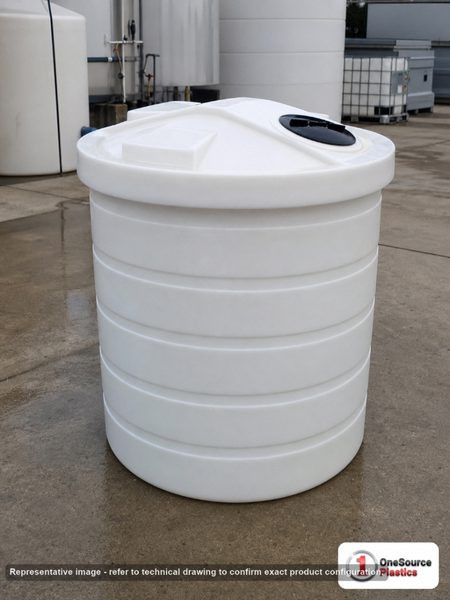
Norwesco vertical bulk storage - 1,500 to 15,500 gallon class for ag retail bulk inventory. SKU N-40146 (1,500 gallon vertical liquid storage) is the entry size. Larger sizes available for retail customers running multiple chemistry SKUs at higher inventory.
Snyder Industries Captor double-wall - integrated secondary containment for sites without engineered concrete dike infrastructure. SII-5990102N42 (1,000 gallon XLPE), SII-5490000N42 (1,550 gallon XLPE), and SII-1006600N42 (10,000 gallon XLPE Captor) cover the bulk size range with built-in 110% containment.
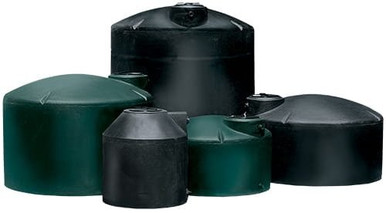
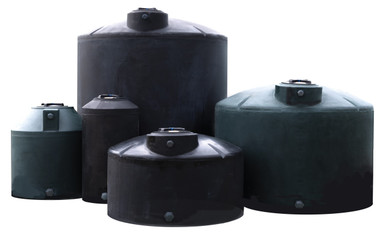
Enduraplas vertical water/liquid storage - EP-TLV02100BK (2,100 gallon black water), EP-THV02500FG (2,500 gallon faint green liquid), EP-THV01100BK (1,100 gallon black liquid), EP-THV01350BK (1,350 gallon black liquid) for liquid storage including water tender, irrigation reserve, and lower-SG ag chemical service.
Internal Linking and Further Reading
For comprehensive California regulatory map covering tank installations, see our California state regulations pillar. For chemistry-specific compatibility on California-typical ag chemistry, see chemical compatibility hub and the specific chemistry pages including glyphosate, sulfuric acid, UAN 32, and ammonium hydroxide (aqua ammonia). For SPCC engineering on the federal layer above 3 CCR, see the EPA SPCC ag retailer walkthrough and Captor vs UL-142 steel comparison.
Pricing and Procurement
OneSource Plastics ships ag bulk tank product into all 58 California counties. Listed pricing for representative SKUs: Norwesco N-40146 1,500 gallon vertical at $2,837.16; Snyder SII-5990102N42 1,000 gallon Captor at $6,798.99; Enduraplas EP-TLV02100BK 2,100 gallon black at $2,198.99. LTL freight to California ZIPs is quoted via the freight estimator separately - California freight typically runs $400 to $1,800 depending on origin and destination remoteness.
Call OneSource Plastics at 866-418-1777 for tank specification on California ag retail or farm bulk storage projects. We will run the chemistry, capacity, and 3 CCR / SPCC requirements against the catalog and recommend the right tank. Compliance with 3 CCR 6670, the CAC permit framework, the CDFA fertilizer rules, the SPCC plan, and the HMBP filing remain the operator's responsibility - we provide the tank engineering. The reference framework is comprehensive; the tank specification is a defensible foundation.
Recommended Tanks for This Guide
Live pricing, updated automatically · estimate freight to your ZIP.