
California Septic Tank Regulations — OWTS Policy, Setbacks, Capacity Rules
California Septic Tank Regulations
Before buying or replacing a septic tank in California, you need to know about the OWTS Policy, CPC Chapter 7 capacity rules, Tier 1 setbacks, and county-level enforcement.
The Governing Framework
California regulates septic tanks (formally called Onsite Wastewater Treatment Systems, or OWTS) under a three-layer framework:
- State Water Resources Control Board — OWTS Policy. Adopted June 19, 2012; amended and re-adopted in 2023. This is the statewide minimum standard. Every county in California must at minimum meet it.
- California Plumbing Code (CPC), Chapter 7. Establishes septic tank capacity tables and plumbing installation requirements. Referenced by the OWTS Policy for sizing.
- County Environmental Health Department. Each of California's 58 counties issues permits, inspects installations, and can impose requirements stricter than the statewide minimum through a Local Agency Management Plan (LAMP).
How Many Septic Tanks Are in California?
The State Water Board says there are about 1.2 million OWTS in California, serving homes and small businesses. This is the largest regulated group in the U.S., which is why there's a statewide framework. Without it, each of the 58 counties would make their own rules.
OWTS Policy Tiers — What Tier Applies to You
The OWTS Policy sorts installations into tiers based on design flow, site conditions, and risk. Most homes and small businesses are in Tier 1.
| Tier | Scope | Key Requirement |
|---|---|---|
| Tier 1 | Low-risk new and replacement OWTS with projected flow up to 3,500 gallons per day. | Conservative, prescriptive default standards; minimal engineering review. |
| Tier 2 | OWTS operating under an approved county Local Agency Management Plan (LAMP). | County-specific rules that differ from (but are approved to substitute for) Tier 1. |
| Tier 3 | OWTS near impaired surface waters designated by the State Water Board. | Supplemental treatment (nitrogen or pathogen reduction) beyond standard septic. |
| Tier 4 | OWTS requiring individual Waste Discharge Requirements (WDR). | Full engineered system with continuous monitoring. |
Most single-family homes use Tier 1 for their septic systems, including typical 1,000–1,500 gallon replacement tanks. If you're replacing a tank with the same type under an existing permit, Tier 1 usually applies.
Tier 1 Setback Requirements
These are the statewide minimum setbacks for a Tier 1 OWTS. Your county may impose stricter distances through its LAMP.
| From | Minimum Setback |
|---|---|
| Unstable land mass or areas subject to earth slides | 100 feet |
| Springs and flowing surface water bodies (to natural bank of creeks and rivers) | 100 feet |
| Vernal pools, wetlands, lakes, ponds (to high-water mark of lakes/reservoirs) | 200 feet |
| Public water well (variable by dispersal depth) | 150 feet minimum |
Septic Tank Capacity — CPC Chapter 7
The California Plumbing Code Chapter 7 provides the capacity table that most county permit offices use for single-family homes.
- Starting tank capacity scales by bedroom count.
- Each bedroom beyond the base size adds 150 gallons of required capacity.
- Tanks must include sludge storage capacity plus any capacity needed for domestic food waste disposal units (garbage disposals).
In practice, most residential installations use these common sizes:
| Bedrooms | Typical Tank Capacity | Common Application |
|---|---|---|
| 1–2 | 750–1,000 gallons | Small cabin, ADU, tiny home |
| 3 | 1,000 gallons | Standard single-family residence |
| 4 | 1,200–1,250 gallons | Larger single-family residence |
| 5–6 | 1,500 gallons | Estate-size single-family home |
| 7+ | 2,000–2,500 gallons | Multi-family or very large single-family |
Material Approvals
California allows polyethylene septic tanks for all Tier 1 installations if they meet IAPMO or CPC standards. Most rotomolded HDPE tanks have this marking. Brands like Norwesco, Snyder, Enduraplas, and Chem-Tainer make tanks that comply with California standards. Look for these OEM markings:
- IAPMO listing — International Association of Plumbing and Mechanical Officials certification that the tank meets Uniform Plumbing Code section 7.
- NSF/ANSI 41 or NSF/ANSI 46 — national sanitation standard for residential wastewater treatment vessels.
- ICC-ES evaluation report — International Code Council structural adequacy review.
Most counties don't require all three markings; IAPMO alone is usually enough. Check with your local permit office before ordering.
What Counties Differ On
Even within the OWTS Policy framework, counties customize via their LAMPs. The most common variations:
- Seismic zones. Counties in seismically active zones (Alameda, Santa Clara, San Mateo, Los Angeles) often require tanks with anti-buoyancy anchoring against post-seismic groundwater rebound.
- High water table. Counties near Sacramento-San Joaquin Delta, in the Central Valley, or along the coast may require additional tank ballast or raised dispersal.
- Coastal zones. Coastal counties (San Mateo, Monterey, San Luis Obispo) often require advanced treatment (nitrogen reduction) in the near-coast zone, which changes tank selection and may invoke Tier 3.
- Watershed-sensitive areas. Counties along Lake Tahoe, Mono Basin, and other designated watersheds have explicit additional requirements adopted under Tier 3.
Permits & Inspection Process
- Site assessment. County typically requires a percolation test ("perc test") or deep-hole soil profile evaluation by a registered environmental health specialist or licensed soils engineer.
- Design submittal. Plot plan showing tank, dispersal field, and all setback-relevant features (wells, water bodies, unstable slopes).
- Permit issuance. Typical California permit fee ranges $400–$2,500 depending on county and complexity. Issuance timeline 2–8 weeks.
- Installation. Must be performed by a county-permitted installer in most jurisdictions (not DIY except where explicitly allowed, e.g., remote parcels under certain county LAMPs).
- Inspection. County inspects the tank AND dispersal field before backfill. The inspection is the point at which capacity, setbacks, and material approvals are all verified on site.
- Certificate of completion. Issued after passing inspection; required for property sale disclosures and some homeowner insurance policies.
Frequently Asked Questions
- Can I install my own septic tank in California?
- In most counties, no — installation must be performed by a county-permitted contractor. A handful of rural counties allow owner-installed systems on parcels over a certain acreage. Check with your specific county environmental health department before planning DIY work.
- What if my lot doesn't pass a perc test?
- Failed percolation can still be permitted under an engineered alternative system — typically an advanced treatment unit (ATU) that pre-treats effluent before dispersal. Expect these systems to cost 3–5 times more than a conventional septic and to involve ongoing maintenance contracts. Tier 3 or Tier 4 classification may apply.
- How far ahead do I need to order the tank?
- Typical California permit timelines are 2–8 weeks from application to approval. Tank delivery in California is usually 2–4 weeks from order. Start the permit process first; tank orders can ship just-in-time once your design is approved.
- What's the difference between a septic tank and an OWTS?
- A septic tank is the single-vessel component that holds wastewater for primary settling and anaerobic digestion. An OWTS is the full system including tank, dispersal field, any advanced treatment, vents, and distribution boxes. California regulation is written at the OWTS (system) level, not the tank alone.
- Can I use a polyethylene tank if I'm near the coast?
- Yes, provided the tank is commissioned for anti-buoyancy installation (ballast ribs, anchor kits) and meets your county's specific LAMP requirements for coastal zones. Confirm with your county before ordering.
Source Citations
Shop Septic Tanks for California
California effectively requires IAPMO/NSF listing for polyethylene septic tanks. Specify the IAPMO-approved models below. Match capacity to your design flow per California's rules summarized above. OneSource drop-ships from the OEM warehouse closest to your install address.
IAPMO Approved Septic Tanks
Required specification for most California installations. NSF/IAPMO listed polyethylene tanks.
Browse IAPMO Approved Septic TanksAll Plastic Septic Tanks
Full catalog of polyethylene septic tanks. Confirm IAPMO listing with your chosen model.
Browse All Plastic Septic TanksSeptic Accessories
Risers, lids, inlet/outlet baffles, effluent filters, alarms, pumps.
Browse Septic AccessoriesMulti-Use Tanks
Dual-use tanks for combined septic/cistern installations where local code permits.
Browse Multi-Use TanksStoring chemicals in your California tank?
California's OSSF rules don't cover chemical-storage tanks. These are specified by the manufacturer. If you need a tank for sulfuric acid, bleach, fertilizer solution, or any of 300+ industrial chemicals, our Chemical Compatibility Database has all the construction specifications.
Agricultural Tank Regulations — California Department of Pesticide Regulation (DPR)
California has the most complex rules in the U.S. for storing pesticides, fertilizers, and agrichemicals. Three authorities oversee this: the California Department of Pesticide Regulation (DPR), the California Department of Food and Agriculture (CDFA), and County Agricultural Commissioners (CACs) who enforce locally.
- 3 CCR 6670-6677 — DPR Bulk Pesticide Storage Rule (one of the most prescriptive in the nation): construction, secondary containment, loading-pad rinsate, inspection, closure.
- FAC (Food and Agricultural Code) 12843 — Statutory authority for bulk pesticide storage regulations.
- 3 CCR 6600 et seq. — Pesticide use enforcement, applicator licensing, Restricted Material Permits.
- FAC 14501 et seq. — California Fertilizing Materials Inspection Program under CDFA.
- 3 CCR 2300 et seq. — CDFA commercial fertilizer rules.
California is the largest agricultural state by value, producing tree nuts, wine grapes, citrus, and more. Facilities storing bulk liquid pesticides must have secondary containment that holds 100% of the largest tank plus the volume displaced by other tanks. This is stricter than the federal 110% rule. Requirements include impermeable liners, monthly inspections, and specific construction standards. County Agricultural Commissioners enforce these rules, with active programs in places like Fresno and Kern. Bulk fertilizer facilities follow CDFA rules and local fire-code requirements. Anhydrous ammonia storage follows ANSI K61.1, OSHA PSM, and CalARP Program 4 for certain quantities.
Oil & Gas Produced Water — California Geologic Energy Management Division (CalGEM)
The California Geologic Energy Management Division (CalGEM) within the Department of Conservation regulates oil and gas under 14 CCR Division 2, Chapter 4, with authority from PRC Division 3.
- 14 CCR 1775 — Sumps and pits: lining, freeboard, fencing, closure.
- 14 CCR 1774 — Production facility construction (tanks, separators, vessels).
- 14 CCR 1773 and 1778 — Spill prevention and response, abandonment, idle-well management.
- PRC 3106 — CalGEM rulemaking authority.
- PRC 3400 et seq. — Well abandonment and idle-well requirements.
- SB 1137 (2022) — 3,200-foot health-protection setback from sensitive receptors (enjoined, then re-implemented after referendum clarification).
Kern County oilfields produce a lot of water along with oil, requiring extensive tank and pipeline systems. CalGEM oversees tanks, sumps, and pits under 14 CCR 1774/1775, requiring secondary containment and coordination with water boards on any releases. Polyethylene tanks are common for chemical-injection skids, while fiberglass and steel are used for high-volume water service. UIC Class II disposal wells operate under EPA Region 9 and CalGEM oversight.
Petroleum USTs — SWRCB UST Program
California's underground storage tank program is run by the State Water Resources Control Board (SWRCB) Division of Water Quality UST Program under HSC Chapter 6.7 and 23 CCR Division 3, Chapter 16 (sections 2610-2728).
- HSC 25281 — UST definitions, scope, and statutory authority (Chapter 6.7 — Underground Storage of Hazardous Substances).
- 23 CCR 2610-2728 — Technical standards: design, installation, monitoring (continuous electronic leak detection), spill/overfill prevention, corrective action, closure.
- HSC 25299 — Petroleum UST Cleanup Fund (LUST Cleanup Fund), state reimbursement for eligible release-cleanup costs; administered by SWRCB Division of Financial Assistance.
- CUPA (Certified Unified Program Agency) — Local implementation by county or city agencies under CalEPA oversight; CUPAs enforce UST regulations, hazardous materials business plans, HMBP, and Aboveground Petroleum Storage Act (APSA) facility programs at the local level.
California's UST rules are very strict: continuous electronic leak detection, double-walled tanks and piping, and secondary containment are required. There are also specific release notification rules. CUPAs handle permits, inspections, and enforcement, and any releases trigger corrective action with possible LUST Cleanup Fund reimbursement.
Aboveground Petroleum Storage Act (APSA) — CalOES and CUPAs
California's Aboveground Petroleum Storage Act adds state rules to federal SPCC for oil storage. It's in HSC Chapter 6.67 (sections 25270-25270.13) and is managed by CalOES through CUPAs.
- HSC 25270 et seq. — APSA scope (1,320 gallons aggregate aboveground oil trigger, same as federal SPCC).
- SPCC Plan — APSA facilities must have a federally compliant SPCC plan plus CUPA-reviewed APSA documentation.
- Tank integrity testing — APSA requires specific inspection and testing for tanks 55,000 gallons or larger, with credentialed inspectors and documented intervals.
- Hazardous Materials Business Plan (HMBP) — CUPA administered under HSC Chapter 6.95 for facilities handling 55 gallons liquid, 500 pounds solid, or 200 cubic feet compressed gas of hazardous materials.
- CalARP (HSC Chapter 6.95 Article 2) — California Accidental Release Prevention Program for regulated substances above threshold quantities (e.g., anhydrous ammonia, chlorine, propane).
CalOES provides APSA guidance and coordinates CUPA implementation. Active enforcement happens in Kern, Fresno, LA, and Bay Area counties. Facilities must register with the California Environmental Reporting System (CERS), submit documents, and pay a single fee covering multiple programs.
Septic System Sizing Deep Dive — SWRCB OWTS Policy
California regulates onsite wastewater treatment systems (OWTS) through the SWRCB OWTS Policy (Resolution 2012-0032) with local implementation by Regional Water Quality Control Boards and county health departments. The default design flow is 150 gpd per bedroom.
| Bedrooms | Minimum Septic Tank Capacity |
|---|---|
| 1–3 BR | 1,200 gallons (many counties require 1,500) |
| 4 BR | 1,500 gallons |
| 5 BR | 2,000 gallons |
| 6+ BR | +500 gallons per additional bedroom |
California has varied soils and geology, affecting OWTS regulations. The SWRCB Policy defines four tiers based on water sensitivity, with increasing treatment requirements. Tier 1 systems are standard, while higher tiers require more restrictions and treatments. Counties implement local modifications, especially in sensitive areas like the Tahoe Basin.
Chemical Storage Secondary Containment & Spill Reporting
Federal SPCC (40 CFR 112) applies at 1,320 gallons aggregate aboveground oil. California layers on a dense regulatory stack:
- HSC Chapter 6.67 (APSA) — CalOES/CUPA aboveground petroleum storage.
- HSC Chapter 6.95 (HMBP/CalARP) — CUPA hazardous materials business plans and accidental release prevention.
- 23 CCR Division 3 Chapter 16 (UST) — SWRCB underground storage.
- Porter-Cologne Water Quality Control Act (Water Code Division 7) — SWRCB and Regional Board water-quality release reporting; a release to waters of the state or that threatens waters triggers immediate notification.
- CCR Title 22 — California Hazardous Waste Control Law incorporating RCRA Subtitle C with California additional-listed waste streams (aerosols, certain batteries, specific waste codes).
- HSC Chapter 6.11 (Unified Program) — CUPA structure under CalEPA.
- 14 CCR 1775 — CalGEM spill reporting for upstream oil and gas.
- 3 CCR 6670-6677 — DPR bulk pesticide storage release reporting.
- CalOES State Warning Center — 1-800-852-7550 for all releases of oil, hazardous materials, or hazardous waste.
Report spills to the CalOES State Warning Center within 30 minutes, depending on the material. CUPA and RWQCB also need notification. Federal releases go to the National Response Center. Proposition 65 adds warning and disclosure requirements for certain chemicals. California's containment rules for pesticides are stricter than federal ones, and additional safety measures apply for hazardous chemicals.
Permit Pathways at a Glance
- Residential OWTS: County environmental health (LAMP) under SWRCB OWTS Policy R-2012-0032.
- Fertilizer registration: CDFA under 3 CCR 2300 and FAC 14501.
- Pesticide registration: DPR under 3 CCR 6150 and FAC 12811.
- Pesticide applicator license: DPR with County Agricultural Commissioner enforcement.
- Bulk pesticide storage: DPR under 3 CCR 6670-6677 (highly prescriptive).
- Oil & gas production facility: CalGEM under 14 CCR 1774/1775.
- Petroleum UST: CUPA administration of SWRCB rules under 23 CCR 2610-2728.
- APSA aboveground petroleum: CUPA administration of HSC Chapter 6.67.
- Hazardous Materials Business Plan: CUPA under HSC Chapter 6.95.
- CalARP Program 4: CUPA administration for regulated substances at threshold quantities.
- SPCC > 1,320 gal oil aggregate: Federal SPCC plan plus APSA documentation.
- NPDES industrial stormwater: SWRCB and Regional Water Quality Control Boards.
Facility registration is done through the California Environmental Reporting System (CERS). Fees can change, so check with your local CUPA or relevant agency before budgeting. The CUPA single-fee structure covers most program costs but is higher than in most other states.
More California FAQs
- What is a CUPA and why does it matter?
- A Certified Unified Program Agency is the local — usually county or city — agency that administers the Unified Program consolidating UST, APSA, HMBP, CalARP, hazardous waste generator, and tiered permitting under CalEPA oversight. CUPAs run the inspection cycles, collect the unified fee, and enforce on the ground. You interact with your CUPA for nearly every tank-related compliance touchpoint in California.
- How does 3 CCR 6670 secondary containment differ from federal SPCC?
- DPR's rule for bulk pesticide is 100% of the largest tank plus the volume displaced by other tanks within the containment — more prescriptive than the federal 110% default. DPR also mandates impermeable liner specifications, loading-pad design, rinsate recovery, roof or cover requirements in certain configurations, and documented monthly inspection. This is the most prescriptive state-level bulk pesticide storage rule in the US.
- Is Lake Tahoe really no-discharge for septic?
- Yes — within the Tahoe Regional Planning Agency jurisdiction (TRPA), onsite wastewater disposal is not allowed; all wastewater is exported to treatment plants outside the Basin. This is a product of the 1969 Lake Tahoe Basin Act and decades of water-clarity protection. Existing onsite systems were phased out, and no new ones are permitted.
- Does CalARP apply to a dairy using anhydrous ammonia for cooling?
- Yes — CalARP Program 4 applies to regulated substances at or above threshold quantities. Anhydrous ammonia's threshold is 500 pounds. Dairy refrigeration systems commonly exceed this, triggering Risk Management Plan, process hazard analysis, mechanical integrity, operating procedures, training, and emergency-response documentation under CUPA oversight.
- Do I need both an SPCC plan and APSA documentation?
- Yes — if you have 1,320 gallons aggregate aboveground oil, federal SPCC applies and state APSA layers on CUPA registration, CERS filing, and inspection. Integrity testing requirements scale with tank size. APSA is not a separate plan — it references your SPCC plan and adds state-specific administration and enforcement.
- How does LUST Cleanup Fund reimbursement work?
- The SWRCB LUST Cleanup Fund under HSC 25299 reimburses eligible UST owners for corrective-action costs above a deductible. Registration, fee payment, and compliance with release-detection and spill/overfill rules are prerequisites. Claim process is managed through SWRCB Division of Financial Assistance; timelines and priority rankings vary.
- Does Prop 65 affect tank labeling?
- Prop 65 (HSC 25249.5) requires clear and reasonable warnings for products and facilities exposing people to listed chemicals. Tank systems handling listed substances may need facility-level warning signage. Consult Prop 65 counsel for substance-specific analysis; enforcement is largely private plaintiff-driven in addition to Attorney General action.
- Can I install a pesticide bulk tank without county approval?
- No — County Agricultural Commissioner review and DPR 3 CCR 6670 compliance are both required. Local fire code (CFC Chapter 57 and state-adopted IFC) adds clearance, secondary containment, and access requirements. Most CAC offices require pre-construction review and post-installation inspection.
Septic Tanks That Meet California Code
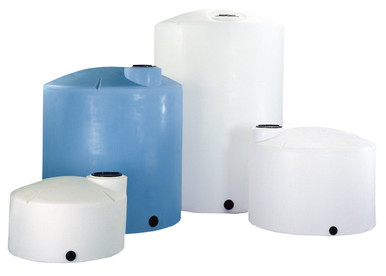
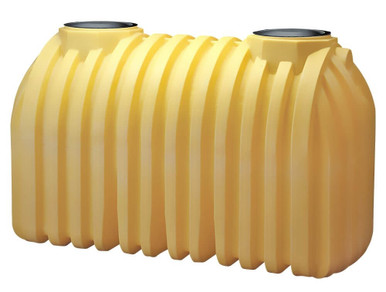
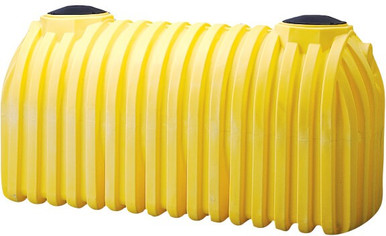
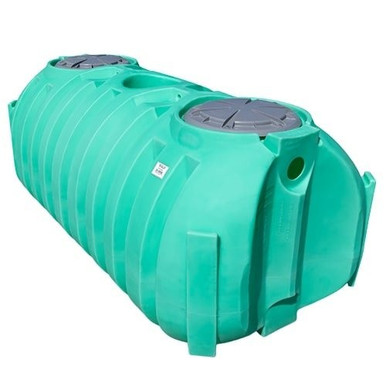
California (CPC Chapter 7 + State Water Board OWTS Policy) sizes septic tanks by bedroom count or design flow, with residential systems typically starting at 1,000 gallons. These IAPMO PS 1–listed polyethylene tanks meet that capacity standard; your county or state permitting office confirms the final size.
Shop all IAPMO PS 1–listed septic tanks →
Meeting the construction standard is not the same as a permit — your county environmental health office issues the permit and makes the final determination. Call us with your permit number and we will confirm the exact tank spec before shipment, with freight quoted to your ZIP.
Chemical Storage & Secondary Containment in California
Storing fuel, fertilizer, or process chemicals alongside your tank changes the rules. The federal Spill Prevention, Control, and Countermeasure rule (40 CFR Part 112) applies at 1,320 gallons of aggregate aboveground oil storage and requires secondary containment sized to at least 110% of your largest tank. Releases of hazardous substances above their federal reportable quantity (40 CFR 302.4) must be reported to the National Response Center at 1-800-424-8802.
California layers its own spill reportable quantities and restricted-substance rules on top of that federal floor — confirm the current thresholds with your state environmental agency before specifying a chemical tank. Just as important, the polyethylene resin must be matched to the exact chemical, concentration, and specific gravity you intend to store; a tank rated for water is not automatically rated for acid, bleach, or fertilizer.
Last reviewed: May 2026 · sourced from California administrative code
Regulations change on a rolling basis — confirm the current rule with your county or state agency before purchasing. Spot something out of date? Email us and we'll fix it.
Nearby states (Pacific) & full index: