FRP Tank Secondary Containment Repair Engineering: Vinyl-Ester Resin Selection, Glass-Mat Lamination Schedule, Surface Preparation Discipline, and the Field-Patching Procedure That Restores Service Life on Aging Fiberglass Berms and Sumps
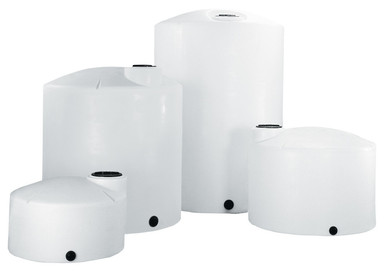
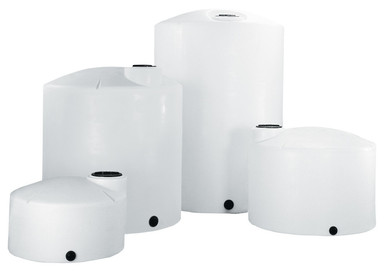
The fiberglass-reinforced plastic secondary containment installations at chemical loading pads, tank farms, and bulk storage areas typically reach 15-25 year service before showing the first signs of structural fatigue. Surface gel coat erodes, hairline cracks appear at high-stress geometric transitions, and chemical splash on the inner face accumulates a population of small chemical-attack pits. The polyethylene primary tank above the FRP berm is still in service. The chemistry inventory still requires the secondary containment volume that the FRP berm provides. The decision is whether to replace the FRP installation entirely or to repair the FRP to extend service life. Replacement is capital-intensive and disrupts operations for days to weeks; repair is performed in place during a planned outage and can extend service life another 10-15 years if engineered correctly. The repair is not optional cosmetic patching; it is structural restoration that requires the right resin, the right lamination schedule, and the right surface preparation to bond reliably with the aged FRP substrate.
This article walks the engineering of in-place FRP secondary containment repair for bulk polyethylene tank installations. The 5-brand catalog of Norwesco, Snyder, Chem-Tainer, Enduraplas, and Bushman tanks frequently sits inside FRP secondary containment from earlier construction campaigns; the FRP outlives the original primary tank but eventually requires repair before another generation of primary tanks moves in. The references are ASME RTP-1 for FRP equipment design, ASTM D5421 for laminate construction methods, the resin manufacturer technical data sheets for service-temperature and chemical-compatibility ranges, and field repair experience documented at chemical processing facilities operating with FRP secondary containment over multi-decade service.
1. The FRP Aging Failure Modes That Drive Repair Need
FRP secondary containment ages on a different schedule and with different mechanisms than the polyethylene primary tank above it. The aging concentrates in:
- Gel coat erosion. The outer gel coat on the FRP laminate is the chemical and weather barrier that protects the structural glass-resin matrix beneath. UV exposure, weather cycling, mechanical impact, and chemical splash gradually wear the gel coat thin. When the gel coat is breached, the glass-resin laminate beneath is exposed to direct chemical and weather attack. Gel coat erosion is gradual; total service life of original gel coat is typically 15-25 years.
- Hairline structural cracks at geometric transitions. The corners of an FRP berm, the radius transitions between floor and wall, the penetrations for drains and piping, and the seams between adjacent panels are stress-concentration zones. Thermal cycling and mechanical loading drive cyclic stress at these locations. Hairline cracks initiate in the gel coat and propagate into the structural laminate over years to decades.
- Chemical-attack pits in the inner face. Splash and standing exposure on the inner face during chemical containment events produces localized chemical attack. The pit surface may be barely visible from a distance but represents a depth of compromised laminate that has lost its chemical-resistance barrier. Pits that reach the structural glass cause progressive damage that accelerates without repair.
- Corner separation and joint failure. Multi-panel FRP installations join at lap joints or butt joints with secondary lamination over the seam. The seam laminate experiences different thermal expansion than the adjacent panels and develops shear stress that can separate the seam over decades. Visible separation at corners or panel joints indicates progressive failure of the seam laminate.
- Surface chalking and color fade. Cosmetic aging that does not by itself indicate structural failure but does indicate UV-driven matrix degradation in the surface zone. Chalking is a marker that gel coat replacement should be planned within the next several years.
The repair decision distinguishes between cosmetic aging (chalking, mild gel coat wear) which can wait, and structural aging (cracks reaching the glass laminate, corner separation, chemical-attack pits through the gel coat) which must be addressed before the next chemistry-containment event tests the integrity of the compromised section.
2. Vinyl-Ester Resin Selection for Field Repair
The resin choice for field repair determines the bond to the aged substrate, the chemical resistance of the repair, and the service life of the repaired section. Vinyl-ester resins are the typical choice for chemical-service FRP repair:
- Bisphenol-A epoxy vinyl-ester (Derakane 411 or equivalent). The most common chemical-service repair resin. Good chemical resistance to dilute acids, alkalis, and most organic chemistries. Cure schedule compatible with field conditions. Good bond to aged vinyl-ester or polyester laminates after appropriate surface preparation. Typical service-temperature limit 80-95 C continuous depending on formulation.
- Novolac vinyl-ester (Derakane 470 or equivalent). Higher chemical resistance for severe-service chemistries (concentrated acids, strong oxidizers, elevated temperatures). Used when the original installation specifies novolac or when the service chemistry has changed to a more aggressive composition. Higher cost; longer cure schedule; same surface preparation discipline as Bisphenol-A vinyl-ester.
- Brominated vinyl-ester (Derakane 510 or equivalent). Fire-retardant formulation for installations with fire-rating requirements (proximity to ignition sources, indoor installations subject to fire code). Used when the original installation specifies fire-retardant or when fire code requires the repair to maintain rating. Verify with local code authority that field repair maintains the original fire rating documentation.
- Polyester resins for non-chemical service. Isophthalic polyester is a lower-cost option for FRP installations not in chemical contact (structural FRP, weather-only exposure). Not appropriate for chemical-service repair; the chemical resistance is inadequate for sustained or repeated chemistry exposure.
The resin selection for any specific repair matches the original construction resin where possible and matches the service chemistry where the original is unknown or unavailable. The resin manufacturer technical data sheet documents the chemical-compatibility envelope; cross-reference the actual stored chemistry against the data sheet before proceeding. For mixed-chemistry installations or where chemistry may change, select the most chemically aggressive expected service as the design basis.
3. Surface Preparation Discipline for Reliable Bond
The surface preparation determines whether the repair bonds reliably to the aged substrate or peels off within a few thermal cycles. The discipline:
- Mechanical removal of degraded surface material. Grind the repair zone with a sander or grinder to remove the gel coat, the chalked surface zone, and any chemically attacked material. Grind exposes fresh structural glass-resin matrix; surface should be matte not glossy after grinding. Extend the grinding zone at least 6 inches beyond the visible damage on each side to provide bond area on intact substrate.
- Tapered grind for bonded patches. For thickness-restoring repairs, taper the grind from full thickness at the patch perimeter to zero thickness at the patch center, in a 12:1 to 20:1 slope ratio. The tapered transition allows the new lamination to feather smoothly into the substrate and minimizes stress concentration at the patch edge. A vertical-edge patch creates a stress riser that often initiates new cracking at the patch boundary within a few cycles.
- Solvent wipe to remove dust and contamination. After grinding, wipe the prepared surface with acetone or methyl ethyl ketone using clean rags. Allow the solvent to flash off completely (no wet appearance, no solvent odor) before proceeding. The wipe removes grinding dust, mold-release residue, and any surface oil that would prevent resin wet-out.
- No moisture during preparation or lay-up. Vinyl-ester resin cure is moisture-sensitive. Surface temperature at least 5 C above dew point during preparation through cure. If the prepared surface absorbs moisture between preparation and lay-up (rain, condensation, dew), re-grind the affected area lightly and re-wipe before resuming.
- Time between preparation and lay-up. The prepared surface oxidizes if exposed to air for extended periods. Lay-up should follow surface preparation within 8 hours; longer delays require re-wipe with solvent and may require light re-grinding to re-activate the surface. Document the preparation time in the repair work record.
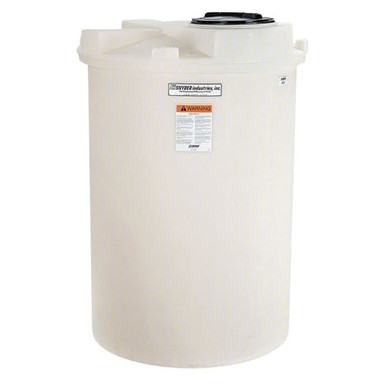
- Protect adjacent in-service installations. Cover or mask adjacent FRP, polyethylene tank surfaces, piping, and instrumentation against grinding dust and resin overspray. Protect any operating chemistry from solvent vapors during preparation. Reference N-40164 5000 gallon Norwesco vertical for the bulk primary tank that often sits inside FRP berms; this primary should be drained and isolated during berm repair.
The preparation discipline is the difference between a repair that lasts 15 years and a repair that fails within 6 months. Field experience consistently shows that 80 percent of repair failures trace back to preparation shortcuts; only 20 percent involve resin mixing errors or environmental cure problems.
4. Lamination Schedule Construction
The lamination schedule specifies the layers of glass reinforcement and resin that build up the repair to the required structural thickness. The schedule:
- Surface coat (corrosion barrier). The first layer in contact with the prepared substrate is a chemical-resistance veil (C-veil or Nexus surfacing veil) saturated with vinyl-ester resin. The veil provides the final chemistry barrier on the inner face of the repair. Thickness 0.010-0.020 inch after cure; provides chemical resistance equivalent to or better than the original gel coat.
- Inner reinforcement layer. Chopped strand mat (CSM) at 1.0-1.5 oz/sq ft saturated with vinyl-ester resin. The CSM provides isotropic reinforcement near the chemical-contact surface and creates a void-free wet-out that protects the structural glass beneath from any chemistry that penetrates the surface coat. Thickness 0.030-0.040 inch per layer after cure.
- Structural layers. Alternating CSM and woven roving (WR) at 18-24 oz/sq yd. The WR provides high-strength bidirectional reinforcement; the CSM provides interlaminar bond and isotropic strength between WR layers. The number of layers depends on the required restored thickness (typically 3-8 alternating layers for 1/4 to 1/2 inch thickness restoration).
- Outer surface layer. CSM at 0.75-1.0 oz/sq ft saturated with vinyl-ester resin and a wax-containing surface coat. The wax migrates to the outer surface during cure and excludes air from the resin surface; this allows full surface cure that resists weathering and provides a smooth final finish.
- UV protection where exposed. If the repaired surface is exposed to direct sunlight, finish with a UV-resistant gel coat or paint compatible with the cured vinyl-ester. The gel coat or paint provides UV protection that the structural laminate alone does not have.
The lamination schedule is documented in a written procedure for each repair, with material lot numbers, layer thicknesses, cure conditions, and inspection results captured in the work record. Reference ASTM D5421 and the resin manufacturer technical data sheet for specific layer-thickness and cure-time requirements.
5. Resin Mixing, Catalyst Ratio, and Cure Control
The resin chemistry is precise and unforgiving of errors. The mixing and cure control:
- Catalyst ratio for ambient cure. Vinyl-ester resin cures with methyl ethyl ketone peroxide (MEKP) catalyst at 1.0-2.0 percent by weight. Higher ratio for cooler ambient temperatures (cool-day catalyst); lower ratio for warmer temperatures (hot-day catalyst). The resin manufacturer publishes the temperature-vs-catalyst-ratio curve; reference the published data and the actual ambient temperature at lay-up.
- Promoter for ambient cure. Cobalt naphthenate or DMA promoter accelerates the cure. The promoter may be pre-blended into the resin from the manufacturer or added at lay-up. Verify whether the resin includes the promoter before adding additional promoter; double-promoter mixing produces flash cure that prevents lay-up.
- Pot life management. The catalyzed resin has a working pot life of 15-45 minutes depending on temperature and catalyst ratio. Mix only the volume that can be applied within the pot life. Document the mix time at the start of each batch; discard any resin remaining at the end of pot life rather than continuing application with partially gelled material.
- Gel time confirmation. After the pot life, the resin gels (no longer flows). After gel, the resin begins exotherm and full cure. Confirm gel time on each batch using a small sample at the lay-up location; if gel time deviates significantly from manufacturer specification, investigate the mix ratio or temperature before continuing.
- Cure temperature and time. Full cure to design properties at typical 20-25 C ambient takes 8-24 hours. Cooler temperatures extend cure time; warmer temperatures shorten cure time. The lamination should not be loaded or returned to chemical service until full cure is confirmed. Reference the resin technical data sheet for the full-cure schedule at the actual ambient temperature.
- Post-cure for severe service. For aggressive-chemistry service or elevated-temperature service, post-cure the laminate at elevated temperature (60-80 C for 4-8 hours) to drive the resin to full cure. Post-cure improves chemical resistance and service-temperature capability; ambient cure alone may leave the laminate at 70-80 percent of full properties.
The resin and cure control discipline is the chemistry of the repair. Errors here produce a repair that is mechanically weak, chemically vulnerable, or both. The repair work record documents every chemistry parameter for traceability if the repair shows degraded performance later.
6. Inspection and Quality Verification
The completed repair is verified before returning the secondary containment to service:
- Visual inspection for void-free lay-up. Look across the repaired surface for resin starvation (dry spots showing white glass), excess resin (puddling, drips), and trapped air bubbles. Voids weaken the laminate and create chemistry-trap zones; surface should be uniform glossy or matte depending on the surface coat used.
- Coin-tap inspection for delamination. Tap the repaired surface lightly with a coin or small hammer. Sound laminate produces a sharp ringing tap; delaminated zones produce a dull thud. Map any dull-thud zones for further inspection or rework.
- Hardness verification using Barcol durometer. Cured vinyl-ester laminate should reach 30-50 Barcol hardness. Lower hardness indicates incomplete cure; higher than published values may indicate mix error or post-cure beyond design temperature. Document hardness readings at multiple locations across the repair.
- Spark testing for severe service. Optional electrical-spark testing at 5-10 kV across the repaired surface detects pinholes or voids that span the laminate thickness. Used for chemical-service repairs where pinhole leakage is unacceptable. Requires specialized test equipment and trained inspector.
- Hydrostatic test where applicable. For containment installations where hydrostatic test is feasible, fill the repaired containment with water and hold for 24 hours. Inspect for any leakage at the repair area. The hydrostatic test confirms the structural integrity and the chemistry-barrier function before returning to service.
- Documentation in the asset record. Photograph the repair before, during, and after lay-up. Record material lot numbers, cure times, ambient conditions, and inspection results. Add the documentation to the asset record so future repairs or inspections have the historical context.
The verification discipline confirms that the repair meets the design intent before chemistry exposure tests it. A failed verification triggers rework in the controlled outage rather than re-discovery during a chemistry containment event.
7. When Repair Is Not the Right Answer
Repair is the right answer for localized damage on otherwise sound FRP. Repair is the wrong answer when the FRP installation has reached end of structural life across most of its surface area. Decision criteria:
- Repair appropriate. Localized damage covering less than 10 percent of total FRP surface area. Substrate beyond the damaged zones still produces sound coin-tap, intact gel coat, no widespread cracking. Original installation less than 20 years old. Operational future for the containment installation 10+ years.
- Repair plus partial replacement. Damage covering 10-30 percent of surface area or concentrated at structural transitions (corners, seams, penetrations). Repair the localized zones and plan partial panel replacement at the most-affected areas. Total cost and outage duration are intermediate between full repair and full replacement.
- Replacement appropriate. Damage covering more than 30 percent of surface area. Substrate showing widespread cracking or chemical attack across most of the inner face. Original installation more than 25 years old with no prior major repairs. Operational future requires another 15-25 years of service. Full replacement is the lower-lifecycle-cost option in this scenario despite the higher up-front capital.
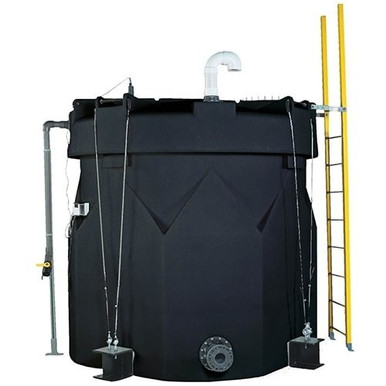
- Demolition and switch to alternate containment. If the FRP secondary is at end of life and the operational future is uncertain, consider demolition and replacement with concrete-and-coating, double-wall tank with integrated containment (reference SII-1006600N42 10,000 gallon XLPE Captor double-wall), or alternative materials per the current containment code requirements.
The repair-vs-replace decision is engineered with a lifecycle cost analysis. The repair cost is typically 20-40 percent of replacement cost and the recovered service life is 60-80 percent of original. The economic analysis favors repair for moderate damage and replacement for advanced aging.
8. Tank Selection That Reduces Future Containment Repair Burden
The primary tank selection affects the future containment repair burden. Selection criteria that reduce the secondary containment maintenance load:
- Double-wall primary tank. Integrated secondary containment in the double-wall design eliminates the separate FRP berm and the FRP repair lifecycle entirely. Reference SII-1006600N42 10,000 gallon XLPE Captor for the double-wall envelope. The polyethylene secondary is integral with the polyethylene primary, ages on the same schedule, and is replaced together at end of service.
- Smaller primary tanks for distributed inventory. Multiple smaller tanks distribute the chemistry inventory across more containment installations but reduce the volume of each individual containment requirement. Reference N-41524 2500 gallon Norwesco for the mid-volume envelope where multiple-tank distribution may be appropriate.
- Sized appropriately to chemistry consumption. Right-sized primary tanks reduce the maximum credible release volume and reduce the secondary containment volume requirement. Oversized tanks drive over-sized containment with longer panel runs, more seams, and more lifecycle repair burden.
- Compatible with secondary containment material. The polyethylene primary and the FRP secondary are chemically compatible across most service ranges, but extreme chemistries may be compatible with one and not the other. Selection coordinates both to the actual service.
List pricing on each product page. LTL freight to your ZIP via the freight estimator or by phone at 866-418-1777.
9. The FRP Repair Engineering Conclusion
FRP secondary containment repair is structural restoration, not cosmetic patching. The vinyl-ester resin chemistry, the lamination schedule, the surface preparation, and the cure control are precise and unforgiving of shortcuts. Field repair done correctly extends service life 10-15 years on a 20-year original installation; field repair done incorrectly fails within 6 months and damages the operator confidence in the repair option for future maintenance decisions.
The decision to repair rather than replace is a lifecycle-cost analysis that compares the repair capital and outage duration against the replacement capital, outage duration, and recovered service life. For localized damage on otherwise-sound FRP, repair is the lower-cost option. For advanced aging across most of the surface area, replacement is the lower-cost option. The engineering analysis is documented in the asset planning record and informs the capital budget for the secondary containment portion of the asset base.
OneSource Plastics ships polyethylene primary tanks across all 5 brands of Norwesco, Snyder, Chem-Tainer, Enduraplas, and Bushman that operate inside FRP secondary containment as well as integrated double-wall tanks that eliminate the separate FRP lifecycle. The FRP repair engineering is performed by a qualified composite-fabrication contractor or in-house composite shop with reference to ASTM D5421 and the resin manufacturer technical data sheets. List pricing on each product page; LTL freight to your ZIP via the freight estimator or by phone at 866-418-1777. For related operations engineering see secondary containment requirements and tank specification sheet reading.
Recommended Tanks for This Guide
Live pricing, updated automatically · estimate freight to your ZIP.