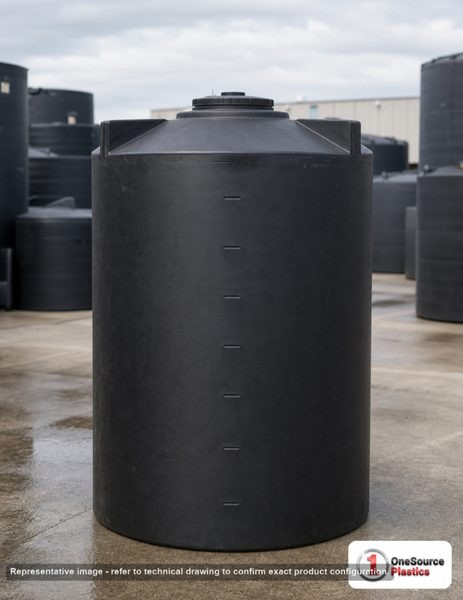
HDPE Tank Permeation Rates by Chemical Class: BTEX Aromatics, Aliphatic Hydrocarbons, Alcohols, and Polar Solvents Compared - Material Decision Framework, Headspace Concentration Math, and When Polyethylene Stops Being the Right Answer
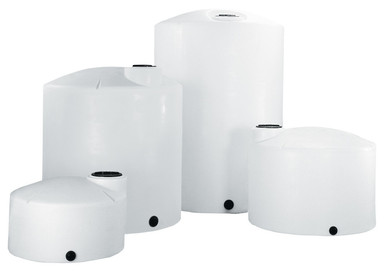
Polyethylene tanks are sold under the assumption that the wall is a solid barrier between contents and atmosphere. The assumption is wrong at the molecular level. Polyethylene is a permeable polymer, and permeation rates differ by orders of magnitude depending on the chemical class of the stored product. Water permeates HDPE at rates so low it is effectively undetectable. Aliphatic hydrocarbons - the C5-C10 fraction of gasoline, diesel, kerosene - permeate at rates that produce headspace odor in adjacent buildings within months. BTEX aromatics - benzene, toluene, ethylbenzene, xylene - permeate at rates 10-50x higher than aliphatics, generating measurable atmospheric concentrations downwind of the tank within weeks. Polar solvents - methanol, ethanol, acetone - sit somewhere in the middle. The chemistry-class permeation behavior is well-characterized in published literature, and it should drive material selection decisions early in tank specification rather than being discovered as a problem six months into service. This guide consolidates the published permeation rates by chemical class and translates them into operating implications.
Reference data sources cited: ASTM D814 standard test method for rubber property - vapor transmission of volatile liquids; ASTM E96 water vapor transmission of materials; ASTM F1249 for polymer film permeation; published research from API, Chevron, and EPA on UST tank permeation; manufacturer data from polyethylene resin producers (LyondellBasell, Dow, Chevron Phillips). Permeation rates quoted are typical industry values for HDPE at room temperature; XLPE values track approximately 30-50 percent lower because crosslinking restricts molecular motion through the polymer matrix.
1. The Permeation Mechanism in Polyethylene
Permeation through a polymer wall is a three-step process: dissolution of the chemical into the polymer at the inner wall surface, diffusion through the polymer matrix, and desorption from the outer wall surface. The overall permeation rate is governed by both solubility (how much chemical dissolves into the polymer at the inner surface) and diffusivity (how fast the dissolved chemical moves through the matrix). Both terms vary with chemistry class.
For HDPE, solubility tracks with the polarity of the chemical relative to the polymer. HDPE is non-polar (the C-C and C-H backbone has no significant dipole). Non-polar chemicals - hydrocarbons, especially aromatics - are highly soluble in HDPE because the molecular interaction is favorable. Polar chemicals - water, alcohols, acids - are poorly soluble because the polar molecule does not interact favorably with the non-polar polymer.
Diffusivity tracks with molecular size: smaller molecules diffuse faster than larger ones at the same solubility. Methanol diffuses faster than benzene because the methanol molecule is smaller, even though benzene has higher solubility in HDPE. The combined effect of solubility times diffusivity produces the overall permeation rate, and the ranking is empirical.
The published permeation rates that follow are expressed in grams per square meter per day (g/m^2/day) at room temperature for a 1/4-inch HDPE wall. These are useful baselines but real tank-wall permeation must be adjusted for actual wall thickness (permeation is inversely proportional to thickness), service temperature (permeation roughly doubles per 20 F increase), and product concentration (permeation is proportional to concentration for ideal solutions).
2. Aromatic Hydrocarbons (BTEX): The Worst Case
Benzene, toluene, ethylbenzene, and the three xylene isomers (BTEX) are the dominant permeation concern for petroleum tanks. Published permeation rates through HDPE at room temperature, 1/4-inch wall:
- Benzene: 80-150 g/m^2/day
- Toluene: 60-110 g/m^2/day
- Ethylbenzene: 40-80 g/m^2/day
- Xylene (mixed isomers): 35-70 g/m^2/day
For a 1,500-gallon vertical HDPE tank with approximately 12 square meters of wetted wall area holding gasoline (which is approximately 1-3 percent BTEX by weight), the annualized BTEX loss through the wall is on the order of 0.5-2 kilograms. That mass enters the surrounding atmosphere or the soil. For a tank in an enclosed structure, the BTEX accumulates to detectable concentrations over weeks. For a tank in open air, the BTEX is dispersed but still measurable downwind.
The regulatory implication: HDPE tanks are not appropriate for primary storage of BTEX or BTEX-containing products in jurisdictions with strict VOC emission regulations or in proximity to occupied buildings. The petroleum industry uses double-wall steel UST or fiberglass-reinforced polyester (FRP) for gasoline storage precisely because HDPE permeation is unacceptable for this service. Above-ground HDPE is occasionally used for diesel (lower BTEX content) or for kerosene (very low aromatic content), but not for gasoline, jet fuel, or any product with significant BTEX fraction.
The fluorinated-HDPE (F-HDPE) treatment that some petroleum AST manufacturers offer reduces BTEX permeation by approximately 90-99 percent through a surface fluorination process that creates a polar barrier layer at the inner wall. F-HDPE is the technical solution when polyethylene tankage is required for petroleum service; it is a specialty product with added cost.
3. Aliphatic Hydrocarbons: The Middle Ground
Aliphatic hydrocarbons - straight-chain and branched alkanes - are the bulk of diesel, kerosene, jet fuel, and the higher fractions of gasoline. Published permeation rates through HDPE:
- n-Heptane (C7): 15-30 g/m^2/day
- n-Octane (C8): 8-18 g/m^2/day
- n-Decane (C10): 3-8 g/m^2/day
- n-Hexadecane (C16): under 1 g/m^2/day
The trend is clear: permeation rate decreases with increasing molecular weight. Diesel (C10-C20 typical) has roughly 5-10x lower permeation than gasoline (C5-C12 with 1-3 percent BTEX). HDPE is generally acceptable for diesel storage in above-ground service for non-regulated applications and where the tank is sited away from occupied buildings. The same tank for jet fuel or aviation gasoline (high BTEX) is not acceptable.
For diesel service in HDPE, the practical management approach is: site the tank in open air with adequate ventilation, monitor for hydrocarbon odor at the property line annually, and accept that the slow loss of light aliphatics over time (called "weathering" of the diesel) is a real cost in addition to the obvious leak risk. Closed indoor diesel storage in HDPE is not recommended for the same VOC accumulation reasons that govern BTEX service.
4. Alcohols: Lower Permeation Than Hydrocarbons
Methanol, ethanol, isopropanol, and the higher alcohols permeate HDPE at lower rates than hydrocarbons:
- Methanol: 5-15 g/m^2/day
- Ethanol: 3-10 g/m^2/day
- Isopropanol: 2-7 g/m^2/day
- n-Butanol: 1-4 g/m^2/day
Alcohols are polar and have low solubility in non-polar HDPE. The diffusivity of methanol through HDPE is high (small molecule), but the low solubility limits the overall permeation rate to manageable levels. HDPE is generally acceptable for alcohol storage in above-ground service, including for high-purity ethanol (E95 fuel grade), denatured alcohol, and isopropanol cleaning solvents.
The exception is when alcohols are blended with hydrocarbons. E10 gasoline (10 percent ethanol, 90 percent gasoline including BTEX) permeates HDPE at the BTEX rates because the BTEX fraction dominates. E85 (85 percent ethanol, 15 percent gasoline) is intermediate. Pure ethanol is fine in HDPE; ethanol-gasoline blends are not.
5. Polar Solvents: Variable Permeation
Acetone, methyl ethyl ketone (MEK), ethyl acetate, and other polar solvents show intermediate permeation rates with significant variation by specific chemistry:
- Acetone: 20-40 g/m^2/day
- MEK: 15-30 g/m^2/day
- Ethyl acetate: 25-50 g/m^2/day
- Tetrahydrofuran (THF): 100-200 g/m^2/day - exceptionally high
The variability is because polar solvents have moderate solubility in HDPE coupled with relatively high diffusivity. THF is an outlier because its molecular geometry allows efficient packing into the HDPE matrix; THF storage in HDPE is not recommended for this reason and the petroleum industry uses stainless or specialty fluoropolymer for THF service.
For acetone, MEK, and ethyl acetate, HDPE is acceptable for above-ground storage with adequate ventilation. Closed indoor storage produces detectable atmospheric concentrations within months. Specify polypropylene or HDPE with fluorinated surface treatment for these solvents in enclosed storage applications.
6. Aqueous Chemicals: Effectively Zero Permeation
Water and aqueous solutions permeate HDPE at rates so low they are effectively undetectable:
- Pure water: 0.01-0.05 g/m^2/day
- Sodium hydroxide solution (50 percent): under 0.01 g/m^2/day
- Sulfuric acid (98 percent): under 0.05 g/m^2/day
- Sodium hypochlorite (12.5 percent): 0.1-0.5 g/m^2/day - higher because of dissolved chlorine
Water-based chemistry is the right service for HDPE tanks. The wall is effectively impermeable, and the design lifetime is governed by other failure modes (UV exposure, mechanical fatigue, chemical attack on the polymer rather than permeation). The five-brand catalog of polyethylene tanks is dominated by SKUs designed for water and aqueous chemical service, and the design assumptions are appropriate for those services.
The exception within aqueous chemistry is sodium hypochlorite, where dissolved chlorine has measurable but still acceptable permeation. Hypochlorite tanks should be specified as XLPE rather than HDPE for chemical resistance reasons (HDPE oxidizes faster than XLPE in concentrated hypochlorite), and the slight permeation contributes to the overall chlorine loss rate that drives the 30-day inventory turnover recommendation for hypochlorite tanks.
7. Headspace Concentration Math: When Permeation Becomes a Code Issue
The headspace concentration of a permeating chemical inside the tank reaches equilibrium when the rate of permeation through the wall equals the rate of vapor loss through the atmospheric vent. For an open-vented HDPE tank with effective vent area, the headspace concentration is approximately equal to the saturated vapor concentration of the stored liquid - permeation is irrelevant for headspace concentration in the open-vent case.
The case where permeation matters is the surrounding-atmosphere concentration. For a tank in an enclosed building, the permeation flux is the source term for a building-air-quality calculation. Take a 5,000-gallon HDPE diesel tank with 30 square meters of wetted wall in a 30,000 cubic foot warehouse with one air change per hour. Diesel permeation rate approximately 5 g/m^2/day for the aliphatic fraction equals 150 g/day total flux. Distributed into 30,000 cubic feet at one air change per hour gives an equilibrium concentration of approximately 0.2 mg/m^3, which is well below OSHA's diesel exhaust permissible exposure limit but above some state-level VOC reporting thresholds.
For BTEX in the same scenario, the math is different. A 5,000-gallon gasoline tank with 1.5 percent benzene content has a benzene permeation flux of approximately 30 g/day, equilibrium concentration in the building of 0.04 mg/m^3, which exceeds OSHA's benzene PEL of 1 ppm (about 3.2 mg/m^3 averaged) - actually below PEL but the action level under 29 CFR 1910.1028 is 0.5 ppm (1.6 mg/m^3) and indoor accumulation can produce measurable benzene concentrations near workers. This is the engineering reason HDPE is not used for indoor gasoline storage.
The decision framework: any tank in an enclosed space requires permeation-class evaluation. Aqueous service: HDPE is fine. Aliphatic hydrocarbon service: HDPE acceptable with ventilation analysis. Aromatic-containing or BTEX service: HDPE not acceptable; specify fluorinated HDPE, FRP, or steel.
8. Material Alternatives When HDPE Permeation Is Unacceptable
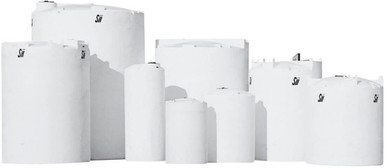
- Crosslinked polyethylene (XLPE): 30-50 percent lower permeation than HDPE for most chemistries. Standard for chemical-service tanks like Snyder Captor double-wall. Reference: SII-5490000N42 1,550 gallon.
- Fluorinated HDPE (F-HDPE): 90-99 percent lower BTEX permeation than untreated HDPE. Available as factory option from some petroleum AST manufacturers. Standard for above-ground petroleum storage in environmentally regulated applications.
- Polypropylene (PP): different permeation profile than HDPE; better for some polar solvents, worse for some hydrocarbons. PP body bulkheads are common but full PP tanks are rare in the AST market.
- Polyvinylidene fluoride (PVDF, Kynar): exceptional barrier properties for aggressive chemistry. Cost is 10-20x HDPE. Used for highly corrosive or pure chemistry tanks where contamination tolerance is zero.
- Fiberglass-reinforced polyester (FRP): standard alternative to HDPE for petroleum service. Permeation through FRP for BTEX is approximately 10-20 percent of HDPE rates. Higher capital cost; longer service life.
- Stainless steel 316L: zero permeation, infinite barrier. Standard for high-purity service and for chemistries where polymer permeation is unacceptable. Highest capital cost in the comparison.
The five-brand polyethylene catalog covers HDPE and XLPE; petroleum-service AST in F-HDPE or FRP, and stainless service tanks, are quoted from extended supplier networks but are outside the catalog 5-brand scope.
9. Practical Decision Tree for Tank Material Selection
- Identify the dominant chemistry class of the stored product.
- If aqueous (water-based, including dilute acids and bases): HDPE is appropriate. Consider XLPE for hypochlorite or other oxidizing aqueous chemistry.
- If alcohol or polar solvent (excluding THF): HDPE generally appropriate. Verify ventilation if storage is enclosed.
- If aliphatic hydrocarbon (diesel, kerosene, mineral oil): HDPE acceptable for above-ground open-air service. For enclosed storage, run the permeation calculation; if VOC concentration exceeds 50 percent of PEL, specify F-HDPE or alternative.
- If aromatic-containing (gasoline, jet fuel, aromatic solvent blend, benzene, toluene): HDPE not acceptable. Specify F-HDPE, FRP, or steel.
- If THF, methylene chloride, or other high-permeation polar solvent: HDPE not acceptable. Specify stainless or PVDF.
- If high-purity service (deionized water, electronic-grade chemistry): HDPE generally acceptable but verify product compatibility against the specific chemistry; PVDF for ultra-high purity.
- If service is mixed or unknown: default to most demanding case in the chemistry mix.
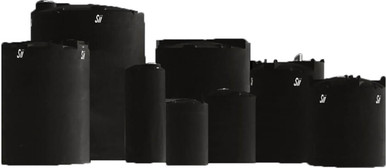
The five-brand polyethylene catalog: Norwesco N-40146 1,500 gallon in HDPE for water and dilute chemical service; Snyder SII-5990102N42 1,000 gallon Captor double-wall XLPE for chemical service; Enduraplas EP-THV02500FG 2,500 gallon for general industrial service. Each SKU has its own resin specification - HDPE, XLPE, or specialty crosslinked formulations - that affects the permeation profile. Confirm resin specification against the chemistry of intended service before placing the order.
OneSource Plastics quotes complete material-decision packages including chemistry compatibility verification, permeation calculation for enclosed-space siting, and fluorinated-HDPE upgrade for petroleum applications. List pricing on a 1,500-gallon HDPE Norwesco starts at $1,895, with XLPE Captor double-wall and F-HDPE options quoted at premium. LTL freight to your ZIP is quoted via the freight estimator or by phone at 866-418-1777.
For complementary reading on related material-selection topics, see our methane offgassing in digestate tanks guide for the digester-specific permeation discussion, and our 2026 OEM-spec decision framework for the broader chemistry-class material decision tree.
Recommended Tanks for This Guide
Live pricing, updated automatically · estimate freight to your ZIP.