Tank Breather Desiccant Cartridges for Polyethylene Storage Tanks: Humidity Ingress Prevention Engineering for Moisture-Sensitive Chemistries, Cartridge Sizing by Tank Volume and Breathing Rate, and Field Replacement Schedules That Match Climate
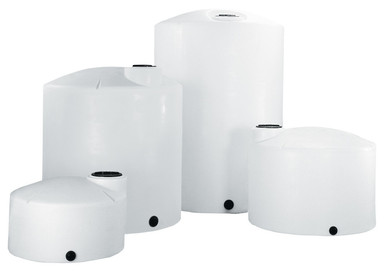
Most polyethylene storage tanks vent to atmosphere. As liquid is drawn out of the tank, air is drawn in through the vent to replace the displaced volume; as liquid is added, air is pushed out the vent. This routine breathing cycle is unavoidable on any non-pressurized tank, and it is the largest single source of contamination ingress for moisture-sensitive chemistries. Outside air carries water vapor, dust, hydrocarbon emissions, and biological matter; every breath the tank takes draws some of this contamination into the headspace where it interacts with the stored chemistry.
For chemistries that are stable in air, this is a non-issue. For chemistries that hydrolyze, oxidize, or react with atmospheric water — DEF (urea solutions), brake fluid, hygroscopic acids and bases, certain pesticides and biocides, lubricants, and many process chemicals — atmospheric breathing is the contamination pathway that progressively degrades the inventory. The engineering remedy is a desiccant breather cartridge installed in the tank vent line, which absorbs humidity from incoming air before it reaches the tank headspace.
This article walks the engineering. References cited: ISO 16890 (air filter classification), ASHRAE 52.2, the Donaldson, Des-Case, Schroeder, and Hy-Pro technical bulletins on breather sizing for industrial tanks, the API DEF handling guidelines, and the manufacturer venting guidance from Norwesco, Snyder, Chem-Tainer, Enduraplas, and Bushman. The objective is the field-grade desiccant breather that protects moisture-sensitive inventory through realistic operational service.
1. The Tank Breathing Phenomenon — Why Air Comes In and How Much
A tank breathes whenever its internal headspace volume changes. Three drivers create breathing cycles:
- Pump-out / draw-down. Liquid leaves the tank; air enters to replace it. The breathing volume equals the volume of liquid removed.
- Pump-in / fill. Liquid enters; air leaves. Breathing volume equals fill volume. (For desiccant breather purposes, outflow is irrelevant — the cartridge protects against ingress, not egress.)
- Thermal cycling. The tank headspace gas heats and cools daily. Heated air expands and exits the vent; cooled air contracts and ambient air enters. The breathing volume from thermal cycling depends on the headspace volume, the temperature swing, and the gas-law expansion.
The thermal-breathing component is often underestimated. A 5,000-gallon tank that is half-full has roughly 333 cubic feet of headspace. A 30 F daily temperature swing causes a 6 percent volumetric expansion (using PV/T = constant for ideal gas). That is 20 cubic feet of air exchanged daily — every day, for the life of the tank, regardless of whether any operational fill or drawdown occurred. Over a year, the cumulative thermal breathing alone is 7,300 cubic feet of incoming air. The operational breathing on top of this depends on tank turnover.
For a typical tank that turns over its full volume 4-6 times per year, operational breathing adds another 3,000-4,000 cubic feet of incoming air. Total annual ingress is therefore around 10,000-12,000 cubic feet, which carries a meaningful payload of water vapor, dust, and other airborne contamination.
2. Water-Vapor Mass That Enters Through the Vent
The water-vapor content of air depends on temperature and relative humidity. Saturated air at 75 F holds roughly 17 grams of water per cubic meter (approximately 0.48 grams per cubic foot). At 50 percent RH, the same air holds 8.5 grams per cubic meter. Higher temperatures hold dramatically more water — saturated 95 F air holds 38 grams per cubic meter, more than double the 75 F value.
For our 5,000-gallon tank example with 10,000 cubic feet of annual incoming air at average 65 F and 60 percent RH, the water-vapor mass entering the tank annually is roughly:
- Saturated 65 F air holds approximately 14 grams per cubic meter (0.4 grams per cubic foot).
- At 60 percent RH, that is 0.24 grams of water per cubic foot of incoming air.
- 10,000 cubic feet times 0.24 grams equals 2,400 grams of water per year.
- That is 2.4 kilograms (5.3 pounds) or roughly 0.6 gallons of water per year.
For a chemistry like DEF (32.5 percent urea in deionized water), the inbound water dilutes the inventory and shifts it out of the tight 31.8-33.2 percent specification. For a hygroscopic chemistry like sulfuric acid or sodium hydroxide concentrate, the inbound water reduces concentration. For lubricants, water contamination accelerates oxidation and additive depletion. The water mass is small in absolute terms but materially significant for moisture-sensitive applications.
3. Desiccant Cartridge Operating Principle
A desiccant breather cartridge installed in the tank vent line performs three functions:
- Particulate filtration. Incoming air passes through a particulate filter element (typically 1-3 micron rating) that removes dust, debris, and biological matter. Outgoing air also passes through the filter, which prevents the desiccant from migrating outward.
- Desiccation. Incoming air passes through a bed of desiccant material — typically silica gel or molecular sieve — that absorbs water vapor down to a low-residual-humidity outlet. The dehumidified air then enters the tank headspace.
- Color-change indication. The desiccant typically incorporates a color-change indicator (silica gel with cobalt-free indicator turns from blue to pink, or from orange to green, or similar) that gives a visual end-of-life signal. The cartridge is replaced when the indicator change reaches a defined threshold.
The cartridge is plumbed into the tank vent line, with a check valve on the tank side to prevent reverse flow during outbound breathing. (Some designs have integrated check valves; others use external check valves.) The breather sits between the tank vent and atmosphere; air flows through it in both directions, but the desiccant only matters during ingress.
The desiccant has finite capacity. Silica gel absorbs roughly 30-40 percent of its dry weight in water at saturation; molecular sieve absorbs 20-25 percent. For a 1-pound desiccant cartridge with silica gel, capacity is roughly 0.3-0.4 pounds (135-180 grams) of water before saturation. Once saturated, the desiccant can no longer absorb more water; incoming humid air passes through and reaches the tank headspace.
4. Cartridge Sizing — Capacity Versus Annual Water Load
The cartridge sizing calculation matches desiccant capacity to expected annual water load with margin for replacement-cadence convenience. Common cartridge sizes and their nominal water-absorption capacities:
- Compact cartridge, 6-inch tall, ~0.5 lb desiccant: approximately 75-90 grams water capacity. Fits small tanks (under 500 gallons) with low operational turnover.
- Medium cartridge, 9-inch tall, ~1.5 lb desiccant: approximately 200-250 grams water capacity. Standard for tanks 500-3,000 gallons.
- Large cartridge, 12-15-inch tall, ~3-4 lb desiccant: 450-600 grams water capacity. For tanks 3,000-10,000 gallons or for high-turnover applications.
- Extra-large industrial cartridge, 18-24-inch, ~6-10 lb desiccant: 900-1,500 grams water capacity. For large bulk tanks above 10,000 gallons.
Returning to the 5,000-gallon tank example with 2,400 grams annual water load, the medium 1.5-pound cartridge would saturate in approximately 250/2,400 = roughly 1 month of service. The large 4-pound cartridge would last approximately 3 months. Annual replacement requires the extra-large 8-pound cartridge or quarterly replacement of the large size.
In practice, cartridge selection is driven by replacement-cadence preference more than by absolute capacity. Most tank operators prefer 3-month or 6-month replacement intervals. Sizing for these intervals at the calculated water load gives the cartridge specification.
5. Climate-Driven Replacement Cadence
The replacement interval depends heavily on climate. The same cartridge installed in different climates lasts dramatically different times:
- Arid climate (Phoenix, Las Vegas, El Paso): average humidity 30-40 percent. Cartridge life is 1.5-2x the calculated baseline. A cartridge sized for 6-month replacement actually lasts 9-12 months.
- Temperate climate (Denver, Seattle, Boston): average humidity 50-60 percent. Cartridge life matches the calculated baseline.
- Humid subtropical (Houston, Miami, Atlanta, New Orleans): average humidity 70-85 percent. Cartridge life is 0.5-0.7x the baseline. A cartridge sized for 6-month replacement actually lasts 3-4 months.
- Coastal humid (Hawaii, Florida Keys, Pacific Northwest coast): average humidity 80-95 percent. Cartridge life is 0.4-0.5x baseline. Replacement may be required as often as monthly.
The visual color-change indicator is the operational guide. Replacement occurs when the indicator reaches the manufacturer-defined trigger color, regardless of calendar interval. In practice, the indicator-driven replacement cycles match the climate-derived calculation reasonably well.
An additional climate factor: rapid weather transitions accelerate desiccant consumption. A cold front passing through a humid region produces a temperature drop and pressure rise that drives a high-volume air ingress event. The cartridge that was 60 percent saturated yesterday may be 90 percent saturated after the weather event. Tanks in transitional climate zones (Tornado Alley, Northeast coastal) often see faster cartridge consumption than the average humidity would suggest.
6. Cartridge Sizing for Flow Rate, Not Just Capacity
A cartridge has both a static capacity (water it can absorb over its life) and a dynamic flow-rate limit (volumetric flow it can pass without excessive pressure drop). The flow-rate limit is the constraint during high-rate fill or drawdown operations.
A typical compact cartridge passes 1-3 cfm at low pressure drop; a medium cartridge handles 5-10 cfm; a large cartridge handles 15-30 cfm. The peak air flow during a tank fill operation depends on the fill rate. A 100 gpm pump filling a tank requires 100 gpm * (1 cubic foot / 7.48 gallons) = 13.4 cfm of vent flow. A medium cartridge handles this; a compact cartridge will choke and may pressurize the tank above its rated headspace pressure.
For tanks with rapid fill or drawdown operations, the cartridge must be sized for the peak flow rate, not just the average. The vent-system pressure-drop calculation:
- Peak fill or drawdown rate determines air flow requirement.
- Cartridge pressure drop at that flow rate (from manufacturer curve) gives the static pressure rise inside the tank.
- The static pressure must remain below the tank's pressure rating (typically 0.5-1 inch water column for atmospheric tanks; pressurized tanks have higher limits).
- If the calculated pressure exceeds the limit, either size up the cartridge, reduce the fill rate, or install parallel cartridges.
An undersized vent on a fast-fill tank can cause real damage — the polyethylene tank can deform under positive pressure, and bulkhead fittings can be unseated. The vent and breather sizing is therefore a safety concern, not just an operational convenience.
7. Common Moisture-Sensitive Chemistries and Their Breather Specifications
The following chemistries typically warrant desiccant-breather protection:
- DEF (diesel exhaust fluid, 32.5 percent urea). Concentration drift outside 31.8-33.2 percent fails specification. Typical specification is medium cartridge with quarterly replacement in temperate climates.
- Glycols and antifreeze concentrates. Inhibitor depletion accelerated by water-driven oxidation. Cartridge required for long-term storage above 90 days.
- Lubricating oil bulk tanks. Water contamination accelerates oxidation, varnish formation, and additive depletion. ISO 16/14/11 cleanliness requires breather plus particulate filter.
- Brake fluid (DOT 3, DOT 4). Hygroscopic; absorbs water from atmosphere even through plastic containers. Breather required for any storage above small operating volume.
- Concentrated sulfuric, hydrochloric, and nitric acids. Hygroscopic; concentration drift compromises process specification. Breather required.
- Sodium hydroxide and potassium hydroxide concentrates (50 percent NaOH). Hygroscopic; carbonates form from atmospheric CO2 and water in combination. Breather plus CO2 scrubber for high-purity service.
- Pesticide and biocide formulations. Many active ingredients hydrolyze in water; concentration drift compromises efficacy. Breather required for season-spanning storage.
- Diethylene and triethylene glycol (gas-dehydration service). Water content in glycol is the variable being controlled; ambient water ingress defeats the dehydration cycle.
Chemistries that do NOT typically require desiccant breathers: ambient water (the water content is unchanged by atmospheric exchange), dilute aqueous solutions where small water variations are immaterial, hydrocarbons that do not hydrolyze (gasoline, kerosene, most fuel oils), and chemistries with high-margin specification windows.
8. Multi-Stage Breather Configurations for High-Value Inventory
For especially valuable or specification-sensitive chemistry, a multi-stage breather configuration provides additional protection:
- Stage 1: Coalescing pre-filter. Removes liquid water aerosols and oil droplets that would saturate the desiccant prematurely.
- Stage 2: Particulate filter. Removes dust and fines.
- Stage 3: Desiccant cartridge. Removes water vapor.
- Stage 4 (optional): Activated carbon cartridge. Removes hydrocarbon vapor and odors. Common on food-grade tank installations.
- Stage 5 (optional): Hydrophobic membrane filter. Final-stage backup against any contaminant breakthrough from upstream stages.
A multi-stage breather can extend cartridge life by 2-3x by removing the precipitating contaminants that would otherwise clog or saturate the desiccant. The capital cost is 3-5x a single-stage cartridge but the annualized operating cost is often lower because of the extended replacement interval.
Multi-stage configurations are common on large bulk DEF tanks, on lubricant storage at oil-and-gas production facilities, and on food-grade and pharmaceutical-precursor tanks. For typical industrial chemistry, the single-stage desiccant cartridge is adequate.
9. Tank Selection and Vent Configuration
The tank's vent specification determines what breather can be installed. The relevant features:
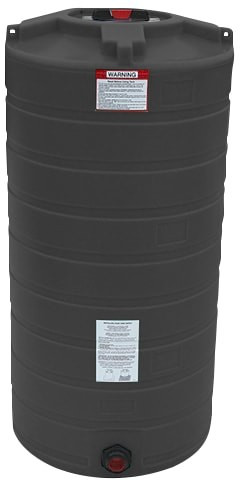
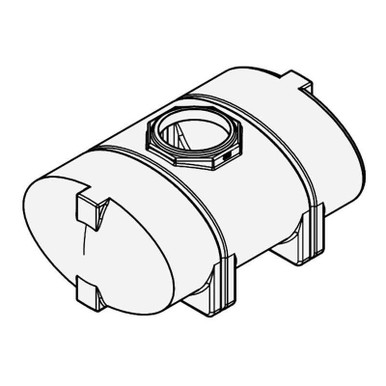
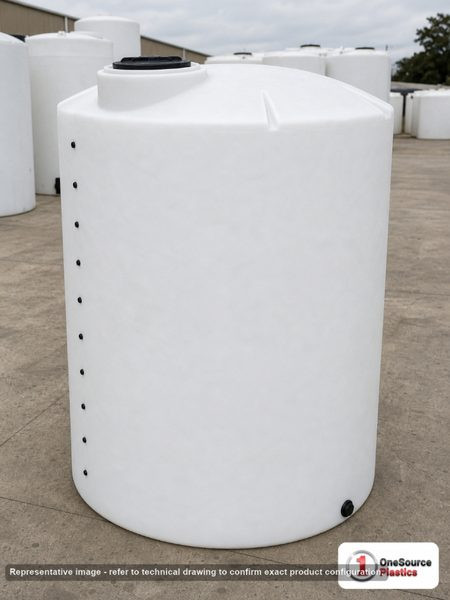
- Vent location and size. Most polyethylene tanks have a top-mounted vent; the diameter determines the maximum cartridge that fits without an adapter. Reference N-40164 5,000 gallon Norwesco vertical with a standard 8-inch top manway and integrated vent that accommodates large industrial breather assemblies.
- Vent flow capacity. The vent itself must pass the required peak flow without pressure drop. Most polyethylene-tank vents are conservatively sized for fill operations within the manufacturer's recommended fill-rate range.
- Sealed-vent option. Some applications require a fully sealed vent path through the breather. Reference SII-5590000N52 3,000 gallon Snyder Captor double-wall, which has factory vent options for industrial chemical service including breather-cartridge mounting interfaces.
- Cone-bottom tank vent. Reference N-43852 1,000 gallon 45-degree cone bottom; the top-mounted vent on a cone-bottom tank typically accepts breather-cartridge accessories with standard threaded connections.
Retrofit installation of a desiccant breather on an existing tank is straightforward — remove the existing vent cap, install a vent-to-breather adapter, mount the breather. The retrofit cost is typically $200-800 depending on cartridge size. Installation time is under an hour.
10. Maintenance Procedure and Replacement Lifecycle
The breather-cartridge maintenance procedure:
- Visual color-change inspection at each operator round (daily or weekly). Document the percentage of color-change progress; record in the maintenance log.
- Replacement at the manufacturer-defined trigger color. Standard practice is replacement at 75-80 percent saturation indicator; some operators replace at 50-60 percent for valuable inventory protection.
- Spare cartridges in stock. Maintain at least one spare per tank for unplanned replacement.
- Replacement procedure: depressurize the vent line, unthread the cartridge, install new cartridge, verify check valve and seal integrity. Estimated 5-15 minutes per tank for cartridge replacement.
- Spent-cartridge disposal. The saturated desiccant is non-hazardous in most cases (silica gel and molecular sieve are mineral materials). Disposal as solid waste is typical; check local regulations for any restrictions.
The annual cost of breather-cartridge service for a typical industrial tank is $300-1,500 depending on cartridge size and replacement frequency. For moisture-sensitive chemistries valued at thousands of dollars per tank-fill, the breather payback is measured in days.
OneSource Plastics ships polyethylene storage tanks across all 5 brands — Norwesco, Snyder, Chem-Tainer, Enduraplas, Bushman — with vent specifications, manway dimensions, and accessory information that supports breather-cartridge installation. List pricing is on the product page; LTL freight to your ZIP is quoted separately via the freight estimator or by phone at 866-418-1777. For related content see DEF cold-weather handling and tank plumbing system walkthrough.
Recommended Tanks for This Guide
Live pricing, updated automatically · estimate freight to your ZIP.