Tank Chemical Compatibility Quick-Look Reference: HDPE Service-Life Expectations by Chemistry Class, Concentration Bracket, and Operating Temperature With Decision-Tree Logic for Borderline Conditions and OEM Catalog Cross-Verification
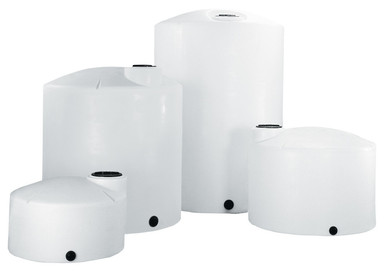
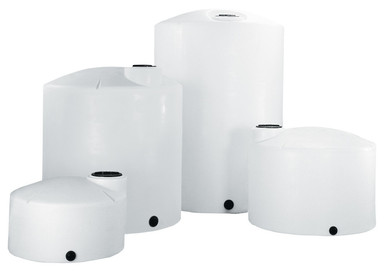
The polyethylene tank chemical compatibility question is asked thousands of times across the industrial procurement landscape: will this chemistry, at this concentration, at this temperature, give acceptable service life in a high-density polyethylene tank? The answer is structured: the chemistry class governs the broad compatibility outlook; the concentration bracket adjusts within the class; the operating temperature shifts the boundary in either direction. A quick-look reference organized by these three variables enables rapid procurement decisions while preserving the discipline of OEM catalog verification for borderline cases. This article presents the framework, walks the major chemistry classes against typical concentrations and temperatures, and provides the decision-tree logic for the borderline conditions where the quick-look gives an ambiguous answer.
The framework is grounded in the published compatibility tables from polyethylene tank OEM manufacturers and the engineering data on polyethylene structural behavior. The treatment is for general engineering reference; specific procurement decisions should always be confirmed against the OEM compatibility catalog for the chosen tank brand. List pricing on each tank product page; LTL freight quoted to your ZIP via the freight estimator or by phone at 866-418-1777.
1. The Chemistry Class Framework for Quick-Look Compatibility
The thousands of industrial chemicals organize into a manageable number of chemistry classes that exhibit common compatibility behavior with polyethylene. The class assignment is the first cut in the quick-look:
- The mineral acid class. Hydrochloric, sulfuric, nitric, phosphoric, and other inorganic acids. Compatibility depends strongly on concentration; dilute mineral acids are generally compatible while concentrated acids are restricted or incompatible.
- The organic acid class. Acetic, formic, citric, lactic, and other organic acids. Generally good compatibility across the typical industrial concentration range; hot concentrated organic acids can be more aggressive.
- The strong base class. Sodium hydroxide, potassium hydroxide, ammonium hydroxide, and other alkalis. Generally good compatibility; concentrated hot caustics may stress-crack polyethylene over extended exposure at high temperature.
- The oxidizer class. Sodium hypochlorite, hydrogen peroxide, chlorine dioxide, ozone solutions, peracids. Compatibility depends strongly on concentration and temperature; oxidizers progressively attack the polyethylene wall through chain scission.
- The hydrocarbon and solvent class. Aliphatic hydrocarbons, aromatic hydrocarbons, chlorinated solvents, ketones, alcohols, ethers. Some are highly compatible (alcohols); some are aggressively absorbed (aromatic hydrocarbons, chlorinated solvents).
- The salt and brine class. Sodium chloride, calcium chloride, magnesium chloride, potassium-based salts, and other inorganic salt solutions. Generally excellent compatibility with polyethylene across the full concentration range.
- The fertilizer class. Urea, ammonium nitrate, ammonium sulfate, monoammonium phosphate, diammonium phosphate, urea-ammonium-nitrate solutions, micronutrient blends. Generally good compatibility; some specific blends may have additive components that warrant individual review.
- The food and beverage class. Sugars, juices, syrups, milk, brewing wort, beverage formulations, edible oils. Generally excellent compatibility for the food-grade polyethylene formulations; organoleptic considerations (taste, odor) may apply.
- The agricultural-chemical class. Pesticides, herbicides, fungicides, plant growth regulators, adjuvants. Compatibility depends on the specific active and the carrier solvent; product label and manufacturer guidance govern.
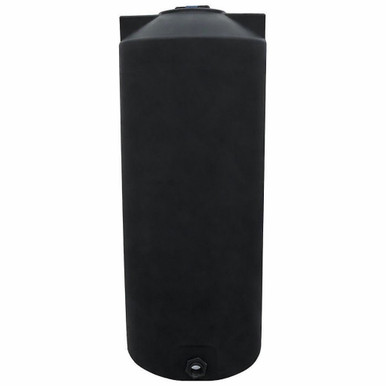
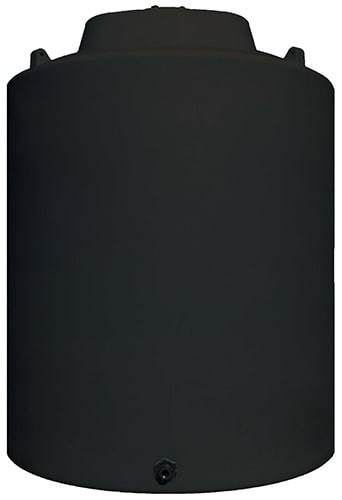
- Reference 5000 gallon tank for class-spanning bulk storage. Reference N-40164 5000 gallon Norwesco vertical as a typical bulk storage tank where the compatibility framework applies. The same tank model serves multiple chemistry classes when the compatibility check passes for the specific service.
The class framework is the macro lens. The within-class adjustments by concentration and temperature provide the resolution.
2. Concentration Bracket Adjustments Within Classes
Within a chemistry class, the concentration bracket shifts the compatibility outlook. The brackets and the typical adjustments:
- The dilute bracket (less than 10 percent). Most dilute solutions of all classes are compatible with polyethylene. The exceptions are dilute strong oxidizers (even 5 percent sodium hypochlorite has finite-life impact at warm temperatures) and dilute aromatic hydrocarbons (which absorb into the polyethylene wall regardless of dilution).
- The moderate bracket (10 to 50 percent). Many mineral acids and bases at moderate concentration are compatible at ambient temperature with finite restrictions at elevated temperature. The 50 percent caustic example is well-known: compatible with polyethylene at ambient but the 50 percent solution crystallizes below 50 degrees Fahrenheit and the warm-storage requirement adds operational complexity.
- The high bracket (50 to 90 percent). High-concentration mineral acids approach the boundary of polyethylene compatibility. 93 percent sulfuric acid is widely stored in polyethylene at ambient temperature; 98 percent sulfuric acid is borderline and warrants OEM-specific verification.
- The concentrated bracket (greater than 90 percent). Concentrated acids like 70 percent nitric, 98 percent sulfuric, and 85 percent phosphoric are at or beyond the polyethylene boundary. OEM-specific verification is essential; some brands rate specific tank constructions for these services and others do not.
- The fuming and anhydrous chemistries. Fuming sulfuric (oleum), fuming nitric, anhydrous hydrogen fluoride, anhydrous ammonia. These are not stored in polyethylene; alternative tank materials (steel, alloy, fluoropolymer-lined) are required. The quick-look reference flags these as out-of-scope.
- The variable-composition mixtures. Some industrial chemistries are mixtures whose composition varies (for example, spent process solutions, regeneration waste, blended fertilizers). Compatibility for variable-composition chemistries is set against the worst-case composition expected during the tank service.
The concentration bracket applies a multiplier to the class-level outlook. A 5 percent acid that is fully compatible at the class level may be derated only slightly at the moderate bracket; a 95 percent acid may shift from compatible to borderline.
3. Operating Temperature Effects on Compatibility
Temperature is the third axis. The temperature effects:
- The Arrhenius rate-doubling rule. Chemical attack rates approximately double for each 10-degree-Celsius increase in temperature. A chemistry compatible for 20-year service at 20 degrees Celsius may have only 10-year service at 30 degrees Celsius and 5-year service at 40 degrees Celsius. The quick-look temperature adjustment applies the rule to bound the service life.
- The 100-degree Fahrenheit threshold. Polyethylene mechanical properties degrade above approximately 100 degrees Fahrenheit (38 degrees Celsius). The hoop-stress allowance reduces; the chemical compatibility envelope shrinks; the tank vendor warranty may not extend to elevated temperatures. Tanks intended for above-100-Fahrenheit service should be ordered with the temperature explicitly specified.
- The 140-degree Fahrenheit boundary. Standard polyethylene tanks are typically rated to a maximum service temperature of 140 degrees Fahrenheit (60 degrees Celsius). Above this temperature, specialty high-temperature polyethylene grades or alternative materials should be considered. Cross-reference the OEM catalog for the specific tank model.
- The freezing-point considerations. Polyethylene is not damaged by freezing per se but the contained chemistry expands on freezing and can damage tank fittings or rupture frozen process piping. Tanks for freeze-vulnerable chemistries should include heat trace, insulation, or freeze-prevention chemistry (for example, propylene glycol blending in food-grade applications).
- The thermal-cycling stress mechanism. Tanks subjected to large diurnal temperature swings experience thermal stress that accumulates fatigue damage independently of the chemistry effects. The cycling stress is highest at the wall thickness transitions and at the fitting boundaries. Long service life for thermally-cycled tanks requires attention to the cycling stress as well as the steady-state chemistry compatibility.
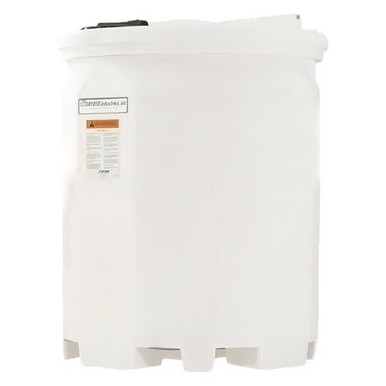
- Reference 1500 gallon tank for moderate-temperature service. Reference N-40154 1500 gallon Norwesco vertical as a typical mid-volume tank where the temperature framework applies. The tank is rated for service up to the OEM-specified temperature limit; above this limit, alternative configurations or materials should be specified.
The temperature effects shift the compatibility envelope. Cold-service installations have wider envelopes than hot-service installations; freezing service has its own constraint set.
4. Quick-Look Service Life Expectations by Combination
Combining the chemistry class, the concentration bracket, and the operating temperature produces a service-life expectation matrix. Representative entries from the matrix:
- Dilute brine, ambient temperature. Saturated NaCl brine in polyethylene at ambient temperature: 20-year service is the typical expectation. The chemistry is benign; the wall thickness is the limiting factor through fitting and weld stress concentrations rather than chemistry attack.
- Sodium hypochlorite at 12.5 percent, ambient temperature. 12.5 percent sodium hypochlorite stored in polyethylene at ambient temperature: 5 to 10 year service before measurable wall thinning. The oxidative attack rate at ambient is moderate; service life is bounded but adequate for most operational planning.
- Sodium hypochlorite at 12.5 percent, 100 degrees Fahrenheit. Same chemistry at elevated temperature: 2 to 5 year service. The Arrhenius effect approximately halves the service life per 10-degree-Celsius increase. Hot hypochlorite installations should plan inspection cadence accordingly.
- Sulfuric acid at 50 percent, ambient temperature. 50 percent sulfuric acid stored in polyethylene at ambient temperature: 20-year service. The chemistry is well within the polyethylene compatibility envelope at this concentration.
- Sulfuric acid at 93 percent, ambient temperature. 93 percent sulfuric acid stored in polyethylene at ambient temperature: 10 to 20 year service in well-specified installations. The OEM catalog should be cross-referenced for the specific tank model and concentration.
- Sodium hydroxide at 50 percent, ambient temperature. 50 percent NaOH in polyethylene at ambient temperature: 20-year service. The constraint is the freezing-point of 50 percent NaOH near 50 degrees Fahrenheit, which forces heat trace or insulation in cold-climate installations.
- Sodium hydroxide at 50 percent, 120 degrees Fahrenheit. Hot 50 percent NaOH approaches the polyethylene environmental-stress-cracking limit. Service life is in the 5 to 10 year range and OEM-specific verification is warranted before procurement.
- Aliphatic hydrocarbons (diesel, kerosene), ambient temperature. Diesel fuel in polyethylene at ambient temperature: 20-year service for fuels meeting standard specifications. The quality of the diesel matters; high-aromatic-content diesel approaches the boundary.
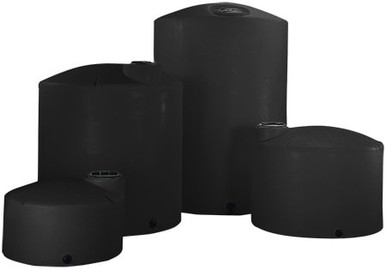
- Reference 1000 gallon tank for combination scoping. Reference N-40152 1000 gallon Norwesco vertical as a typical mid-volume tank where the service-life matrix applies. The expected service life informs the inspection-frequency framework and the procurement-replacement budget planning.
The matrix entries are illustrative, not exhaustive. The procurement decision should always reference the OEM compatibility catalog for the specific tank brand and the specific chemistry-concentration-temperature combination.
5. Decision-Tree Logic for Borderline Service Conditions
The quick-look reference gives clear answers for clearly-compatible and clearly-incompatible chemistries. The decision-tree logic addresses the borderline cases where the quick-look is ambiguous:
- The borderline-by-concentration case. A chemistry is compatible at moderate concentration but borderline at high concentration. Decision: review the OEM catalog for the specific concentration; if not listed, request OEM technical support for a written compatibility opinion; if still ambiguous, perform a coupon-immersion test on a sample of the tank polyethylene grade.
- The borderline-by-temperature case. A chemistry is compatible at ambient but borderline at the specified operating temperature. Decision: determine whether the operating temperature can be reduced through process modifications (cooling, blending, time-of-day operation); if not, escalate to OEM technical support for a temperature-specific opinion.
- The borderline-by-blend case. A chemistry is a blend of components with different compatibilities. Decision: identify the most-aggressive component and apply its compatibility outlook to the blend. If the most-aggressive component is borderline, the blend is borderline.
- The borderline-by-additive case. A chemistry has additives (surfactants, dyes, inhibitors) whose individual compatibilities are not in standard catalogs. Decision: request the safety data sheet and the formulation; review each additive against the polyethylene compatibility data; address borderline additives individually.
- The borderline-by-trace-contaminant case. A chemistry is nominally benign but carries trace contaminants (heavy metals, sulfur compounds, radicals from upstream process) that may affect long-term compatibility. Decision: characterize the trace contaminants; assess the cumulative effect over the planned service life; consider tank-specification enhancements (thicker walls, more frequent inspection) if the trace effect is significant.
- The case-when-compatibility-data-is-not-available. Some specialty chemistries are not in the standard compatibility catalogs. Decision: contact OEM technical support; if no published data exists, perform laboratory immersion testing on coupons of the tank polyethylene grade at the operating temperature for a defined period; extrapolate the laboratory results using Arrhenius to estimate service life.
- The escalation-to-engineering-review pathway. When the decision-tree reaches a node where engineering judgment is required, the question escalates to a qualified materials engineer. The engineering review documents the decision, the rationale, and the inspection-plan for the resulting installation. The decision becomes part of the installation record.
The decision-tree converts the borderline-case ambiguity into a structured progression toward a defensible decision. Sites that follow the structure produce procurement records that support the operational risk management.
6. OEM Catalog Cross-Verification Protocol
The quick-look reference and the decision-tree logic complement, but do not replace, the OEM compatibility catalog for the specific tank brand. The cross-verification protocol:
- The brand-specific compatibility catalog. Each polyethylene tank brand publishes a compatibility catalog that lists chemistries against tank model and rating. The catalog is the authoritative reference for that brand. Norwesco, Snyder, Chem-Tainer, Enduraplas, and Bushman each maintain published compatibility data for their tank models.
- The chemistry-listing search protocol. The procurement engineer searches the OEM catalog for the specific chemistry by name and synonym. Synonyms (sodium hypochlorite versus liquid bleach, sulfuric acid versus battery acid) should be cross-checked. The catalog entry includes the maximum recommended specific gravity and the temperature limit.
- The not-listed escalation. If the chemistry is not listed in the catalog, the procurement engineer contacts the OEM technical support directly. The OEM may have unpublished compatibility data, may recommend laboratory testing, or may decline the application. Each response is documented as part of the procurement record.
- The specific-gravity-rating verification. The OEM catalog often expresses the chemistry compatibility in terms of the maximum specific gravity the tank is rated for. The procurement engineer confirms the chemistry specific gravity against the tank rating; chemistries above the rating require a higher-rated tank or alternative material.
- The temperature-rating verification. The OEM catalog also expresses temperature limits. The procurement engineer confirms the operating temperature against the tank temperature rating. Service above the rating voids the OEM warranty and may shorten the tank life materially.
- The fitting-and-accessory compatibility. The compatibility check extends to the fittings, bulkheads, gaskets, and other accessories. Polyethylene tank bodies may be compatible with a chemistry while standard EPDM gaskets are not. The cross-verification covers the full assembly, not just the tank shell.
- The documentation of the cross-verification result. The result of the cross-verification is documented in the procurement record: chemistry, concentration, temperature, OEM catalog entry, specific gravity rating, temperature rating, fitting compatibility, decision. The record supports the operational compliance and the future audit response.
The cross-verification with the OEM catalog is the procurement-discipline finishing step. The quick-look reference accelerates the early-stage decision; the OEM verification confirms the final-stage commitment.
7. Borderline-Case Operational Practices
Some installations operate in the borderline-compatibility region by intent, accepting reduced service life in exchange for the benefits of polyethylene (cost, weight, availability). The operational practices for borderline installations:
- The accelerated-inspection cadence. Borderline installations are inspected more frequently than standard installations. The inspection cadence may be every 1 to 2 years rather than the standard 5 to 10 years. The accelerated cadence catches degradation early and supports planned replacement before failure.
- The wall-thickness baseline at commissioning. Borderline installations are baselined at commissioning with a complete wall-thickness map. Subsequent inspections compare against the baseline to quantify the actual degradation rate, supporting actuarial planning for the tank service life.
- The replacement-tank stocking. Some sites stock replacement tanks for borderline installations to support rapid changeout when degradation reaches the action threshold. The stocked tank avoids the procurement lead time during a degradation-driven replacement.
- The level-management for splash-zone protection. The splash zone (region above the steady-state liquid surface that receives splash and fill turbulence) often degrades faster than the wetted-wall region. Operating at a steady high level reduces the splash-zone exposure; operating at varying level extends the splash-zone region.
- The temperature-management for Arrhenius reduction. Reducing the operating temperature, even by a few degrees, materially extends the service life through the Arrhenius mechanism. Cooling-water jackets, insulation against solar gain, or process changes can reduce the effective operating temperature.
- The chemistry-management for concentration reduction. Operating at lower concentration than the maximum required, when feasible, extends the service life. Concentration management is process-dependent but can be a useful tool when the borderline service is concentration-dominated.
- The retirement-criterion documentation. The retirement criterion (wall thickness threshold, visual degradation appearance, leakage indication) is documented at commissioning. The criterion provides the unambiguous trigger for replacement decision when reached.
The borderline-case practices manage the operational risk while extracting the value from polyethylene installation. Sites that accept the risk with the practices in place produce installations that operate predictably; sites that accept the risk without the practices produce installations that fail unpredictably.
8. Procurement Implications and 5-Brand Tank Selection
The compatibility framework drives the brand and model selection across the OneSource Plastics 5-brand catalog:
- The benign-chemistry installations. Salt-brine, water, dilute fertilizer, food-grade chemistries are widely compatible across all 5 brands. The selection is driven by size, geometry, and freight rather than chemistry. Norwesco vertical tanks are typically the price-leader for benign-chemistry bulk storage.
- The acid-service installations. Strong-acid services warrant attention to the OEM compatibility catalog and the specific-gravity rating. Snyder, Chem-Tainer, and Norwesco each publish detailed acid-compatibility data; the selection is driven by the specific chemistry and the OEM cross-verification result.
- The caustic-service installations. Caustic services at high concentration and warm temperature warrant attention to environmental-stress-cracking resistance. The OEM compatibility data should be reviewed for the specific concentration and temperature combination.
- The oxidizer-service installations. Hypochlorite, peroxide, and other oxidizer services have finite service life that should be planned at procurement. The brand selection is driven by OEM-published service-life expectations and by the customer's planned replacement cadence.
- The high-temperature installations. Service above 100 degrees Fahrenheit favors brands and models specifically rated for elevated temperature. Cross-reference the OEM catalogs for the temperature ratings and the compatibility envelope at the operating temperature.
- The borderline-case escalation pathway. Borderline cases that exceed the published compatibility envelope warrant OEM technical-support engagement before procurement. The OEM may custom-rate a tank for the specific application or may decline the application. The pre-procurement engagement avoids procurement of a tank that the OEM does not warrant for the intended service.
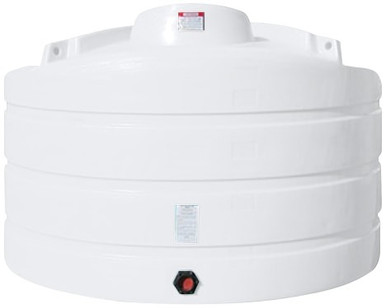
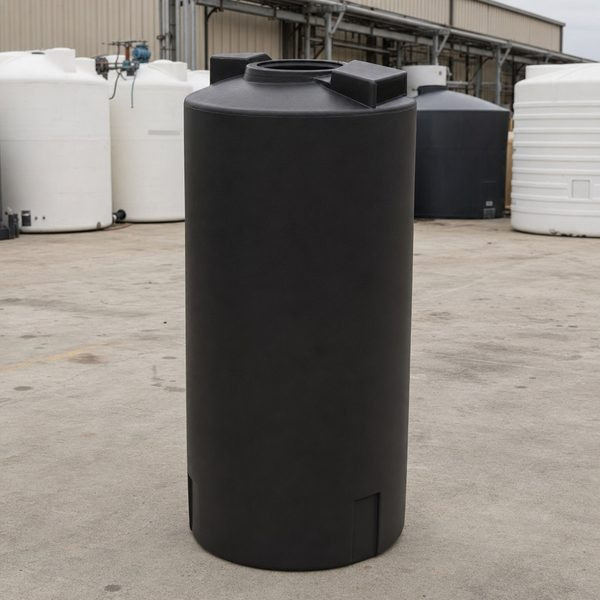
- Reference 100 gallon tank for small-scale chemistry trials. Reference N-44800 100 gallon Norwesco doorway tank as a small-scale option for chemistry trial installations where the borderline compatibility is being characterized through actual service experience before full-scale commitment.
The 5-brand catalog provides procurement flexibility across the chemistry compatibility spectrum. Sites that engage the catalog at the chemistry level produce installations matched to the service requirement.
9. The Compatibility Quick-Look Engineering Conclusion
The polyethylene tank chemical compatibility decision is structured by chemistry class, concentration bracket, and operating temperature. The quick-look reference accelerates the early-stage procurement scoping; the decision-tree logic addresses the borderline cases; the OEM catalog cross-verification confirms the final-stage commitment. Sites that work through the framework produce procurement decisions matched to the chemistry requirements; sites that procure based on size and price alone produce installations that may have inadequate service life or unexpected failure modes. The framework applies across all 5 brands in the catalog and across the full chemistry landscape that the polyethylene tank market supports.
OneSource Plastics ships polyethylene tanks across the 5-brand catalog (Norwesco, Snyder, Chem-Tainer, Enduraplas, Bushman) with chemistry-specific compatibility verification supported by direct access to the OEM catalogs. Tank specification for any specific chemistry is performed by the customer site engineer with reference to the chemistry, concentration, temperature, and the OEM compatibility data. List pricing on each product page; LTL freight to your ZIP via the freight estimator or by phone at 866-418-1777.
Recommended Tanks for This Guide
Live pricing, updated automatically · estimate freight to your ZIP.