Tank Decommissioning + Disposal: HDPE Recycling vs Landfill vs Repurpose
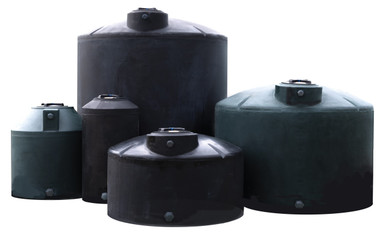
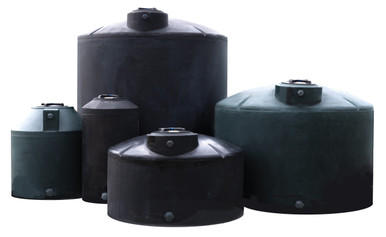
Industrial tanks have a finish line. A well-specified Norwesco, Snyder, Chem-Tainer, Enduraplas, or Bushman polyethylene tank lasts 15-25 years on water service and 2-15 years on chemistry depending on chemistry aggressiveness. When the tank reaches the end of its service life — or when an operator changes process, consolidates sites, or sells the property — somebody has to take the tank out of service safely and dispose of it correctly. Done right, decommissioning is a one-day job with a recyclable HDPE shell going into a regional plastics processor's grinder. Done wrong, it's a hazmat incident, an EPA enforcement action, or a six-figure cleanup of soaked soil.
This pillar walks the decommissioning pipeline from "we're done with this tank" through final disposition. The applicable regulatory framework is RCRA (Resource Conservation and Recovery Act, 40 CFR Parts 261-279), state hazardous waste programs (which often add stricter rules), CERCLA / Superfund liability for legacy contamination, EPA's Universal Waste Rule for some categorically-listed wastes, and state-level recycling and solid waste programs. Polyethylene resin itself is recyclable through the plastic recycling code 2 stream, but residual chemistry and the tank fittings determine whether the recycler accepts the shell.
Stage 1: Decision — Decommission, Replace, or Repurpose?
When to decommission
- Visible failure: wall cracking, leak path, hoop deformation, UV chalking deeper than 1/8 inch on a high-stress tank.
- Service-life exceeded: ASTM D1998 service life predictions exceeded by 1.5x or more without prior recertification.
- Chemistry change: the new chemistry is incompatible with the existing tank material; replacement is cheaper than chemistry-change remediation.
- Site closure: the operation is shutting down or relocating; residual chemistry must be removed and the tank disposition decided.
- Compliance trigger: failed inspection, lost certification (NSF / UL), state regulatory action requires removal.
When to replace in place
If the tank is still serviceable but the operation is consolidating or upgrading capacity, the swap is straightforward: drain the old, drop the new on the existing pad, repipe. Decommissioning still applies to the old tank.
When to repurpose
- Water tank to livestock trough: retired Norwesco MPN 41464-class water tanks make excellent water troughs. Cut the top off, deburr, place in pasture.
- Water tank to rain barrel: add an overflow and faucet, position under downspout. Smaller water tanks like Norwesco MPN 44844 (10 gallon) are perfectly sized for residential rain capture.
- IBC tote to garden cistern: 275-gallon IBC totes (Snyder MPN 6998300B97204 / 6998601B97204) sized perfectly for backyard rainwater storage.
- Tank shell to construction-site material storage: dry storage of sand, salt, gravel, road material.
- Tank shell to flotation: dock and pier flotation when properly anchored.
The key constraint: a tank that previously held chemistry can NOT be repurposed for water, livestock, or food contact without thorough decontamination AND verification by lab testing. A "rinsed" sodium hypochlorite tank still leaches chlorate residue years after retirement.
Stage 2: Pre-Decommissioning Documentation
Before you drain the tank, document:
- Last contents identification: SDS for whatever was in the tank. Required for waste classification under RCRA 40 CFR 262.11.
- Service history: what chemistries the tank has held over its lifetime. Cumulative residue may be reportable even if the last contents were benign.
- Original manufacturer specs: tank material, capacity, manufacturer date, model / SKU. Useful for recycler intake.
- Photographs: overall condition, any visible damage, all penetrations and fittings.
- Site location: for future SPCC / spill-history records.
Stage 3: Drain-Down and Residual Removal
Pump-out for water service
Water tanks are simple: pump to drain or to truck transport. Final residual (the few inches below the suction outlet) goes to grade if the local code permits, or to a vacuum truck. Final rinse is potable water if the tank is being repurposed for water; otherwise no rinse needed for landfill disposal.
Pump-out for chemistry
Chemistry tank drain-down requires:
- Compatible pump (not the pump that ran the system — chemistry-rated diaphragm or peristaltic).
- Compatible transfer hose and fittings.
- Compatible receiving container (vacuum truck, replacement tote, drums) sized to the residual volume.
- PPE matched to the chemistry: chemical-resistant gloves, splash-shield, supplied-air respirator if the chemistry is volatile or toxic.
- Spill containment under the tank and along the transfer route.
Neutralization (where applicable)
Some chemistries can be neutralized in place to reduce hazard classification:
- Sodium hydroxide neutralized with controlled acid addition to pH 6-8.
- Sulfuric acid neutralized with controlled base addition to pH 6-8.
- Sodium hypochlorite reduced with sodium thiosulfate or sodium bisulfite.
- Hydrogen peroxide reduced with catalytic decomposition (manganese dioxide) or sodium thiosulfate.
Neutralization changes the waste profile and may move a hazardous waste to non-hazardous classification, with corresponding disposal cost reduction. Verify with your state hazardous waste program before neutralizing in tank — some states require neutralization in a permitted treatment facility.
Rinse and second rinse
Triple-rinse is the RCRA standard for "empty" container determination per 40 CFR 261.7(b)(1). Three successive rinses with a compatible solvent (water for most water-soluble chemistry), each rinse pumped out and disposed as the original chemistry waste. After triple rinse, the container is "RCRA empty" and the residual is below the regulatory threshold for hazardous waste classification.
"RCRA empty" is the legal threshold for tank disposal as non-hazardous solid waste. Until you reach RCRA empty, the tank itself is hazardous waste and must be disposed accordingly.
Stage 4: Tank Removal
Disconnect plumbing
Cap or disconnect every penetration: inlet, outlet, vent, overflow, drain, instrumentation. Use compatible plugs / caps for the residual chemistry. Do not leave open ports — even RCRA-empty tanks can drip residual onto soil during transport.
Cut for size if necessary
Tanks too large to transport intact (above approximately 5,000 gallons, or in tight site access) are cut into transportable sections at the recycler's intake or by certified industrial demolition contractors. Polyethylene cuts cleanly with a chainsaw or sawzall; XLPE cuts but leaves rougher edges.
Cutting a tank that previously held flammable or volatile chemistry is a vapor-explosion hazard. Triple-rinse plus dry-out plus continuous atmospheric monitoring required before any cutting on petroleum, solvent, or oxidizer service tanks.
Lift and load
Empty polyethylene tank weight is roughly 8-15% of the full water weight. A 5,000-gallon tank shell weighs approximately 600-900 lb empty. Crane / forklift handling for the lift to the disposal trailer.
Stage 5: Disposition Pathways
Pathway A: HDPE recycling (PE2 stream)
Standard HDPE tank shells are recycling code 2 (high-density polyethylene). Regional plastics recyclers accept clean, RCRA-empty HDPE tanks for grinding, washing, and re-pellet. Recycled HDPE pellets become drainage pipe, landscape edging, plastic lumber, and (downcycled) lower-grade rotomolded products.
- Acceptance criteria (typical): RCRA empty, fittings removed, no metal hardware embedded, single resin type identified, clean exterior.
- Cost: recyclers typically charge $20-100 per ton for tipping, depending on cleanliness and local market. Some recyclers pay for clean post-industrial HDPE.
- Logistics: drop-off at recycler facility or scheduled pickup for large volumes.
- Documentation: recycler issues a tipping receipt that documents disposition. Keep for SPCC and corporate environmental records.
Pathway B: Landfill (non-hazardous solid waste)
RCRA-empty polyethylene tanks that don't qualify for recycling (mixed materials, contamination history, contaminated fittings still attached) go to municipal solid waste landfill or industrial solid waste landfill. Costs $40-120 per ton tipping plus haul.
- Verify the receiving landfill accepts the tank. Some landfills exclude oversize items.
- Cut to size if required for landfill compaction.
- Document with weigh ticket and disposal manifest.
Pathway C: Hazardous waste disposal (RCRA Subtitle C)
Tanks that fail to reach RCRA empty status, or tanks contaminated with listed hazardous waste (40 CFR 261.31-261.33 P-list, U-list, F-list, K-list), must go to a permitted RCRA treatment / storage / disposal facility (TSDF).
- Cost: $500-3,000 per ton, plus haul on a hazmat carrier, plus generator manifest documentation.
- Manifest: EPA Form 8700-22 Uniform Hazardous Waste Manifest required at every step.
- Generator status: the operator becomes a hazardous waste generator if not already; small-quantity generator (SQG, 100-1,000 kg / month) and large-quantity generator (LQG, > 1,000 kg / month) trigger registration and reporting requirements.
- Liability: CERCLA / Superfund liability for hazardous waste persists; choose the TSDF carefully.
Pathway D: Repurpose (water / agricultural)
For tanks that held only water, mild fertilizer, or non-toxic chemistry, repurpose is environmentally and economically attractive. Common second lives:
- Livestock water trough (top removed)
- Rain barrel / cistern (gutter integration)
- Aquaponics / hydroponics reservoir
- Construction site water source
- Fire-suppression reserve on rural property
- Pond / decorative water feature
- Material storage (sand, salt, gravel)
The product line at OneSource includes small water tanks like Norwesco MPN 44844 (10-gallon vertical white) and 100-gallon-class MPN 41464 (vertical black) and MPN 41861 (vertical white) that retire into perfect rain-barrel or trough applications. We can connect operators with farms and reuse markets in many regions.
Pathway E: Sale on secondary market
Used tanks in serviceable condition (visual inspection passes, fittings intact, no chemistry contamination) sell on secondary markets including agricultural classifieds, Craigslist, Facebook Marketplace, equipment dealers. Typical secondary value: 15-40% of new replacement cost depending on age and condition.
Disclosure of prior service is ethically required and legally required in some states. A tank that held a regulated chemistry must be disclosed to the buyer with prior-use SDS information.
Material-Specific Disposal Notes
Standard HDPE tanks
Best recycling candidate. Single-resin construction, code 2, accepted by virtually all plastics recyclers. After fittings are removed, the shell is clean polyethylene.
XLPE tanks
Cross-linked polyethylene cannot be re-melted and is not directly recyclable through the PE2 stream. Some specialty processors grind XLPE for filler material in plastic lumber or fence post products. Otherwise landfill is the typical disposition. Repurpose options remain (as long as chemistry compatibility is acceptable for the new use).
FRP tanks
Fiberglass-reinforced plastic is not recyclable. The fiber-resin matrix cannot be separated by current commercial processes. Landfill is the universal disposition. Some FRP cutoffs and grinds find use as filler in concrete or asphalt.
Steel tanks
High-value scrap. Carbon steel scrap value $150-300 per ton in 2026 market; 304 stainless $1,000-2,500 per ton; 316 stainless $1,200-3,000 per ton. Often the scrap value covers removal cost. Verify the tank is RCRA empty before sending to scrap; scrap yards reject contaminated material.
Cost Comparison
| Disposition | Typical cost | Best for |
|---|---|---|
| HDPE recycling (PE2) | $0-100 / ton tipping | Clean, RCRA-empty HDPE shells |
| Municipal landfill | $40-120 / ton tipping + haul | Mixed materials, contaminated fittings, XLPE / FRP |
| Hazardous waste TSDF | $500-3,000 / ton + manifest + haul | Non-RCRA-empty, listed waste contamination |
| Repurpose to second use | $0 (or revenue) | Water / mild-chemistry tanks, intact |
| Secondary market sale | Net revenue 15-40% of new | Serviceable condition, documented history |
| Steel scrap | Net revenue (scrap value > haul) | Stainless / carbon steel tanks |
Underground Tank (UST) Decommissioning
Underground tanks add a layer: closure of the tank cavity. Federal UST regulations 40 CFR 280 Subpart G specify two closure options:
- Removal (clean closure): excavate tank, remove from pit, transport for disposal. Soil sampling at the tank cavity boundaries to verify no release. Backfill with clean fill.
- Closure in place: empty, RCRA-rinse, fill the tank with inert material (sand, foam, concrete slurry) and abandon in place. Soil sampling around the tank perimeter. Document closure for permanent record.
State programs (most states are EPA-delegated) often add closure assessment requirements: groundwater monitoring, soil sampling at deeper intervals, third-party verification. Costs run $5,000-50,000+ depending on tank size and any contamination found.
If contamination is found at closure, CERCLA / Superfund liability may apply to all current and former operators back to the original installation. Closure assessment is the moment historical contamination liability surfaces — budget for the assessment AND for potential remediation.
Common Decommissioning Mistakes
Mistake 1: Sending a contaminated tank to recycling
Recyclers reject contaminated material at intake and back-charge for the haul. Verify RCRA-empty status before scheduling the recycler pickup.
Mistake 2: Skipping triple rinse on chemistry tank
The tank stays classified as hazardous waste until triple rinse is documented. Single-rinse "good enough" creates legal exposure.
Mistake 3: Cutting a tank without vapor-clear documentation
Petroleum, solvent, and oxidizer tanks contain vapor in the headspace and absorbed in the wall material. Cutting without vapor monitoring is the cause of multiple industrial-fatality incidents per year. Triple rinse, dry, monitor, then cut.
Mistake 4: Leaving the foundation pad after removal
The pad becomes a site nuisance unless removed. Budget for pad demolition and site restoration.
Mistake 5: Repurposing a chemistry tank for water without lab verification
Residual chemistry leaches for months to years. Lab-verify the rinse water meets the new use requirements before deploying for livestock, garden, or any potable application.
Mistake 6: Not documenting the disposition
Recycler tipping receipt, landfill weigh ticket, hazardous waste manifest. Keep all three for the corporate retention period (typically 5+ years; some states require longer for hazardous waste records). Required for SPCC plan updates and for due-diligence in property transactions.
Mistake 7: UST closure without state notification
State UST programs require advance notification of intent to close. Closure without notification can result in additional state oversight, fines, and re-do of the closure assessment.
Mistake 8: Underestimating contamination liability
Contamination found at closure is the operator's legal responsibility regardless of who installed the tank. Pre-closure soil and groundwater assessment can identify contamination before closure, allowing budget planning.
End-of-Life Quick Reference by Tank Type
| Tank type | Best disposition | Notes |
|---|---|---|
| HDPE water tank (Norwesco / Snyder / Bushman) | Repurpose or recycle PE2 | Excellent repurpose value (trough, rain barrel) |
| HDPE septic tank | Recycle PE2 (after triple rinse) | Septic residue must be pumped first |
| XLPE chemistry tank | Specialty grind or landfill | Cross-linked PE not PE2-recyclable |
| FRP tank | Landfill | No recycling stream available |
| Coated carbon steel tank | Scrap (after RCRA empty) | Scrap value typically covers removal |
| 304 / 316 stainless steel tank | Scrap (high value) | Scrap revenue often funds replacement |
| UL-142 petroleum AST | Vapor-clear, then scrap | Triple rinse + atmospheric monitoring required before cutting |
| Underground UST | 40 CFR 280 closure (remove or fill) | State notification required |
| IBC tote (HDPE) | Return to supplier or rebottle | Many suppliers run closed-loop tote programs |
Internal Resources
- ASTM D1998 Service Life Methodology
- Failure Mode Analysis
- SPCC Compliance Audit Checklist
- Repair, Reline, or Replace Decision
- Aboveground vs Belowground Engineering
- Tank Material Selection
- Contact OneSource for replacement tank quotes
Source Citations
- RCRA — Resource Conservation and Recovery Act, 40 CFR Parts 260-279
- 40 CFR 261.7(b)(1) — RCRA empty container determination (triple rinse)
- 40 CFR 261.31-261.33 — Listed hazardous wastes (F, K, P, U lists)
- 40 CFR 262.11 — Hazardous waste determination
- 40 CFR 262 Subpart B — Manifest requirements
- 40 CFR 280 Subpart G — UST closure requirements
- EPA Form 8700-22 — Uniform Hazardous Waste Manifest
- CERCLA / Superfund — Comprehensive Environmental Response, Compensation, and Liability Act
- OSHA 29 CFR 1910.146 — Permit-Required Confined Spaces (tank entry during decommissioning)
- ASTM D1998 — Standard Specification for Polyethylene Upright Storage Tanks (service life baseline)
- ASTM D7611 — Standard Practice for Coding Plastic Manufactured Articles for Resin Identification (recycling code 2 / HDPE)
- OneSource Plastics master catalog data, dated 2026-03-26 snapshot (9,419 products)
Related chemical compatibility resources
For deeper engineering specifications on the chemicals discussed above, see our chemical-compatibility pillars:
- Sodium Hypochlorite — storage compatibility, recommended resin grade, fittings, secondary containment.
- Sodium Thiosulfate — storage compatibility, recommended resin grade, fittings, secondary containment.
- Sulfuric Acid — storage compatibility, recommended resin grade, fittings, secondary containment.
- Sodium Hydroxide — storage compatibility, recommended resin grade, fittings, secondary containment.
Recommended Tanks for This Guide
Live pricing, updated automatically · estimate freight to your ZIP.