Tank Dome Curvature Engineering: How the Top Dome Geometry on Vertical Polyethylene Tanks Distributes Vacuum and Pressure Load, Supports Worker Foot Traffic for Inspection Access, and Integrates with Fall-Protection Anchors
The top dome of a vertical polyethylene tank is one of the most engineered surfaces on the tank. The dome curvature determines the pressure-load distribution from breathing vacuum and overpressure, the structural support behavior under worker foot traffic during inspection, the geometry of fitting penetrations, and the attachment points for fall-protection anchors. The dome geometry chosen by manufacturers reflects decades of evolution balancing structural performance, manufacturing capability through rotational molding, fitting ergonomics, and field operational practice.
This article walks the engineering of polyethylene tank dome curvature across the 5-brand catalog of Norwesco, Snyder, Chem-Tainer, Enduraplas, and Bushman. The discussion covers pressure-load mechanics, fall-protection integration, inspection access ergonomics, and the practical operational consequences of dome geometry decisions. References are to manufacturer engineering data, OSHA fall-protection requirements (29 CFR 1910 Subpart D and 29 CFR 1926 Subpart M), ANSI Z359 fall-protection standards, and tank inspection practice. List pricing on each tank product page; LTL freight quoted to your ZIP via the freight estimator or by phone at 866-418-1777.
1. Dome Geometry Types in Polyethylene Tank Construction
Polyethylene rotationally molded vertical tanks use several dome geometries, each with engineering consequences:
- Hemispherical (true half-sphere) dome. The dome rises a height equal to the tank radius. The geometry produces uniform stress under uniform pressure load. Manufacturing requires the rotational molding process to fill the upper sphere completely with adequate wall thickness. The hemispherical dome is uncommon on commercial polyethylene tanks because the rotational molding process produces thinning at the dome apex.
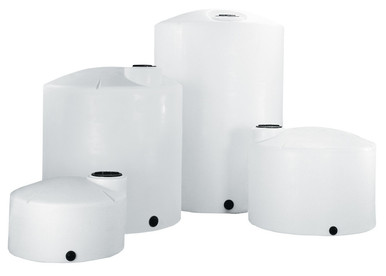
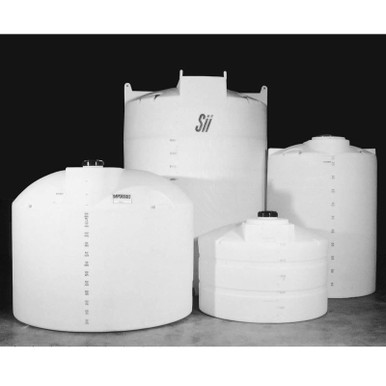
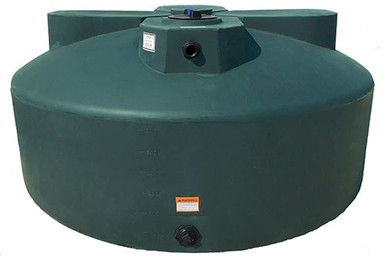
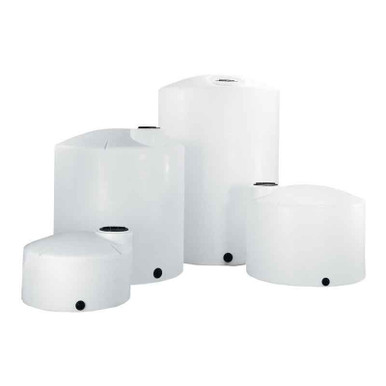
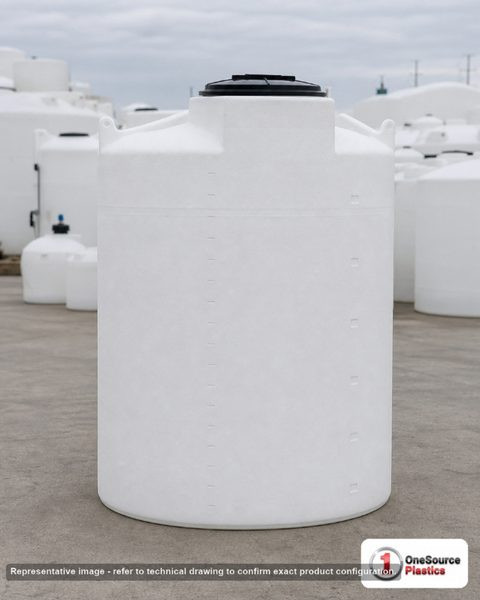
- Shallow elliptical dome (the standard polyethylene profile). The dome rises typically 12-24 inches above the cylindrical shell on a 8-12 foot diameter tank. The aspect ratio (radius over rise) is 3:1 to 5:1. The geometry is the standard for rotational molding because the process can produce uniform wall thickness across the dome. Most Norwesco, Snyder, Chem-Tainer, Enduraplas, and Bushman vertical tanks use this profile.
- Conical dome. The dome is a flat-sided cone rising to a vertex. The geometry is rare on vertical liquid storage tanks but appears on some specialty tank designs. The conical geometry sheds rain effectively and has predictable structural behavior but offers less pressure-handling capacity per pound of polyethylene than the elliptical dome.
- Flat dome (zero-rise top). The tank top is a flat horizontal surface. The geometry is structurally inferior under pressure load and is essentially never used on commercial polyethylene tanks for liquid storage. Some intermediate bulk container (IBC) totes have flat tops but are pressure-rated below the typical vertical tank service envelope.
- Reference standard polyethylene profile. Reference N-40164 5000 gallon Norwesco vertical as a typical example of the shallow elliptical profile used across the polyethylene tank industry. The dome rise on a 102-inch diameter tank is approximately 18 inches, producing the 3:1 aspect ratio that defines the standard.
The shallow elliptical dome is the dominant polyethylene tank geometry. The discussion that follows addresses primarily this profile.
2. Pressure and Vacuum Load Distribution on the Dome
The dome experiences three pressure-load conditions during normal operation:
- Breathing vacuum during fluid drain. When chemistry drains from the tank, the tank vapor space expands. If the vent restricts air ingress, partial vacuum develops in the headspace. Even small vacuum (1-2 inches water column, equivalent to 0.04-0.08 psi) over the dome surface area produces inward force that the dome must resist. On a 12-foot diameter tank with 113 square feet of dome projected area, 0.08 psi vacuum produces 1,300 pounds of inward force concentrated at the dome.
- Breathing overpressure during fluid fill or thermal expansion. Conversely, fluid filling or solar heating produces vapor expansion. The vent must release the vapor; if vent flow is restricted, overpressure develops. The dome experiences outward force from the overpressure. The shallow elliptical dome resists outward force more effectively than inward (vacuum) force because the curvature supports tension better than compression buckling.
- Wind load from external air movement. Wind across the tank top creates pressure differentials around the dome. Aerodynamic load is typically modest (10-30 pounds per square foot in extreme wind events) but combines with other loads. The shallow elliptical profile handles wind load better than steep profiles because of the lower projected area and the smoother flow.
- Snow and ice accumulation in cold climates. The dome supports any accumulated snow or ice load through the winter. A shallow dome accumulates more snow than a steep dome. Snow load up to 30-50 pounds per square foot is the typical northern-tier winter design point. Snow load is concentrated at the dome center where curvature is shallowest.
- Worker foot traffic load during inspection. A worker walking on the dome adds 200-300 pounds of point load. The dome must support this load without buckling or local deformation that could propagate to fitting damage. The structural design of the dome and the wall-thickness profile across the dome accommodate the foot-traffic load within design margin.
- Combined load envelope. The structural design considers combined loading: simultaneous internal vacuum, snow accumulation, and worker foot traffic. The combined envelope is the worst-case scenario for which the dome is engineered. Most manufacturer specifications include the combined load case.
The dome geometry is engineered to handle the combined load envelope with adequate safety margin. The shallow elliptical profile is the optimum compromise across the load cases.
3. Wall Thickness Profile Across the Dome
The dome wall thickness varies across the curvature in rotationally molded polyethylene tanks:
- Manufacturing-driven thickness profile. Rotational molding distributes resin across the mold by gravity and rotation. The dome upper region (highest point of the mold during rotation) typically receives the thinnest resin layer because the molten resin flows away from the apex. Wall thickness at the dome apex is typically 70-85 percent of the cylindrical shell thickness; thickness at the dome shoulder (transition to vertical wall) is typically 100-110 percent of shell thickness due to resin pooling at the transition.
- Engineering allowance for the thickness variation. The dome geometry combines with the variable thickness to achieve adequate stress capacity across the dome. The calculations are non-trivial and are validated by manufacturer hydrostatic testing of the complete tank. Published wall-thickness specifications give the nominal cylindrical shell thickness; the dome-specific thickness is implicit in the manufacturer engineering.
- Reference thickness specifications. Manufacturer technical data sheets specify wall thickness either as nominal or as "average" measured at multiple points around the tank. The dome apex measurement typically falls below the nominal due to the thickness variation. Quality control accepts variation within typical 80-110 percent of nominal across the tank.
- Implications for fitting installation at the dome. Fittings installed at the dome (manways, vents, level sensors, fill ports) penetrate the wall at locations where thickness may be at the lower end of the variation range. Fitting torque specifications and gasket designs accommodate the thinner dome wall. Over-torque on dome fittings is the leading cause of dome cracking around fitting penetrations.
- Implications for foot traffic. The thinner dome apex has lower buckling capacity than the cylindrical shell. Worker foot traffic at the dome apex creates the highest local stress. Inspection and operational practice treats the dome apex as the most stress-sensitive zone of the tank.
- Reference larger tank for dome thickness scaling. Reference N-43128 10000 gallon Norwesco vertical for the larger-volume tank where dome thickness considerations scale with tank size. The 142-inch diameter dome on a 10,000 gallon tank has a larger absolute dome area but proportionally similar thickness profile to the 5,000 gallon tank.
The wall thickness profile across the dome is part of the manufacturer engineering. Operational practice respects the variation by handling the dome with appropriate care.
4. Fall Protection Integration on Tank Domes
OSHA regulations (29 CFR 1910.28 for general industry, 29 CFR 1926.501 for construction) require fall protection above 4-foot fall heights in general industry, 6-foot in construction. Most vertical tanks exceed these thresholds. The fall protection integration on the tank dome is critical:
- Anchor point load rating requirements. An OSHA-compliant fall arrest anchor must support 5,000 pounds static load per worker. ANSI Z359.1 requirements are similar. The anchor is engineered to transfer the fall arrest force into the tank structure without local deformation that exceeds the arrest forces specified by Z359.
- Polyethylene tank dome as anchor base. Polyethylene material is not directly rated for 5,000-pound point load on a single fitting. Fall protection anchors on polyethylene tanks typically require engineered solutions: through-bolted anchor plates that distribute the load over a large dome area, structural cages mounted to the tank exterior, or fixed anchor systems mounted to adjacent permanent structures rather than to the tank itself.
- Distributed-load anchor plate design. An engineered anchor plate is a steel or fiberglass plate mounted to the dome with multiple through-bolts distributing the 5,000-pound fall arrest load across the plate footprint. The plate is sized typically 12-18 inches diameter with 4-8 through-bolts. The bolt-load distribution prevents single-point overload of the polyethylene wall.
- External anchor mast or structural anchor preferred. The preferred fall protection approach for tank work is an anchor mast or anchor cable mounted to permanent structure separate from the tank itself. The worker accesses the tank top via ladder or platform and clips to the external anchor before stepping onto the dome. The dome itself is not loaded by the fall arrest system. This approach is the OSHA-preferred engineered solution for tank-top work.
- Permanent versus mobile anchors. Permanent anchor systems are engineered into the facility and inspected per OSHA requirements. Mobile anchor systems (anchor sleds, deadweight anchors) are allowed but require engineered specification and must be set up correctly for each use. The mobile systems are typical for occasional inspection work; permanent systems are typical for tanks accessed routinely.
- Fall protection requirement extends to ladder access. Workers climbing tank-side ladders above 24 feet (per 29 CFR 1910.28) require ladder safety systems including cage, climbing assist device, or ladder safety system. The ladder-protection requirement is independent of the tank-top anchor requirement; both must be addressed.
Fall protection on tank domes is an engineered system, not an afterthought. The tank manufacturer typically does not provide fall protection components; the facility owner integrates fall protection with the tank installation.
5. Inspection Access Ergonomics on the Dome
Routine tank inspection requires worker access to the dome for visual inspection, fitting torque checks, and ultrasonic thickness measurement. The dome ergonomics affect inspection feasibility:
- Foot traffic safety zones on the dome. The dome shoulder (transition zone from vertical wall to dome curvature) has the highest wall thickness and is the safest foot-traffic zone. The dome apex has the lowest thickness and is the most fragile. Standard inspection practice walks the shoulder zone perimeter and avoids the apex unless specific inspection requires it.
- Manway location and ergonomics. Standard polyethylene tank manways are located at the dome top or shoulder for chemistry access during cleaning and inspection. The 16-inch and 24-inch manway sizes are standard. Worker ergonomics around the manway includes adequate flat surface for kneeling or sitting during interior inspection without unstable footing on the dome curvature.
- Vent fitting and level sensor location. Vents, level sensors, and other top-mount fittings are clustered typically in the dome center 4-6 foot diameter zone. Worker access to these fittings requires walking the dome curvature. The fittings are spaced for ergonomic access without forcing the worker to stand on the dome apex.
- Walking surface friction in wet or icy conditions. Polyethylene surface is naturally smooth and slippery when wet. Inspection in rain, dew, or freezing conditions presents slip hazards on the dome curvature. Operational practice schedules inspection during dry conditions when possible; non-skid surface treatments (textured coatings, bonded grit pads) can be applied to the dome upper surface to improve foot traction.
- Dome diameter affecting access feasibility. A small-diameter tank (below 60-inch diameter) may not provide adequate stable foot surface for safe worker access to the dome top. Such tanks are typically inspected from a platform or ladder reaching the manway rather than by walking on the dome. Reference N-41524 2500 gallon Norwesco as a 95-inch diameter tank where dome-walking access is practical with appropriate fall protection.
- Inspection platform alternative. For high-frequency inspection or where dome ergonomics are unfavorable, a permanent or portable inspection platform reached by side ladder provides flat work surface adjacent to the dome top. The platform allows fitting access through reach without standing on the dome curvature. The platform approach is the preferred engineering for tanks inspected weekly or daily.
Inspection access ergonomics are designed-in by the manufacturer (manway and fitting placement) and supplemented by the facility owner (platform installation, fall protection, surface treatments). The complete system supports safe and effective inspection across the tank service life.
6. Field Practices for Dome Care and Operation
Field practices around the dome affect tank service life and operational safety:
- Foot traffic discipline. Restrict dome foot traffic to authorized inspection and maintenance only. Document each dome traffic event in the tank inspection log. Prohibit walking on the dome apex; require shoulder-zone traffic only. Train inspectors on the dome thickness profile and the apex sensitivity.
- Footwear specification. Specify soft-sole, non-marking footwear for dome access. Hard-sole industrial boots can damage the polyethylene surface and create stress concentration zones. Steel-shank boots concentrate worker weight more than flat-sole. The footwear specification is a small but cumulative factor in dome service life.
- Tool and equipment placement. Avoid setting tools, equipment, or supplies on the dome where their weight or sharp edges concentrate stress. Use a separate work platform or hold tools by hand or in a tool belt. Avoid sliding or dragging items across the dome surface; lift and place rather than slide.
- Dome inspection cadence. Visual inspect the dome surface at each routine tank inspection (typically annual). Look for stress whitening (visible whitening of the polyethylene indicating microcracking), surface scratches deeper than typical handling marks, fitting penetration cracks (radiating cracks from fitting edges), and snow or debris accumulation. Document findings.
- UV degradation monitoring on the dome. The dome receives the highest UV exposure of any tank surface (continuous direct sun in most installations). UV-driven aging shows as surface chalking, color fade, and Shore D hardness change. Monitor through Shore D readings at the dome apex and shoulder; trending hardness rise indicates UV-driven embrittlement. Replacement is indicated when hardness exceeds the manufacturer-published end-of-life threshold.
- Dome modification restrictions. Adding fittings, anchor points, or modifications to the dome after initial installation requires manufacturer or qualified-engineer review. The dome is engineered for the original fitting layout; field modifications introduce stress concentrations and may compromise the design margin. Authorized modifications use engineered through-bolted plates rather than direct welded or fused attachments.
The field practices preserve the dome service life and protect the worker safety. The practices are typically captured in facility operating procedures and inspector training.
7. Manufacturer Variation in Dome Engineering
The 5-brand catalog manufacturers vary slightly in dome engineering details:
- Norwesco vertical tanks. Use the standard shallow elliptical dome profile across the volume range. Dome rise is approximately 18-24 inches on tanks up to 12,000 gallons. The dome wall thickness profile is published in the tank technical specifications. Norwesco specifies the dome as suitable for occasional inspection foot traffic with appropriate care.
- Snyder Industries vertical tanks. Similar shallow elliptical dome on standard tanks. The Captor double-wall tanks have different dome profiles on the inner shell and outer jacket; the outer jacket dome is engineered as a permanent secondary containment cover. Snyder specifications detail the dome geometry and approved inspection access.
- Chem-Tainer vertical tanks. The standard vertical tank product line uses shallow elliptical domes. Some specialty tank lines use steeper dome profiles for specific service requirements. Chem-Tainer technical specifications detail the dome geometry per product family.
- Enduraplas vertical tanks. Standard shallow elliptical profile on the vertical tank product line. The Enduraplas Liquid Storage tank line uses the standard dome with engineered top fittings. Specifications detail the dome geometry and approved inspection access.
- Bushman vertical tanks. Standard shallow elliptical profile. The Bushman product line has detailed specifications for dome geometry and fitting placement on the standard tank line.
- Common engineering thread. All five brands use shallow elliptical domes on the standard vertical tank product line because the geometry is the optimum compromise for rotational molding manufacturing combined with structural performance and inspection access. Brand-specific differences are detail-level (exact rise dimensions, fitting placements, surface texture) rather than fundamental geometry differences.
The brand variation does not change the fundamental engineering of the dome. The brand selection for any specific application turns on chemistry compatibility, volume availability, and price; the dome engineering is similar across brands.
8. The Dome Engineering Conclusion
The polyethylene tank dome is engineered to handle pressure and vacuum loading from breathing, wind load from external environment, snow and ice accumulation in cold climates, and worker foot traffic during inspection. The shallow elliptical profile common across the 5-brand catalog is the optimum compromise across these loading conditions and the rotational molding manufacturing constraint. The wall thickness profile across the dome is engineered to deliver adequate stress capacity at the apex, shoulder, and transition zones. Fall protection on the dome is an engineered system requiring distributed-load anchor plates or external anchor masts because the polyethylene material cannot directly accept concentrated 5,000-pound anchor load.
OneSource Plastics ships polyethylene vertical tanks across the 5-brand catalog with the standard shallow elliptical dome profile suitable for typical chemistry storage service with engineered fall protection and inspection practice. The tank selection for any specific application considers the dome engineering as one factor among the chemistry compatibility, volume requirements, and operational practices of the site. List pricing on each product page; LTL freight to your ZIP via the freight estimator or by phone at 866-418-1777. For related tank engineering see secondary containment requirements and tank specification sheet reading.
Recommended Tanks for This Guide
Live pricing, updated automatically · estimate freight to your ZIP.