Tank Insulation and Heat Tracing: Cold-Climate Operations Beyond Zero Degrees Fahrenheit
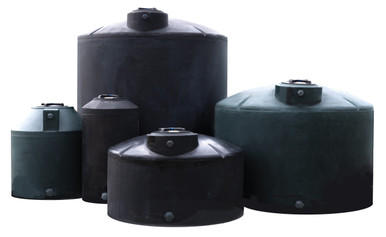
Polyethylene tanks become brittle below 0F. The water inside them freezes between 32F (pure water) and somewhere between 0F and -20F (concentrated brines, glycol mixtures, salt-water solutions, depending on freezing-point depression of the dissolved solute). Below those temperatures the tank is at risk of split-from-ice-expansion, fitting failure from frozen pipes, and impact-fracture from cold-brittle wall material when something hits it.
The existing Tank World blog has a freeze-protection guide aimed at the 32F to -10F range (post 2635, "Freeze Protection for Polyethylene Tanks"). This post is the heavy-cold-climate sequel: tank operations in environments where ambient stays below 0F for weeks at a time. North Dakota, northern Minnesota, interior Alaska, mountain west winter operations, Canadian prairie, Yukon and Northwest Territories. The engineering changes substantially below 0F, and most installation manuals stop at "use heat trace if needed" without telling you the heat trace specification.
Why Polyethylene Goes Brittle Below 0F
HDPE has a glass transition temperature (Tg) around -110C (-166F), meaning the polymer itself does not become amorphous-glass at any temperature you'll encounter on Earth's surface. But the impact toughness drops substantially as temperature drops, and the tank wall transitions from "ductile failure mode" (deforms before cracking) to "brittle failure mode" (cracks from impact) somewhere in the 0F to -20F range, depending on resin grade and wall thickness.
The practical consequence: a tank that survives a forklift bump at 30F may shatter at -20F. A vehicle bumper at 20F dents the tank; the same impact at -10F cracks it. Wall thickness governs failure resistance, so heavy-wall 1.9 ASTM tanks survive cold-impact better than thin-wall 1.5 ASTM tanks. This is one of the reasons cold-climate facilities standardize on the heavier-wall construction even when chemistry density doesn't require it.
The fluid inside the tank is the more common failure mode: water expands ~9% on freezing, generating roughly 30,000 PSI of expansion pressure if perfectly confined. No tank wall can resist that. Either the tank cracks, the lid blows off, or a fitting blows out. The goal of cold-climate engineering is preventing the fluid from freezing in the first place.
Step 1: Calculate Your Heat Loss
The fundamental cold-climate calculation is the heat-loss rate from the tank. This determines whether passive insulation alone can hold the fluid above its freezing point or whether active heat tracing is required. The simplified equation:
Q = U × A × (T_fluid - T_ambient)
Where Q is heat loss in BTU/hr, U is the overall heat transfer coefficient in BTU/(hr*ft^2*F), A is the wetted surface area in square feet, and T_fluid - T_ambient is the temperature differential.
For a bare polyethylene tank, U is approximately 0.5 to 0.8 BTU/(hr*ft^2*F) for still air (typical winter calm) and rises to 2.0 to 4.0 with windchill. For an insulated tank with R-15 insulation, U drops to roughly 0.07 BTU/(hr*ft^2*F). Insulation reduces heat loss by approximately 90%, which is the entire point.
Worked example: a 2,500 gallon Norwesco vertical tank (N-43092 at 95-inch diameter and 124-inch height) has a wetted surface area of approximately 290 square feet (cylinder + top + bottom). Holding water at 40F in a -20F ambient (60F differential):
| Configuration | U-value | Heat Loss (BTU/hr) | Watts Required |
|---|---|---|---|
| Bare tank, calm wind | 0.65 | ~11,300 | ~3,310 W |
| Bare tank, 15 mph wind | 2.5 | ~43,500 | ~12,750 W |
| R-7 jacket | 0.14 | ~2,440 | ~715 W |
| R-15 jacket | 0.07 | ~1,220 | ~360 W |
| R-30 jacket (heavy duty) | 0.034 | ~590 | ~175 W |
Reading across the table: a bare 2,500 gallon tank in -20F ambient with 15 mph wind sheds heat at roughly 13 kW. That's a thermal load equivalent to running 130 hundred-watt lightbulbs continuously. Without heat input, the fluid freezes within hours. With an R-15 jacket, the heat loss drops to 360 watts, which is what a single self-regulating heat trace cable can supply continuously through the winter at modest electricity cost.
Insulation Options for Polyethylene Tanks
Wrapped Mineral Wool / Fiberglass Jackets
The most common solution for retrofit insulation. 2-inch fiberglass wrap (R-7) or 4-inch wrap (R-15) covered with a vinyl, aluminum, or PVC weather jacket. Mechanically secured with banding straps every 18 inches. Cost: $4 to $8 per square foot of tank surface installed. Lifetime: 7 to 15 years before vinyl jacket UV-degrades and requires recovering.
Pros: low cost, retrofit-friendly, simple to inspect and repair. Cons: requires re-jacketing periodically, vinyl jacket can trap moisture against tank wall if water gets behind it, mineral wool sags if not properly banded.
Spray Polyurethane Foam (SPF)
Sprayed-on closed-cell polyurethane at 2 to 4 inches thickness, achieving R-12 to R-25 depending on thickness. Self-jacketing UV cap coating applied over the foam. Cost: $7 to $14 per square foot installed. Lifetime: 15 to 25 years.
Pros: monolithic seal eliminates water infiltration paths, conforms to tank shape, doesn't require periodic re-banding. Cons: requires specialty applicator, foam adheres permanently to tank wall (cannot be easily removed for tank replacement), some foam chemistries off-gas during cure and require extended ventilation before tank refill.
Pre-formed Polyethylene Insulation Blankets
Manufactured insulation jackets specifically sized to match standard Norwesco and Snyder tank dimensions. Typically 2-inch closed-cell foam between two layers of UV-stabilized polyethylene fabric. Velcro closures or zipper down one seam.
Pros: removable for tank inspection and maintenance, factory-tested R-value, fast installation. Cons: higher unit cost ($1,200 to $3,500 per jacket for typical tank sizes), only available in standard sizes that match common tank MPNs.
Rigid Foam Board Enclosure
For tanks installed inside an unheated building, the building itself can be insulated rather than the tank. 2-inch rigid XPS foam board (R-10) on building walls, ceiling, and floor effectively converts the building into a thermos. Combined with a small space heater (typically 1,500 watt utility heater), the building interior stays above freezing in any reasonable ambient.
This option is often preferred for chemistry-service tanks where wrapping the tank itself complicates fitting access and maintenance. Insulate the room, not the tank.
Heat Tracing: When Insulation Alone Isn't Enough
Insulation reduces heat loss but cannot add heat. If the fluid enters the tank already warm and you only need to slow heat loss enough to prevent freeze before the fluid is drawn off, insulation alone may suffice. If the fluid sits in the tank for days or weeks at a time and ambient is well below freezing, you need heat input to replace the heat loss. That's heat tracing.
Self-Regulating Cable
The standard for tank heat tracing. Self-regulating cable (e.g., Raychem XL-Trace, Thermon BSX) is a parallel-circuit cable with a conductive polymer matrix between two bus wires. As the cable temperature rises, the polymer's electrical resistance increases, automatically reducing power output. This means the cable cannot overheat itself, simplifying control and improving safety.
Common ratings: 5 W/ft, 8 W/ft, 10 W/ft at 50F pipe temperature. The cable de-rates with rising pipe temperature, so a 10 W/ft cable produces 10 W/ft at 50F, dropping to roughly 7 W/ft at 80F and 4 W/ft at 120F. For tank service, 5 to 8 W/ft cable is typical.
Specification example for the 2,500 gallon tank above with R-15 insulation losing 360 watts at -20F: the tank has approximately 290 square feet of surface, so a single helical wrap at one wrap-per-foot of tank height is roughly 60 to 80 feet of cable. At 8 W/ft, that's 480 to 640 watts of capacity, comfortably exceeding the 360 watt heat loss with margin for the inevitable fittings and uninsulated service penetrations that lose extra heat.
Mineral Insulated (MI) Cable
For high-temperature or hazardous-area applications, mineral-insulated heat trace uses a metal-sheathed conductor with magnesium oxide insulation. More expensive ($30 to $80 per linear foot vs $5 to $15 for self-regulating), but rated for higher temperatures and intrinsically safe in Class 1 Div 1/2 hazardous locations. For most polyethylene tank applications, self-regulating is sufficient and cheaper.
Power Limiting Cable
Constant-wattage cable with internal sensors that limit the maximum temperature. Less common for tank service but appears in some specialty applications. More complex than self-regulating, comparable cost.
Control Strategy
Always-On (Ambient Control)
The simplest strategy: wire the heat trace cable to a 240V or 120V circuit through a thermostat that closes when ambient temperature drops below a setpoint (typically 40F). The cable runs continuously below the setpoint, off above. Self-regulating cable's intrinsic temperature regulation handles the tank-side temperature control without separate sensors.
Pipe-Sense Control
For more precise control or in applications where the tank temperature should be maintained well above freezing (heated chemistry service, viscosity-sensitive fluids), a temperature sensor mounted on the tank wall feeds a controller that switches the heat trace based on tank temperature rather than ambient. More complex wiring but tighter temperature control.
SCADA-Integrated
For industrial installations with existing supervisory control, the heat trace circuit is wired through the SCADA temperature monitoring with alarms at low-temperature setpoints (typically alarm at 35F, alarm + maintenance call at 32F, alarm + automatic emergency drain at 28F). This provides defense-in-depth against heat trace failure.
Sizing the Electrical Service
Heat trace draws continuous power for the duration of cold weather. A 600-watt circuit on a 240V service is roughly 2.5 amps continuous. Multi-tank facilities can drive substantial total heat-trace load. Plan the electrical service:
- Single tank, residential: 240V 20A dedicated circuit serves up to roughly 4,000 watts of heat trace, sufficient for one or two large tanks.
- Multi-tank commercial: dedicated panel with 5 to 10 individual 20A circuits. Sub-meter the panel for energy accounting.
- Industrial: 480V three-phase service with 100 to 200A capacity for facility-scale heat trace. Often uses dedicated transformer.
Pay special attention to GFCI requirements. NEC Article 427 requires ground-fault equipment protection (GFEP, 30 mA trip) on heat trace circuits. Standard 5 mA personnel-protection GFCI breakers will nuisance-trip on heat trace and should not be used.
Real SKU Recommendations for Cold-Climate Service
| Application | MPN | Capacity | Insulation | Heat Trace |
|---|---|---|---|---|
| Residential well buffer | N-44045 (Norwesco) | 1,000 gal | 2″ pre-formed jacket, R-7 | 40 ft of 5 W/ft cable |
| Agricultural water | N-45246 (Norwesco) | 3,000 gal | 4″ mineral wool wrap, R-15 | 80 ft of 8 W/ft cable |
| Industrial chemistry | SII-1012700N42 + heavier | 100-3,000 gal | 2″ SPF, R-12 | Sized per fluid Tf |
| Cone-bottom processing | N-43852 (Norwesco) | 1,000 gal | Pre-formed cone jacket | 60 ft incl. cone wrap |
Special Cases
Brine Tanks
Sodium chloride brine at 23.3% concentration freezes at -6F. Calcium chloride at 32% freezes at -60F. For most road-treatment brine applications, the brine itself does not freeze at typical ambient temperatures, so heat tracing is unnecessary if the tank is full. But the inlet, outlet, and dispensing piping see thinner fluid layers and freeze more readily. Heat trace the fittings and external piping; the tank itself can run uninsulated for brine service in most climates.
DEF (Diesel Exhaust Fluid) Tanks
32.5% urea solution freezes at 12F. DEF service tanks in cold climates require either heated storage (above 12F) or recirculation through a heated tank to thaw before use. ISO 22241 governs DEF storage; see our DEF tank selection guide for the full DEF cold-climate engineering.
Glycol Heat-Transfer Fluid Tanks
Propylene glycol at 50% solution freezes at -34F; ethylene glycol 50% at -36F. These fluids are themselves freeze-protection chemistries; the tank holding them rarely needs additional heat. But the tank's polyethylene wall still becomes brittle below 0F, so wall-thickness selection (1.9 ASTM heavy wall) matters.
Buried Tanks
Buried tanks below the frost line (typically 4 to 6 feet in cold climates) are insulated by the surrounding soil and stay at ground temperature (~50F year-round in most temperate zones). Buried tanks generally don't require heat tracing. The above-ground service piping connecting to a buried tank is the freeze-vulnerable component.
Common Cold-Climate Mistakes
Mistake 1: Insulating without venting
Insulated tanks can't shed solar gain in summer if the insulation is too aggressive. A black-jacketed insulated tank sitting in summer sun can rise above 100F internally, which is bad for chemistry stability and bad for resin life. Specify white-jacketed insulation in sun-exposed installs.
Mistake 2: Skipping heat trace on fittings
The tank wall is thick enough to retain heat. The fittings (1-inch and smaller pipe) have negligible thermal mass and freeze first. Always heat-trace the lower 4 feet of all external piping, including the outlet valve and any drain piping.
Mistake 3: Using non-self-regulating cable
Constant-wattage cable can overheat at fittings and at insulation thinning points, causing local damage to the tank wall. Always specify self-regulating cable for polyethylene tank service.
Mistake 4: Ignoring NEC Article 427
Heat trace circuits require specific GFEP protection, junction box ratings, and conductor sizing. An inspection failure on a non-compliant install can shut down a facility's heat trace right when winter hits. Have a licensed electrician install per NEC.
Mistake 5: Not testing the heat trace before winter
Heat trace cable degrades over years from UV and from connector corrosion. Before each winter, energize each circuit and verify amperage matches the cable's rated draw. Replace any cable showing more than 20% deviation from rated current.
Procurement Timing
Heat trace cable, insulation jackets, and SPF foam application all require lead time. Order by August for installation before the November freeze in the upper Midwest, by September for installation before December freeze in the mid-Atlantic. The tank itself ships LTL through the same lead-time window described in our tank procurement lead time post.
Internal Resources
- Water Storage Tanks — full vertical, horizontal, and cone-bottom catalog
- Freeze Protection for Polyethylene Tanks — companion post for moderate freeze protection
- Fall Winterization Guide — pre-winter operational checklist
- Spring Startup Checklist — post-winter return-to-service
- DEF Tank Selection — cold-climate DEF specifics
- Freight Cost Estimator — LTL quote to your ZIP
How to Order
For cold-climate procurement consultation including pre-engineered insulation and heat trace bundles for your specific tank MPN, ambient temperature design point, and electrical service, call us at 866-418-1777 or use the contact form. We can pair the tank order with insulation jacket and heat trace specification so everything arrives together for installation.
Source Citations
- NEC (NFPA 70) Article 427 — Fixed Electric Heating Equipment for Pipelines and Vessels
- IEEE Standard 515 — Standard for the Testing, Design, Installation, and Maintenance of Electrical Resistance Trace Heating
- ASHRAE Handbook Fundamentals, Chapter on Heat Transfer through Insulated Surfaces
- ISO 22241 — Diesel Exhaust Fluid storage and handling
- ASTM D1998 — Polyethylene Storage Tank Specification
- Raychem (nVent) XL-Trace and Thermon BSX self-regulating cable application guides
- Norwesco Storage Tank Installation Manual (cold-climate addendum)
- OneSource Plastics master catalog data, 2026-03-26 snapshot
Related chemical compatibility resources
For deeper engineering specifications on the chemicals discussed above, see our chemical-compatibility pillars:
- DEF (Diesel Exhaust Fluid) — storage compatibility, recommended resin grade, fittings, secondary containment.
- Sodium Chloride — storage compatibility, recommended resin grade, fittings, secondary containment.
- Calcium Chloride — storage compatibility, recommended resin grade, fittings, secondary containment.
- Urea Solution — storage compatibility, recommended resin grade, fittings, secondary containment.
Recommended Tanks for This Guide
Live pricing, updated automatically · estimate freight to your ZIP.