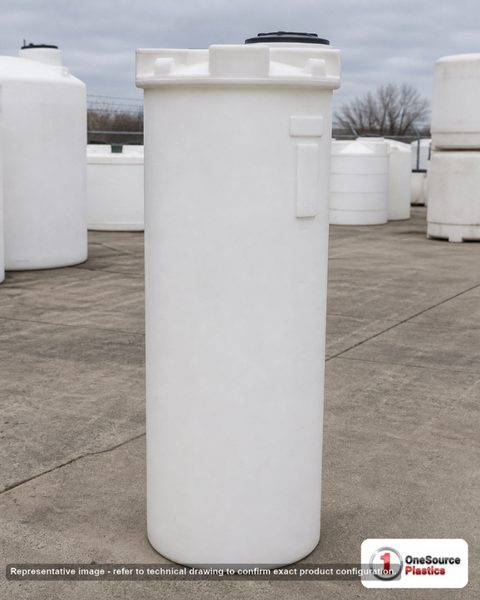
Tank UV Stabilizer Loading: How HALS + Carbon Black vs Translucent Resin Differ Functionally
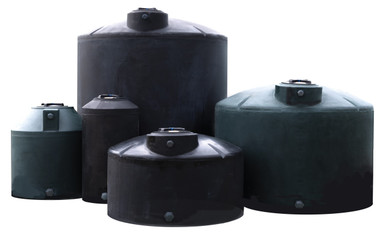
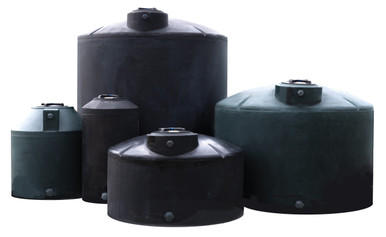
Color choice on a polyethylene tank looks like an aesthetics decision. It is not. The pigment system, the UV stabilizer chemistry, and the loading rate are interrelated specifications that determine whether a tank survives 5 years or 25 years in outdoor service. Two tanks that look identical on a spec sheet — both labeled "UV stabilized polyethylene" — can have radically different outdoor service life depending on whether the stabilization chemistry is HALS (hindered amine light stabilizers), UV absorbers, carbon black, or some combination. Buyers and specifiers who treat color as cosmetic miss the engineering question entirely.
This guide walks the polymer-chemistry mechanisms by which polyethylene degrades under UV, the four real stabilization strategies the industry deploys, the loading-rate ranges that distinguish a 5-year tank from a 25-year tank, and the real OneSource catalog SKUs that anchor each color/stabilization strategy. The math is governed by ASTM D4329 (xenon-arc weathering), ASTM G154 (fluorescent UV exposure), and ASTM D1693 (environmental stress crack resistance) — citations are real and verified.
What UV Actually Does to Polyethylene
Polyethylene chains absorb ultraviolet radiation in the 290-400 nm wavelength band. The energy is sufficient to cleave the C-C and C-H bonds that form the polymer backbone. The cleavage events generate free radicals that initiate three competing reaction cascades:
- Chain scission — backbone cleavage shortens chains, reduces molecular weight, drops impact strength and stress-crack resistance.
- Cross-linking — adjacent radicals couple, increase molecular weight at certain regions, embrittle the matrix.
- Oxidation — radicals react with atmospheric oxygen to form hydroperoxides, ketones, and carboxylic acids; surface chalking and color shift result.
Unstabilized HDPE in direct outdoor exposure (Phoenix, Arizona equivalent — UV index 11+ during summer) loses 50% of impact strength within 6-18 months. The same resin survives 20-30 years if properly stabilized. The 30x lifetime difference is entirely about additive package — the base polymer is the same.
The Four UV Protection Strategies
Strategy 1: Carbon Black
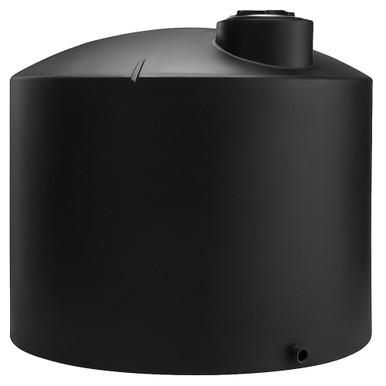
Carbon black at 2-3% loading is the gold standard for outdoor polyethylene UV protection. The mechanism is straightforward: carbon black absorbs UV energy across the entire 290-400 nm band before the energy can reach polymer chains. The carbon black particles act as physical UV shields and as radical scavengers if any UV energy does penetrate.
- Loading rate: 2.0-2.5% by weight is the reference loading per ASTM D4218 carbon black content test method.
- Particle size: 15-25 nm primary particle size optimizes UV blocking per unit weight. ASTM D1603 governs measurement.
- Service life: 25-30+ years in continuous outdoor exposure on water-storage applications.
- Limitations: tank is opaque. Cannot visually verify fluid level without external sight gauge. Tank surface absorbs solar heat (interior temperatures 15-30F above ambient on summer afternoons in southern latitudes). Cannot be used for chemistries where heat absorption accelerates degradation.
- Catalog SKUs: Norwesco MPN 41464 (100-gallon vertical black, ~$394 list), Norwesco MPN 40892 / 44113 (1,000-gallon vertical black), Snyder MPN WB46 / WB47 (1,500-gallon vertical black), Bushman MPN WW-1500-GL-BLK, Enduraplas MPN TLV02100 / TLV03000 / TLV10000 (vertical black).
Strategy 2: HALS (Hindered Amine Light Stabilizers)
HALS is the workhorse stabilizer for white, light-pigmented, and translucent tanks where carbon black is not visually acceptable. The mechanism is fundamentally different from carbon black: HALS does not absorb UV. Instead, HALS molecules act as catalytic radical scavengers — they regenerate themselves through the Denisov cycle and continue to neutralize radicals indefinitely until the additive is physically depleted by extraction, volatilization, or hydrolysis.
- Loading rate: 0.1-0.5% by weight typical, with high-performance grades using 0.3-0.8%. The Denisov cycle means catalytic action exceeds the stoichiometric value of the additive.
- Common chemistries: Tinuvin 770, Tinuvin 622, Chimassorb 944 are reference industrial-grade HALS additives. Many manufacturers blend two HALS molecules (one low-MW for surface protection, one high-MW for bulk protection) for synergistic performance.
- Service life: 15-25 years in continuous outdoor exposure depending on loading and synergists.
- Synergy with UV absorbers: HALS combined with benzotriazole or benzophenone UV absorbers (Tinuvin 326, Tinuvin 1130) extends service life significantly. The UV absorber reduces incoming UV intensity; the HALS scavenges any radicals that form.
- Limitations: HALS is depleted faster in chemistry service than in water service. Acidic contents (sulfuric, hydrochloric) can hydrolyze the amine functional group; oxidizing contents (bleach, peroxide) can over-oxidize the nitroxyl intermediate. Chemistry-service tanks often need higher HALS loading or supplemental UV absorbers.
- Catalog SKUs: Norwesco MPN 41861 (100-gallon vertical white, ~$320 list), Norwesco MPN 60204 (100-gallon applicator saddle white), Norwesco MPN 44963 (100-gallon utility loaf white), Norwesco MPN 45246 / 43092 (3,000-gallon vertical white), Bushman MPN WW-1500-GL-NAT.
Strategy 3: Translucent Resin (Natural Polyethylene)
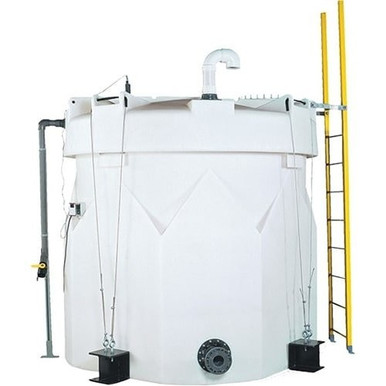
Translucent or "natural" polyethylene tanks intentionally use no pigment and minimal opacifier. The visual benefit: fluid level is visible through the tank wall without external sight gauge. The chemistry: HALS is the primary stabilizer; UV absorbers may be co-loaded; carbon black is excluded by design.
- Loading rate for HALS in translucent: typically higher than white (0.3-0.6%) because there is no pigment-particle UV scattering to assist.
- Service life: 8-15 years in moderate latitudes; 5-10 years in high-UV zones (Phoenix, Las Vegas, southern Texas).
- Algae growth risk: visible-spectrum light penetrating the translucent wall promotes algal growth in stagnant water tanks. Specifying translucent tanks for water storage in warm climates is a common mistake; the tank works mechanically but the contents fail biologically.
- Heat absorption: translucent tanks absorb less solar heat than black tanks. Interior temperatures track ambient closely. Useful for chemistries sensitive to heat (e.g., DEF, peroxide).
- Catalog SKUs: Norwesco MPN 45379 (containment tray, natural). Translucent and natural polyethylene SKUs are available across the Norwesco, Bushman, and Enduraplas lines for vertical and horizontal water storage; specify "natural" or "translucent" at quote time.
Strategy 4: Pigmented Color (Green, Blue, Tan, Dark Green)
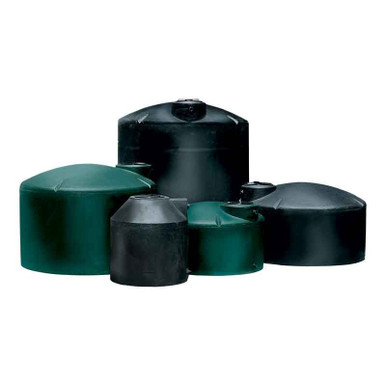
Colored tanks (other than black and white) use organic or inorganic pigments at 0.5-2% loading. The pigment provides partial UV scattering and absorption; the formulation typically includes HALS plus UV absorbers to make up the protection differential vs carbon black.
- Iron oxide pigments (red, brown, tan): excellent UV stability themselves; provide significant UV protection as a side effect.
- Phthalocyanine pigments (green, blue): moderate UV stability; require HALS supplementation.
- Cadmium and lead-based pigments: historical use; mostly phased out due to RoHS and proposition-65 restrictions. Modern formulations use cadmium-free alternatives.
- Service life: 12-22 years depending on pigment chemistry and HALS loading.
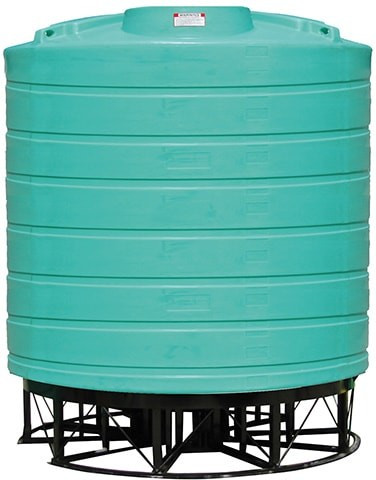
- Catalog SKUs: Norwesco MPN 41520 (200-gallon vertical green), Snyder MPN 32036 (10,000-gallon HDPE green), Chem-Tainer MPN TC6481IW-GREEN (1,000-gallon green water), Bushman MPN 45466 (2,650-gallon dark green), Norwesco MPN 45549 (4,050-gallon black) — wide pigmented inventory across the catalog.
Side-by-Side: How the Four Strategies Compare
| Property | Carbon Black | HALS (White) | Translucent | Pigmented Color |
|---|---|---|---|---|
| UV mechanism | Absorption (physical shield) | Radical scavenging (catalytic) | Radical scavenging only | Mixed: pigment + HALS |
| Typical loading rate | 2.0-2.5% | 0.1-0.5% | 0.3-0.6% HALS + UV-A | 0.5-2% pigment + HALS |
| Service life (mod latitude) | 25-30+ yr | 15-25 yr | 8-15 yr | 12-22 yr |
| Service life (high UV zone) | 20-25 yr | 12-18 yr | 5-10 yr | 8-15 yr |
| Heat absorption (summer) | High (15-30F over ambient) | Moderate (5-15F) | Low (3-10F) | Variable by color |
| Algae growth risk | Low (no light penetration) | Low | High in stagnant water | Low to moderate |
| Visual fluid level | No (sight gauge required) | No (sight gauge required) | Yes | No |
| Cost premium vs black | Baseline | 5-15% premium | 5-12% premium | 8-25% premium by color |
Why HALS Loading Rate Matters More Than People Think
Two manufacturers selling "UV stabilized white polyethylene" can have HALS loading at 0.15% (low end of the range, $5-8 lower cost per tank) or 0.45% (high end, full performance). The buyer cannot distinguish on a spec sheet. The difference shows up at year 8-12 when the lower-loaded tank starts surface chalking and shell embrittlement.
Reputable polyethylene tank manufacturers (Norwesco, Snyder Industries, Chem-Tainer, Enduraplas, Bushman) publish HALS loading rates against ASTM D4329 xenon-arc weatherometer test data. The typical industry benchmark: 80% retention of original tensile elongation after 5,000 hours of xenon-arc exposure (roughly equivalent to 5-7 years of Phoenix-equivalent outdoor exposure). Lower-priced imports often fail this benchmark.
The ASTM Test Methods That Govern UV Performance
- ASTM D4329 — Xenon-Arc Apparatus Exposure: the primary accelerated weathering test for plastics. Xenon arc reproduces full-spectrum sunlight; 5,000-hour exposure roughly equates to 5-7 years of moderate-latitude outdoor exposure depending on cycle parameters.
- ASTM G154 — Operating Fluorescent UV Lamp Apparatus: cheaper, faster accelerated test using UVA-340 or UVA-351 lamps. Less spectrum-accurate than xenon-arc but useful for screening.
- ASTM D1603 — Carbon Black Content of Polyolefin: reference test for carbon black loading verification. 2.0-3.0% range expected for outdoor service.
- ASTM D4218 — Determination of Carbon Black Content (Muffle Furnace): alternative carbon black quantification.
- ASTM D1693 — Environmental Stress Crack Resistance: stress-cracking is the failure mode for UV-degraded polyethylene; D1693 provides the test framework for measuring residual ESCR after UV exposure.
- ASTM D1998 — Polyethylene Upright Storage Tanks: the umbrella standard that references the above for UV stabilization requirements on rotomolded tanks.
Selection Logic: Which Color/Stabilization Wins by Application
| Application | Best Color/Stabilization | Reason |
|---|---|---|
| Outdoor agricultural water (high latitude) | Black (carbon black) | Maximum UV protection; longer service life justifies cost |
| Outdoor potable water (warm climate) | White (HALS) | Lower interior temperatures reduce bacterial growth; NSF 61 colorant |
| Indoor / shaded water | Translucent or White | UV is not the controlling factor; visibility helps inventory |
| DEF (urea 32.5%) | White or Translucent | Heat sensitivity of DEF requires low solar absorption |
| Sodium hypochlorite outdoor | White or Black per chemistry-service practice | Chlorine evolution + UV degrades both — heavy HALS or carbon black; XLPE preferred |
| Septic / underground | Black (most manufacturers) | UV not a factor underground; carbon black is also opaque to root intrusion light cues |
| Containment tray (outdoor) | Natural / Translucent | Visual leak detection valuable; secondary containment seldom holds liquid long enough for algae |
| Decorative landscape (visible) | Pigmented green / tan / brown | Aesthetic match; iron oxide pigments deliver good UV resistance with HALS supplement |
Common Mistakes
Mistake 1: Specifying translucent tank for outdoor potable water in southern latitudes
Visible-spectrum light penetrates translucent walls and promotes algae growth. The tank's UV stabilization may be excellent; the contents still turn green within months. White or black is correct for outdoor potable water in warm zones. NSF 61 certification matters more than color preference here.
Mistake 2: Believing all "UV stabilized" labels are equivalent
Loading rate and additive chemistry vary widely. Reputable manufacturers publish ASTM D4329 test data; verify against published spec, not against marketing language.
Mistake 3: Using black tank for heat-sensitive chemistry
Diesel exhaust fluid, hydrogen peroxide solutions, certain pharmaceutical fluids degrade with elevated temperature. Black tank in summer sun raises interior temperature 15-30F above ambient. Specify white or translucent for these applications even though black has longer UV service life.
Mistake 4: Ignoring HALS depletion in chemistry service
HALS depletes faster in acidic and oxidizing environments. White tanks holding 12.5% sodium hypochlorite or concentrated sulfuric should be specified with extra HALS loading or replaced on accelerated schedule. Cross-linked polyethylene (XLPE) often makes more sense for these chemistries; see our resin selection pillar.
Mistake 5: Buying lowest-cost tank without UV warranty review
Manufacturer warranties cover UV-related failures only when the user-side conditions match the warranty terms. Outdoor exposure, geographic latitude, surface preparation, and content type all affect coverage. Read the warranty terms before buying — short warranty periods (2-3 year) are signals that UV stabilization is at the budget end of the range.
How Latitude Changes the Math
UV intensity scales with latitude. Phoenix at 33°N gets roughly 2.5x the cumulative UV dose of Minneapolis at 45°N over a typical year. The same tank with the same stabilization package has dramatically different service lives in those two zones. Manufacturer service-life claims typically reference moderate-latitude exposure (35-45°N continental US); add 30-50% to the HALS loading or step up to carbon black for installations south of 30°N or at high-altitude sites where UV intensity is elevated.
For installations in the desert Southwest, the Florida Keys, southern California, or equivalent high-UV zones, the working assumption should be: black tanks for maximum life, white tanks if heat absorption is unacceptable, translucent tanks only for shaded or short-term applications.
How OneSource Specifies UV-Stabilized Tanks
OneSource Plastics carries the full color range across the Norwesco, Snyder, Chem-Tainer, Enduraplas, and Bushman catalogs. Our default specification logic for outdoor installations:
- Black for non-decorative applications where carbon black UV protection plus opaque shell makes economic sense (most agricultural water, septic, industrial bulk storage)
- White for potable water, DEF, food-grade, and chemistry where heat absorption matters
- Pigmented color for decorative or code-required applications (some municipal codes require specific colors for fire-water tanks; many ranching applications prefer green for landscape integration)
- Translucent / natural only for indoor or shaded installations, secondary containment trays, and applications where visual fluid level monitoring justifies the shorter UV service life
The catalog descriptions reference the manufacturer's stated UV warranty period and the published HALS or carbon black loading where available. Our Freight Cost Estimator handles the freight-by-ZIP quote; for chemistry-specific service-life questions or premium-loading variants, phone coordination at 866-418-1777 surfaces options not visible in the standard catalog.
Internal Resources
- HDPE vs XLPE Resin Decision Tree
- Material Selection HDPE vs XLPE vs Steel vs FRP
- ASTM D1998 Service Life Methodology
- Spec Sheet Engineering Guide
- Chemical Compatibility Database (309 chemicals)
- Freight Cost Estimator
- Water Storage Tanks Catalog
Source Citations
- ASTM D1998 — Standard Specification for Polyethylene Upright Storage Tanks
- ASTM D4329 — Standard Practice for Fluorescent UV Exposure of Plastics (xenon-arc weathering)
- ASTM G154 — Standard Practice for Operating Fluorescent Ultraviolet (UV) Lamp Apparatus for Exposure of Materials
- ASTM D1603 — Standard Test Method for Carbon Black Content in Olefin Plastics
- ASTM D4218 — Standard Test Method for Determination of Carbon Black Content in Polyethylene Compounds By the Muffle-Furnace Procedure
- ASTM D1693 — Standard Test Method for Environmental Stress-Cracking of Ethylene Plastics
- NSF/ANSI 61 — Drinking Water System Components: Health Effects (covers NSF-listed colorants and stabilizers for potable contact)
- OneSource Plastics master catalog data, dated 2026-03-26 snapshot (9,419 products across Norwesco, Snyder, Chem-Tainer, Enduraplas, Bushman)
Recommended Tanks for This Guide
Live pricing, updated automatically · estimate freight to your ZIP.