Tank Weather Protection: Tarp vs Insulation Wrap vs Engineered Shell vs Bunker Real-World Trade-Offs
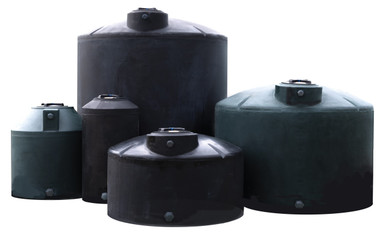
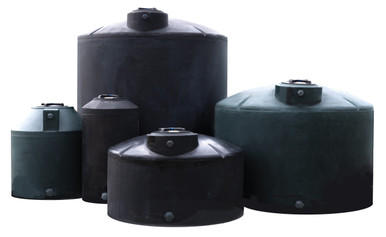
An aboveground polyethylene storage tank in service is exposed to UV degradation, freeze-cycle stress, summer heat-up, hail, wind, and (increasingly) wildfire ember strike. The weather-protection decision is not one product versus another — it's a trade-off matrix across cost, lifetime, chemistry compatibility, and the specific climate threat profile at your installation. This pillar walks the four major weather-protection strategies operators deploy on Norwesco, Snyder, Bushman, Chem-Tainer, and Enduraplas tanks: simple tarps, insulation wrap, engineered shell enclosures, and full bunker / building enclosures. Real-world trade-offs at each price point with codes, certifications, and the failure modes that drive the decision.
Reference codes binding this analysis: ASTM D4329 (UV exposure of plastics), ASTM G155 (Xenon-arc weathering), ASTM D6386 (UV stabilization additives), ASHRAE 90.1 (insulation values), NFPA 22 (Water Tanks for Private Fire Protection — building enclosures), NFPA 30 (Flammable Liquid Tanks — fire-rated bunkering), International Building Code Chapter 16 (wind / snow / seismic), and 40 CFR 112 (SPCC for fuel and chemistry tanks).
The Climate Threat Matrix
Match the protection strategy to the actual threat. A tank in Phoenix needs different protection than the same tank in International Falls. The threat matrix:
| Threat | Tank Failure Mode | Geographic Zones | Mitigation |
|---|---|---|---|
| UV exposure | Polymer chain breakdown, surface chalking, brittle failure at fittings | All zones, accelerated SW + high altitude | Tank UV stabilization + cover |
| Freeze cycle | Ice expansion split, fitting frost-crack, valve frost-jam | Climate Zone 4-8 (IRC) | Insulation + heat trace |
| Summer heat | Off-gassing acceleration, surface temp 130F+, contained fluid 95F+ | Zones 1-3 (IRC) | Reflective shell or shade |
| Hail | Surface impact damage, fitting fracture | Plains states, hail belt | Engineered shell or bunker |
| Wind | Rotation / tip when empty, fitting stress | Zones IBC V > 110 mph | Anchoring + windbreak |
| Wildfire ember | Tank ignition (low-grade poly burns) | WUI zones (West, FL, GA, NC) | Fire-rated bunker |
| Algae growth | Internal contamination on potable / chemistry | All zones, high in S/SE | Opaque cover + fitting seal |
Strategy #1: Simple Tarp Cover
What it is
A heavy-duty UV-rated polyethylene or polyester tarp tied or bungeed over the tank. The cheapest weather protection you can deploy. Common SKUs: 12-mil reinforced poly tarp, sized 2-3 feet larger than the tank diameter on all sides.
What it does well
- UV mitigation: blocks 95-99% of incident UV reaching the tank wall, doubling tank surface life on poorly-stabilized older tanks.
- Algae prevention: opaque cover blocks photosynthesis-driving light from entering the tank through translucent walls. Critical on Norwesco translucent natural-color tanks.
- Surface temperature reduction: 10-20F reduction on summer surface temperature.
- Hail damage reduction: 12-mil tarp absorbs 1-inch hail with no transmitted damage. 1.5-inch hail typically penetrates and damages tank.
- Cost: $50-300 depending on tank size. Pays back in extended tank life within 6 months on a sun-exposed tank.
What it doesn't do
- Freeze protection: tarp is not insulation. R-value is essentially zero. Below freezing, fluid will freeze and damage the tank.
- Wind resistance above ~50 mph: tarps tear, tie-downs fail, the cover ends up downwind. Severe winds need engineered cover.
- Fire protection: UV-rated polyethylene tarps burn. Wildfire WUI zones require fire-rated material (TPO, EPDM, or rated fabric).
- Chemistry vapor management: a tarp is not vapor-tight. Off-gassing chemistry continues to vent through tarp seams.
When to use
Tarp is appropriate for: agricultural water tanks in temperate zones, chemistry tanks where the primary threat is UV/algae, secondary protection on tanks already inside a roofed structure, and any tank whose service life is under 5 years (so investment in higher-tier protection isn't recovered).
Strategy #2: Insulation Wrap
What it is
Engineered insulation blanket, typically polyisocyanurate, fiberglass, or closed-cell foam, with an outer weatherproof skin (PVC, aluminum, or stainless). Wrapped around the tank and sealed at seams. R-values typically 5-25 depending on thickness.
R-value sizing
| Climate Zone | Min R-Value | Insulation Thickness | Heat Trace? |
|---|---|---|---|
| Zone 4 (Mid-Atlantic / Pacific NW) | R-7 | 1.5 inch polyiso | Optional |
| Zone 5 (Northeast / North Plains) | R-13 | 2.5 inch polyiso | Recommended |
| Zone 6 (Northern Plains) | R-20 | 3.5 inch polyiso | Required |
| Zone 7 (Northern MN / ND) | R-25 | 4 inch polyiso | Required |
| Zone 8 (Alaska / North Canada) | R-30+ | 5+ inch polyiso | Required |
Reference: ASHRAE 90.1 Section 6.4.1 for insulation values; NFPA 22 Section 4.16 for fire-protection water tank insulation requirements.
What it does well
- Freeze protection: with appropriate R-value and supplementary heat trace, prevents freeze damage in zones 4-8.
- Heat-up suppression: in summer service, insulation wrap holds surface temperature within 5-10F of contained fluid. Reduces off-gassing acceleration on chemistry.
- UV protection: outer weatherproof skin blocks 100% UV.
- Service life extension: insulated tanks routinely exceed 25-year service vs 12-15 years exposed.
What it doesn't do
- Hail protection: insulation crushes under impact. Outer skin damage propagates to interior moisture penetration.
- Wildfire protection: standard polyisocyanurate is combustible. Fire-rated insulation (mineral wool) is required for WUI installs.
- Wind / structural protection: insulation wrap doesn't add structural strength. Wind-loaded tanks still require anchoring per IBC.
- Cost: $1,500-15,000 depending on tank size and insulation thickness. Heat trace adds another $500-3,000.
When to use
Insulation wrap is the default for: any tank in zones 5-8, year-round outdoor chemistry storage where temperature stability matters, fire-protection water tanks per NFPA 22 (which requires freeze protection), and food-grade or potable storage where temperature cycling drives biofilm growth.
Strategy #3: Engineered Shell Enclosure
What it is
A purpose-built outer shell — typically galvanized or coated steel, FRP, or premium HDPE — surrounding the tank. The shell provides hail and wind protection while accommodating insulation in the wall cavity. Snyder Industries Captor and Bushman ShieldStone series are factory-built engineered shell tanks; aftermarket options include site-built steel enclosures and pre-fab portable shells.
What it does well
- Hail protection: 1.5-inch hail rated as standard; up to 2-inch optional. Insurance discounts available in hail-belt states.
- Wind resistance: rated for IBC V design wind speeds up to 150-180 mph with appropriate anchoring.
- UV / vapor / contamination shield: opaque, sealable, equipment-protective.
- Insulation cavity: wall cavity accommodates R-30+ insulation without external footprint.
- Operator safety: external ladder, walkway, and safety rail are standard on factory-built shells.
- Service life: 25-40 years for the shell, with internal tank replaceable inside the shell.
What it doesn't do
- Wildfire shielding: standard galvanized or FRP shells are not fire-rated. Wildfire WUI installs need NFPA 30A-rated bunker or fire-rated coatings.
- Cost: $5,000-50,000 incremental over equivalent unshelled tank. Justified by service life and insurance.
- Footprint: shell adds 12-24 inches of diameter. Confirm space at install location.
When to use
Engineered shell is the choice for: hail-belt installations (Texas Panhandle through North Dakota), high-wind coastal installs (Florida through coastal, Outer Banks, Pacific NW), 25+ year service-life expectations, and any chemistry where the consequence of a tank failure (catastrophic spill or fire) justifies the shell investment.
Strategy #4: Full Bunker / Building Enclosure
What it is
A purpose-built fire-rated structure surrounding the tank: concrete bunker, fire-rated CMU building, or metal building with fire-rated wall assemblies. Common on petroleum storage at fueling stations, anhydrous chemistry near occupied spaces, and ammunition / pyrotechnic feedstock storage.
What it does well
- Fire protection: 1-4 hour fire ratings per NFPA 30 Section 22.6 (fire-rated tank enclosure). Wildfire-survivable when properly built.
- Vapor containment: sealed building captures off-gassing through dedicated vapor recovery.
- Security: lockable enclosure protects against vandalism, theft, and unauthorized access.
- Climate control: heated and cooled space maintains 60-80F year-round.
- Operator workspace: tank service performed indoors, weather-independent.
- Insurance / regulatory: often required for petroleum bulk storage near occupied buildings, per NFPA 30 setback table 22.4.1.
What it doesn't do
- Cost: $25,000-500,000 for the structure. Generally only economic for chemistries with high spill liability or for fire-rated requirements.
- Footprint: building doubles or triples the install footprint. Site planning required.
- Permitting: full IBC permit, fire marshal review, environmental assessment.
When to use
Full bunker is required for: petroleum bulk storage where setback or fire-rated enclosure is required by NFPA 30 / NFPA 30A; anhydrous ammonia, anhydrous hydrofluoric, or other extreme chemistry; military and DoD facilities; any installation where fire-marshal approval requires fire-rated enclosure.
Cost / Lifetime Comparison
| Strategy | Capital Cost | Annual Maintenance | Tank Life Extension | Strongest For |
|---|---|---|---|---|
| Tarp | $50-300 | $50-150 (annual replace) | 2-5 years | UV / algae |
| Insulation wrap | $1,500-15,000 | $200-500 | 8-15 years | Freeze / heat-up |
| Engineered shell | $5,000-50,000 | $300-1,000 | 15-25 years | Hail / wind / 25-yr life |
| Full bunker | $25,000-500,000 | $2,000-10,000 | 30-50 years | Fire / regulatory mandate |
Decision Framework
Apply this decision tree:
- Is fire-rated enclosure required by code? (Petroleum near occupied buildings, NFPA 30 / 30A.) Yes → Full bunker.
- Is hail above 1.5 inch a real threat? (Hail-belt locations, insurance discount.) Yes → Engineered shell.
- Is freeze protection required? (Climate zones 5-8, water service in zone 4 with high reliability requirement.) Yes → Insulation wrap with heat trace.
- Is service life 25+ years required? (Bulk water utility, bulk chemistry.) Yes → Engineered shell with insulation cavity.
- Is the primary threat UV / algae / heat-up only? Yes → Tarp or insulation wrap, dependent on heat-management need.
- Does the chemistry require vapor containment beyond venting? Yes → Engineered shell or full bunker.
Site-Specific Climate Considerations
Hot / arid: Phoenix, Las Vegas, El Paso
UV exposure 6-8 kWh/m2/day. Insulation wrap recommended even on water service for temperature stability. Reflective outer skin (white or aluminum) drops surface temp 30-40F.
Cold / dry: Minneapolis, Calgary, Salt Lake City
Freeze cycle is dominant threat. Insulation wrap with heat trace is mandatory. Validate heat-trace circuit per UL 515 standard.
Hail belt: Plains states from Texas to North Dakota
1.5-inch hail expected annually. Engineered shell is the cost-justified choice. Insurance carriers (Travelers, Chubb) discount premiums on shelled tanks.
Coastal high-wind: Gulf, Florida, Carolinas, Pacific Northwest
IBC wind speed 130-180 mph. Engineered shell with anchoring per IBC Section 1605.
WUI wildfire: California, Oregon, Washington, Colorado, Montana, Idaho
Wildfire ember is the dominant threat. Full fire-rated bunker is the only protective strategy that survives ember storms. NFPA 30 Section 22.6 ratings 2 hours minimum.
Common Weather-Protection Mistakes
Mistake 1: Tarp on a freeze-zone tank
Tarp is not insulation. R-value zero. Tank will freeze. Use insulation wrap.
Mistake 2: Standard polyiso on WUI install
Polyiso is combustible. Fire-rated mineral wool or NFPA 30A-rated bunker for wildfire zones.
Mistake 3: Insulation wrap without heat trace in zone 6+
Insulation slows heat loss but doesn't replace it. Below zone 5, supplementary heat trace is required.
Mistake 4: Engineered shell without anchor calculation
IBC Section 1605 requires anchor design for wind loads. Self-supporting shells in 130 mph zones tip over.
Mistake 5: Full bunker without ventilation engineering
Sealed buildings around chemistry tanks accumulate vapor. NFPA 30 requires bunker ventilation rate 1 cfm/ft2 minimum.
Mistake 6: Reflective outer skin facing south on freeze-zone tank
Reflective skin works against you in winter — you want solar gain. Specify dark outer skin in zone 5+.
Mistake 7: Tarp pinned at the base only
Wind lifts the loose top, tarp ends up downwind. Tie at top, sides, and base; refresh annually.
Mistake 8: Skipping fire-marshal review on bunker installs
Fire-rated enclosure requires permit and fire-marshal sign-off. Skip it and the install fails final inspection.
Internal Resources
- Insulation & Heat Tracing Engineering
- Aboveground vs Belowground Storage Engineering
- Tank Cleaning + Maintenance Pillar
- Multi-Tank Manifold Design Pillar
- Chemical Compatibility Database
- Specialty & Metal Fabrication
- Freight Cost Estimator
Source Citations
- ASTM D4329 — Standard Practice for Fluorescent Ultraviolet (UV) Lamp Apparatus Exposure of Plastics
- ASTM G155 — Standard Practice for Operating Xenon Arc Light Apparatus for Exposure of Materials
- ASTM D6386 — Standard Practice for Preparation of Zinc (Hot-Dip Galvanized) Coated Iron and Steel Product
- ASHRAE 90.1 — Energy Standard for Buildings (Section 6.4.1: Insulation values for service hot water)
- NFPA 22 — Standard for Water Tanks for Private Fire Protection (Section 4.16: Insulation)
- NFPA 30 — Flammable and Combustible Liquids Code (Sections 22.4.1, 22.6)
- NFPA 30A — Code for Motor Fuel Dispensing Facilities
- International Building Code (IBC) Chapter 16 — Structural Design (Section 1605)
- UL 515 — Electrical Resistance Heat Tracing for Pipes and Vessels
- 40 CFR 112 — Spill Prevention, Control, and Countermeasure (SPCC) Plan
- Snyder Industries Captor product engineering documentation
- Bushman ShieldStone product engineering documentation
Recommended Tanks for This Guide
Live pricing, updated automatically · estimate freight to your ZIP.