
304 vs 316/316L Stainless Selection
304 vs 316/316L Stainless Selection
The difference between 304 and 316 stainless comes down to a few percent of molybdenum, and that small change decides whether your tank survives years of chloride exposure or pits through. Picking the wrong grade is one of the most expensive mistakes in process tank fabrication.
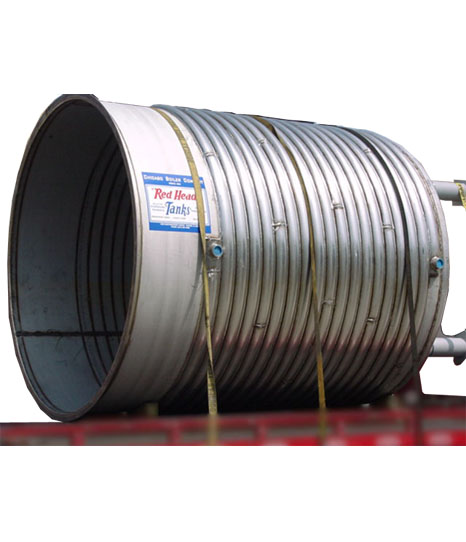
The two workhorse austenitic stainless grades
The vast majority of fabricated process tanks are built from one of two austenitic stainless steels: Type 304 or Type 316. Both are chromium-nickel alloys that form a self-healing passive layer of chromium oxide, which is what gives stainless its corrosion resistance. Both are non-magnetic in the annealed condition, both weld well with standard procedures, and both are food-safe when finished and passivated correctly. The decision between them is rarely about strength, because their mechanical properties are similar. It is almost entirely about corrosion environment.
Type 304 contains roughly 18 percent chromium and 8 percent nickel, which is why it is sometimes called 18/8. It is the default, lowest-cost stainless and an excellent general-purpose material for water, many foods, and mildly corrosive service. Type 316 adds approximately 2 to 3 percent molybdenum and slightly more nickel. That molybdenum is the entire point of paying more for 316: it dramatically improves resistance to localized corrosion in the presence of chlorides.
Both grades share the broad strengths of austenitic stainless. They are tough and ductile across a wide temperature range, retaining impact resistance even at low temperatures where many steels become brittle. They are non-hardenable by heat treatment, so they are shaped and joined cold, and they keep their corrosion resistance after forming. These shared properties are why the choice between them so rarely hinges on strength or fabricability, and why the corrosion environment is allowed to dominate the decision.
Why molybdenum matters
Chlorides are the enemy of stainless steel. Chloride ions attack the passive layer at weak points, initiating tiny pits that can bore through a wall while the surrounding surface still looks bright and clean. This is called pitting corrosion, and a closely related failure, crevice corrosion, occurs in tight gaps under gaskets, deposits, or weld spatter. Molybdenum stabilizes the passive film against chloride attack, so 316 resists pitting and crevice corrosion far better than 304 in salty, brackish, coastal, or chemically aggressive conditions.
The 'L' grade and why welds fail without it
The L in 304L and 316L stands for low carbon, typically a maximum of 0.03 percent versus around 0.08 percent for the standard grades. Low carbon directly addresses a welding problem called sensitization. When standard stainless is held in the temperature range of roughly 800 to 1500 degrees Fahrenheit, which happens in the heat-affected zone next to every weld, carbon combines with chromium to form chromium carbides at the grain boundaries. This robs the adjacent metal of the free chromium it needs to maintain its passive layer.
The result is a chromium-depleted zone that corrodes preferentially along the grain boundaries, a failure mode known as intergranular corrosion or weld decay. Because tanks are defined by their welds, sensitization is a real fabrication risk. Using a low-carbon L grade keeps carbon too low to form significant carbides, so the heat-affected zone retains its corrosion resistance without any post-weld heat treatment.
For this reason, welded stainless vessels are very commonly specified in L grades. 316L is the de facto standard for sanitary and corrosive process tanks. The mild tradeoff is that L grades have slightly lower room-temperature strength than their standard counterparts, but for tank wall thicknesses this is rarely a limiting factor. Where elevated-temperature strength and weldability are both needed, dual-certified material such as 316/316L meets the chemistry limits of both grades.
A quick word on other grades
Beyond 304 and 316 sit specialty options. 317L adds still more molybdenum for harsher chloride service. Duplex stainless steels combine austenitic and ferritic structures for higher strength and superior chloride stress-corrosion-cracking resistance, often allowing thinner walls. These are worth discussing when 316L is being pushed to its limits, but they carry higher material and fabrication cost and are not necessary for typical service.
How sensitization shows up in practice
It helps to picture what a sensitized weld actually looks like in service. The tank passes its hydrotest, ships, and runs cleanly for months. Then a thin line of rust appears running parallel to a weld seam, set back slightly from the bead itself in the heat-affected zone. That offset is the tell: the corrosion is not in the weld metal but in the band of base metal that was held in the carbide-forming temperature range during welding. Once it starts, intergranular attack can propagate quickly because it follows a continuous network of grain boundaries. Specifying an L grade and a matching low-carbon filler such as the appropriate ER316L wire is the simplest, most reliable defense, and it costs essentially nothing extra over the life of the vessel. On heavier sections or repaired areas, a post-weld solution anneal can also reverse sensitization, but for tank work the low-carbon route is far more practical.
Form, finish, and fabrication considerations
Grade choice does not stand alone; it interacts with how the tank is built and finished. Both 304 and 316 are highly formable and weld with standard gas tungsten arc procedures, and both accept the same range of surface finishes and passivation treatments. That means the alloy decision can be made on corrosion grounds alone, with confidence that the chosen grade will fabricate, polish, and clean to the same standard.
One practical point is filler metal matching. Welds should be made with filler that matches or slightly exceeds the base metal: 308L family fillers for 304L, and 316L filler for 316L. Using a filler with less alloy content than the base metal creates a weld that is the weakest link for corrosion, undermining the very reason a higher grade was specified. A reputable fabrication shop matches filler to base metal as a matter of course, but it is worth confirming on the specification.
Comparing the grades side by side
| Property | 304 / 304L | 316 / 316L |
|---|---|---|
| Nominal chromium | ~18% | ~16-18% |
| Nominal nickel | ~8% | ~10-14% |
| Molybdenum | None | ~2-3% |
| Chloride pitting resistance | Moderate | High |
| Relative material cost | Lower | Higher |
| Typical use | Water, dry goods, mild food service | Brine, acids, coastal, sanitary chemical service |
| Weld sensitization risk | Use 304L to mitigate | Use 316L to mitigate |
Choosing the right grade for your service
Start with the chemistry of what the tank will hold and how it will be cleaned. Potable water, dry ingredients, and many neutral food products are comfortably handled by 304 or 304L, and the lower material cost is real and worthwhile at scale. The moment chlorides enter the picture, whether from the product, from chlorinated cleaning chemicals, or from a salt-laden coastal atmosphere, the calculus shifts toward 316L.
Several process categories almost always justify 316L. Acidic foods and condiments, brines and pickling liquors, pharmaceutical and cosmetic ingredients, and most chemical process duties benefit from the molybdenum. Sanitary applications that use aggressive caustic and acid cleaning cycles also favor 316L because the cleaning chemistry itself is corrosive.
Temperature matters as well. Concentration and temperature together set how aggressive a chloride environment is, and a solution that 304 tolerates at ambient conditions may pit it readily when warmed. As service temperature rises, the case for 316L strengthens, because the molybdenum-bearing alloy maintains its passive film under conditions that overwhelm 304. The same logic applies to vapor spaces and splash zones, where alternating wet and dry cycles can concentrate chlorides at the liquid line and create a more severe local environment than the bulk liquid suggests.
It is also worth thinking past the current product. Process tanks are long-lived assets that frequently outlast the first product they were bought for. A vessel specified tightly for a benign duty in 304 can become a liability if the plant later runs an acidic or chloride-bearing product through it. Where future flexibility has value, the modest upcharge to 316L buys optionality as well as corrosion margin.
Finally, consider the whole life of the vessel. The premium for upgrading from 304 to 316 is modest compared with the cost of a chloride-pitting failure: lost product, downtime, cleanup, and a replacement tank. When the service is ambiguous or expected to evolve, specifying 316L and the appropriate low-carbon weld filler protects the investment and keeps the door open for future products.
Frequently asked questions
- Is 316 stainless always better than 304?
- Not always; it is better in chloride-bearing or aggressive chemical environments where its molybdenum content resists pitting and crevice corrosion. For potable water, dry goods, and many mild food applications, 304 performs well and costs less. The right answer depends on your specific service chemistry and cleaning regime.
- What is the difference between 316 and 316L?
- The L denotes low carbon, typically 0.03 percent maximum versus about 0.08 percent for standard 316. Low carbon prevents chromium carbide formation in the weld heat-affected zone, which protects against intergranular corrosion. Because tanks are heavily welded, 316L is the standard choice for fabricated vessels.
- Will polishing or passivation let me use 304 instead of 316?
- No. Polishing improves cleanability and passivation strengthens the chromium-oxide passive layer, but neither adds the molybdenum that gives 316 its chloride resistance. Finishing operations enhance whichever alloy you select; they cannot change its fundamental corrosion behavior in chloride service.
- When should I consider a grade beyond 316L?
- When 316L is being pushed to its chloride limit, when higher strength or thinner walls are desired, or when stress-corrosion cracking is a concern, consider 317L or a duplex stainless. These offer greater molybdenum content or superior cracking resistance, at higher material and fabrication cost, so they are reserved for demanding service.
Scope your custom build
Send us your volume, service chemistry, dimensions, and finish or code requirements. We return a full engineering package, firm lead time, and a fixed quote — freight quoted separately to your ZIP.
Request a Custom QuoteCall 866-418-1777