
Skid-Mounted Process Systems
Skid-Mounted Process Systems
A skid-mounted system takes the tanks, pumps, valves, piping, and controls that would normally be installed piece by piece and delivers them pre-assembled on a single steel frame. The payoff is a faster, lower-risk startup and a process that was already proven before it reached the floor.
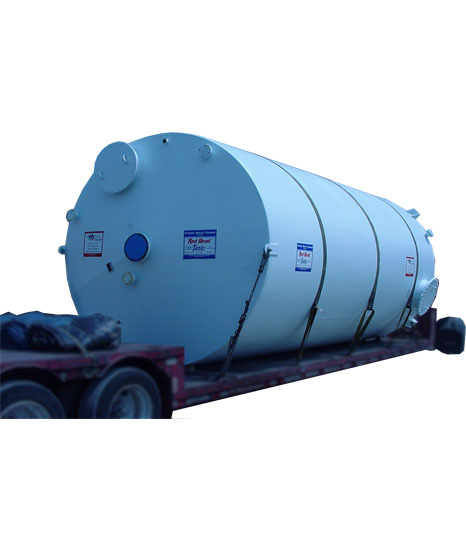
What a skid-mounted system is
A skid is a structural steel frame that carries a complete, self-contained process module: one or more tanks, the pumps that move product, the valves and instrumentation that control it, the interconnecting piping, and often the electrical panel and controls that run it. Instead of buying individual components and integrating them on site, a facility receives a finished system that arrives, is set in place, connected to a few utility and process points, and started up. The skid concept turns a construction project into an installation task.
Skids range from small modules carrying a single tank and pump up to large multi-skid systems that together form an entire process train. They are common wherever a repeatable, well-defined process needs to be deployed quickly and reliably, including blending, dosing, filtration, clean-in-place, and transfer duties.
The underlying idea is to move as much engineering and assembly work as possible off the construction site and into a controlled fabrication environment. On a job site, every component must be received, located, supported, piped, wired, and tested individually, often while other trades work around the same space and weather and access complicate everything. In a shop, the same work is done once, in a planned sequence, by people who build these systems repeatedly. The skid is the physical embodiment of that shift, a finished product rather than a kit of parts.
Why facilities choose skids
Faster installation
The largest benefit is time. Site integration of loose components means coordinating multiple trades, sequencing piping and electrical work around other plant activity, and discovering fit problems in the field. A skid arrives with that work already done, so on-site labor shrinks to setting the frame, making a handful of tie-in connections, and commissioning. For a plant where downtime is expensive, compressing weeks of field work into days is the entire value proposition. It also frees the facility's own staff and contractors to keep production running rather than diverting them to a long integration project in an active space.
Factory testing before shipment
Because the system is fully assembled in a controlled shop, it can be tested as a complete unit before it ships. Piping can be pressure-tested, pumps and valves can be run, controls can be checked, and the whole module can be functionally verified. Problems are found and fixed in the shop, where access, tooling, and expertise are concentrated, rather than in the field under schedule pressure.
Smaller, predictable footprint
Designing the whole system on one frame forces an efficient, compact layout. Components are arranged for both function and serviceability, piping runs are short, and the footprint is known in advance, which makes plant layout and space planning straightforward. The module also becomes portable: it can be relocated within a facility or to another site far more easily than field-built equipment.
Repeatable quality and standardization
When a facility deploys the same process across several lines or several sites, building it as a standardized skid means each copy is essentially identical. Operators and maintenance staff learn one system, spare parts are common across units, and documentation, training, and procedures transfer directly. This consistency is hard to achieve with field-built systems, which tend to drift apart as each installation adapts to its local conditions. Standardized skids turn a custom installation into a repeatable product, which lowers operating risk over the long run, not just at startup.
Skid-built versus field-built
| Aspect | Skid-mounted (packaged) | Field-built (loose components) |
|---|---|---|
| On-site labor | Low (set and connect) | High (full integration) |
| Testing before startup | Functionally tested in shop | Tested in the field |
| Schedule risk | Lower, more predictable | Higher, weather and trade dependent |
| Footprint | Defined and compact | Variable, set during install |
| Portability | Relocatable as a unit | Effectively fixed |
What goes on a process skid
A typical stainless process skid integrates several subsystems into one package:
- Vessels such as mix, blend, batch, or hold tanks, often jacketed and agitated for the duty.
- Pumps sized for the transfer, recirculation, or CIP supply flow.
- Piping and hygienic fittings, often tri-clamp connections in sanitary service, routed for drainability and access.
- Valves and instrumentation, including control valves, flow and level sensors, and temperature and pressure measurement.
- Controls, from a simple local panel to a full PLC with recipe management and automated sequencing.
- The frame itself, designed to support the assembly, allow forklift or crane handling, and meet drainage and access needs.
Designing a skid well
A skid is more than its parts bolted to a frame; a good one is designed for the realities of installation, operation, and maintenance. Several considerations separate a well-built skid from a crowded one.
- Transport and rigging. The frame and its overall dimensions must clear doorways, roll-up doors, and ceiling heights at the destination, and provide lifting lugs or forklift pockets so the module can be set without improvisation. A skid that cannot fit through the door it must pass is a costly oversight.
- Utility tie-in points. Process, electrical, and service connections should be grouped and clearly marked at accessible edges of the skid, so the field crew makes a small number of obvious connections rather than hunting for them.
- Maintenance access. Pumps, valves, and instruments need to be reachable for service without dismantling the skid. Crowding components to shrink the frame can trade a small footprint saving for years of awkward maintenance.
- Drainage and hygiene. In sanitary service the skid layout, frame, and piping are arranged so the system drains and cleans fully, with sloped piping and no dead legs, just as a hygienic tank would be.
Controls and integration
The controls package is often what turns a collection of components into a true system. At the simplest level a skid may carry only local switches and gauges, but most process skids include some degree of automation. A programmable logic controller can sequence valves and pumps, hold temperatures, run timed cleaning cycles, manage recipes for different products, and record data for traceability. Building the controls onto the skid means the wiring, sensor calibration, and logic are all completed and checked in the shop alongside the mechanical assembly.
Integration with the wider plant is part of the design. A skid's control system has to communicate with any overarching plant control system, share alarms and status, and accept start and stop commands from a central operator station where one exists. Planning these interfaces up front, defining the signals that cross the skid boundary, lets the module drop into the plant's automation architecture cleanly rather than requiring rework after delivery. The same discipline applies to utilities: the skid's demands for power, compressed air, steam, water, and drainage are specified so the receiving facility can have those services waiting at the tie-in points.
When a skid is the right approach
Skids make the most sense when the process is well defined, when speed of installation matters, when shop fabrication quality is preferred over field work, and when the system may need to move or be replicated. A standardized blending or CIP module deployed across several lines is a natural fit. Conversely, a sprawling, one-of-a-kind installation tied deeply into existing structures may be better field-built. For most discrete process modules, though, packaging the tanks, pumps, piping, and controls onto a tested skid reduces risk, compresses schedule, and delivers a system that was already working before it ever reached the plant floor.
The deeper benefit is risk transfer. With a skid, the integration risk, the chance that the components do not work together as intended, is resolved in the shop where it is cheapest to address, rather than during a live plant startup where every problem competes for the same scarce commissioning time. A buyer trades a slightly longer shop schedule for a far shorter and more certain field schedule, and receives a system whose performance has already been demonstrated. For processes where downtime is costly and reliability matters, that trade is usually worth making.
Frequently asked questions
- What does skid-mounted mean?
- Skid-mounted means a complete process system, including tanks, pumps, valves, piping, and often controls, is assembled on a single structural steel frame at the fabrication shop. The finished module ships as a unit, is set in place, and is connected to utilities and process lines, rather than being built up from loose components on site.
- What are the main advantages of a packaged skid system?
- The primary advantages are faster installation, factory testing before shipment, and a compact, predictable footprint. Because integration happens in the shop, on-site labor and schedule risk drop sharply, faults are caught and fixed before startup, and the module can often be relocated as a single unit. This makes commissioning quicker and lower risk.
- Can a skid be tested before it arrives?
- Yes, and that is one of its key benefits. A fully assembled skid can have its piping pressure-tested, its pumps and valves run, and its control logic verified in the controlled shop environment. Finding and fixing problems before shipment is far cheaper and faster than diagnosing them during a live plant startup.
- What kinds of systems are built as skids?
- Common skid-built systems include blending and batching modules, dosing systems, filtration packages, clean-in-place units, and transfer or recirculation systems. Any well-defined process that benefits from quick installation, shop-quality fabrication, or the ability to be replicated or relocated is a good candidate for skid mounting.
Scope your custom build
Send us your volume, service chemistry, dimensions, and finish or code requirements. We return a full engineering package, firm lead time, and a fixed quote — freight quoted separately to your ZIP.
Request a Custom QuoteCall 866-418-1777