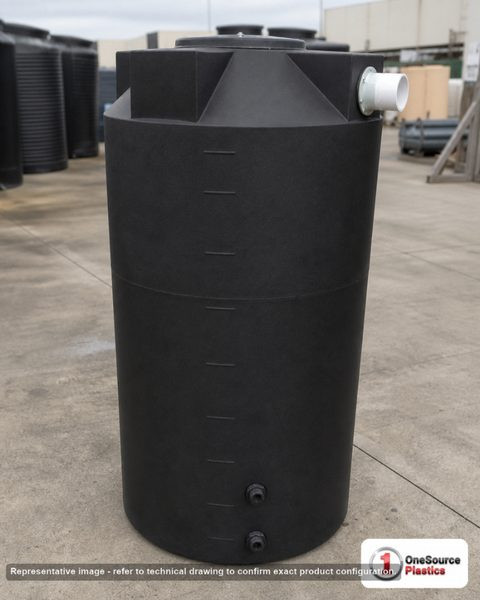
ASTM D1998 Versus API 650 Tank Specification Matrices: How the Plastic and Steel Storage Tank Standards Compare on Wall Sizing, Service Envelope, Inspection Cadence, and the Material Selection Decision for Bulk Industrial Storage
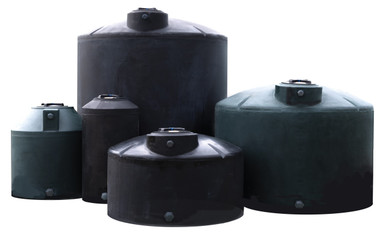
The bulk industrial storage tank market is a two-material decision: polyethylene tank built to ASTM D1998 or steel tank built to API 650. The two standards operate on parallel logic, dimension wall thickness through different mathematics, define service envelopes through different test methods, and prescribe different inspection cadences. An engineer specifying a tank for new chemical service is choosing not only between two materials but between two engineering frameworks that govern the entire lifecycle from design through end of service.
The choice is not always obvious. Polyethylene tanks dominate the dilute-aqueous, low-temperature, atmospheric-pressure service envelope where the chemistry is corrosive to steel without significant lining cost. Steel tanks dominate the high-temperature, high-pressure, hydrocarbon, and bulk-petroleum service envelope where chemistry compatibility favors steel and where the vessel size approaches limits that polyethylene rotational molding cannot reach. The middle envelope is contested: aqueous chemistry at moderate temperature and pressure, intermediate volumes 2,000 to 20,000 gallons, where either material could meet the technical requirements and the decision turns on lifecycle cost, inspection burden, and operational philosophy. This article walks the comparison framework between ASTM D1998 and API 650 for the 5-brand catalog of Norwesco, Snyder, Chem-Tainer, Enduraplas, and Bushman polyethylene tanks against equivalent-volume steel tank engineering. The references are the published ASTM D1998 standard for polyethylene tanks, the API 650 standard for welded steel tanks, the manufacturer technical data sheets for each polyethylene resin grade, and the engineering economics literature for tank lifecycle cost comparisons.
1. The Two Standards in Brief
The ASTM D1998 and API 650 standards address fundamentally different materials with parallel engineering logic:
- ASTM D1998: Polyethylene Upright Storage Tanks. The standard governs polyethylene rotationally molded tanks for atmospheric-pressure storage. Wall thickness is determined by hoop-stress calculation using the polyethylene resin hydrostatic design basis (HDB), the chemistry specific gravity, the tank diameter, and the service temperature. Standard tank sizes range from 50 gallons to 20,000+ gallons (the largest produced). Service temperature range typically from -40 C to 60 C continuous depending on the resin grade.
- API 650: Welded Steel Tanks for Oil Storage. The standard governs welded steel atmospheric-pressure storage tanks for petroleum and bulk-liquid service. Wall thickness is determined by hoop stress calculation using the steel allowable stress, the chemistry specific gravity, the tank diameter and height, and the joint efficiency for welded construction. Standard tank sizes range from 1,000 gallons to multi-million gallon (the largest produced). Service temperature range from -40 C to 90 C continuous for carbon steel, higher for alloy steel.
- Common engineering basis. Both standards calculate wall stress from hoop pressure (pgh for fluid) divided by allowable stress for the material. Both specify minimum wall thickness for handling and structural integrity. Both prescribe inspection methods to verify construction quality.
- Material-specific differences. ASTM D1998 incorporates polyethylene-specific factors including ESCR (environmental stress cracking resistance), chemical compatibility ratings, UV stabilization, and rotational molding manufacturing constraints. API 650 incorporates steel-specific factors including weld inspection, post-weld heat treatment, corrosion allowance, and fabrication tolerances.
- Code interaction with other standards. Both standards interact with applicable building codes, fire codes, environmental regulations, and industry codes (NFPA, OSHA, EPA, state-specific tank regulations). Material selection considers compliance with all applicable requirements not just the primary tank standard.
The two standards are mature and well established. Designers in either material framework have reliable engineering bases for tank specification. The decision is which framework fits the service better.
2. Wall Sizing Mathematics: The Hoop Stress Calculation Compared
2. Wall Sizing Mathematics: The Hoop Stress Calculation Compared
The wall thickness calculation in both standards starts from the hoop stress equation and applies material-specific allowable stress:
- ASTM D1998 wall sizing. Wall thickness at any elevation = (specific gravity × height to top × tank diameter × safety factor) / (2 × hydrostatic design stress at service temperature). The hydrostatic design stress for typical polyethylene tank resins at room temperature is 600-700 psi; at elevated service temperature it derates to 400-500 psi at 38 C and 250-350 psi at 60 C. The standard requires testing per ASTM D2837 to establish the HDB for each resin grade.
- API 650 wall sizing. Wall thickness at any elevation = (specific gravity × height to top × tank diameter × safety factor) / (2 × allowable stress × joint efficiency). The allowable stress for typical carbon steel A36 is 21,000 psi; for higher-grade A516 Grade 70 is 25,300 psi. Joint efficiency factor is 0.85 for spot-radiographed welds, 1.00 for full radiographed welds.
- Comparative wall thickness for typical service. A 12 foot diameter tank holding 1.0 specific gravity water at 18 feet height: polyethylene wall at room temperature requires 0.4-0.5 inch thickness based on D1998 mathematics; steel wall requires 0.13-0.15 inch thickness based on API 650. The polyethylene wall is 3-4 times thicker by absolute dimension; the polyethylene tank weight is approximately 30-40 percent of the equivalent steel tank weight.
- Service temperature effect on polyethylene. The polyethylene wall thickness increases significantly at elevated service temperature. At 60 C continuous service the polyethylene wall is 2-3 times the room-temperature thickness; this drives the practical service-temperature limit for cost-effective polyethylene tanks. Steel wall thickness is essentially temperature-insensitive within the typical service envelope.
- Specific gravity effect. Both standards scale wall thickness proportionally to chemistry specific gravity. A 1.5 SG chemistry produces 50 percent thicker walls than 1.0 SG; a 1.9 SG chemistry produces 90 percent thicker walls. Reference SII-1006600N42 10,000 gallon XLPE Captor 1.9 SG Snyder for the high-SG polyethylene envelope where the thicker walls are evident in the tank specification.
The wall sizing mathematics produces different absolute values for the two materials but operates on the same engineering logic. The designer using either standard arrives at a wall thickness sized for the service.
3. Service Envelope Comparison: Where Each Material Excels
The service envelopes overlap significantly but each material has zones of clear advantage:
- Polyethylene advantage envelope. Aqueous chemistry, dilute acids (sulfuric below 50 percent, hydrochloric below 20 percent, phosphoric below 75 percent), most hypochlorite and chloride solutions, dilute caustic, brines, and ambient-temperature aqueous service. The polyethylene resin is inherently corrosion-resistant to these chemistries; steel would require lining (epoxy, rubber, glass) at significant capital and maintenance cost. Service temperature below 60 C continuous. Atmospheric pressure only.
- Steel advantage envelope. Hydrocarbon storage (gasoline, diesel, lubricants, jet fuel), elevated temperature service (above 60 C continuous), large-volume storage (above 20,000 gallons where polyethylene rotational molding capacity ends), pressure-rated service (above atmospheric), and high mechanical loading service (overhead piping support, integrated structural attachment). Carbon steel is the standard material; stainless or alloy steel for corrosive elevated-temperature service.
- Contested envelope. Aqueous chemistry at intermediate volume (2,000-20,000 gallons), moderate service temperature (30-50 C), and chemistry that is compatible with both materials. Either material works; the decision turns on lifecycle cost, operational philosophy, and site-specific factors.
- Concentrated acid service. Concentrated sulfuric (above 93 percent) requires special polyethylene formulations or dedicated steel construction; the lined-steel option dominates for very-large-volume service while polyethylene is competitive at small to mid volumes. Concentrated nitric acid favors stainless steel for mid-to-large volumes.
- Cryogenic and high-temperature extremes. Below -40 C or above 90 C, neither standard polyethylene nor carbon steel is the answer. The selection moves to specialized materials (alloy steel for high temperature, lined cryogenic vessels for low temperature) outside the scope of either ASTM D1998 or API 650.
The service envelope boundary determines which material the engineer specifies. For dilute-aqueous chemistry at modest volume and ambient temperature, polyethylene is the dominant choice. For petroleum bulk storage at industrial volume, steel is the dominant choice. For the contested middle envelope, the lifecycle cost analysis decides.
4. Manufacturing Method and Quality Control Differences
The manufacturing methods differ fundamentally and produce different quality-control profiles:
- Polyethylene rotational molding. Resin powder loaded into a heated mold, the mold rotates on two axes while the resin melts and coats the mold interior, then cools and is removed. The resulting tank is seamless with isotropic wall properties. Quality control verifies wall thickness at multiple points, shape conformance to the mold, and surface finish. Manufacturing defects are rare in well-controlled molding facilities and are visible during the inspection.
- Steel welded construction. Steel plates rolled and welded into shell rings, shell rings welded together vertically, top and bottom heads welded to the shell. The resulting tank has multiple weld seams that are stress-concentration zones and corrosion-initiation zones. Quality control includes radiographic inspection of welds, dye penetrant or magnetic particle inspection of weld surfaces, and hydrostatic pressure testing of the completed tank.
- Manufacturing variability. Polyethylene tanks of the same model from the same manufacturer have very low part-to-part variation; the molding process is repeatable. Steel tanks of the same nominal specification have higher part-to-part variation depending on the welder skill, the rolling tolerance, and the shop quality system.
- On-site versus shop fabrication. Polyethylene tanks are entirely shop fabricated and shipped complete. Steel tanks may be shop fabricated up to a size limit then shipped, or may be field-fabricated for very large sizes. Field fabrication adds quality variability and weather-related construction-schedule risk.
- Reference polyethylene tanks. Reference N-40164 5000 gallon Norwesco vertical for the bulk polyethylene envelope and N-43128 10,000 gallon Norwesco vertical for the upper-volume polyethylene envelope. Both are shop-fabricated and ready to install. List pricing on each product page; LTL freight to your ZIP via the freight estimator or by phone at 866-418-1777.
The manufacturing differences influence the up-front capital cost, the delivery lead time, and the field installation effort. Polyethylene tanks typically have shorter lead time and lower installation cost than equivalent steel tanks due to the shop-finished single-piece construction.
5. Inspection Cadence and Methods Comparison
The inspection programs prescribed or recommended for each material differ:
- Polyethylene tank inspection. Annual visual external inspection. Periodic internal inspection where confined-space entry is feasible (typically every 5-10 years). Wall thickness measurement using ultrasonic testing at typical 5-year intervals to detect chemical-attack thinning. Fitting torque verification annually. Surface hardness testing (Shore D) at 5-year intervals to detect UV-driven aging. The inspection program is generally lighter than the steel-tank equivalent.
- Steel tank inspection per API 653. External visual inspection at 1-month intervals. Comprehensive external inspection with thickness measurements at 5-year intervals or shorter. Internal inspection at 10-20 year intervals depending on chemistry and corrosion history. Bottom-plate thickness mapping using vacuum-box or ultrasonic methods. Roof and shell weld inspection. Comprehensive inspection report with engineering analysis of remaining service life.
- Inspection cost comparison. The polyethylene tank inspection program runs at typically 0.5-1 percent of tank capital cost per year over the service life. The steel tank inspection program runs at typically 2-4 percent of capital cost per year. The cost differential becomes significant over 25-year service life.
- Failure mode detection differences. Polyethylene tanks fail by surface aging, fitting fatigue, or chemical attack at vulnerable zones. The failure modes are typically progressive and are detected by visual and ultrasonic inspection. Steel tanks fail by corrosion at the bottom plate (typically the first failure mode), corrosion at weld zones, and pitting at chemical-attack zones. Bottom-plate corrosion is hidden until inspection methods specifically address it.
- Lining inspection for lined steel tanks. Steel tanks with corrosion-resistant linings (epoxy, rubber, polyurethane) require additional lining inspection at typical 3-5 year intervals. Lining failure exposes the underlying steel to chemistry attack and accelerates corrosion. The lining-inspection program adds to the steel-tank lifecycle inspection burden.
The inspection cadence differential is one of the operational-cost advantages of polyethylene over steel for chemistries where both materials are technically suitable.
6. Service Life and End-of-Life Comparison
The expected service life and end-of-life economics differ:
- Polyethylene tank service life. Manufacturer-published design life is typically 20-30 years for outdoor service in moderate climate. Actual service life ranges from 20-25 years in extreme climate (sun-belt UV, rust-belt freeze-thaw) to 30+ years in moderate climate with good maintenance. End of life typically presents as fitting fatigue, surface aging beyond cosmetic, or chemistry change requiring different material specification.
- Steel tank service life. Manufacturer-published design life is typically 30-50 years with appropriate corrosion control. Actual service life ranges from 20-30 years for inadequately-protected steel in corrosive service to 50+ years for well-maintained steel in benign service. End of life typically presents as bottom-plate thinning beyond minimum acceptable, weld zone corrosion, or accumulated repair cost exceeding replacement value.
- End-of-life replacement cost. Polyethylene tank replacement involves removal of the old tank and installation of the new tank. The polyethylene shell is light enough for crane handling without major rigging. Steel tank replacement involves cutting and removal of the old tank with associated decommissioning, soil and foundation evaluation, and large-scale fabrication or field-erection of the new tank. The replacement cost differential favors polyethylene at small to mid volumes.
- Recyclability at end of life. Polyethylene shell at end of life can be ground and recycled into lower-grade polyethylene products. Steel shell at end of life is scrap-recycled with high recovery value. Both materials have established end-of-life recovery paths.
- Service-life extension via re-lining. Steel tanks can be re-lined to restore corrosion resistance and extend service life. Polyethylene tanks cannot generally be re-lined; replacement is the typical end-of-life action. The re-lining option is an advantage of steel for very large tanks where replacement cost is prohibitive.
The lifecycle service-life comparison favors steel for very long expected operation (50+ years) at large volumes; favors polyethylene for moderate operation (20-30 years) at small to mid volumes. The crossover point depends on the chemistry, the volume, and the operational discipline.
7. Lifecycle Cost Analysis Framework
The lifecycle cost comparison combines capital, installation, inspection, maintenance, and end-of-life costs:
- Capital cost. For comparable volume in the contested envelope (2,000-20,000 gallons aqueous service), polyethylene tank capital is typically 30-50 percent of steel-tank capital with no lining or 20-35 percent of steel-tank capital with lining for chemical service.
- Installation cost. Polyethylene tanks ship as single piece and install on prepared concrete pad. Steel tanks at large volume require field fabrication and concrete foundation engineered for the heavier shell. Installation cost differential further favors polyethylene at small to mid volumes; differential narrows at larger volumes where both involve significant site work.
- Annual inspection and maintenance cost. Polyethylene at typical 0.5-1 percent of capital per year; steel at typical 2-4 percent of capital per year for comparable service. The differential compounds over the service life.
- Replacement at end of life. Polyethylene replacement at typical 80-90 percent of original capital (cost inflation offset by smaller replacement scope); steel replacement at typical 70-100 percent of original capital depending on whether re-lining defers replacement and at what cost.
- Total lifecycle cost over 30-year service. For typical aqueous chemistry at 5,000-10,000 gallons, polyethylene total lifecycle cost is approximately 40-60 percent of steel-tank lifecycle cost. The differential narrows for service that demands the steel-specific advantages (high temperature, large volume, hydrocarbon).
- Capital opportunity cost consideration. The capital savings from polyethylene at year zero can be invested elsewhere. Over 30-year service the time-value of money on the saved capital can be material to the lifecycle comparison; favorable to polyethylene in most realistic interest-rate assumptions.
The lifecycle analysis framework is the engineering economics tool for the material decision in the contested envelope. The framework should be applied with site-specific cost data; the percentages cited above are typical industry benchmarks but actual costs vary with site, chemistry, and operational practices.
8. Tank Selection Decision Matrix
The decision matrix consolidates the technical and economic factors:
- Chemistry compatibility. If polyethylene is incompatible with the chemistry, steel is the only choice. If steel is incompatible without lining, polyethylene is the lower-cost choice unless other factors override.
- Service temperature. Below 60 C continuous: polyethylene is competitive. Above 60 C continuous: steel is the typical choice. Reference N-41524 2500 gallon Norwesco for the moderate-temperature water and aqueous-chemistry envelope where polyethylene dominates.
- Volume. Below 20,000 gallons: polyethylene is widely available. Above 20,000 gallons: steel is the typical choice. The largest single polyethylene tank common in 5-brand catalogs is 20,000-25,000 gallons; steel scales to multi-million gallon.
- Pressure rating. Atmospheric only: either material works. Above atmospheric: steel is required (polyethylene tank standards do not address pressure-rated service).
- Inspection burden tolerance. Lower-burden operations favor polyethylene; operations equipped for full API 653 inspection programs accept the steel-tank inspection burden as part of the operational profile.
- Capital availability and lifecycle horizon. Constrained capital favors polyethylene at small to mid volumes; long lifecycle horizon (50+ years) at large volumes favors steel where the longer service life amortizes the higher capital.
- Site space and load constraints. Polyethylene tanks at modest volume have lower foundation loading and smaller footprint than equivalent steel; site constraints can favor polyethylene where space is limited.
The decision matrix produces a recommendation; the final decision incorporates the site-specific cost data and the operational philosophy.
9. The Standards Comparison Conclusion
ASTM D1998 and API 650 are mature engineering frameworks that govern the two dominant bulk-storage tank materials. The standards operate on parallel logic with material-specific differences in wall sizing, service envelope, manufacturing, inspection, and lifecycle cost. The material selection for any specific service balances these differences against the service requirements and the operational constraints.
The clearest cases are the corner cases: dilute aqueous chemistry at modest volume favors polyethylene; petroleum bulk storage at industrial volume favors steel. The contested middle envelope requires the engineering economics analysis that compares lifecycle cost, inspection burden, and operational philosophy. For most industrial chemical service at 5,000-15,000 gallon volume, polyethylene specified to ASTM D1998 produces a lower-lifecycle-cost installation than equivalent steel specified to API 650, and the polyethylene installation is supported by an established 5-brand catalog of Norwesco, Snyder, Chem-Tainer, Enduraplas, and Bushman manufacturers.
OneSource Plastics ships polyethylene tanks across all 5 brands with the ASTM D1998 specification compliance, the chemistry compatibility envelope, and the dimensional range that supports most contested-envelope chemical service. The selection decision for any specific chemistry-and-volume combination is performed by the customer site engineer with reference to ASTM D1998 for polyethylene options, API 650 for steel options, the manufacturer chemistry compatibility data, and the lifecycle cost analysis for the specific operation. List pricing on each product page; LTL freight to your ZIP via the freight estimator or by phone at 866-418-1777. For related operations engineering see secondary containment requirements and tank specification sheet reading.
Recommended Tanks for This Guide
Live pricing, updated automatically · estimate freight to your ZIP.