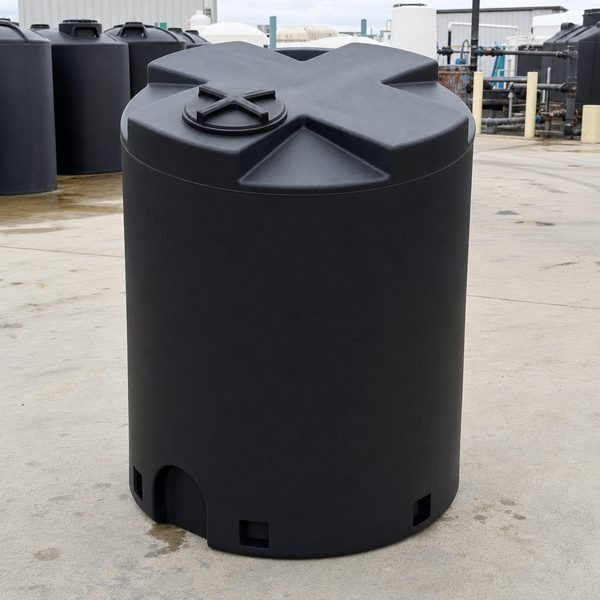
Between-Batch Tank Turnover Sanitization Protocol Design: Drain-Rinse-Inspect-Sanitize-Verify Sequence Engineering, Chemistry Cross-Contamination Risk Assessment, and the Documented Procedure That Restores a Tank to Clean-Service Status
A bulk polyethylene tank that has just discharged a chemistry batch is rarely empty. The tank holds a residual heel at the bottom below the outlet elevation. The walls retain a thin film of the discharged chemistry. The fittings and gaskets carry trace chemistry in their crevices and seal interfaces. The headspace contains vapor from the previous chemistry. If the next batch in this tank is a different chemistry, the residual carryover from batch one cross-contaminates batch two and produces a chemistry that is neither pure batch one nor pure batch two. For some chemistry pairs, the cross-contamination is a quality issue that the receiving customer detects in lab analysis. For other chemistry pairs, the cross-contamination is a hazard that produces gas evolution, exotherm, or reaction products that can damage the tank or injure the operator.
The between-batch sanitization protocol restores the tank to a documented clean-service state before the next batch arrives. The protocol is not a single procedure; it is a family of procedures parameterized by the previous-chemistry, the next-chemistry, and the tank specification. A simple water-to-water turnover requires minimal sanitization; an acid-to-base turnover requires neutralization, multiple rinses, and verified end-point pH. A food-grade-to-food-grade turnover requires sanitizer with documented residence time. A herbicide-to-fertilizer turnover requires complete decontamination because residual herbicide damages the next-batch crop. This article walks the engineering of the documented sanitization protocol for the 5-brand catalog of Norwesco, Snyder, Chem-Tainer, Enduraplas, and Bushman bulk polyethylene tanks. The references are the chemistry compatibility data sheets, the EPA pesticide-handler guidance for herbicide and pesticide rinsing, the FDA food-contact guidance where applicable, and the field operations data from facilities operating multi-chemistry bulk storage with zero-cross-contamination operating records.
1. The Cross-Contamination Failure Mode and Risk Assessment
Cross-contamination from inadequate between-batch sanitization presents in several failure categories:
- Quality cross-contamination. The next batch contains residual previous-batch chemistry above the customer specification limit. The receiving customer rejects the load on lab analysis or detects the contamination in their downstream process. Financial impact is the rejected load value plus the customer relationship damage.
- Reactive cross-contamination. The next batch reacts with the residual previous-batch chemistry to produce gas, heat, or reaction products. Acid residual reacting with base next-batch produces salt formation and CO2 evolution. Hypochlorite residual reacting with reducing-agent next-batch produces chlorine gas evolution. Oxidizer residual reacting with organic next-batch produces exotherm and potential fire. Reactive cross-contamination is a safety event that requires immediate response.
- Catalytic cross-contamination. Trace residual that does not react directly but catalyzes degradation of the next-batch chemistry. Trace iron in a tank previously holding ferric chloride can catalyze decomposition of hydrogen peroxide in the next batch. Trace transition metals can catalyze polymerization of monomer chemistry. The catalytic effect appears only with the trace metal still present and is missed unless the sanitization is verified.
- Regulated cross-contamination. Pesticide and herbicide residuals at trace concentrations damage downstream crops or violate registration restrictions. Atrazine residual in a tank later filled with fertilizer damages crops fertilized from the contaminated tank. The EPA pesticide handler training documents this failure mode and the rinsing protocols that address it.
- Microbial cross-contamination. Aqueous chemistry that supports microbial growth (food-grade brines, aqueous nutrient solutions, fermentation broths) becomes contaminated with residual microbiology from the previous batch. The microbial population may colonize the tank surfaces and re-contaminate every subsequent batch until full sanitization is performed.
The risk assessment for each chemistry pair determines the sanitization protocol intensity. The two-axis assessment considers the consequence of cross-contamination (quality, safety, regulatory, microbial) and the likelihood of residual carryover (residual heel volume, wall film thickness, fitting crevice volume). High-consequence high-likelihood pairs require the most intensive protocol; low-consequence low-likelihood pairs may use the minimal turnover.
2. The Drain-Rinse-Inspect-Sanitize-Verify Sequence
The general protocol structure for moderate to high-consequence turnovers:
- Drain. Discharge the tank as completely as possible through the normal outlet. Continue draining until flow ceases naturally; do not attempt to vacuum out the residual heel without proper procedures (vacuum collapse risk and residual chemistry exposure risk). The residual heel is the chemistry below the outlet elevation; this heel will be addressed in the rinse step.
- Initial rinse. Add water (or rinse chemistry compatible with both previous and next batch) at 5-10 percent of tank volume. Operate the recirculation loop or in-tank mixer if available; if not, rock the tank gently or use external pump-around through hose connections. Discharge the rinse chemistry to the appropriate disposal stream. The rinse mobilizes the residual heel, dissolves the wall film, and reduces residual chemistry concentration by 90-95 percent at this stage.
- Inspection. Visual inspection through the tank top hatch (with confined-space precautions where applicable) confirms the wall surfaces are clear, no residual film is visible, and the floor area is clean. Inspect fittings and gasket interfaces for residual deposits. Document inspection findings in the work record before proceeding.
- Secondary rinse if needed. If the inspection identified persistent residual, add a second rinse with appropriate chemistry (acid to dissolve mineral scale, base to dissolve organic residue, sanitizer to address microbial residual). Operate mixing or recirculation; discharge to disposal; re-inspect.
- Sanitize. For chemistries requiring sanitization (food-grade, microbial-sensitive), add sanitizer at the specified concentration and dwell time. Common sanitizers are sodium hypochlorite at 100-200 ppm available chlorine for 10-30 minutes contact, peracetic acid at 80-100 ppm for 5-10 minutes contact, or chemistry-specific sanitizers per the customer specification. Drain the sanitizer; rinse with potable water if sanitizer carryover affects the next batch; verify that sanitizer residual is below acceptable limit.
- Verify. Document the as-cleaned condition with sample test (pH, conductivity, sanitizer residual, visual inspection). Compare against the documented specification for clean-service status. Record the verification in the work record. Tank is then released for the next batch.
The sequence is documented as a written procedure with parameters set for each chemistry-pair turnover. Operators execute the procedure step by step, document each step completion, and the work record is reviewed by the supervisor before the tank is released for the next batch.
3. Acid-to-Base and Base-to-Acid Neutralization Protocol
The most chemically reactive turnover is between acidic and basic chemistries. The protocol detail:
- Pre-discharge dilution where applicable. If the previous batch is concentrated acid or base, dilute the residual heel with water before discharge. The dilution reduces the chemistry concentration in the residual heel and reduces the reaction potential during the subsequent neutralization. Pre-dilution is not always possible (small tanks, customer chemistry constraints) but is preferred where practical.
- Neutralization with stoichiometric titrant. Add the neutralizing chemistry (base if previous was acid; acid if previous was base) gradually with mixing. Monitor pH during addition. The end point is pH 6-8 for full neutralization. Slow controlled addition prevents localized exotherm and gas evolution; rapid addition produces hot spots that can boil locally and over-pressurize the tank.
- Mixing during neutralization. Mixing during neutralization is essential. Without mixing, the titrant settles at the floor or stratifies depending on density and the bulk pH does not equilibrate. Use the recirculation loop, in-tank mixer, or external pump-around to drive mixing. Do not rely on diffusion alone.
- Heat management. Neutralization is exothermic. The temperature rise depends on the chemistry concentration and the volume. Calculate the expected temperature rise (heat of neutralization is approximately 13.7 kcal per mole for strong-acid-strong-base) and monitor actual temperature during the operation. If temperature exceeds the polyethylene tank service limit (typically 60 C continuous), pause neutralization, allow cooling, and resume slowly.
- End-point verification. Confirm pH at multiple sample locations (top, middle, bottom) using calibrated pH meter. The pH should be 6-8 at all locations with no significant gradient. If gradient persists, continue mixing until equilibrated.
- Disposal of neutralized rinse. The neutralized rinse contains the dissolved salts from the acid-base reaction at typical 0.5-2 percent concentration. Disposal route depends on local regulations; sewer discharge if locally permitted, evaporation pond, or hazardous waste collection if the chemistries or salts are regulated.
The neutralization protocol typically takes 4-8 hours for a 5,000-gallon tank including titrant addition, mixing, cooling, and verification. The completed tank is then ready for water rinse and final clean-service preparation.
4. Herbicide and Pesticide Rinsing Protocol
Tanks that have held herbicide, pesticide, or any registered crop-protection chemistry require special rinsing procedures:
- Triple-rinse procedure. The EPA standard for pesticide containers and tanks is the triple-rinse: three sequential rinses with water at minimum 10 percent of tank volume per rinse, with mixing during each rinse. Each rinse removes a fraction of the residual; three rinses reduce residual to typically 0.01-0.1 percent of the original chemistry concentration.
- Rinse water disposal as the next-batch dilution. Where the next batch is the same chemistry diluted (a herbicide tank rinsed and refilled with fresh herbicide-water mix), the rinse water can be added to the next batch as part of the dilution water. This conserves the chemistry and avoids waste disposal.
- Rinse water disposal as registered application. Where the rinse water is not added to the next batch, the rinse water is disposed by application to a labeled use site (a labeled crop area at a rate within the use rate). This is the EPA-specified disposal for triple-rinse water and avoids classifying the rinse as hazardous waste.
- Rinse water disposal as hazardous waste. If neither of the above options applies, the rinse water is hazardous waste subject to the applicable regulations. This is the most expensive disposal option and is avoided where possible by using one of the registered alternatives.
- Documentation of triple-rinse completion. The triple-rinse is documented in the work record with rinse volumes, mixing time per rinse, and disposal route. The documentation supports any future regulatory inquiry and supports the operational record that the tank has been properly cleared for next-batch service.
- Cross-chemistry herbicide consideration. A tank that has held atrazine herbicide and is being prepared for fertilizer service requires the triple-rinse plus additional verification that no atrazine residual is present. Atrazine at trace levels damages susceptible crops; the post-rinse residual must be below the crop tolerance level. Lab analysis of the cleaned tank or the first-batch fertilizer confirms compliance.
The herbicide/pesticide rinse discipline is well established in agricultural chemistry handling. Reference N-42064 15 gallon cone bottom Norwesco for the small-batch chemistry envelope where this discipline is most often executed; the cone-bottom geometry helps drainage during the rinse cycles.
5. Food-Grade and Sanitary Service Protocol
Tanks holding food-grade chemistry require additional sanitization beyond chemical cleaning:
- Pre-clean to remove product residue. Caustic detergent at 0.5-2 percent NaOH at 60-80 C for 20-30 minutes contact dissolves protein residue and fat residue. Acidic detergent at 0.5-1 percent phosphoric acid for 10-20 minutes contact removes mineral scale. Alternation of caustic and acid cleans both organic and inorganic residue.
- Sanitizer application. Sodium hypochlorite at 100-200 ppm available chlorine for 10-30 minutes contact, peracetic acid at 80-100 ppm for 5-10 minutes contact, or quaternary ammonium at 200-400 ppm. The sanitizer concentration and dwell time are matched to the target organism reduction (typically 5-log reduction for general food contact, 7-log for high-risk service).
- Final rinse with potable water. Sanitizer residual is rinsed to below the regulatory limit (typically less than 0.5 ppm for chlorine in finished food contact). Rinse volume and quality are documented; rinse water is potable per local regulations.
- Pre-fill verification by ATP test or microbial swab. ATP bioluminescence test gives a quick (1-3 minute) indication of organic residue. Swab samples cultured for 24-48 hours give a quantitative microbial count. Verification confirms the sanitization achieved the required cleanliness level before the food-grade chemistry is loaded.
- Material compatibility with food-grade requirements. Verify that the polyethylene resin in the tank is FDA 21 CFR 177.1520 compliant for the food-grade chemistry service. The Norwesco, Snyder, Chem-Tainer, Enduraplas, and Bushman polyethylene resin specifications include FDA compliance for the standard food-grade tank lines; verify the specific tank model against the documentation. Reference N-41524 2500 gallon Norwesco for the FDA-compliant water and food-grade envelope.
- Documentation for traceability. Food-grade operations require traceability documentation including cleaning chemistry lot, sanitizer concentration, contact time, ATP or swab verification result, and signature of qualified personnel. The documentation is retained per the customer or regulator requirement.
The food-grade sanitization is the most disciplined protocol in the bulk-storage operations world. The standards are well-defined, the chemistry is established, and the verification methods are quantitative.
6. Confined Space Entry Procedures During Inspection
The inspection step in many sanitization protocols requires personnel entry to the tank interior. The confined-space discipline:
- Confined-space pre-entry checklist. Atmospheric testing for oxygen (19.5-23.5 percent), flammable gas (less than 10 percent LEL), and toxic gases (per chemistry-specific limits). Forced ventilation if atmosphere is not initially safe. Lockout-tagout of all energy sources to the tank including process valves, agitator power, and any heating sources. Standby person at the entrance for the duration of the entry.
- Personal protective equipment. Chemical-resistant suit appropriate for the residual chemistry. Respirator (air-purifying or supplied-air per the chemistry hazard). Eye protection. Lifeline and harness for retrieval if entry is overhead-vertical. Communications between entrant and standby.
- Entry duration limits. Per the confined-space program, limit entry duration based on atmospheric stability and chemistry exposure time. Typical limits 15-30 minutes per entry with rotation if longer inspection is needed.
- Inspection checklist while inside. Visual inspection of tank floor, walls, fittings, and ceiling. Photograph any deposits or anomalies. Sample any deposits for lab analysis if their identity is uncertain. Document the as-found condition before any cleaning action that disturbs the deposits.
- Post-entry verification. Confirm complete egress, replace any removed grating or covers, restore lockouts to operational state, and complete the entry log with duration, findings, and any follow-up actions.
- Alternative non-entry inspection. Camera inspection through tank top hatch eliminates the confined-space entry for routine inspections. Borescope or pole-camera through the hatch provides visual coverage of most tank interior surfaces without entry. Reserve manned entry for situations where camera inspection is inadequate or hands-on action is required.
The confined-space discipline is a legal requirement in the United States under OSHA 1910.146. The protocol prevents the operator-injury events that have historically occurred during tank-cleaning operations.
7. Tank Selection That Supports Efficient Turnover
The tank specification affects how easy or difficult the turnover protocol is to execute. Selection criteria:
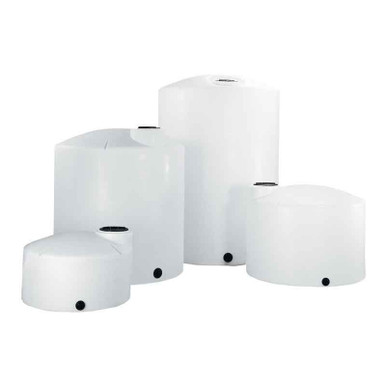
- Cone or sloped bottom for complete drain. A cone-bottom tank (45-60 degree cone) drains nearly completely under gravity with minimal residual heel. A flat-bottom tank retains a heel volume that requires rinse-mobilization to discharge. Reference N-42064 15 gallon 57-degree cone bottom Norwesco for the small-batch cone envelope. Reference SII-1006600N42 10,000 gallon XLPE Captor for the bulk envelope where the floor-drain geometry helps but does not eliminate the heel.
- Smooth interior surface. Polyethylene tank interiors are smooth-molded which favors easy cleaning. Avoid tanks with internal baffles, internal fittings, or interior structural elements that create cleaning shadows where chemistry residue persists.
- Hatch large enough for camera or person inspection. A hatch of 16-20 inch diameter accommodates pole-camera inspection. A hatch of 24 inch and larger accommodates manned entry per confined-space procedures.
- CIP (clean-in-place) spray ball compatibility for high-cycle service. Tanks that turnover frequently (weekly or more often) benefit from a permanently installed CIP spray ball that delivers cleaning chemistry to the tank interior surfaces. The spray ball connects to a permanent CIP supply line and runs the rinse, cleaning, and sanitization cycles without manual hose handling. Reference N-40164 5000 gallon Norwesco vertical for the bulk envelope where CIP installation pays back through reduced turnover labor.
- Multiple bottom or side fittings for drain options. A tank with multiple bottom outlets allows complete drain coverage and reduces the residual heel. The drain fittings should reach the lowest point of the tank floor (cone tip or bowl floor minimum elevation).
List pricing on each product page. LTL freight to your ZIP via the freight estimator or by phone at 866-418-1777.
8. The Documented Procedure and Operational Discipline
The protocol is only as effective as the documented procedure and the operational discipline that follows it:
- Written procedure per chemistry-pair turnover. Each common turnover sequence has a written procedure. The procedure specifies the chemistry pair, the sequence of steps, the parameters at each step, the inspection criteria, and the verification method. New chemistry pairs trigger the development of a new procedure before the first turnover.
- Operator training and qualification. The operator executing the protocol is trained on the specific chemistry hazards, the personal protective equipment requirements, the equipment operation (recirculation loop, sanitizer dosing pumps, sample taps), and the documentation requirements. Qualification is documented and refreshed periodically.
- Step-by-step documentation during execution. The operator documents each step as completed. Sign-off after each step ensures no step is skipped or executed out of order. The documentation is reviewed by supervision before the tank is released.
- Sample retention. Sample of the post-rinse, post-sanitize, and pre-fill condition is retained for some period (typically 30-90 days) so that any chemistry-quality issue in the next batch can be traced back through the cleaning record.
- Periodic protocol review. Annually review the protocols against the actual operational record. Failures, near-misses, and customer complaints inform updates to the procedure. The procedures evolve as the operations team learns from experience.
- Auditor verification. Customer audits, regulator inspections, and internal quality audits review the protocol documentation and verify operational compliance. The audit findings drive procedure improvements and operational discipline reinforcement.
The protocol works because the people executing it follow it consistently. The documented procedure and the operational discipline together produce the zero-cross-contamination operating record that responsible bulk-storage operators maintain over multi-year multi-chemistry service.
9. The Between-Batch Sanitization Conclusion
Tank turnover between chemistries is a chemistry operation in its own right with the same engineering discipline as any other process step. The drain-rinse-inspect-sanitize-verify sequence is parameterized for each chemistry pair based on the cross-contamination risk assessment, the chemistry compatibility, and the regulatory or customer requirements. The protocol is documented, the operators are trained, the execution is logged, and the verification is sample-based with traceable results.
The investment in protocol design and operational discipline returns reliability that the alternative does not produce. Quality complaints from cross-contaminated batches, safety events from reactive cross-contamination, regulatory exposure from inadequate pesticide rinsing, and microbial contamination in food-grade service are all eliminated by the disciplined protocol. The operational cost of the protocol is small compared to the avoided losses.
OneSource Plastics ships polyethylene tanks across all 5 brands of Norwesco, Snyder, Chem-Tainer, Enduraplas, and Bushman with the geometry, the fitting count, and the FDA-compliant resin specifications that support efficient turnover protocols. The protocol engineering is performed by the customer site engineer with reference to the chemistry compatibility data, the EPA pesticide-handler guidance, the FDA food-contact regulations, and the OSHA confined-space standard where applicable. List pricing on each product page; LTL freight to your ZIP via the freight estimator or by phone at 866-418-1777. For related operations engineering see secondary containment requirements and tank specification sheet reading.
Recommended Tanks for This Guide
Live pricing, updated automatically · estimate freight to your ZIP.