Cathodic Disbondment Testing for Double-Wall Tank Interstitial Spaces: ASTM G8, G42, and G80 Methodology for Coating Adhesion Under Cathodic Polarization, Why It Matters for Buried Steel Outer Walls, and the Polyethylene Boundary Condition
Cathodic disbondment is a specific failure mode of coatings applied to buried metal surfaces protected by cathodic protection systems. The failure mode is well-characterized by three ASTM standards (G8, G42, and G80) that define laboratory test methods for measuring coating adhesion under cathodic polarization conditions. For tank installations the failure mode is most relevant to double-wall tanks with steel outer walls and protective coatings, but the underlying physics and the test methodology have implications even for polyethylene-walled tanks where buried steel piping or fittings interface with the polyethylene tank body. This article walks the cathodic disbondment failure mode, the three test standards, the field-relevant interpretation, the implications for double-wall tank specifications, and the boundary between metal and polyethylene where the failure mode does and does not apply.
The discussion is grounded in ASTM G8, ASTM G42, ASTM G80, NACE SP0169 cathodic protection criteria, and field practice across the 5-brand polyethylene tank catalog (Norwesco, Snyder, Chem-Tainer, Enduraplas, Bushman). List pricing on each tank product page; LTL freight quoted to your ZIP via the freight estimator or by phone at 866-418-1777.
1. The Cathodic Disbondment Failure Mode
Cathodic disbondment is the loss of adhesion between a protective coating and the underlying metal substrate when the substrate is held at cathodic potential by a cathodic protection (CP) system:
- The cathodic protection context. Cathodic protection prevents corrosion of buried steel by impressing a negative potential on the steel relative to a reference electrode. The negative potential drives the metal into the immune region where corrosion does not occur. The protection is achieved with sacrificial anodes (zinc, magnesium, aluminum that corrode preferentially) or impressed current systems (a DC power supply driving current from inert anodes to the protected steel).
- The coating role under CP. The protective coating on the steel reduces the current required to maintain cathodic protection. Without coating, the entire steel surface must be polarized; with coating, only the holidays (defects in the coating) need to be polarized. A well-coated tank requires a small fraction of the CP current that an uncoated tank would require.
- The disbondment mechanism. At a coating defect (holiday), the bare steel is polarized cathodically and water is reduced at the steel surface to produce hydroxide ions and hydrogen gas. The hydroxide raises the pH at the metal-coating interface to alkaline values; the hydrogen gas pressure can mechanically drive the coating away from the metal. Together the chemical and mechanical effects can disbond the coating outward from the original holiday, exposing more bare steel.
- The progression with time. A small initial holiday with cathodic disbondment can grow into a large disbonded area across months and years. The disbonded area still has coating present (it has not flaked off) but the coating no longer adheres to the metal. The disbonded coating may shield the underlying steel from the CP current, allowing localized corrosion to begin under the disbonded coating in a phenomenon called "shielding."
- The detection difficulty. Disbondment is mechanically subtle: the coating may appear visually intact while losing adhesion underneath. Field detection requires either physical inspection (cutting and lifting the coating to look) or specialized non-destructive techniques (ultrasonic adhesion testing, holiday detection paired with potential surveys).
- The consequence for tank service life. A buried double-wall tank with disbonded coating on the outer steel wall develops localized corrosion under the disbondment, eventually penetrating the outer wall, allowing groundwater into the interstitial space, and triggering the leak detection system. The underlying tank chemistry is still contained by the inner wall, but the tank is now compromised and the corrective action can be expensive.
The cathodic disbondment failure mode is the dominant long-term degradation mechanism for coated buried steel tanks under CP. The test methods quantify a coating's resistance to the failure mode and inform coating selection for new tank installations.
2. ASTM G8 Standard Test Method
ASTM G8 (now superseded for some applications by G80 but still widely referenced) is the original cathodic disbondment test method:
- The test specimen preparation. A coated steel coupon is prepared with a deliberate holiday (a circular disc-shaped area of coating removed to expose bare steel) at the center. The coupon dimensions and holiday geometry are specified to provide reproducible results.
- The test cell configuration. The coupon is immersed in a sodium chloride electrolyte (3 percent NaCl typically). A counter electrode (platinum wire or graphite) and a reference electrode (saturated calomel or silver-silver chloride) are placed in the electrolyte. A potentiostat or power supply drives the coupon to a defined cathodic potential.
- The test conditions. The coupon is held at the test potential for a defined duration (typically 30 days) at a defined temperature (typically 65 to 95 C for accelerated testing). The elevated temperature accelerates the disbondment mechanism so that 30 days of testing represents many years of field exposure.
- The post-test evaluation. After the test period, the coupon is removed, dried, and the disbonded area around the original holiday is measured. The measurement is typically made by cutting radial slits through the coating at the holiday and lifting the coating to find where the disbondment ends. The disbonded radius minus the original holiday radius is the reported result.
- The acceptance criteria. Different specifications use different acceptance criteria. A typical industrial specification might require that the disbonded radius at 30 days at 65 C not exceed 5 to 10 mm beyond the original holiday. A pipeline specification under more aggressive conditions might require 15 mm or less at 95 C.
- The G8 limitations. The G8 test conditions are aggressive and the results scale to field conditions only with significant assumptions. The test is most useful for comparative coating evaluation (coating A versus coating B under identical conditions) rather than for absolute prediction of field performance.
G8 is the foundational method that established the cathodic disbondment test framework. The current revision and the related methods refine the test conditions for specific applications.
3. ASTM G42 Elevated-Temperature Test
ASTM G42 specifies the cathodic disbondment test at elevated temperatures relevant to operating tank and pipeline service:
- The temperature range. G42 typically operates at 65 to 95 C, with the specific temperature selected to match the expected service temperature. A buried tank operating at ambient temperature uses lower test temperatures; a tank operating at elevated temperature (heated chemistry, hot-process service) uses higher test temperatures.
- The temperature acceleration factor. Cathodic disbondment kinetics roughly double for every 10 C temperature increase. A 30-day test at 65 C is approximately equivalent to several years at 25 C; a 30-day test at 95 C is approximately equivalent to a decade or more at 25 C. The temperature acceleration converts a multi-year field-behavior question into a one-month laboratory question.
- The test cell modifications. Operating at elevated temperature requires sealed test cells to prevent electrolyte evaporation, temperature controllers to hold the cell at the target temperature, and heat-tolerant cell components. The test cells are more complex than the G8 ambient cells but the underlying methodology is similar.
- The G42 result interpretation. Results from G42 testing are read with explicit attention to the test temperature. A coating that performs well at 25 C may perform poorly at 65 C; a coating qualified for ambient buried service is not necessarily qualified for elevated-temperature service.
- The G42 application to tank coatings. Tank coatings for buried double-wall tanks are typically tested at G42 conditions matching the expected operating temperature plus a margin. A tank in moderate climate burial typically tests at 65 C; a tank in hot climate or heated-chemistry service tests at 95 C.
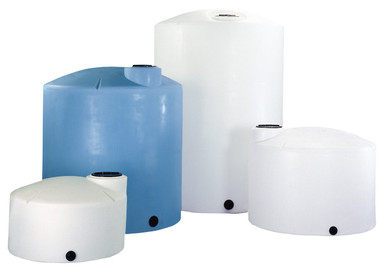
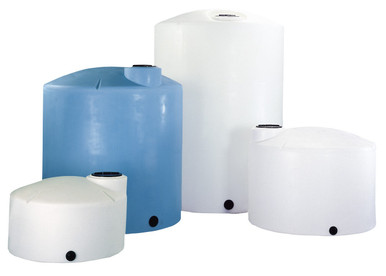
- Reference 5000 gallon tank for the coating-specification context. Reference N-40164 5000 gallon Norwesco vertical as the typical industrial polyethylene tank where the G42 discussion is contextual rather than directly applicable. The polyethylene tank itself does not need cathodic disbondment qualification; the polyethylene is the tank wall, not a coating on a metal substrate. The G42 discussion applies to associated metal piping, fittings, and any metal secondary containment.
G42 is the most commonly cited cathodic disbondment standard for buried tank and pipeline coatings. The temperature-explicit testing reflects the field reality that disbondment is highly temperature-dependent.
4. ASTM G80 Standard for Pipeline Coatings
ASTM G80 provides a specific cathodic disbondment test methodology aimed at pipeline coatings but applicable to tank applications:
- The G80 specimen geometry. G80 uses a flat coupon similar to G8 but with refined specimen preparation procedures. The coupon size, holiday geometry, and surface preparation are specified more tightly than in G8.
- The G80 electrolyte and conditions. The electrolyte is sodium chloride at 3 percent. The temperature is typically 65 C, with G80 referencing G42 for higher-temperature variants. The test duration is 30 days standard, with longer durations (60 or 90 days) for more demanding qualification.
- The G80 reporting. Results are reported as disbondment radius and as a disbondment-index value calculated from multiple measurements around the original holiday. The index provides a more nuanced characterization than a single radius measurement.
- The G80 application context. G80 is typically referenced in pipeline coating specifications and in some buried-tank coating specifications. The methodology is comparable to G8 but the standardized procedures provide more consistent results across laboratories.
- The G80 versus G8 selection. Many modern specifications have moved from G8 to G80 because G80's tighter procedural definitions reduce inter-laboratory variability. Sites updating coating specifications should consider the move; sites with existing specifications referencing G8 can continue with G8 but should be aware that some coating manufacturers report only G80 results.
- Reference 1000 gallon tank for the small-scale context. Reference N-40152 1000 gallon Norwesco vertical as a smaller-scale tank where the cathodic disbondment discussion still informs the procurement of any associated metal piping and fittings, even though the tank wall itself is polyethylene.
G80 is a refinement of the test methodology that produces better-controlled results. The choice between G8, G42, and G80 in a specification depends on the specifying entity's preferences and the operating-temperature requirements.
5. The Polyethylene Boundary Condition
Polyethylene tanks have a fundamentally different relationship with cathodic disbondment compared to coated steel tanks:
- The polyethylene tank wall is not a coating. A polyethylene tank wall is a homogeneous polymer material across its full thickness, not a thin coating over a metal substrate. The cathodic disbondment failure mode does not exist for polyethylene tank walls because there is no coating-substrate interface to disbond.
- The polyethylene material does not require cathodic protection. Polyethylene does not corrode by the electrochemical mechanism that drives cathodic protection. A buried polyethylene tank does not need a CP system; the material is intrinsically immune to electrochemical corrosion.
- The metal-to-polyethylene transition fittings. Buried polyethylene tanks typically connect to metal piping at the inlet, outlet, and vent. The metal piping may be cathodically protected; the transition between the cathodically-protected metal and the unprotected polyethylene is a specific design consideration. Improper transitions can produce localized corrosion at the metal side of the joint or stray-current effects on adjacent metal infrastructure.
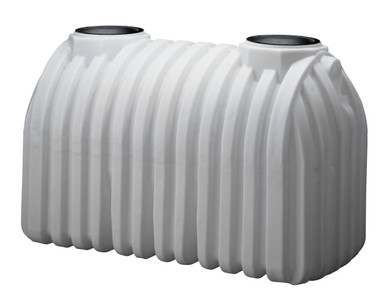
- The double-wall polyethylene tank consideration. Some double-wall tanks use polyethylene for both walls. These all-polyethylene double-wall tanks have no cathodic protection requirement and no cathodic disbondment failure mode. The leak detection in the interstitial space relies on different physics (vapor sensors, hydrostatic sensors, capacitive level sensors) that do not interact with electrochemistry.
- The double-wall steel-lined polyethylene tank consideration. A small number of specialty tanks use polyethylene inner with steel outer or steel inner with polyethylene outer. These hybrid configurations require careful analysis of the cathodic protection regime and the disbondment-failure-mode applicability to the specific metal component. The hybrid tanks are uncommon in the 5-brand catalog but do exist in specialty applications.
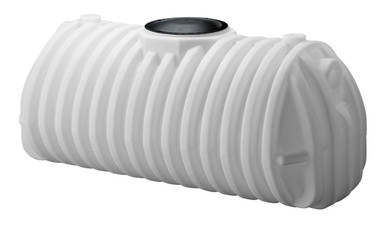
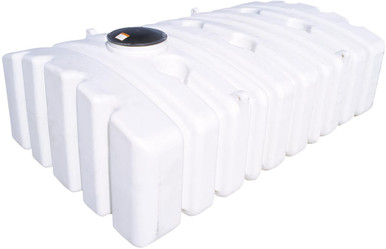
- Reference 100 gallon tank for the small-scale boundary. Reference N-44800 100 gallon Norwesco doorway tank as the smallest-scale polyethylene tank where the cathodic disbondment discussion is essentially academic. The all-polyethylene construction means no coating, no CP requirement, and no disbondment failure mode.
The polyethylene boundary is the practical takeaway. For sites operating polyethylene tanks the cathodic disbondment topic applies to associated metal infrastructure (buried piping, valves, fittings) and not to the tank itself.
6. Double-Wall Tank Interstitial Space Considerations
Double-wall tanks with metal outer walls (where they exist) present specific cathodic disbondment considerations in the interstitial space:
- The interstitial space environment. The interstitial space between the inner and outer walls of a double-wall tank is typically dry under normal operation. If the inner wall leaks, chemistry enters the space; if the outer wall leaks, groundwater or air enters. The space is small (typically 1 to 4 inches wide) and may be partially filled with monitoring fluid in some designs.
- The outer-wall coating exposure. The coating on the inside of a metal outer wall (the side facing the interstitial space) is exposed to the interstitial environment. If the space is dry the coating is in benign environment; if the space contains chemistry or groundwater the coating is in aggressive environment. The coating-selection decision must consider both ends of the exposure range.
- The CP application to the outer wall. Cathodic protection on a metal outer wall is typically applied to the outside of the wall (the buried side, in soil contact). The inside of the outer wall (interstitial space side) is not cathodically protected because it is not in contact with soil. The cathodic disbondment failure mode applies to the outside coating, not the inside coating.
- The interstitial leak-detection logic. The leak detection system in the interstitial space identifies fluid in the space (whether from inner-wall failure or outer-wall failure). The system does not directly distinguish between the two failure sources; investigation after detection is required to identify the source. Cathodic disbondment of the outer wall would manifest as outer-wall corrosion penetration with groundwater entering the interstitial space.
- The maintenance-access consideration. The interstitial space is generally not accessible for routine inspection. Coating condition on the inside of the outer wall cannot be inspected without disassembling the tank. The coating selection at procurement is therefore a permanent decision; field replacement or repair is impractical.
- Reference 2500 gallon tank for the double-wall context. Reference N-41524 2500 gallon Norwesco vertical as the typical mid-volume tank that, in double-wall configuration, presents the interstitial-space considerations described. Sites should request the double-wall construction details from the supplier including the coating specification on any metal components.
The double-wall tank interstitial space is a specific consideration that bridges the cathodic disbondment topic with the broader leak-detection and tank-construction topics. The polyethylene-walled tanks in the 5-brand catalog do not have the metal-coating issues; specialty hybrid tanks may.
7. Field Inspection and Condition Assessment
For tanks where cathodic disbondment is a relevant failure mode, the field inspection program addresses the topic:
- The CP potential survey. The cathodic protection system is surveyed periodically by measuring the tank-to-soil potential at multiple locations. The potential should be at or beyond the criterion (typically minus 850 millivolts versus copper-copper sulfate reference electrode) at all locations. Locations that fail the criterion indicate inadequate CP coverage that may permit corrosion.
- The close-interval potential survey. A close-interval survey takes potential measurements every few feet along the tank perimeter, producing a high-resolution potential map. The map identifies localized areas of inadequate protection that the broader survey may miss.
- The depth-of-cover survey. The depth of soil cover over a buried tank affects both the CP current distribution and the susceptibility to physical damage. A periodic depth survey identifies areas of erosion or settling that may require remediation.
- The above-grade visual inspection. The above-grade portions of the tank installation (manway, vent, fill connections, gauge connections) are visually inspected for coating condition, corrosion, and mechanical damage. Above-grade coating failures often presage below-grade coating failures in the same installation.
- The internal inspection during scheduled outage. Some sites perform internal inspection during scheduled outages (every 5, 10, or 20 years). The inspection looks at the inner-wall condition, the manway gasket condition, and any visible features inside the tank. The inspection does not directly assess the cathodic disbondment status on the outer wall but can assess inner-wall corrosion if it exists.
- The documentation of inspections. Each inspection produces a documented report with date, inspector, findings, and recommendations. The documentation feeds the asset management system and supports the regulatory compliance position.
The field inspection program is the operational complement to the laboratory disbondment testing. The lab tests qualify the coating before installation; the field inspections confirm the coating performs as expected over service life.
8. Procurement Implications and Tank Selection
The cathodic disbondment topic informs procurement decisions for sites considering buried tank installations:
- The all-polyethylene preference for buried installations. Where the chemistry compatibility allows, all-polyethylene tank construction (single-wall or double-wall polyethylene) avoids the cathodic disbondment topic entirely. Polyethylene has no coating to disbond, no CP system to maintain, and no associated long-term degradation mechanism in the buried environment. The 5-brand catalog provides extensive polyethylene options for buried service.
- The chemistry-compatibility verification. Polyethylene compatibility with the contained chemistry is the prerequisite for the all-polyethylene approach. The chemistry-compatibility tables (manufacturer-published, supplemented by field experience) identify the chemistries where polyethylene is acceptable. Where polyethylene is not compatible, alternative materials (with their own degradation considerations) must be selected.
- The fitting and piping material decisions. Even with polyethylene tanks, the associated piping, valves, and fittings may be metal. The metal infrastructure benefits from the same coating, CP, and disbondment-testing discipline that applies to metal tanks. Procurement of the supporting infrastructure should be specified with similar rigor.
- The transition fitting specification. The transition between metal piping and polyethylene tank requires specific fitting design. Common transitions include flanged poly-to-metal adapters, threaded poly-to-metal bushings, and welded-fitting connections. The transition design should accommodate any CP isolation requirements (insulating flanges to prevent stray current to the polyethylene side).
- The site-condition information request. The procurement specification should request site condition information from the customer: soil resistivity, water table depth, soil pH and chloride levels, presence of nearby buried metal infrastructure. The information informs the supplier's recommendations for tank construction, fittings, and any required protection systems.
- The lifecycle-cost calculation. The lifecycle cost of a buried tank installation includes the tank cost, the CP system cost (if metal), the coating maintenance cost (if coated), the inspection cost, and the contingent corrosion-failure cost. Polyethylene tanks typically have lower lifecycle costs than coated steel for chemistries where polyethylene is compatible.
The procurement implications favor polyethylene where the chemistry allows. Sites should perform the chemistry-compatibility analysis early in the procurement process and select polyethylene where the analysis supports.
9. The Cathodic Disbondment Engineering Conclusion
Cathodic disbondment is a coating failure mode specific to coated metal substrates under cathodic protection. The ASTM G8, G42, and G80 standards define laboratory test methods for measuring disbondment resistance. For polyethylene tank installations the failure mode does not apply directly to the tank wall, which is an all-polyethylene construction without coating-substrate interfaces. The topic applies to associated metal piping and fittings, to specialty hybrid tanks with metal outer walls, and to buried metal infrastructure adjacent to polyethylene tanks. The procurement preference for buried installations favors all-polyethylene construction where the chemistry compatibility allows; the lifecycle-cost analysis typically supports the preference.
OneSource Plastics ships polyethylene tanks across the 5-brand catalog (Norwesco, Snyder, Chem-Tainer, Enduraplas, Bushman) in single-wall and double-wall all-polyethylene configurations suited to buried service for compatible chemistries. Tank specification for any specific application is performed by the customer site engineer with reference to the chemistry compatibility, the site conditions, and any associated metal-infrastructure considerations. List pricing on each product page; LTL freight to your ZIP via the freight estimator or by phone at 866-418-1777.
Recommended Tanks for This Guide
Live pricing, updated automatically · estimate freight to your ZIP.