Cathodic Protection for Buried Steel vs Polyethylene Tanks: When Each Material Is the Right Choice
The decision between buried steel and buried polyethylene for an underground storage tank reduces to a single physical fact: steel corrodes when exposed to soil and groundwater. Polyethylene does not. Steel-tank installations require a documented external corrosion-control program, typically combining a dielectric coating with cathodic protection (CP) per NACE/AMPP SP0169. Polyethylene tank installations do not. The capital cost of the CP system, the operations and maintenance cost of CP monitoring, and the regulatory exposure under 40 CFR 280 (federal UST rules) and state UST rules together flip the lifetime economics for many underground installations toward polyethylene. This walkthrough covers when steel with CP is the right specification, when polyethylene is the right specification, and the engineering and code basis for the decision.
The Corrosion Physics: Why Steel Needs Protection Underground
Buried steel sits in a corrosive environment by default. Soil moisture, dissolved salts, soil pH, soil resistivity, and stray DC current from nearby pipelines or rail systems all drive electrochemical corrosion of unprotected steel. The corrosion rate varies widely by site conditions but typically runs 1 to 10 mils per year (0.025 to 0.25 mm/yr) on bare uncoated steel in moderately corrosive soil. A 0.25-inch (250-mil) steel wall reaches end of useful life in 25 to 250 years of bare-steel service depending on soil aggressiveness. In aggressive soils (low resistivity, high chloride, low pH) the timeline collapses dramatically.
External corrosion control combines two engineering approaches. The first is a dielectric coating (factory-applied epoxy, coal-tar epoxy, polyurethane, or fusion-bonded epoxy) that physically isolates the steel from the soil. The second is cathodic protection: an applied DC current that drives the steel surface into a protected electrochemical state where corrosion stops. The two work together. Coatings inevitably develop holidays (small breaks in the coating film) over decades of service, and CP picks up at the holidays where the coating fails.
NACE/AMPP SP0169 and the Cathodic Protection Engineering Framework
NACE Standard SP0169 (now maintained by AMPP, the Association for Materials Protection and Performance, after the 2021 NACE-SSPC merger) is the foundational reference for CP design on buried metallic structures. The standard sets the engineering basis for CP system sizing, criteria for confirming protection, and inspection cadence. SP0169 was originally written for pipelines but the cathodic-protection criteria apply to any buried metallic structure, including underground steel tanks.
The standard authorizes three potential criteria for confirming a buried steel structure is cathodically protected:
- A negative (cathodic) potential of at least 850 mV with the CP applied, measured between the structure surface and a saturated copper/copper-sulfate reference electrode contacting the electrolyte (the so-called -850 mV "on" criterion)
- A negative polarized potential of at least 850 mV with respect to the same reference electrode (the -850 mV "instant-off" criterion, eliminating IR drop)
- A minimum of 100 mV of cathodic polarization between the structure surface and a stable reference electrode in contact with the electrolyte
For steel UST installations subject to 40 CFR 280, the operator must confirm one of these criteria is met by a qualified corrosion specialist or CP tester at intervals not exceeding three years (40 CFR 280.31).
Regulatory Framework: 40 CFR 280 for Petroleum USTs
40 CFR Part 280 governs underground storage tanks holding petroleum or hazardous substances. The corrosion-protection requirement (40 CFR 280.20 for new tanks, 40 CFR 280.21 for upgrades) is unambiguous: any new metal UST must be cathodically protected through a corrosion-resistant coating combined with cathodic protection (typically called "sti-P3" tanks meeting STI standards), constructed of cathodically protected steel from the factory, or constructed of non-corrodible material (fiberglass-reinforced plastic or jacketed-steel composite). Operators must monitor and document cathodic protection effectiveness per 40 CFR 280.31, including the three-year survey cadence.
Polyethylene tanks are not subject to the corrosion-protection requirements of 40 CFR 280 because they are non-corrodible. Polyethylene UST installations storing petroleum-product service still face 40 CFR 280 obligations for release detection, spill prevention, overfill prevention, financial responsibility, and operator training, but the corrosion-protection element of 40 CFR 280 does not generate ongoing monitoring or maintenance burden because the tank material is inherently non-corrodible.
Polyethylene Underground Tanks: Where the Material Wins
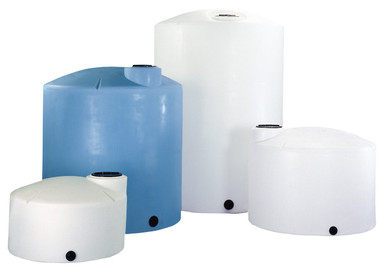
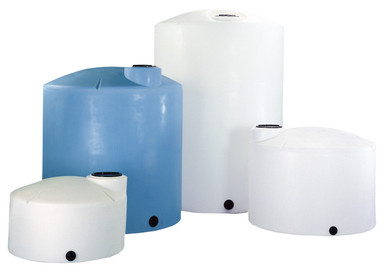
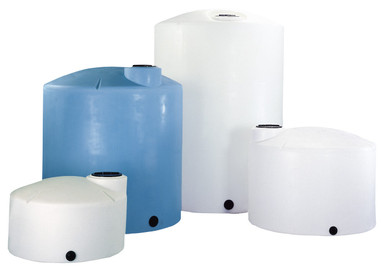
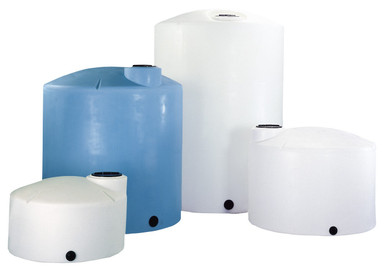
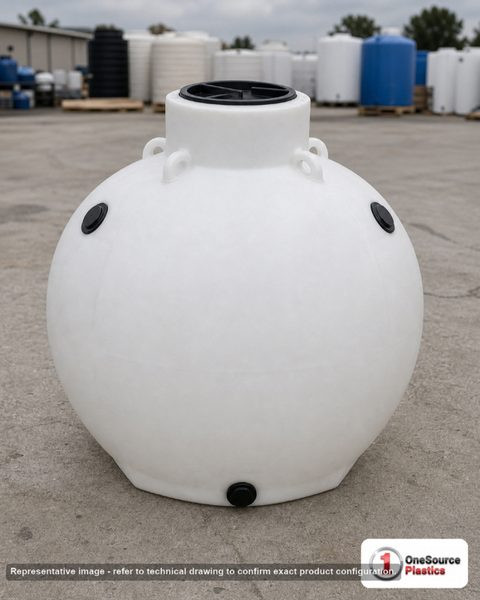
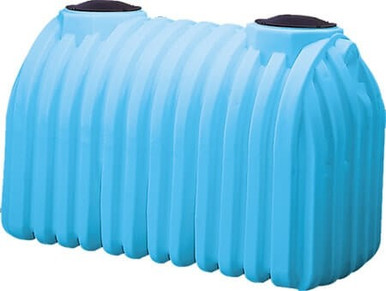
For non-petroleum service — water storage, septic, cistern, fire-suppression water reserve, agricultural process water, brine, fertilizer solution, sodium hypochlorite, sodium hydroxide, sulfuric acid, hydrochloric acid, and a long list of compatible chemistries — polyethylene underground tanks are the dominant choice for installations under 5,025 gallons. The Norwesco multi-use underground tank line is the workhorse of this segment.
Norwesco multi-use underground polyethylene tanks at OneSource:
- Norwesco 1000 Gallon Plastic Multi-Use Underground Liquid Storage Tank (MPN 41734, listed at $2,448.99) — the entry-size workhorse. Single-piece rotomolded HDPE, no field seams, 50-year inert-service expectancy under proper installation.
- Norwesco 1000 Gallon Plastic Multi-Use Underground Liquid Storage Tank (MPN 41735, listed at $2,798.99) — alternate fitting and access configuration.
- Norwesco 1000 Gallon Plastic Multi-Use Underground Liquid Storage Tank with Gas Service (MPN 44463, listed at $2,208.21) — gas-service configured 1,000-gallon underground.
- Norwesco 1250 Gallon Plastic Multi-Use Underground Liquid Storage Tank (MPN 41752, listed at $2,998.99) — mid-size 1,250-gallon underground.
- Norwesco 1250 Gallon Plastic Multi-Use Underground Liquid Storage Tank (MPN 41821, listed at $3,098.99) — alternate 1,250-gallon configuration.
- Norwesco 1500 Gallon Plastic Multi-Use Underground Liquid Storage Tank (MPN 41772, listed at $3,798.99) — 1,500-gallon underground.
- Norwesco 1500 Gallon Plastic Multi-Use Underground Liquid Storage Tank (MPN 41822, listed at $3,798.99) — alternate 1,500-gallon configuration.
- Norwesco 5025 Gallon Underground Water Storage Cistern Tank (MPN 44876, listed at $15,798.99) — large-volume underground cistern, water and inert-chemistry service.
- Norwesco 5025 Gallon Underground Water Storage Cistern Tank with Riser (MPN 44877, listed at $16,098.99) — riser-equipped 5,025-gallon configuration for deeper-burial sites.
The polyethylene underground tank installation has zero ongoing CP cost, zero CP-system survey cost, zero CP-system rectifier replacement cost over the tank's service life. The tradeoff is volume scale: above 5,025 gallons, polyethylene underground options become limited and steel or fiberglass-reinforced plastic dominate the large-volume underground segment.
When Steel With CP Is the Right Choice
Steel underground tanks remain the right specification for several application classes:
- Petroleum UST service above ~12,000 gallons: Polyethylene underground tanks become impractical above the 5,025-gallon ceiling. Petroleum service in the 10,000-30,000 gallon range is dominated by sti-P3 cathodically protected steel and by FRP composites. The double-wall steel option provides 40 CFR 280-compliant secondary containment integral to the tank.
- High-temperature service: Polyethylene service-temperature ceiling for sustained chemical service is ~140°F (60°C) for HDPE and somewhat higher for crosslinked polyethylene. Above this range, steel is the practical choice.
- Pressure service: Polyethylene tanks are atmospheric-pressure designs. For LPG, anhydrous ammonia stationary, or any pressurized underground service, steel with CP is the regulatory and engineering requirement (29 CFR 1910.110, 29 CFR 1910.111, ASME pressure-vessel codes).
- Fire-resistant rated installations: Where the AHJ requires UL-2085 protected-tank rating or equivalent fire-rated construction, steel with the appropriate jacketing is the path. Polyethylene cannot meet UL-2085.
- Existing CP infrastructure on site: Where a facility already operates a CP system serving multiple buried metallic structures (pipelines, fuel-distribution piping, water main), adding a new steel tank to the existing CP network may have lower marginal cost than adding a new polyethylene tank (which would not benefit from the existing CP).
Cost Comparison: 1000-Gallon Underground, Water/Process Service
For an apples-to-apples comparison on a 1,000-gallon non-petroleum underground installation:
Polyethylene (Norwesco 41734)
- Tank: $2,448.99
- Excavation, bedding, backfill: $2,448.99 to $2,448.99 (varies by site soil)
- Installation labor: $2,000 to $5,000
- CP system: not required
- 30-year CP O&M: not applicable
- Total 30-year ownership: $7,099.99 to $15,099.99 (one-time installation cost)
Cathodically Protected Steel (sti-P3 1,000-Gallon)
- Tank with factory CP and coating: $8,000 to $15,000 (varies by manufacturer and configuration)
- Excavation, bedding, backfill: $3,000 to $8,000
- Installation labor: $3,000 to $7,000 (more complex than polyethylene because of CP wiring and reference cell installation)
- CP rectifier (if impressed-current system): $2,000 to $5,000
- Three-year CP survey, 10 surveys over 30 years: $1,500 to $4,000 per survey, $15,000 to $40,000 over 30 years
- Anode replacement cycle (for galvanic CP) or rectifier overhaul (for impressed-current): $3,000 to $10,000 over 30 years
- Total 30-year ownership: $34,000 to $85,000
For non-petroleum service in the 1,000-5,025 gallon underground segment, polyethylene wins decisively on lifetime cost. The CP O&M alone over 30 years exceeds the entire installed cost of the polyethylene alternative.
Installation Engineering: Polyethylene Underground Specifics
Polyethylene underground tank installation requires attention to bedding, backfill, and burial depth. The Norwesco installation guide (mirrored in the OEM spec sheets shipped with each tank) sets the requirements. Key engineering points:
- Bedding: pea gravel, washed gravel (3/4 inch maximum particle size), or coarse sand. Minimum 6 inches under the tank, fully supporting the tank shell. Bedding must be compacted to provide uniform support — voids under the tank create stress concentrations that can fail the polyethylene shell over time.
- Backfill: same material as bedding, placed in 12-inch lifts, mechanically tamped between lifts. The backfill provides lateral support against the tank wall — the polyethylene tank relies on the backfill for hoop strength when filled. Backfill must extend at least 12 inches above the tank crown.
- Burial depth: minimum 12 inches of cover over the tank crown; maximum varies by tank model (typically 36 to 60 inches depending on diameter). Beyond the maximum, the soil column generates excessive crown loading and the tank can deform.
- Groundwater: in high-water-table sites, the empty tank floats. Anti-flotation provisions include hold-down straps anchored to a deadman concrete pad at the bottom of the excavation, or filling the tank immediately after installation to ballast against flotation. The Norwesco installation guide specifies the strap configuration and anchor torque.
- Vehicular traffic: standard polyethylene underground tanks are not rated for traffic loading. For installations under driveways or vehicle paths, a load-distributing concrete slab over the tank or upgrade to a traffic-rated tank model is required. Verify the model rating before installation.
CSA B66 and IAPMO Considerations
Norwesco septic and underground tanks for sale through OneSource carry IAPMO certification (per IAPMO PS 1 referencing ASTM C1227 for the tank standard). For installation in Canadian provinces, CSA B66-2016 certification is the typical provincial-AHJ requirement for septic-tank service. Several Norwesco underground models carry both IAPMO and CSA B66 certification — verify by model on the OEM specification sheet before specifying for cross-border installation.
Stray-Current Corrosion: A Site-Specific Risk for Steel
An overlooked failure mode for buried steel is stray-current corrosion driven by nearby DC sources: electrified rail systems, impressed-current CP systems on adjacent pipelines, electric-arc welding ground returns, and DC-powered industrial equipment. Stray current pickup and discharge accelerate steel corrosion at the discharge points dramatically and can defeat a properly designed CP system. NACE SP0169 and the companion NACE SP0177 (mitigation of stray-current corrosion) cover the assessment and mitigation engineering. Polyethylene tanks are inherently immune — there is no metallic path for stray current.
Decision Tree
- Service is petroleum or hazardous substance under 40 CFR 280? → If yes, choose either factory cathodically protected steel (sti-P3 or equivalent), composite jacketed steel, or fiberglass-reinforced plastic. Polyethylene is uncommon in this segment but available for select non-petroleum applications.
- Service is non-petroleum (water, process water, septic, cistern, brine, fertilizer, compatible chemistry) and volume is 5,025 gallons or less? → Polyethylene wins on lifetime cost. Specify Norwesco multi-use underground line.
- Service requires UL-2085 fire rating or pressure rating? → Steel is the regulatory path. Engineer a CP system per NACE SP0169.
- Site has known stray-current exposure (rail proximity, adjacent CP system, DC industrial)? → Polyethylene is the lower-risk choice for non-petroleum service.
- Volume is above 5,025 gallons and below ~12,000 gallons in non-petroleum service? → Compare bid pricing on FRP composite and on cathodically protected steel; polyethylene options are limited at this scale for buried installations.
Cross-References
For state-level UST and septic regulatory context, see the OneSource state-regulations pillars including California, Texas, Florida, and New York. For chemical-compatibility verification on the inner surface of polyethylene underground tanks in chemistry service, see the chemical compatibility hub.
For pricing, freight, and configuration on Norwesco multi-use underground tanks, contact OneSource Plastics at 866-418-1777. For LTL freight quoting on underground-tank delivery to your installation site, use the freight estimator.
Recommended Tanks for This Guide
Live pricing, updated automatically · estimate freight to your ZIP.