
Florida Septic Tank (OSTDS) Regulations — FS §381.0065, Chapter 62-6 FAC
Florida OSTDS (Septic Tank) Regulations
The Florida Department of Health (DOH) has transferred its septic system regulation duties to the Florida Department of Environmental Protection (DEP). This involves following FS §381.0065 and Chapter 62-6 FAC standards, which include requirements for outlet filters, multi-chamber systems, and special rules for hurricane-zone installations.
The Governing Framework — Mid-Transition
Florida is in the process of transferring its septic system regulatory program from the Florida Department of Health (DOH) to the Florida Department of Environmental Protection (DEP). Before July 1, 2021, DOH managed these rules under Chapter 64E-6 Florida Administrative Code (FAC). Starting July 1, 2021, DEP took over, replacing 64E-6 with Chapter 62-6 FAC. This change is happening in phases.
| Phase | Counties | Effective Date |
|---|---|---|
| Phase 1 | Escambia through Jefferson (panhandle) | January 2, 2025 |
| Phase 2 | Marion County | July 1, 2025 |
| Remaining counties | To be determined pending legislative approval | Phased |
The Governing Statute — FS §381.0065
The law that supports the septic system program is Florida Statutes Section 381.0065, which covers the regulation of onsite sewage treatment and disposal systems. This law is the basis for the FAC rules, and key requirements remain consistent in both 64E-6 and 62-6.
- Permit required before installation, substantial modification, or abandonment of any OSTDS.
- Minimum tank design and capacity standards set by administrative rule.
- Outlet filter device required on all permitted tanks.
- Minimum setbacks from potable water wells, surface waters, and property lines.
- Local county health departments (DOH counties) or DEP regional offices (DEP counties) administer permits and inspections.
Septic Tank Capacity — The Multi-Chamber & Filter Rules
Florida has two distinctive tank-design requirements that go beyond what most states demand:
- Multi-chamber or tanks-in-series. All permitted septic tanks must be multi-chambered (typically 2 compartments) OR be installed as multiple tanks in series. Single-compartment tanks are not permitted for new installations.
- Outlet filter device. An approved outlet filter (a solids screen in the outlet tee) is required on every permitted tank. This captures floating solids that would otherwise escape to the dispersal field, dramatically extending dispersal-field lifespan in Florida's high-groundwater environment.
The minimum capacity for single-family residences scales with effective dwelling units (EDUs):
| Home Size | Base Minimum Capacity | Per Additional Dwelling Unit |
|---|---|---|
| 1-bedroom ADU / small | 900 gallons | +75 gallons |
| 2-3 bedroom | 1,050 gallons | +75 gallons |
| 4 bedroom | 1,200 gallons | +75 gallons |
| 5+ bedroom | 1,500–1,600 gallons | +75 gallons |
These are the basic standards that most Florida counties follow under 64E-6 / 62-6. Check with your county, as some coastal areas have stricter minimums in high-groundwater zones.
High Groundwater & Hurricane Considerations
Florida's water-table conditions affect every septic system installation. Standard national septic designs don't work here, so Florida includes extra requirements not found in most other states.
- Mounded dispersal systems are common in south and coastal Florida where groundwater is within 42 inches of grade. Gravity-flow conventional drainfields are rare outside the Panhandle and central ridge.
- Anti-buoyancy anchoring is required for tanks installed in areas where groundwater can rise above the tank's invert. This is essentially everywhere south of I-4 and along the coasts. A 1,000-gallon tank holding air weighs <500 lb; it will float out of the ground under hurricane-rain groundwater conditions unless anchored.
- Flood-zone filings are required for tanks in FEMA Special Flood Hazard Areas. The tank and its vent must be elevated or sealed per FEMA rules, and the dispersal field design accounts for flood-event surcharge.
- Post-hurricane inspection is implied by the operating permit. After a named storm, Florida health departments may issue local guidance to inspect and pump tanks that floated or were inundated.
Material Approvals
Florida accepts polyethylene septic tanks that meet either Chapter 64E-6 or Chapter 62-6 design standards, including:
- IAPMO listing for uniform plumbing code compliance.
- ASTM D1998 wall-thickness and material standards for upright polyethylene storage tanks.
- State-approved outlet filter device installed at the outlet tee.
- Manufacturer's certification of load ratings for buried installations (particularly relevant for traffic-bearing installations under driveways or parking).
Companies like Norwesco, Snyder, Enduraplas, and Chem-Tainer make rotomolded HDPE tanks that meet Florida's septic system rules. When buying, order the Florida-specific version, which comes with anchor straps, a proper manway, and an outlet filter already installed.
Frequently Asked Questions
- How do I know if my county is under DOH or DEP?
- Call your county environmental health office. DOH counties file through the Department of Health; DEP counties file through the DEP regional office. The fees and paperwork differ; engineering requirements are similar.
- Can I install a single-compartment tank?
- No. Florida requires multi-chamber tanks or tanks-in-series for all permitted installations. Even single-compartment replacements of existing tanks must upgrade to multi-chamber on re-permit.
- What's an outlet filter and why do I need it?
- An outlet filter is a solids screen in the tank outlet tee that captures floating solids (grease, paper, undigested waste) before they escape into the dispersal field. Florida requires one on every permitted tank because the state's high-groundwater dispersal fields have much less margin than elsewhere. Filter maintenance (cleaning every 1-3 years) is the owner's responsibility.
- Does Florida require a polyethylene tank or will concrete work?
- Both are accepted. Concrete is traditional in Florida and remains common. Polyethylene is increasingly popular because it's easier to install, resists the state's aggressive groundwater better, and ships with integrated anchor points. Cost is comparable for mid-size residential tanks.
- Do I need flood insurance if I have a septic tank in a flood zone?
- Flood insurance covers the dwelling and sometimes ancillary structures. OSTDS components (tank, dispersal) are typically NOT covered by standard flood insurance. Speak with your insurance agent about septic-system-specific endorsements. Hurricane damage to a tank is a known loss profile in Florida.
Source Citations
- Florida Statute §381.0065 — Onsite Sewage Treatment and Disposal Systems; Regulation
- Chapter 62-6 FAC (current DEP rule) — flrules.org
- Chapter 64E-6 FAC (historical DOH rule) — flrules.org
- Florida DEP — Onsite Sewage Program
- Chapter 64E-6 FAC full text (PDF, Florida Health)
- DEP — Onsite Sewage Program News & Rulemaking
Shop Septic Tanks for Florida
OneSource stocks polyethylene septic tanks meeting Florida construction requirements. Match capacity to your design flow per the rules summarized above. Tank + accessories + holding tank options below cover standard and alternative configurations. OneSource drop-ships from the OEM warehouse closest to your install address.
Plastic Septic Tanks
Full polyethylene septic tank catalog. Sizes from 300 to 1,500+ gallons for Florida installations.
Browse Plastic Septic TanksIAPMO Approved Models
NSF/IAPMO listed tanks. Some counties and some installation types require this listing.
Browse IAPMO Approved ModelsSeptic Accessories
Risers, lids, baffles, filters, alarms, pumps, and install hardware.
Browse Septic AccessoriesHolding Tanks
Holding tanks for construction sites, recreational properties, and pump-and-haul installations.
Browse Holding TanksStoring chemicals in your Florida tank?
Florida's onsite sewage system rules don't apply to chemical storage tanks. These are specified by the manufacturer. If you need a tank for sulfuric acid, bleach, fertilizer solution, or any of 300+ industrial chemicals, our Chemical Compatibility Database has all the construction details you need.
Agricultural Tank Regulations — FDACS
The Florida Department of Agriculture and Consumer Services (FDACS) oversees the storage of pesticides, fertilizers, and feed in bulk under Ch. 487 F.S. (Florida Pesticide Law) and Ch. 576 F.S. (Commercial Fertilizers), with rules in the Florida Administrative Code (F.A.C.).
- 5E-2 F.A.C. — Fertilizer Registration and Labeling.
- 5E-9 F.A.C. — Pesticide Registration and Labeling.
- 5E-14 F.A.C. — Pesticide Use and Applicator Licensing.
- Ch. 487 F.S. — Florida Pesticide Law (statutory authority).
- Ch. 576 F.S. — Commercial Fertilizers.
Florida's agriculture is mainly citrus, sugarcane, vegetables, nursery plants, tropical fruits, and beef cattle. Facilities storing bulk liquid fertilizer and pesticides must have secondary containment that holds 110% of the largest tank, with impermeable liners and proper inspection. The Everglades Agricultural Area and other regions have specific Best Management Practice (BMP) rules. FDACS works with FDEP on storage incidents.
Oil & Gas — FDEP (Minor Industry)
Florida's oil and gas industry is small, with some fields in the southwest and panhandle. The FDEP Division of Water Resource Management regulates oil and gas under 62C-25 through 62C-30 F.A.C., with authority from Ch. 377 F.S.
- 62C-25 F.A.C. — General oil and gas rules.
- 62C-26 F.A.C. — Oil and gas drilling, casing, cementing.
- 62C-28 F.A.C. — Oil and gas pits, tanks, spills.
- Ch. 377 F.S. — Oil and gas (statutory authority).
Because the oil industry is small, Florida focuses more on regulating petroleum UST/AST, septic systems, and agricultural bulk storage rather than water infrastructure. Operators must follow specific pit and tank containment rules under 62C-28.
Petroleum Storage Tanks (UST & AST) — FDEP
FDEP regulates petroleum storage under a comprehensive program with statutory authority at Ch. 376 F.S.:
- 62-761 F.A.C. — Underground Storage Tank Systems: design, installation, release detection, spill/overfill prevention, operator training, corrective action, closure.
- 62-762 F.A.C. — Aboveground Storage Tank Systems (Florida regulates AST comprehensively, not just at the SPCC 1,320-gallon threshold).
- 62-770 F.A.C. — Petroleum Contamination Site Cleanup Criteria (corrective action).
- Ch. 376 F.S. — Pollutant Discharge Prevention and Removal (statutory authority); also establishes Florida's Inland Protection Trust Fund (IPTF) for state-funded cleanups.
Florida UST/AST owners must register with FDEP or county programs, pay annual fees, maintain 2018 federal rule upgrades, and report suspected leaks within 24 hours. Florida's AST program under 62-762 applies to tanks over 550 gallons storing pollutants, which is broader than federal SPCC rules. The Inland Protection Trust Fund (IPTF) has historically covered eligible petroleum cleanup costs and still funds state-led remediation of old sites.
OSTDS Septic System Sizing Deep Dive — 64E-6 F.A.C.
Florida regulates onsite sewage treatment and disposal systems (OSTDS) under 64E-6 F.A.C., managed by the Florida Department of Health (FDOH) through county health departments, with authority from Ch. 381 F.S.
| Home Size | Design Daily Flow | Minimum Septic Tank Capacity |
|---|---|---|
| 1 BR (or ≤750 sf) | 100 gpd | 900 gallons |
| 2 BR (751–1,200 sf) | 200 gpd | 900 gallons |
| 3 BR (1,201–2,250 sf) | 300 gpd | 1,050 gallons |
| 4 BR (2,251–3,300 sf) | 400 gpd | 1,200 gallons |
| 5+ BR | 500+ gpd | 1,500+ gallons |
Florida's OSTDS rules are very strict due to the Floridan Aquifer, which supplies drinking water to millions. 64E-6 requires systems to be at least 75 feet from private wells and 200 feet from public water supply wells. The drainfield must be at least 24 inches above the wet-season water table for standard systems. Florida often uses mound systems, performance-based treatment systems, and nitrogen-reducing systems in certain areas. FDOH works with FDEP on reducing nitrogen loads, and recent laws have increased nitrogen requirements in priority areas. Wind load, flood elevation, and anti-flotation design are important in coastal and flood-prone areas.
Chemical Storage Secondary Containment & Spill Reporting
Federal SPCC (40 CFR 112) applies at 1,320 gallons aggregate aboveground oil. Florida layers on:
- Ch. 376 F.S. — Pollutant discharge prevention and removal; immediate spill notification to FDEP.
- 62-740 F.A.C. — Petroleum Contamination Site Cleanup Criteria.
- 62-730 F.A.C. — Hazardous Waste Management (RCRA Subtitle C delegation).
- Florida State Warning Point (Division of Emergency Management) — EPCRA Tier II and State Emergency Response Commission (SERC); 24-hour hotline 1-800-320-0519.
Report spills to the Florida State Warning Point at 1-800-320-0519 and federal releases to the National Response Center at 1-800-424-8802. Secondary containment at 110% is standard, but FDEP AST rules (62-762) may require stricter double-wall construction. For specific RQ thresholds, contact FDEP directly.
Permit Pathways at a Glance
- Residential OSTDS: County Health Department under 64E-6 F.A.C. (FDOH).
- Fertilizer registration & BMPs: FDACS under Ch. 576 F.S. and 5E-2 F.A.C.
- Pesticide applicator license: FDACS under Ch. 487 F.S. and 5E-9/14 F.A.C.
- Oil & gas: FDEP under 62C-25 through 62C-30 F.A.C.
- Petroleum UST / AST: FDEP (or delegated county) under 62-761 / 62-762 F.A.C.
- SPCC > 1,320 gal oil aggregate: Federal SPCC plan; state spill reporting via Florida State Warning Point.
- NPDES industrial stormwater: FDEP (FL is delegated NPDES state).
- Springs Protection Area / Indian River Lagoon OSTDS: Enhanced FDOH requirements under Clean Waterways Act amendments to 64E-6.
Current fees change; verify with FDACS, FDEP, FDOH, or local county programs before budgeting.
More Florida FAQs
- Why are Florida OSTDS setbacks so strict?
- The Floridan Aquifer is a federally-designated sole-source aquifer underlying most of the state. Because Florida sand soils provide minimal filtration and water tables are often shallow, nutrient and pathogen loads from septic drainfields can reach the aquifer and nearby surface springs quickly. 64E-6 F.A.C. imposes 75-ft minimum well setbacks, 24-inch water-table separation, and enhanced treatment in Springs Protection Areas and Indian River Lagoon basin. Florida's Clean Waterways Act (2020) tightened nitrogen-reduction requirements further.
- Do I need a tank permit for a backyard pool chlorine tank?
- Residential pool chemical storage is generally not regulated as a pollutant storage tank under 62-761/762, but commercial pool service operations with bulk chlorine, acid, or other chemical storage above threshold fall under FDEP AST rules or hazardous-materials reporting under EPCRA. Local fire-marshal plan review applies.
- Does my county run its own UST program?
- Possibly — Florida has 46 county-level Local Pollutant Storage Tank Programs that are delegated subsets of the FDEP program. If you are in a delegated county, you interact with county staff for inspections, registrations, and compliance while FDEP retains overall program authority. Confirm delegation status with FDEP Petroleum Restoration Program.
- What are the Everglades Agricultural Area BMPs?
- FDACS and the South Florida Water Management District administer BMPs for the EAA, sugarcane-belt basins, and Lake Okeechobee watershed under Ch. 403 F.S. and 5M F.A.C. BMP enrollment provides a presumption of compliance with state water quality standards for agricultural operations in the watershed; bulk fertilizer tank siting, application, and setback practices fall within the BMP framework.
- Why does Florida regulate ASTs above 550 gallons when the federal SPCC threshold is 1,320 gallons?
- 62-762 F.A.C. reflects Florida's specific vulnerability to groundwater pollution: sole-source aquifer, high water table, porous sand soils, and limited natural attenuation. The state AST program lowers thresholds below SPCC to capture smaller tanks whose releases would nevertheless reach potable groundwater quickly. This is distinctive nationally and drives tank-selection and containment design on virtually every commercial petroleum facility in the state.
Septic Tanks That Meet Florida Code
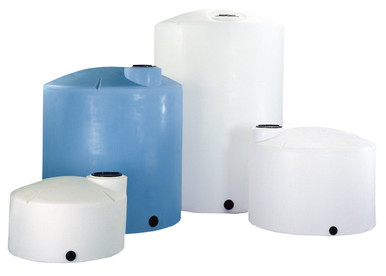
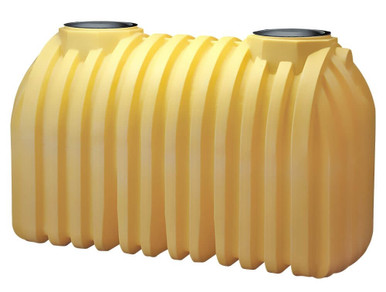
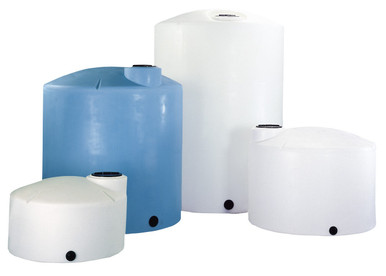
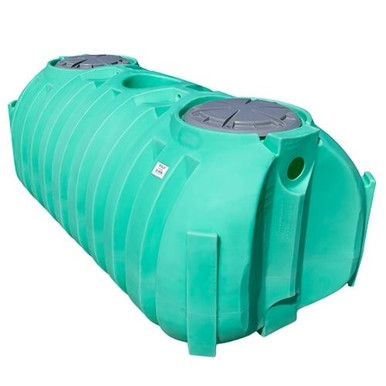
Florida (Chapter 62-6 FAC) requires a multi-chamber septic tank with an outlet (effluent) filter. The IAPMO PS 1–listed two-compartment tanks below meet Florida's multi-chamber standard at or above 1,000 gallons; add an outlet filter to complete the spec.
Shop all IAPMO PS 1–listed septic tanks →
Meeting the construction standard is not the same as a permit — your county environmental health office issues the permit and makes the final determination. Call us with your permit number and we will confirm the exact tank spec before shipment, with freight quoted to your ZIP.
Chemical Storage & Secondary Containment in Florida
Storing fuel, fertilizer, or process chemicals alongside your tank changes the rules. The federal Spill Prevention, Control, and Countermeasure rule (40 CFR Part 112) applies at 1,320 gallons of aggregate aboveground oil storage and requires secondary containment sized to at least 110% of your largest tank. Releases of hazardous substances above their federal reportable quantity (40 CFR 302.4) must be reported to the National Response Center at 1-800-424-8802.
Florida layers its own spill reportable quantities and restricted-substance rules on top of that federal floor — confirm the current thresholds with your state environmental agency before specifying a chemical tank. Just as important, the polyethylene resin must be matched to the exact chemical, concentration, and specific gravity you intend to store; a tank rated for water is not automatically rated for acid, bleach, or fertilizer.
Last reviewed: May 2026 · sourced from Florida administrative code
Regulations change on a rolling basis — confirm the current rule with your county or state agency before purchasing. Spot something out of date? Email us and we'll fix it.
Nearby states (South Atlantic) & full index: