
New York Septic Tank Regulations — 10 NYCRR Appendix 75-A
New York Septic Tank Regulations
10 NYCRR Appendix 75-A covers the standards for residential onsite wastewater treatment in New York. It includes the 5-day-retention sizing rule, permits from NYSDOH and local health departments, and follows a different plumbing code for NYC.
The Governing Framework
New York State has one of the more distributed septic-regulatory frameworks in the country:
- 10 NYCRR Appendix 75-A — Residential Onsite Wastewater Treatment Standards. The main upstate / suburban residential rule.
- New York State Department of Health (NYSDOH), Bureau of Water Supply Protection — owns the state-level rule and the companion Design Handbook.
- Local Health Departments (county or multi-county) — administer permits and inspections in most of the state.
- NY State Department of Environmental Conservation (DEC) — regulates intermediate-sized (commercial, subdivision) systems above the Appendix 75-A threshold.
- New York City — essentially does not permit new onsite systems within the five boroughs; NYC operates under the NYC Plumbing Code Article 5 and sewer hookup is mandatory for new dwellings inside city limits. This page applies to upstate and suburban NY, not NYC.
Design Flow & The 5-Day Retention Rule
Appendix 75-A sizes septic tanks on a design-flow basis rather than a fixed bedroom-to-capacity table. The guiding math:
- Design flow is calculated per bedroom (NY DOH references 75 gpd per person × 2 persons per bedroom = 150 gpd/bedroom in some Design Handbook excerpts, and 110 gpd/bedroom in other recent NYSDOH references).
- Septic tank capacity = 5 × daily design flow, OR a 1,000-gallon floor, whichever is greater.
- For homes with more than 6 bedrooms, add 250 gallons of tank capacity per additional bedroom.
In New York, septic tanks are usually larger than in other states that use bedroom-count tables. For a 4-bedroom home, the design flow is 110 gallons per day per bedroom, totaling 440 gallons per day. Over 5 days, this means a tank needs to hold 2,200 gallons. If the flow is 150 gallons per day per bedroom, the tank should be 3,000 gallons. It's best to choose the larger size unless your local health department allows the smaller one.
Companion Design Handbook
The NYSDOH provides a Residential Onsite Wastewater Treatment Systems Design Handbook to go with Appendix 75-A. This handbook is the main guide for practical use and includes details like:
- Provides worked examples of design-flow calculations.
- Shows tank-sizing worksheets and standardized symbols for site plans.
- Specifies installation details (bedding, backfill, risers, connections) that Appendix 75-A references in summary.
- Includes greywater-system design (75 gpd/bedroom base flow).
If you're buying a tank for a New York installation, your licensed designer will use both the Appendix and the Handbook. It's helpful to read the Handbook's introduction yourself, as it explains many decisions not covered in the administrative code.
Intermediate-Sized Systems — NYSDEC Jurisdiction
For systems that exceed the Appendix 75-A threshold (usually more than 1,000 gallons per day or for multiple-dwelling areas), the NY State Department of Environmental Conservation (DEC) takes over. Their 2014 Design Standards for Intermediate Sized Wastewater Treatment Systems cover these larger systems.
- Subdivisions, small communities, and commercial developments.
- Engineered advanced treatment with higher nitrogen and pathogen reduction.
- Groundwater protection standards in designated aquifer-recharge zones.
If your project might exceed the residential threshold, hire a professional engineer early to determine if NYSDOH or NYSDEC has jurisdiction. The permit process and engineering requirements are quite different.
Permit Process — LHD Administered
- Local Health Department (LHD) intake. NY has ~60 LHDs covering 62 counties (some are multi-county). Each LHD implements Appendix 75-A locally.
- Site and soil evaluation. Performed by a licensed designer or LHD staff. New York uses soil classification (texture + groundwater) rather than percolation tests alone in most counties.
- Design submittal. Licensed professional (PE or qualified designer) prepares the system design. Many suburban counties require PE stamping.
- Permit issuance. Typical fees $250–$1,000. Timelines 2–10 weeks depending on LHD workload and season.
- Installation. Licensed installer required in most LHDs.
- Pre-backfill inspection. LHD inspects tank, dispersal field, and piping before backfill.
- Certificate of completion. Required for occupancy and for property-transfer disclosures.
Material Approvals
Appendix 75-A mentions standard IAPMO and ASTM construction standards for septic tanks. Polyethylene tanks from companies like Norwesco, Snyder, Enduraplas, and Chem-Tainer are accepted if they meet certain criteria:
- Tank carries IAPMO listing for UPC compliance.
- Polyethylene wall construction meets ASTM D1998.
- Two compartments preferred for larger capacities (in some LHDs required — check locally).
- Effluent filter at outlet, though specifics vary by LHD.
New York-Specific Considerations
- Long Island (Suffolk and Nassau counties). Very high groundwater + nitrogen loading to the sole-source aquifer. Suffolk County has adopted Innovative and Alternative (I/A) treatment requirements for new construction in many zones, adding advanced nitrogen-reducing ATUs. Expect 2-3x baseline OSS cost in Suffolk I/A zones.
- Hudson Valley and Catskills. Watershed protection zones (NYC water supply) impose additional setback and treatment requirements on systems draining toward NYC reservoirs.
- Adirondack and Catskill parks. State Park-style constraints on installations within designated park boundaries.
- Frost depth. Northern NY (Adirondacks, North Country) has 48+ inch frost depth; insulated risers or deep cover required.
- Co-enforcement with DEC. Some Long Island counties operate under joint NYSDOH + DEC oversight for systems near coastal waters.
Frequently Asked Questions
- What design flow value does my county use — 110 or 150 gpd/bedroom?
- Call your LHD and ask directly. State-level references have used both numbers; current practice varies by jurisdiction. Your licensed designer will confirm the applicable value before submitting the permit.
- Why is a New York septic tank often larger than one in Georgia or Ohio?
- New York's 5-day-retention sizing produces larger tanks than states with fixed bedroom-to-capacity tables. The rationale is that longer retention improves primary treatment, reducing downstream loading on the dispersal field. Larger tanks also tolerate household flow surges (laundry marathon, holiday dinner) without carrying solids to the field.
- Can I install an OSS in New York City?
- Essentially no. NYC requires sewer hookup for new dwellings within the five boroughs under the NYC Plumbing Code. Existing OSS installations in NYC (a handful on Staten Island, some estate parcels) are grandfathered but difficult to replace. If the property is in NYC, verify sewer availability — that's almost always the required path.
- What about Long Island's Innovative and Alternative (I/A) requirements?
- Suffolk County requires nitrogen-reducing advanced treatment in many new construction scenarios, driven by Long Island Sound aquifer protection. Expect a 2-3x cost premium and an ongoing maintenance contract. Confirm with Suffolk County Health Department before committing to a parcel purchase.
- Do I need a Professional Engineer (PE) for my design?
- Depends on LHD and system size. Conventional residential systems in most counties can be designed by a qualified designer without PE stamping. Systems with advanced treatment, unusual sites, or near the intermediate-size threshold typically require PE review.
Source Citations
Shop Septic Tanks for New York
OneSource stocks polyethylene septic tanks meeting New York construction requirements. Match capacity to your design flow per the rules summarized above. Tank + accessories + holding tank options below cover standard and alternative configurations. OneSource drop-ships from the OEM warehouse closest to your install address.
Plastic Septic Tanks
Full polyethylene septic tank catalog. Sizes from 300 to 1,500+ gallons for New York installations.
Browse Plastic Septic TanksIAPMO Approved Models
NSF/IAPMO listed tanks. Some counties and some installation types require this listing.
Browse IAPMO Approved ModelsSeptic Accessories
Risers, lids, baffles, filters, alarms, pumps, and install hardware.
Browse Septic AccessoriesHolding Tanks
Holding tanks for construction sites, recreational properties, and pump-and-haul installations.
Browse Holding TanksStoring chemicals in your New York tank?
New York's onsite sewage system rules don't cover chemical-storage tanks. These are specified by the manufacturer. If you need a tank for chemicals like sulfuric acid, bleach, or fertilizer solution, our Chemical Compatibility Database has all the construction specifications you need.
Agricultural Tank Regulations — NYS Department of Agriculture and Markets (DAM)
The New York State Department of Agriculture and Markets oversees pesticide, fertilizer, and feed bulk storage under Agriculture and Markets Law (AML) Article 33, with rules in 1 NYCRR.
- 1 NYCRR Part 325 — Rules Relating to the Application of Pesticides: applicator certification, bulk storage, recordkeeping, notification.
- AML Article 33 — Pesticide Control (statutory authority); coordinated with NYS DEC registration.
- AML Article 10 — Commercial Feed.
- AML Article 10-B — Commercial Fertilizer, Lime, Liming Materials.
New York's agriculture is mainly dairy, especially in Western NY, Finger Lakes, and North Country. It also includes fruit, vegetables, and specialty crops. Facilities with bulk liquid fertilizer and pesticide storage must have secondary containment sized to 110% of the largest tank, with impermeable liners and inspection records. Pesticide registration is managed by DEC and DAM. Anhydrous ammonia storage follows ANSI K61.1 standards and is found at larger dairy and crop operations in Western NY.
Oil & Gas — NYS DEC Division of Mineral Resources
New York banned high-volume hydraulic fracturing in 2014, so there's little shale development. Conventional oil and gas production is small, mainly in the Southern Tier and Allegany field. The NYS Department of Environmental Conservation (DEC) Division of Mineral Resources regulates oil and gas under 6 NYCRR Parts 550–559.
- 6 NYCRR Part 550 — General provisions.
- 6 NYCRR Part 554 — Drilling, brine disposal, storage.
- 6 NYCRR Part 556 — Operating practices (tank batteries, pits, containment).
- ECL Article 23 — Oil, Gas and Solution Mining (statutory authority).
Due to the shale ban, New York focuses on petroleum, chemical, and agricultural bulk storage rather than produced-water infrastructure. The few conventional operators in the Southern Tier follow specific pit and tank-containment rules under 6 NYCRR Part 554.
Petroleum Bulk Storage (PBS) — NYS DEC
The NYS DEC manages petroleum storage through the Petroleum Bulk Storage (PBS) program under 6 NYCRR Part 613, with authority from ECL Articles 17 and 40.
- 6 NYCRR Part 613 — PBS: registration, installation, release detection, spill prevention, closure, corrective action for both UST and AST petroleum storage above threshold.
- ECL Article 17 Title 10 — Control of the bulk storage of petroleum.
- Navigation Law Article 12 — Oil Spill Prevention, Control and Compensation (the famous “Navigation Law” strict-liability regime).
- NY Environmental Protection and Spill Compensation Fund — state fund for third-party damages and cleanup.
PBS registration is required for facilities with aboveground tanks of 110 gallons or more, or any underground petroleum tank. New York's threshold is lower than the federal SPCC's 1,320-gallon limit, making PBS one of the most comprehensive programs in the US. Facilities must register with DEC, pay fees every five years, follow federal and state design rules, and report suspected leaks within 2 hours under Navigation Law § 175.
Chemical Bulk Storage (CBS) — 6 NYCRR Parts 596–599 (Unique to NY)
New York's Chemical Bulk Storage (CBS) program is one of the most comprehensive in the US. Under 6 NYCRR Parts 596–599, facilities storing any of 185 listed hazardous substances above a certain amount must register and follow strict design and operational rules.
- 6 NYCRR Part 596 — Hazardous Substance Identification, Release Prohibition, and Release Reporting (the 185-substance list and RQ table).
- 6 NYCRR Part 597 — Hazardous Substances List, Reportable Quantities, and Management Standards.
- 6 NYCRR Part 598 — Handling and Storage of Hazardous Substances (design standards, containment, monitoring for ASTs and USTs storing listed substances).
- 6 NYCRR Part 599 — Design, Construction, Installation, Testing of New and Substantially Modified Hazardous Substance Storage Tank Systems.
- ECL Article 40 — Hazardous Substances Bulk Storage (statutory authority).
The list of 185 substances includes common industrial chemicals, solvents, fuels, and specialty chemicals. The registration threshold is usually 1,100 gallons aboveground or any underground tank. Facilities must register, tag tanks, renew every five years, and meet design requirements like double-walled construction and leak monitoring. CBS is in addition to the PBS program and federal RCRA Subtitle C for hazardous waste. For any industrial tank project in New York, CBS analysis is crucial for tank selection and compliance costs.
Septic System Sizing Deep Dive
New York regulates onsite wastewater treatment through 10 NYCRR Appendix 75-A for residential sewage disposal up to 1,000 gallons per day. Larger systems fall under DEC 6 NYCRR Part 750 (SPDES). The minimum design flow is 110 gallons per day per bedroom for 1-2 bedrooms, increasing with more bedrooms.
| Bedrooms | Design Daily Flow | Minimum Septic Tank Capacity |
|---|---|---|
| 1–3 BR | 110–330 gpd | 1,000 gallons |
| 4 BR | 440 gpd | 1,250 gallons |
| 5 BR | 550 gpd | 1,500 gallons |
| 6+ BR | +110 gpd/BR | +250 gal/BR above 1,500 |
New York's soil types vary widely, affecting septic system design. Appendix 75-A requires a site evaluation, licensed installer, and local health department permit. Alternative systems for poor soil include aerobic units, sand filters, mounds, and enhanced-nitrogen-removal systems, especially in Suffolk County to protect the aquifer. In the North Country, insulated tanks and deep burial are needed due to frost.
Chemical Storage Secondary Containment & Spill Reporting
Federal SPCC (40 CFR 112) applies at 1,320 gallons aggregate aboveground oil. New York layers on:
- ECL Article 17, Navigation Law Article 12 — strict-liability petroleum spill reporting (2-hour notification; NYS DEC Spill Hotline 1-800-457-7362).
- ECL Article 40, 6 NYCRR Part 595 — Hazardous Substance release reporting (1-hour for RQ releases).
- 6 NYCRR Part 371 — Hazardous waste management incorporating RCRA Subtitle C.
- NYS Division of Homeland Security and Emergency Services — EPCRA Tier II and State Emergency Response Commission.
Report petroleum spills to the NYS Spill Hotline at 1-800-457-7362 within 2 hours. Report CBS releases to DEC within 1 hour. Federal RQ releases go to the National Response Center at 1-800-424-8802. Secondary containment at 110% is the SPCC default, but CBS Parts 598/599 may require stricter measures like double-walled construction and electronic monitoring. For state-specific RQ thresholds, check 6 NYCRR Part 597.
Permit Pathways at a Glance
- Residential OWTS: Local DOH under 10 NYCRR App 75-A (NYS DOH).
- Fertilizer & pesticide registration: DAM (applicators/retail) and DEC (product registration) under AML Art. 33 and 1 NYCRR 325.
- Pesticide applicator certification: DAM/DEC jointly.
- Oil & gas: DEC Mineral Resources under 6 NYCRR Parts 550–559.
- Petroleum Bulk Storage (PBS): DEC under 6 NYCRR Part 613 (AST ≥110 gal or any UST).
- Chemical Bulk Storage (CBS): DEC under 6 NYCRR Parts 596–599 (185 listed substances).
- SPCC > 1,320 gal oil aggregate: Federal SPCC plan; Navigation Law strict liability state overlay.
- SPDES industrial stormwater: DEC (NY is delegated NPDES state as SPDES).
Current fees change; verify with DAM, DEC, or local DOH before budgeting.
More New York FAQs
- Do I really register a 500-gallon home heating oil tank?
- Residential home heating oil ASTs under 1,100 gallons used for on-site consumption at single-family dwellings are generally exempt from PBS registration, but the facility threshold of 1,100 gallons aggregate aboveground or any underground tank triggers PBS. Commercial, industrial, and multi-family facilities register at much lower thresholds than federal SPCC. Confirm status with DEC regional PBS staff.
- What makes CBS different from federal hazardous waste rules?
- CBS regulates the storage of hazardous substances in tanks — it is a storage program, not a waste program. RCRA Subtitle C (6 NYCRR Part 371) regulates hazardous waste handling, treatment, storage, and disposal. A tank storing virgin sulfuric acid for process use is CBS; a tank storing spent acid awaiting disposal is RCRA. Many facilities have both programs active simultaneously.
- Does Long Island have stricter septic rules than upstate?
- Yes — Suffolk County Department of Health Services enforces enhanced-nitrogen-removal (ENR) treatment requirements in designated groundwater-protection zones, well beyond App 75-A minimums. Long Island sits on a sole-source aquifer with direct hydrologic connection between septic discharge and drinking-water supply, and Suffolk has been the most aggressive county in the state on OWTS reform.
- How strict is New York's Navigation Law?
- Very. Navigation Law Article 12 imposes strict, no-fault liability on any “discharger” of petroleum — defined broadly to include owners, operators, and sometimes property owners even without fault. Cleanup costs and third-party damages attach automatically. This legal regime is the primary driver of NY's robust PBS compliance infrastructure and drives owner/operator insurance requirements.
- Is fracking banned in New York permanently?
- High-volume hydraulic fracturing has been prohibited by DEC since 2014 and codified by the 2020 Climate Leadership and Community Protection Act (CLCPA) framework. Conventional low-volume fracturing remains technically permissible but negligible. For tank-storage purposes, New York is not a meaningful upstream oilfield market.
Septic Tanks That Meet New York Code
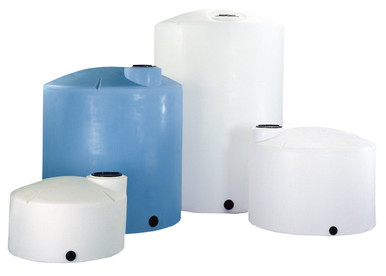
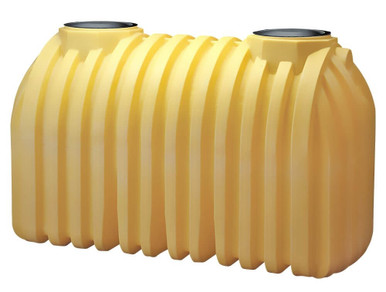
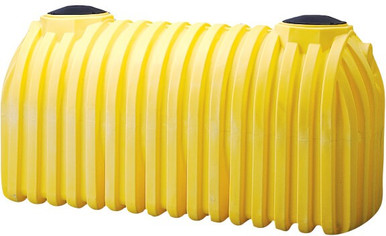
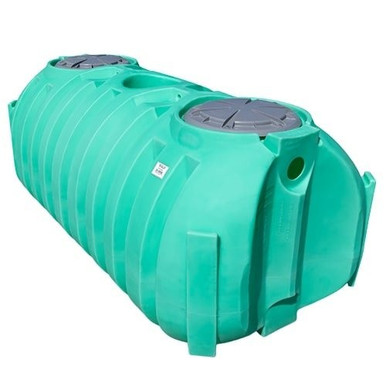
New York (10 NYCRR Appendix 75-A) sizes septic tanks by bedroom count or design flow, with residential systems typically starting at 1,000 gallons. These IAPMO PS 1–listed polyethylene tanks meet that capacity standard; your county or state permitting office confirms the final size.
Shop all IAPMO PS 1–listed septic tanks →
Meeting the construction standard is not the same as a permit — your county environmental health office issues the permit and makes the final determination. Call us with your permit number and we will confirm the exact tank spec before shipment, with freight quoted to your ZIP.
Chemical Storage & Secondary Containment in New York
Storing fuel, fertilizer, or process chemicals alongside your tank changes the rules. The federal Spill Prevention, Control, and Countermeasure rule (40 CFR Part 112) applies at 1,320 gallons of aggregate aboveground oil storage and requires secondary containment sized to at least 110% of your largest tank. Releases of hazardous substances above their federal reportable quantity (40 CFR 302.4) must be reported to the National Response Center at 1-800-424-8802.
New York layers its own spill reportable quantities and restricted-substance rules on top of that federal floor — confirm the current thresholds with your state environmental agency before specifying a chemical tank. Just as important, the polyethylene resin must be matched to the exact chemical, concentration, and specific gravity you intend to store; a tank rated for water is not automatically rated for acid, bleach, or fertilizer.
Last reviewed: May 2026 · sourced from New York administrative code
Regulations change on a rolling basis — confirm the current rule with your county or state agency before purchasing. Spot something out of date? Email us and we'll fix it.
Nearby states (Mid-Atlantic) & full index: