High-Temperature Tank Engineering Above 120F: HDPE Specific-Gravity Derating Curves, Polypropylene and Crosslinked Alternatives, Insulation and Heat-Trace Architecture, Thermal-Cycling Fatigue, and the Field-Operations Decision Framework
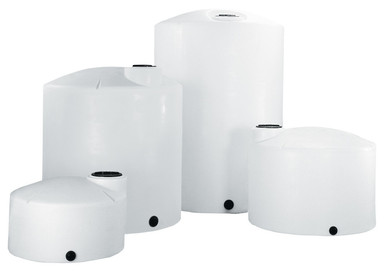
The polyethylene tank rated for ambient service performs well across the typical operating envelope from 32 degrees Fahrenheit to about 100 degrees. Above 100 degrees the design margins begin to compress; above 120 degrees the standard high-density polyethylene tank is operating in derated territory; above 140 degrees most HDPE tanks are no longer the right material and the engineering decision must move to polypropylene, crosslinked polyethylene, or specialty constructions. The high-temperature service envelope is therefore not a minor variation on standard tank engineering but a distinct domain with its own materials selection, accessory specification, insulation architecture, and operational discipline. This article walks the temperature-derating curves, the alternative materials, the insulation and heat-trace systems, the thermal-cycling considerations, and the field-operations framework that supports a high-temperature tank installation across its service life.
The discussion is grounded in ASTM D1998 polyethylene tank standard, ASTM D2837 hydrostatic-design basis methodology, manufacturer specific-gravity rating tables across the 5-brand polyethylene tank catalog (Norwesco, Snyder, Chem-Tainer, Enduraplas, Bushman), and field experience with hot-process applications. List pricing on each tank product page; LTL freight quoted to your ZIP via the freight estimator or by phone at 866-418-1777.
1. The Specific-Gravity Derating Mechanism
The starting point for high-temperature tank engineering is the specific-gravity rating system. Polyethylene tanks are sold with a maximum specific-gravity rating (typically 1.5, 1.9, or 2.2 depending on the tank model) that represents the maximum liquid density the tank can hold at room temperature for the design service life. Above room temperature the rating must be derated:
- The hydrostatic-design-basis foundation. Polyethylene long-term strength is characterized by a hydrostatic-design-basis (HDB) curve that relates allowable stress to time-at-temperature. The HDB curve is steeper at higher temperatures: the same stress produces failure faster at 120°F than at 70°F. The specific-gravity rating is set by the HDB curve at the design service life and the operating temperature.
- The derating ratio at elevated temperature. A typical HDPE tank rated for 1.9 specific gravity at 73°F derates to approximately 1.4 to 1.5 specific gravity at 100°F, 1.0 to 1.2 at 120°F, and below 1.0 at 140°F. The exact derating curve is manufacturer-specific and depends on the polyethylene grade, the tank dimensions, and the design service-life assumption. Manufacturer derating tables are the authoritative source.
- The chemistry-density consideration. The actual liquid specific gravity matters only if it exceeds the derated tank rating. A water tank (specific gravity 1.0) at 120°F is operating below the derated 1.0+ rating; a 50 percent caustic tank (specific gravity 1.53) at 120°F is operating above the derated rating and is structurally compromised. The chemistry-density check is application-specific.
- The temperature-of-record question. Tank temperature is set by the contained liquid, the ambient environment, and any process heating. Continuous-hot-service tanks operate at the chemistry temperature. Intermittent-hot-service tanks see temperature swings between hot and ambient. Outdoor tanks in summer can see solar-heated wall temperatures well above the contained-liquid temperature. The design temperature should be the highest temperature the tank wall actually sees, not the average.
- The derating-curve interpretation discipline. Manufacturers provide derating tables in different formats: percentage-of-rating versus temperature, allowable specific gravity at standard temperatures, or maximum operating temperature for a given specific gravity. Sites should normalize the manufacturer-specific format and verify the calculation independently before specifying a tank for high-temperature service.
- Reference 5000 gallon tank for derating illustration. Reference N-40164 5000 gallon Norwesco vertical as a typical mid-volume tank. The standard 1.9 SG rating at 73°F supports most ambient-temperature aqueous chemistry. Hot-service applications above 100°F require explicit derating verification before specification.
The derating mechanism is the central engineering concept for high-temperature service. Sites that ignore derating and specify tanks at room-temperature ratings for elevated-temperature service are setting up premature failures.
2. Polypropylene Tanks for Higher Continuous Temperature
When the operating temperature exceeds the HDPE useful range, polypropylene becomes the material of choice. Polypropylene tanks are produced by some manufacturers in the polyethylene tank catalog space and have specific design characteristics:
- The polypropylene temperature advantage. Polypropylene maintains useful structural strength to approximately 180°F continuous service, with intermittent excursions higher. The continuous-service temperature is approximately 60°F higher than HDPE, opening many hot-process applications that HDPE cannot serve.
- The chemistry-compatibility difference. Polypropylene has somewhat different chemistry compatibility than HDPE. Polypropylene is generally compatible with most aqueous chemistry, dilute acids, and dilute bases at elevated temperature. Some chemistries (concentrated oxidizers, aromatic hydrocarbons) attack polypropylene more aggressively than HDPE; the specific chemistry should be verified against polypropylene compatibility before specifying.
- The lower notched-impact toughness. Polypropylene has lower notched-impact toughness than HDPE at low temperatures. Outdoor polypropylene tanks in cold climates can develop cracks from impact (forklift bumps, dropped tools) at low temperatures. The cold-climate consideration affects polypropylene installation choices.
- The UV stabilization formulation. Polypropylene is more sensitive to UV degradation than HDPE. Outdoor polypropylene tanks require strong UV-stabilizer packages, typically using carbon-black or hindered amine light stabilizers. The UV-stabilizer specification matters for tank service life.
- The fitting compatibility. Polypropylene tank fittings should be polypropylene rather than PVC. Bulkhead fittings, threaded inserts, and flanges in polypropylene are available from the same manufacturers; mixing PVC fittings on polypropylene tanks creates differential thermal expansion that stresses the joints.
- The fabrication-process compatibility. Polypropylene piping is fused with polypropylene-specific procedures. The procedures parallel HDPE fusion but use different temperatures and parameters. Welder qualifications for polypropylene are separate from HDPE qualifications.
- Reference 1000 gallon tank for polypropylene application. Reference N-40152 1000 gallon Norwesco vertical as a representative tank size. The HDPE version serves ambient applications; the polypropylene equivalent extends the service envelope to hot-water (140°F to 160°F continuous), hot-rinse (CIP applications), and warm-process aqueous chemistry.
Polypropylene is the principal material upgrade path from HDPE for higher continuous-temperature service. The trade-offs are higher cost, lower notched-impact toughness, and somewhat different chemistry compatibility.
3. Crosslinked Polyethylene (XLPE) and Specialty Materials
Above the polypropylene continuous-service envelope, the materials options become more specialized and more expensive:
- The crosslinked-polyethylene (XLPE) advantage. XLPE is HDPE chemistry that has been crosslinked through peroxide, silane, or radiation processing. The crosslinking creates molecular-network bonds that prevent the polymer from melting; instead, the material softens but retains shape at temperatures well above the HDPE melting point. XLPE tanks can serve continuous temperatures to approximately 200°F and intermittent excursions higher.
- The XLPE manufacturing-process implications. XLPE is produced by specific rotational-molding processes with peroxide additives. Not all polyethylene-tank manufacturers offer XLPE; the specific manufacturer specification should be verified before specifying. Typically Snyder offers XLPE through their cross-linked tank products.
- The fluoropolymer-lined alternative. Some severe applications use a polyethylene or polypropylene tank with a fluoropolymer (PVDF, ETFE, FEP) liner bonded to the inner surface. The liner extends the chemistry-resistance envelope without changing the tank-structural material. The lined-tank approach is application-specific and significantly more expensive than unlined tanks.
- The dual-laminate construction. Some chemistry-and-temperature combinations use dual-laminate construction: a chemistry-resistant inner layer (typically a thermoplastic) bonded to an FRP outer structural layer. The construction is field-fabricated and involves significant engineering investment. The dual-laminate approach extends to chemistries beyond the polyethylene envelope.
- The metallic-tank crossover point. At some combination of temperature, pressure, and chemistry the polyethylene-tank approach becomes uneconomic and metallic tanks (carbon steel with chemistry-resistant coating, stainless steel, exotic alloys) become preferable. The crossover point is application-specific and may occur at lower temperatures for some chemistries than others.
- The intermittent-hot versus continuous-hot distinction. Some applications are intermittent-hot: the chemistry is briefly elevated (cleaning cycle, sanitization, reaction step) and then returns to ambient. Standard HDPE may serve intermittent excursions to higher temperatures than its continuous rating; manufacturer guidance specifies the intermittent envelope. Continuous-hot service uses the conservative continuous rating.
The materials hierarchy from HDPE through polypropylene to XLPE to lined-tank to metallic establishes a progression of capability, cost, and engineering investment. The application drives the material selection.
4. Insulation Architecture for Heat Conservation
Hot-service tanks lose heat to the ambient environment through the wall. Insulation architecture conserves the heat and stabilizes the contained-chemistry temperature:
- The heat-loss calculation. Heat loss from a tank wall is calculated as the temperature difference times the wall thermal conductance times the wall area. For an uninsulated polyethylene tank at 140°F internal, 70°F ambient, the heat-loss rate is significant. Insulation reduces the heat loss in proportion to the insulation R-value.
- The closed-cell foam insulation choice. Closed-cell polyurethane or polyisocyanurate foam is the most common insulation for polyethylene tanks. Spray-applied foam or pre-fabricated foam panels are both used. Closed-cell foam is moisture-resistant and maintains R-value over service life; open-cell foam absorbs moisture and degrades.
- The insulation-thickness selection. Insulation thickness from 1 inch to 4 inches is typical for polyethylene tanks; the optimum thickness balances insulation capital cost against energy savings. The thickness analysis follows standard insulation-economics calculations: heat-loss reduction times energy cost equals annual savings; capital cost divided by annual savings equals payback.
- The vapor-barrier consideration. Insulation systems require a vapor barrier on the warm side to prevent moisture migration into the insulation. For polyethylene tanks the warm side is the inside; the tank wall itself acts as a partial vapor barrier. The outside of the insulation may benefit from a separate vapor barrier in cold-climate or high-humidity environments.
- The weather-jacket protection. Outdoor insulation requires a weather jacket to protect the foam from UV degradation and physical damage. Aluminum or stainless-steel jackets are typical; some installations use elastomeric coatings. The weather-jacket specification matters for insulation service life.
- The fitting and accessory penetrations. Insulation around fittings, manways, and accessory connections requires careful detailing to prevent thermal short-circuits and leakage paths. Pre-fabricated insulation kits for common fitting sizes simplify the field installation.
- Reference 2500 gallon tank for insulation example. Reference N-41524 2500 gallon Norwesco vertical as a typical tank size where insulation may be applied for hot-service applications. The 2500 gallon tank surface area determines the insulation cost; the chemistry temperature and ambient determine the heat-loss savings.
Insulation is the principal heat-conservation tool for hot-service tanks. The insulation specification follows from the heat-loss analysis and the energy-economics calculation.
5. Heat-Trace Systems for Temperature Maintenance
Where the chemistry must be maintained above ambient at all times (not just inherited from process supply), heat-trace systems supply the make-up heat:
- The heat-trace cable principle. Heat-trace cables are electrical resistance heaters wrapped around the tank or installed in heat-trace channels. The cables convert electrical energy to heat at the tank surface, replacing the heat lost through the insulation. Most modern cables are self-regulating: as the tank wall temperature rises, the cable resistance rises and the heat output drops automatically.
- The wattage-per-foot specification. Heat-trace cables are specified by their heat output per foot at the design temperature. Common specifications are 5, 10, 15, or 20 watts per foot; higher wattages are available for severe-cold or low-insulation applications. The cable wattage times the cable length installed equals the total heating capacity.
- The temperature-controller integration. Self-regulating cables provide passive temperature control; constant-wattage cables require active controllers. Temperature controllers can be set-point thermostats, line-sensing controllers, or process controllers with multiple sensors. The control architecture matches the application complexity.
- The polyethylene-tank temperature-limit consideration. Heat-trace on polyethylene tanks must not exceed the tank wall temperature limit. Self-regulating cables matched to the tank temperature rating are used; constant-wattage cables require fail-safe controllers to prevent overheating. The matching is critical to avoid heat-trace damage to the tank.
- The freeze-protection use case. The most common heat-trace application on polyethylene tanks is freeze protection in cold climates: a low-wattage cable maintains the contents above freezing during winter ambient. The freeze-protection capacity is typically 5 to 10 watts per foot; the system runs intermittently as ambient temperature dictates.
- The process-temperature use case. The more demanding heat-trace application is process-temperature maintenance: holding the tank contents at a specified elevated temperature continuously. This application requires higher cable wattage, more capable insulation, and more sophisticated control. The continuous energy consumption is significant; the system economics drives the insulation investment.
Heat-trace systems are the active complement to passive insulation. The combined system maintains tank-content temperature against ambient heat loss across the service envelope.
6. Thermal-Cycling Fatigue and Stress Considerations
Tanks subjected to large temperature cycles experience stress-strain cycles that accumulate fatigue damage. The thermal-cycling consideration is a separate engineering topic from the steady-state high-temperature derating:
- The thermal-expansion physics. Polyethylene has a coefficient of thermal expansion approximately 100 times higher than steel and 10 times higher than concrete. A polyethylene tank that swings 100°F sees significant linear expansion. The expansion is accommodated by the polyethylene flexibility but creates stress at constraint points.
- The constraint-stress concentration. Tanks anchored to a foundation, connected to rigid piping, or restrained by surrounding structures experience stress concentration at the constraint points during thermal cycles. The stress concentration accelerates fatigue damage compared to free-expansion conditions.
- The piping-flexibility specification. Tank-discharge piping should include flexibility to accommodate the thermal expansion. Expansion loops, flexible connectors, or simply long straight runs with anchored midpoints all provide flexibility. Rigid short piping is the worst case for thermal-cycle stress.
- The cold-startup stress consideration. Tanks filled rapidly with hot chemistry experience thermal shock: the inside surface heats while the outside stays cool, creating tensile stress at the outside. Cold tanks rapidly filled with cold chemistry have the opposite stress pattern. Slow-fill or slow-warm-up procedures reduce thermal-shock stress.
- The freeze-thaw cycle stress consideration. Tanks holding water-based chemistry that periodically freezes (cold-climate, intermittent-use, or off-season storage) experience freeze-thaw stress that compounds the temperature-cycle fatigue. Freeze damage can be sudden (ice expansion fractures) or gradual (microcrack accumulation).
- The fitting-joint cycle stress. Fittings and bolted joints experience differential expansion between the polyethylene tank material and the metallic fasteners or fittings. The expansion difference cycles with temperature; the cycling loosens bolt torque and stresses gasket seals. Periodic re-torquing of fitting bolts and gasket inspection accommodate the cycling.
The thermal-cycling considerations affect installation design, operating procedures, and maintenance discipline. Hot-service tanks that ignore the cycling considerations develop premature failures at the constraint and fitting points; tanks designed and operated with cycling-awareness perform reliably across long service lives.
7. The Field-Operations Decision Framework
The high-temperature tank installation involves operational considerations beyond the equipment specification:
- The operator-protection consideration. Hot-tank surfaces present burn hazards. Insulated tanks may have weather-jacket surface temperatures within burn-risk range; uninsulated hot tanks definitely do. Personnel-contact analysis identifies the burn-risk surfaces and specifies protection (additional insulation, signage, physical barriers) to prevent operator injury.
- The vapor-handling consideration. Hot chemistry generates more vapor than cold chemistry. Tank vents on hot-service tanks must be sized for the vapor flow during operation; under-sized vents pressurize the tank or vapor-lock fitting connections. The vapor-handling specification is application-specific (water vapor, organic-vapor, hazardous-vapor each have different requirements).
- The vapor-condensation management. Vapors that escape the tank vent can condense in the surrounding piping or atmosphere, dripping back onto the tank or onto operator areas. Vapor-recovery systems (condensers, scrubbers, or simply long vent runs to atmosphere) capture the vapor before condensation. The vapor-management specification flows from the chemistry properties.
- The level-instrument compatibility. Standard level instruments (radar, ultrasonic, hydrostatic) have temperature ratings that must match the tank service. Some instruments require special high-temperature variants; some require remote-sensor configurations with the electronics in cooler ambient. The instrument compatibility is verified at procurement.
- The fitting-and-accessory compatibility. Tank fittings, gaskets, valves, and instruments all have temperature ratings. The full assembly is rated to the lowest-rated component; one PVC fitting on a 180°F polypropylene tank limits the entire system. Component-by-component temperature-rating verification prevents weak-link failures.
- The personnel-training implications. Hot-tank operations require specific personnel training: how to handle hot connections, what protective equipment is required, how to respond to spills of hot chemistry, how to monitor tank temperature and recognize anomalies. The training program is part of the high-temperature installation, not a separate afterthought.
- Reference 100 gallon tank for small-scale hot service. Reference N-44800 100 gallon Norwesco doorway tank as the smallest-scale tank where hot-service applications occur. Even at 100 gallons the burn-risk, vapor-handling, and component-compatibility considerations apply with proportional rigor.
The field-operations framework converts the high-temperature tank from a specification document into a working installation that operates safely and reliably. Sites that build the operational discipline alongside the equipment specification produce installations that serve their planned function for the service-life duration.
8. Procurement Implications and Tank Selection
The high-temperature service envelope informs procurement at the tank-specification stage:
- Manufacturer-rating verification. The procurement decision starts with verification of the manufacturer rating at the operating temperature. The rating table for the specific tank model at the specific temperature drives the selection between HDPE, polypropylene, XLPE, or alternative construction.
- Fitting-temperature-rating consistency. Tank fittings should be rated to the operating temperature consistent with the tank wall. Mixed-rating fittings on hot-service tanks create premature-failure points at the lowest-rated component.
- Insulation-and-jacket inclusion in tank quote. The tank quote can include factory-applied insulation and weather jacket as a turnkey package or can leave the insulation to a separate field installation. The factory-applied option is typically more uniform in quality; field installation is more flexible to accommodate site-specific conditions.
- Heat-trace pre-engineering. Some tank-and-insulation packages include heat-trace circuits at the factory; others leave the heat-trace as a field installation. Factory-pre-engineered heat-trace simplifies the site work and improves the system reliability.
- Color selection for thermal-load consideration. Outdoor hot-service tanks should typically be specified in light colors (white, light gray) to minimize solar-load contribution to the wall temperature. Black tanks add 20°F or more to the wall temperature in direct sun, accelerating UV and thermal-cycling damage.
- Documentation-package completeness. Hot-service tank documentation should include the manufacturer derating curve, the materials specification, the fitting-rating verification, and the insulation/heat-trace specifications. The documentation supports the eventual operating-and-maintenance program through the service life.
The procurement-stage decisions on tank material, fitting rating, insulation, and heat-trace establish the high-temperature installation envelope. Sites that integrate the procurement and operating-engineering disciplines produce installations that serve hot-process applications reliably for 20 to 30 years.
9. The High-Temperature Tank Engineering Conclusion
The high-temperature tank service envelope above 120°F is a distinct engineering domain with specific materials selection, accessory specification, insulation architecture, and operational discipline. The HDPE specific-gravity derating curves identify when standard polyethylene must be replaced with polypropylene, XLPE, or specialty constructions. The insulation and heat-trace systems conserve heat and maintain process temperature. The thermal-cycling considerations affect installation design and maintenance. The field-operations framework ensures the installation operates safely and reliably. Sites that build the full engineering picture produce hot-service tank installations that perform across 20 to 30 year service lives; sites that approach hot service with ambient-tank assumptions produce premature failures and operating problems.
OneSource Plastics ships polyethylene tanks across the 5-brand catalog (Norwesco, Snyder, Chem-Tainer, Enduraplas, Bushman) including HDPE and polypropylene options for elevated-temperature service. Tank specification for any specific high-temperature application is performed by the customer site engineer with reference to the chemistry, the operating temperature, and the manufacturer derating tables. List pricing on each product page; LTL freight to your ZIP via the freight estimator or by phone at 866-418-1777.
Recommended Tanks for This Guide
Live pricing, updated automatically · estimate freight to your ZIP.