Mobile Tote Washout Station Design for Between-Batch IBC Turnover: Spray-Ball Geometry, Hot-Water Loop Engineering, Wash-Effluent Capture, and the Procurement Decisions That Make Tote-Reuse Operationally Viable
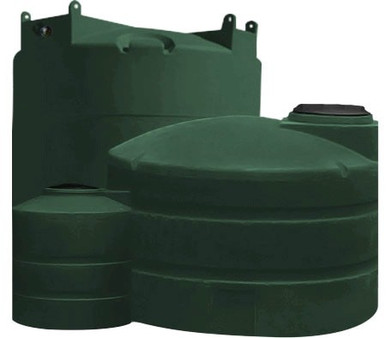

The intermediate bulk container (IBC tote) sits at the workhorse middle of liquid handling: 275 to 330 gallons per unit, stackable, forklift-handleable, returnable, and reusable across multiple service rotations. The economic case for tote reuse over single-use disposal is decisive when the wash cycle costs less than the replacement tote, and that economics holds for nearly all chemistries that totes carry. The constraint is the wash cycle itself: a wash cycle that removes prior chemistry to a verified residue threshold, captures and disposes of the wash effluent in compliance with environmental regulation, returns the tote to service in dry serviceable condition, and does all of this fast enough to keep up with the production cadence. A mobile tote washout station is the engineered system that makes the wash cycle efficient and repeatable. This article walks the spray-ball geometry, the hot-water loop engineering, the chemical-cleaning options, the wash-effluent capture and treatment, the dry-down and inspection workflow, the mobility and service-area design, and the procurement decisions that drive tote-reuse economics.
The framework draws on CIP (Clean-In-Place) practice from food and pharmaceutical industries, on tote-rental industry operating standards, on EPA RCRA hazardous-waste handling regulation, and on field experience across the 5-brand polyethylene tank catalog (Norwesco, Snyder, Chem-Tainer, Enduraplas, Bushman). List pricing on each tank product page; LTL freight quoted to your ZIP via the freight estimator or by phone at 866-418-1777.
1. Why Mobile Wash-Out Stations Beat Fixed Wash-Bays for Many Operations
The tradeoff between a mobile wash-out station and a fixed wash-bay is operational fit. The mobile-station case:
- Bring the wash to the tote rather than the tote to the wash. A mobile station can be positioned where the totes accumulate (production line end, customer-return staging, dispatch yard) and washes the totes in place. A fixed wash-bay requires every tote to be transported across the site to and from the wash, adding handling cost.
- Distributed wash capacity at multi-line operations. A site with multiple production lines that each terminate in tote loading benefits from distributed wash capacity that follows the production line rather than centralizing all wash through a single bay.
- Field-service compatibility. A mobile station can travel to customer sites for tote-collection and field-wash service. The capability supports a returnable-tote business model where the wash service is performed at the customer location rather than requiring backhaul to the supplier site.
- Capital efficiency for variable-throughput operations. A site with seasonal peaks (spring fertilizer, summer chemistry, winter heating-oil) sees variable wash-throughput demand. A mobile station can be deployed during the peak and stored during the off-season; a fixed bay carries its capital cost regardless.
- Disaster-recovery flexibility. A fire, flood, or facility-loss event at the primary wash bay leaves the operation without wash capacity. A mobile station provides backup wash capability that can be relocated to alternative working space.
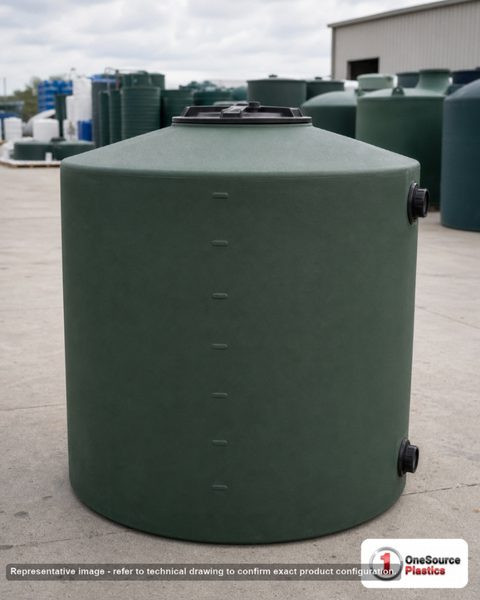
- Reference 2500 gallon tank for fresh-water supply integration. Reference N-40051 2500 gallon Norwesco vertical as a typical fresh-water supply tank that can be integrated with a mobile wash station to provide wash-water reservoir capacity for distant working locations.
The mobile-station case is not universal; it depends on the operation's tote-throughput profile and site geometry. The case is strong enough at many operations that the mobile station is the preferred architecture even where a fixed wash bay would be feasible.
2. Spray-Ball Geometry and Internal Coverage Engineering
The cleaning effectiveness inside the tote depends on the spray-ball geometry that distributes wash water across the interior surfaces. The geometry decisions:
- Static spray-ball with multiple holes. A static spray ball is a sphere or hemisphere drilled with many holes that distribute water in fixed patterns. The simplicity is the strength: no moving parts, no maintenance complexity, and predictable spray patterns. The limitation is the fixed-pattern coverage, which may leave shadows where holes do not reach.
- Rotating spray-ball. A rotating spray ball is driven by the pressure of the wash water and produces a sweeping coverage pattern that reaches all interior surfaces. The motion eliminates the shadows of static designs at the cost of moving parts that can stick or wear.
- Multi-pass spray-pattern engineering. Both static and rotating designs benefit from multi-pass operation: the wash cycle runs the spray ball multiple times with intermediate quiescent periods to allow runoff. The multi-pass approach extends single-cycle effectiveness without changing hardware.
- Insertion through the tote-cap opening. The spray ball is inserted through the standard 6-inch tote-cap opening on a rigid-or-flexible lance. The lance length positions the spray ball in the upper third of the tote where coverage to the bottom and walls is most effective.
- Spray-ball materials of construction. Stainless steel (Type 316) is the dominant material for chemical-resistant durability. PTFE and PVDF are alternatives for aggressive chemistries. Polypropylene is acceptable for benign aqueous service. Material selection follows the chemistry compatibility chart of the most aggressive expected wash service.
- Hole-size and pattern design. Hole sizes typically run 1.5 to 3 millimeters with hole counts of 50 to 200. Smaller holes produce finer atomization and better surface contact at the cost of plugging risk if wash water carries particulates. Larger holes resist plugging but produce coarser spray patterns.
- Reference 1500 gallon tank for batch-wash water supply. Reference N-40144 1500 gallon Norwesco vertical as a typical wash-water reservoir that can support 5 to 10 tote washes between refills, depending on the wash protocol.
The spray-ball geometry is the technical core of the cleaning effectiveness. A well-designed spray ball achieves verifiable interior coverage with reasonable wash-water consumption; a poorly-designed spray ball leaves shadows and consumes excess water trying to compensate.
3. Hot-Water Loop Engineering
Most tote-wash chemistries benefit from hot water (50 to 80 degrees Celsius) to dissolve residue, reduce viscosity, and accelerate cleaning kinetics. The hot-water loop engineering:
- Heating system selection. Hot-water generation can be from a fired water heater (natural gas, propane, oil), an electric water heater, or a heat-exchanger from another hot stream (steam, hot process water). Selection depends on energy availability and the wash-throughput volume.
- Recirculation versus once-through operation. A recirculation loop sends the wash water back to a sump and recycles it through additional passes. A once-through loop discharges the wash water after a single pass. Recirculation is more water-efficient but requires the heated water to remain compatible with the residue load.
- Temperature-control discipline. Wash temperature is monitored and controlled to a setpoint band. Too cold and the cleaning kinetics slow; too hot and energy is wasted (and some thermoplastic totes face derating above 60 degrees Celsius). The control is a thermostat-driven loop with periodic verification.
- Insulation on supply piping. Hot-water supply piping is insulated to maintain temperature from the heater to the spray ball. Uninsulated supply piping in a cold ambient drops the wash temperature 10 to 20 degrees Celsius across a long run.
- Flow-rate sizing for cycle time. The wash flow rate determines the cycle time: a 200 gpm flow rate completes a 600-gallon wash pass in 3 minutes; a 50 gpm flow rate takes 12 minutes. Flow rate is sized against the cycle-time target and the spray-ball pressure-drop characteristic.
- Pump and impeller selection for hot-water service. Centrifugal pumps for hot-water service are specified with elastomer compatibility for the temperature range. EPDM elastomers tolerate hot water; some compounded rubbers do not. The pump selection includes the elastomer specification.
- Reference 1000 gallon vertical for compact heated-water supply. Reference N-40152 1000 gallon Norwesco vertical as a compact heated-water supply tank where insulation can be applied externally to maintain temperature for the wash session.
The hot-water engineering is the energy infrastructure of the wash station. A well-engineered loop produces consistent wash-water temperature, predictable cycle times, and controlled energy consumption; a poorly-engineered loop oscillates in temperature, drives variable cycle times, and either wastes energy or under-cleans.
4. Chemical-Cleaning Options for Stubborn Residues
Hot water alone is sufficient for many tote-wash applications but not all. Chemical-cleaning options extend the wash capability for stubborn residues:
- Caustic cleaning for organic residue. Sodium hydroxide solutions at 1 to 3 percent concentration dissolve oils, greases, fats, and many organic residues. Caustic is dosed into the wash water through a chemical-feed pump; concentration is verified by titration or pH check.
- Acid cleaning for mineral residue and scale. Phosphoric, citric, or nitric acid solutions at 1 to 3 percent concentration dissolve mineral scale, hard-water deposits, and oxide films. Acid cleaning is preferred over caustic where the residue is mineral.
- Sanitizer cycle for biological-load reduction. A sanitizer pass (chlorinated water at 100 to 200 ppm, peroxyacetic acid at 80 ppm, or quaternary ammonium at label rate) follows the cleaning steps for tote applications where biological contamination is a concern.
- Solvent cleaning for solvent-residue applications. Some chemistries (paint solvent residues, oil-based coatings) require organic-solvent cleaning rather than aqueous. The solvent cycle adds capture and disposal complexity that drives up the wash cycle cost; it is reserved for specific applications.
- Multi-stage cleaning sequences. Stubborn applications use multi-stage sequences: pre-rinse with cold water, hot-water wash, caustic cleaning, hot-water rinse, acid cleaning, hot-water rinse, sanitizer pass, final rinse. Each stage has a defined purpose and addresses a specific residue characteristic.
- Operator chemistry-handling protocols. The chemical-cleaning agents themselves are hazardous. The operator handling protocols include personal protective equipment, safety-data-sheet review, eye-wash and emergency-shower availability, and supervised chemistry transfer.
- Reference small mid-size tanks for chemical-feed reservoirs. Reference N-41528 300 gallon Norwesco vertical as a typical chemical-feed reservoir for caustic, acid, or sanitizer concentrate that feeds the wash-water dosing system.
Chemical cleaning is reserved for applications that need it. Sites that default to chemical cleaning waste consumable cost on routine washes; sites that resist chemical cleaning when residue requires it produce inadequate cleaning that causes cross-contamination in the next service.
5. Wash-Effluent Capture and Treatment
The wash effluent leaves the tote contaminated with prior-service residue, cleaning chemicals, and wash water. The effluent must be captured, characterized, and treated or disposed:
- Effluent-capture sump or pan beneath the tote. The wash station includes a containment sump beneath the tote that captures all wash effluent. The sump is sized for the maximum wash-cycle volume plus a safety margin. The sump material is compatible with the wash chemistries.
- Effluent transfer pump and routing. A pump transfers the effluent from the capture sump to the effluent storage tank. The pump and routing are sized for the wash-cycle volume divided by the cycle-recovery interval.
- Effluent-storage tank for hold-and-characterize operation. The effluent is held in a dedicated storage tank for characterization before disposal. The hold supports waste classification and routing decisions: hazardous waste, non-hazardous wastewater, or treatment-and-discharge eligibility.
- Characterization sampling discipline. Each effluent batch (or a representative sample of multiple batches) is sampled and tested for hazardous characteristics (flash point, pH, reactive components, toxic constituents per RCRA Subpart C). The result determines the disposal pathway.
- On-site treatment options. Some effluents are amenable to on-site treatment: pH neutralization with acid or caustic, oxidation-reduction with bleach or sulfite, settling for solids removal, oil-water separation. Treated effluent may meet discharge standards for sanitary sewer or stormwater.
- Off-site disposal for non-treatable effluent. Effluent that does not meet treatment-amenability criteria is shipped off-site as hazardous waste under RCRA manifests. The cost is significant ($0.50 to $3.00 per gallon depending on classification) and is rolled into the wash-cycle economics.
- Reference 5000 gallon tank for effluent storage scale. Reference N-40164 5000 gallon Norwesco vertical as a typical effluent-hold tank that supports several weeks of accumulated wash effluent before disposal pickup. Tanks for effluent service must be specified for the most aggressive expected effluent chemistry.
The effluent management is the regulated portion of the wash operation. Sites that handle effluent rigorously remain compliant and predictable in their disposal cost; sites that improvise produce regulatory-compliance issues, occasional fines, and operational disruption.
6. Dry-Down and Final-Inspection Workflow
The wash cycle is followed by a dry-down and final-inspection workflow that prepares the tote for return to service:
- Drain-down to remove residual wash water. The tote is positioned for full drain-down (typically inverted on a drain stand) to remove pooled wash water from the bottom. Inadequate drain-down leaves water that dilutes the next service and may produce off-spec product.
- Air-blow-down for accelerated drying. A filtered compressed-air blow-down accelerates the drying of interior surfaces. The air is filtered to prevent introducing oil-mist or particulate contaminants from the compressed-air system.
- Heated-air drying option. For high-throughput operations, heated-air drying (typically 60 to 80 degrees Celsius) reduces dry-time from hours to tens of minutes. The heated-air system has its own energy and capital cost that is justified at high throughput.
- Visual inspection of interior surfaces. An inspection through the tote-cap opening (with portable light) verifies that the interior is visually clean and dry. The inspection is operator-direct and catches gross cleaning failures before the tote returns to service.
- Periodic analytical verification. A sample of washed totes (typically 1 in 20 or per a defined sampling plan) receives analytical verification: water rinse with subsequent residue-analysis sampling. The sampling provides objective evidence of cleaning effectiveness.
- Tote-condition inspection beyond residue. The inspection also covers physical condition: cage damage, valve operation, gasket condition, identification-label readability. Damaged totes are removed from service for repair or replacement.
- Cleaning-record documentation. Each washed tote is logged with the wash date, the prior service, the wash protocol used, the inspection result, and the operator. The records support customer-service inquiries and regulatory traceability.
The dry-down and inspection workflow converts a wet, just-washed tote into a dry, verified, return-to-service unit. The workflow discipline is the difference between a wash operation that produces consistent reusable totes and one that produces variable quality with occasional failures.
7. Mobility, Power, and Service-Area Design
The mobile-station character introduces design requirements beyond the wash chemistry and mechanics:
- Trailer chassis or skid-mounted base. The station is mounted on a trailer chassis (DOT-roadable for over-road movement) or a skid that is forklift-relocatable on the site. The chassis selection depends on whether the station travels between sites or only within a single site.
- Power supply considerations. The wash station requires electric power for pumps, controls, and (if applicable) the water heater. Mobile stations operate from on-site 240 volt or 480 volt service, from a portable generator, or from a tow-vehicle PTO depending on the field operation.
- Water-supply connection. The station requires fresh-water supply at the wash flow rate. The supply may be from a hose-fed plant water connection, from an on-trailer water tank that is periodically refilled, or from a pumped supply from a local source.
- Effluent-discharge connection. The station requires an effluent-discharge connection to the on-site effluent management system. The connection is matched to the on-site pipe and valve specifications.
- Working-area footprint. The mobile station requires a working area that accommodates the unit itself plus tote-staging space plus operator work area plus drain-down area. Footprints typically run 20 by 30 feet for a single-tote operation; larger for multi-tote configurations.
- Weather-protection enclosure. Outdoor operations benefit from a weather-protection enclosure that allows year-round operation. The enclosure also confines spray and aerosol within a controlled volume for safety and chemical-handling compliance.
- Reference small storage tanks for fresh-water and effluent. Reference N-40152 1000 gallon Norwesco vertical as a compact on-trailer fresh-water supply or a paired effluent-hold tank for stations operating in locations with limited utility connections.
The mobility engineering converts the wash equipment from a fixed-installation system into a deployable system. The deployment flexibility is the strategic advantage; the engineering for that flexibility is the cost of the strategy.
8. Procurement Decisions That Drive Tote-Reuse Economics
The wash-station procurement decisions affect the tote-reuse economics over years of operation:
- Capacity sizing against wash-throughput projections. The station capacity (totes per hour) is sized against the production-line throughput projections. Under-sized stations bottleneck the line; over-sized stations carry unused capital cost.
- Chemistry-compatibility scope of the construction materials. The pumps, hoses, spray balls, sumps, and effluent piping are constructed of materials compatible with the broadest expected wash chemistry. Specifying for the worst-case chemistry adds initial cost but supports operational flexibility.
- Heated versus ambient-temperature configuration. The decision to include heating capability is a function of the chemistry portfolio. Some applications wash effectively at ambient; others require heated water. The heated configuration adds capital and operating cost.
- Automation level selection. Automation ranges from manual valve-set wash cycles to fully-automated multi-stage wash sequences with operator-monitored progression. Higher automation reduces labor but adds capital and complexity.
- Effluent-storage capacity sizing. The effluent-storage tank is sized for the period between disposal pickups multiplied by the per-tote effluent volume multiplied by the throughput. Under-sized storage bottlenecks the wash; over-sized storage carries unused capital.
- Spare-parts and consumables strategy. Spare spray balls, gaskets, pump impellers, and chemical-feed components are stocked for field-failure response. The stocking strategy prevents downtime from common-failure modes.
- Documentation-system integration. The wash records can be paper-based or electronic. Electronic systems integrate with the broader plant or rental-company tracking and support cleaner audit trails. The decision affects ongoing administrative cost.
- Reference 5000 gallon tank for high-volume effluent storage. Reference N-40164 5000 gallon Norwesco vertical as a high-volume effluent-storage candidate where the wash-throughput justifies large-volume hold-and-characterize operation between disposal pickups.
The procurement decisions are coupled to the wash-station economics over its service life. Decisions made with consideration of the operational profile and the chemistry portfolio produce stations that operate efficiently for a decade or more; decisions made on initial-cost basis only produce stations that under-serve the operation and generate hidden-cost variability.
9. The Mobile Tote Wash-Out Station Engineering Conclusion
The mobile tote wash-out station is the engineered system that converts an IBC-tote-reuse aspiration into operational reality. The spray-ball geometry distributes the wash water across the interior surfaces. The hot-water loop engineering provides the temperature and flow rate that drives cleaning kinetics. The chemical-cleaning options extend the wash capability for stubborn residues. The wash-effluent capture and treatment manage the regulated end of the wash operation. The dry-down and inspection workflow returns the tote to service in verified condition. The mobility, power, and service-area design make the station deployable across the operating sites where it is needed. The procurement decisions across capacity, materials, automation, and storage drive the long-term economics of the tote-reuse operation. Sites that engineer the wash station across these dimensions sustain low-cost, regulatory-compliant tote-reuse operations; sites that under-engineer either fail to clean adequately or absorb effluent-handling violations that erode the reuse economics.
OneSource Plastics ships polyethylene tanks across the 5-brand catalog (Norwesco, Snyder, Chem-Tainer, Enduraplas, Bushman) in capacities and chemical-compatibility ratings appropriate for fresh-water supply, effluent storage, and chemical-feed reservoirs that support mobile tote-wash-out station operations. Tank specification for any specific wash-station integration is performed by the customer site engineer with reference to the chemistry portfolio, the throughput projections, and the regulatory regime. List pricing on each product page; LTL freight to your ZIP via the freight estimator or by phone at 866-418-1777.
Recommended Tanks for This Guide
Live pricing, updated automatically · estimate freight to your ZIP.