Pump-Around Recirculation Loop Engineering for Bulk Polyethylene Tanks: Chemistry Distribution Discipline, Thermal Homogenization, Eductor Versus Mixer Trade-Offs, and the Field Layout That Eliminates Stratification Without Touching the Tank Top

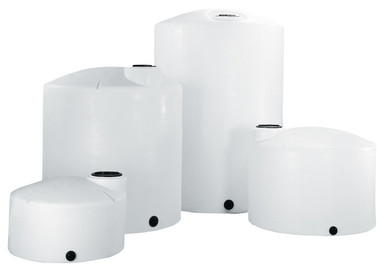
A bulk polyethylene tank holding 5,000 to 10,000 gallons of any chemistry rarely sits as a uniform fluid. Concentration drifts as fresh make-up adds at the top while consumption draws from the bottom. Temperature drifts as warm sun heats the upper layers and cooler ground temperatures hold the bottom. Specific gravity differences settle dense components toward the floor. Pre-mixed chemistry that arrived homogeneous becomes stratified within hours of unloading. The downstream process draws from a single point and gets whatever happens to be at that elevation, not the bulk-average composition that the dosing calculations assumed. The downstream process performance varies, the operator chases the variation with set-point adjustments, and the variation itself remains hidden until concentration sampling reveals it.
Pump-around recirculation solves this problem by continuously circulating the tank contents through an external loop that returns at a different elevation. The recirculation produces forced flow inside the tank, distributes added chemistry uniformly, homogenizes thermal stratification, and prevents the dense-component settling that creates stratified inventory. The engineering choice between pump-around recirculation, in-tank mechanical mixers, and eductor-driven recirculation depends on the chemistry, the tank geometry, and the operational discipline that the site supports. This article walks the engineering of pump-around loops for the 5-brand catalog of Norwesco, Snyder, Chem-Tainer, Enduraplas, and Bushman bulk polyethylene tanks, including the design decisions that make the loop work and the field layout that produces homogeneous tank contents without unnecessary capital or operating cost. The references are the manufacturer guidance for fitting locations and pressure ratings on each tank brand, the Hydraulic Institute pump curves for flow-rate selection, and field operations data from facilities operating with and without pump-around loops on otherwise comparable tank installations.
1. The Stratification Failure Mode and Operational Consequences
Stratification develops in any tank where the contents are not actively mixed. The mechanisms:
- Density stratification. Components of different specific gravity separate over time. Concentrated chemistry added to a tank of dilute chemistry sinks if denser, floats if lighter, and forms a layer at the corresponding density elevation. The layer persists for hours to days depending on diffusion rates; without active mixing, the layer remains.
- Thermal stratification. Solar heating warms upper layers; cooler bottom temperatures hold lower layers cold. The temperature gradient drives density differences (warm fluid is less dense) that stabilize the stratification rather than mix it. A 5-10 C top-to-bottom temperature gradient is common in outdoor tanks during sunny conditions.
- Concentration stratification from fill operations. Tank-top fill connections deposit fresh chemistry at the top. Tank-bottom discharge connections withdraw from the bottom. Without mixing, the tank ages from a homogeneous mixture into a vertical concentration profile where the freshly delivered top layer is high concentration and the long-resident bottom layer is depleted.
- Settling of suspended solids. Slurry chemistries, dispersions, and any chemistry with suspended solids settle the dense phase to the floor. Without mixing, the floor accumulates a settled layer that is denser than the supernatant and may be too dense or too thick to draw through the bottom outlet.
- Dead zones in tank corners. Tank corners and the area beneath the bottom-fitting elevation become dead zones where fluid does not exchange with the bulk. Chemistry residing in the dead zone ages differently from the bulk and may degrade or precipitate before being detected.
The operational consequences of stratification are concentration drift at the discharge point, dosing errors at downstream processes, off-spec product if the stratified inventory is shipped to customers, and unexpected chemistry behavior when a previously stratified tank is finally agitated. Operators report the symptoms but rarely diagnose the root cause as stratification because the stratification itself is invisible from the outside.
2. Pump-Around Recirculation Loop Architecture
The pump-around loop circulates tank contents through an external pump and returns the flow to the tank at a different elevation. The architecture:
- Suction connection at the tank bottom. The recirculation loop draws from a side or bottom fitting near the tank floor. The bottom-draw geometry mobilizes any settled solids and prevents dead-zone accumulation. The draw-fitting size matches the loop flow rate (typically 2 inch to 4 inch for tanks 1,000 to 10,000 gallons).
- Centrifugal pump for the loop circulation. A centrifugal pump moves the fluid at the design flow rate. Pump selection matches the chemistry compatibility, the flow rate (typically 5-25 percent of tank volume per hour for moderate stratification control; higher for thermal homogenization or aggressive solids re-suspension), and the pressure drop through the loop and return-fitting geometry.
- Return connection at the tank top or upper side. The loop returns to the tank at a different elevation, ideally near the tank top or upper third of tank height. The elevation difference between draw and return drives the vertical mixing pattern. A short-circuit path from a near-floor draw to a near-floor return produces minimal mixing; the elevation differential is essential.
- Return-flow distribution. The return flow can enter the tank as a single jet, as a distributed manifold, or through an eductor that entrains additional tank fluid into the return stream. Single-jet return is simplest; distributed return improves mixing in tall tanks; eductor return multiplies the effective mixing flow by 4-8 times the pump flow.
- Loop instrumentation. Flow meter on the loop confirms circulation rate. Temperature sensor on the loop indicates bulk temperature for thermal control. Sample tap on the loop enables periodic concentration sampling that reflects the bulk-average tank composition rather than a single-point in-tank measurement.
- Loop isolation valves. Block valves on the loop suction and return enable maintenance, pump replacement, or instrumentation calibration without de-tanking the bulk inventory. Drain valves between the block valves drain the loop section for service.
The architecture is straightforward in principle and modest in capital cost. A 5,000-gallon tank with a 25 GPM recirculation loop processes one tank turnover per 3.3 hours at a centrifugal pump consuming 0.5-1 kW continuous power. The operating cost is small compared to the avoided losses from stratified-inventory operational problems.
3. Flow Rate Selection Based on Mixing Objective
The pump flow rate is selected based on the mixing objective, not by rule of thumb. The objectives and their corresponding flow rates:
- Density and concentration uniformity (typical bulk storage). Tank turnover rate of 5-15 percent of tank volume per hour. A 5,000-gallon tank circulates at 4-12 GPM. The recirculation maintains uniform composition during steady-state holding and during slow-rate fills or withdrawals. Most stratification control applications operate in this range.
- Thermal homogenization (outdoor tanks with significant solar gain). Tank turnover rate of 25-50 percent per hour during peak solar hours. A 5,000-gallon tank circulates at 21-42 GPM during the highest-gradient daylight hours. The higher rate ensures that solar-driven thermal gradients do not establish before the recirculation breaks them up.
- Aggressive solids re-suspension (slurries with settling tendency). Tank turnover rate of 50-150 percent per hour with eductor-amplified return. The high circulation rate plus the eductor-induced internal flow keeps suspended solids mobilized and prevents floor accumulation. Operating cost is higher; chemistry that requires this level of mixing typically justifies the cost.
- Gentle blending during fill operations. Tank turnover rate matched to the fill rate. If a tanker delivers 5,000 gallons over 30 minutes (10,000 GPH), the recirculation rate during fill should be 25-50 percent of fill rate to ensure incoming chemistry blends with resident chemistry as the fill progresses. The recirculation rate may step up during fill and step down during steady-state holding.
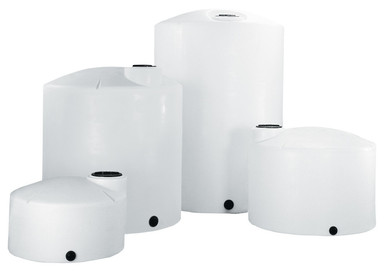
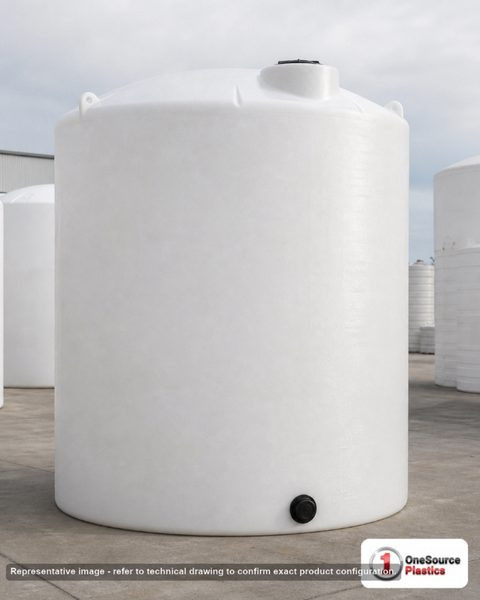
The flow-rate selection drives the pump sizing, the line sizing, and the operating cost. Right-sized for the actual mixing objective produces good homogenization at low operating cost; over-sized produces unnecessary operating cost; under-sized fails to achieve the mixing objective and leaves the operator with the original stratification problem. Reference manufacturer fitting size and pressure rating data when sizing the loop. Reference N-40164 5000 gallon Norwesco vertical for the bulk envelope where this sizing analysis applies.
4. Eductor Return Versus Direct Return Engineering
The return-flow geometry significantly affects mixing efficiency. The eductor versus direct return decision:
- Direct return geometry. The recirculation flow returns to the tank as a single jet from the loop piping. The jet entrains a small amount of tank fluid into its motion (typical entrainment ratio 1:1 to 2:1) but most of the mixing depends on the jet momentum reaching across the tank and creating internal circulation. Adequate for moderate-mixing-requirement bulk storage at typical 5-15 percent turnover rates.
- Eductor return geometry. The recirculation flow drives an eductor (jet pump) installed inside the tank. The eductor uses the high-velocity recirculation jet to entrain a multiple of additional tank fluid into a mixing chamber. Effective mixing flow is 4-8 times the pump-driven recirculation flow. A 25 GPM pump-driven loop with 6:1 eductor entrainment produces 150 GPM of effective in-tank mixing flow. Significant capital and complexity addition; significant mixing benefit for thermal homogenization or solids re-suspension applications.
- Eductor placement strategy. Eductors are placed near the tank floor, oriented to direct flow across the floor and upward at the wall. The floor-sweeping flow re-suspends settled solids; the upward wall flow drives top-to-bottom circulation. Multiple eductors at different floor locations provide better coverage in large-diameter tanks (12 feet diameter and larger).
- Return jet orientation. Direct-return jets are oriented to maximize mixing path length without short-circuiting back to the suction. A jet aimed at the tank wall on the opposite side of the tank from the suction creates a circular mixing pattern; a jet aimed across the surface drives surface-renewal mixing useful for vapor-equilibrium control on volatile chemistries.
- Avoiding free-jet vapor entrainment. The return jet should remain submerged below the liquid surface to avoid air entrainment that creates foam, oxidation, or aerosol on volatile chemistry. The minimum submergence depth depends on jet diameter and velocity; typical 6-12 inches below the minimum operating level.
The eductor return is the upgrade option for installations that require active mixing rather than gentle homogenization. Reference SII-1006600N42 10,000 gallon XLPE Captor for the larger-volume installations where eductor return demonstrates clear benefit over direct return.
5. Pump-Around Versus In-Tank Mechanical Mixer Trade-Offs
The mixing problem can also be solved with an in-tank mechanical mixer (vertical-shaft impeller, side-entering mixer, or top-entering mixer with shaft and impeller). The trade-off:
- In-tank mixer advantages. Mixing energy is delivered directly to the tank contents without external piping or pumps. Higher mixing intensity per unit power input than pump-around recirculation. Compact installation. Suitable for high-viscosity chemistries that pump poorly. Better mixing for shear-sensitive chemistries when low-shear impellers are selected.
- In-tank mixer disadvantages. Requires mounting on the tank top or side wall with structural support that the polyethylene tank designer must accommodate. Polyethylene tanks have limited capacity to support concentrated mounting loads from a top-entering mixer; reinforced top-mounting plates or external support stands are required. Shaft seal at the tank entry is a leak path that requires maintenance. Mixer power and reduction gears require periodic service.
- Pump-around advantages. No load applied to the tank top; the tank bears only the fluid weight as designed. The pump and motor are at ground level for easy maintenance access. Loop instrumentation enables sample-tap and bulk-temperature measurement. Loop isolation enables service without tank entry.
- Pump-around disadvantages. External piping with the associated leak paths, freeze risk in cold climates, and pressure-drop losses that add to operating cost. Lower mixing intensity per unit power input than direct mechanical mixing. Less effective for high-viscosity or high-solids chemistries that limit pump performance.
- Combined approach for severe service. Some installations use both a small pump-around for sample-tap and bulk-temperature measurement and a mechanical mixer for high-intensity mixing. Capital is higher; operational flexibility is higher.
The decision depends on the chemistry, the tank specification, and the operational discipline. Polyethylene tanks favor pump-around for the load-bearing reasons; metal tanks more readily accept top-mounted mechanical mixers. The chemistry compatibility determines the pump material selection (centrifugal pump in CPVC, polypropylene, or magnetic-drive lined for chemical service) or the mixer wetted-parts material.
6. Field Layout and Mechanical Design Detail
The pump-around installation only works if the field layout supports the design intent. The detail:
- Suction line slope and dead zones. The suction line slopes downward from the tank to the pump suction with no high points that could trap air. Air trapping causes pump cavitation, suction loss, and stratification at the trap. A loop pre-prime air-bleed valve at any high point removes trapped air on startup.
- NPSH calculation. The available net positive suction head depends on tank elevation, fluid temperature, fluid vapor pressure, and friction loss in the suction line. Compare against the pump required NPSH; provide adequate margin (typically 3-5 feet) to prevent cavitation during normal operation and during rapid level changes during fill or discharge.
- Return line size and pressure rating. The return line carries pump discharge pressure plus eductor backpressure if eductor is used. The line size matches the flow rate with reasonable velocity (typically 5-8 ft/sec); the pressure rating matches the chemistry and the pump shut-off head.
- Heat tracing and freeze protection in cold climates. The external recirculation loop is exposed to outdoor temperature and can freeze when not in operation. Heat trace and insulate the entire loop, or design the loop to drain back to the tank when stopped. Drain-back loops require careful design to prevent siphoning that drains the tank during shutdown.
- Pump bypass and minimum-flow protection. A bypass line from pump discharge back to suction or back to tank protects the pump during low-flow conditions. Centrifugal pumps overheat when operated against a closed discharge or below their minimum continuous flow; the bypass ensures minimum flow during all operating conditions.
- Tank fitting selection for loop connections. The suction and return fittings should be heavy-duty, chemically compatible, and rated for the loop flow and pressure. Flanged connections enable easy disassembly for service. Bolted bulkhead fittings are sized for the loop line size, not under-sized to a smaller fitting that creates additional pressure drop.
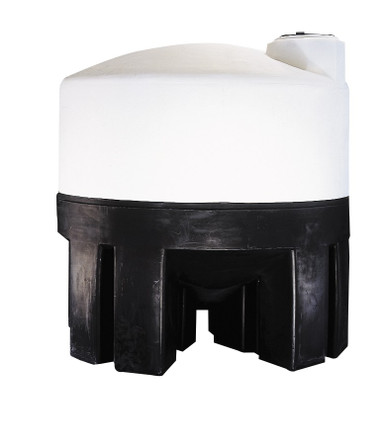
The field layout discipline produces a loop that runs reliably for years between major service events. Reference N-41524 2500 gallon for the mid-volume bulk envelope and N-42064 15 gallon cone bottom for the small-batch envelope where the cone-bottom geometry helps gravity-feed the recirculation suction.
7. Verification That the Loop Is Actually Mixing
The loop is sized and installed; verification confirms that it produces homogeneous tank contents in actual operation:
- Tracer testing during commissioning. Add a tracer (a measurable colored or chemically detectable marker) at one tank location. Sample at multiple tank locations over the next 1-3 hours. Plot tracer concentration versus time at each location. Well-mixed tanks show all locations converging to the average concentration within 1-3 tank turnover times; poorly mixed tanks show persistent concentration differences indicating dead zones or short-circuiting.
- Temperature gradient verification. Install temporary or permanent temperature sensors at multiple elevations and locations within the tank. Compare readings during peak solar conditions and during steady-state operation. A well-mixed tank shows top-to-bottom temperature gradient less than 1-2 C; a poorly mixed tank shows 5-10 C or more.
- Bulk-sample concentration tracking over time. Sample the loop tap during a steady-state holding period. The samples should show consistent concentration with statistical noise at the analytical method limit. Drifting concentration indicates active stratification that the loop is not preventing.
- Operational metric tracking. Track the downstream process variability (concentration set-point chasing, off-spec rate, dosing pump turn-down) before and after pump-around installation. The before-and-after comparison documents the operational benefit and supports the capital justification for the loop.
- Periodic loop performance verification. Annually re-confirm the loop flow rate, the pump performance, and the mixing performance using a tracer or temperature test. Slow drift in pump performance, suction-line fouling, or eductor wear can degrade the loop without obvious indication.
The verification confirms that the engineering produced the operational result. The verification data also informs future capital decisions on similar tanks; the demonstrated benefit on existing installations justifies the loop on new installations of comparable service.
8. Tank Selection That Supports Pump-Around Recirculation
The tank specification affects whether a pump-around loop can be installed cleanly. Selection criteria:
- Multiple side or bottom fittings for loop connections. The tank should provide bottom or near-bottom fittings for the loop suction and side or top fittings for the loop return. Tanks with limited fitting count force compromise on connection elevation that reduces mixing efficiency. Reference N-40164 5000 gallon Norwesco vertical for the bulk envelope with adequate fitting count.
- Bottom fitting for low-elevation suction. The cone-bottom or sloped-bottom geometry on dedicated dispensing tanks delivers fluid to the suction fitting under gravity. Reference N-42064 15 gallon 57-degree cone bottom for the small-batch cone geometry. Flat-bottom vertical tanks require positioned suction at the lowest practical elevation.
- Top fittings for return geometry. A return at upper-third or upper-half of tank height drives top-to-bottom mixing. Top-fitting count and locations on the tank as-built drawing determine the achievable return geometry.
- Hatch or access for in-tank eductor installation. If eductor return is planned, the tank top hatch must allow eductor installation, removal, and inspection. Verify hatch size and orientation against the eductor envelope before specifying the eductor.
- Pressure rating compatible with loop dynamics. The tank itself sees only atmospheric pressure during pump-around operation; the loop pressure is internal to the loop piping. Tank specification does not change for the loop installation.
List pricing on each product page. LTL freight to your ZIP via the freight estimator or by phone at 866-418-1777.
9. The Pump-Around Engineering Conclusion
Stratification is invisible from the outside and produces operational consequences that are difficult to diagnose without recognizing the root cause. Pump-around recirculation is the most common and most cost-effective solution for the typical bulk polyethylene tank installation: external pump, modest piping, modest power consumption, and reliable homogeneous tank contents that eliminate the downstream-process variability that stratified inventory produces.
The engineering decisions that make the loop work are the flow-rate selection matched to the mixing objective, the suction-and-return fitting elevations that drive vertical mixing, the eductor versus direct return choice based on mixing intensity required, and the field layout details that prevent operational problems like cavitation, freeze damage, and dead-zone short-circuiting. A correctly engineered loop runs reliably for 10-15 years between major service events and produces consistent homogeneous tank contents that the downstream process can rely on.
OneSource Plastics ships polyethylene tanks across all 5 brands of Norwesco, Snyder, Chem-Tainer, Enduraplas, and Bushman with the fitting locations and the dimensional envelope that support clean pump-around installation. The loop engineering is performed by the customer site engineer with reference to the manufacturer fitting and pressure-rating data, the Hydraulic Institute pump curves, and the chemistry compatibility data for the actual stored chemistry. List pricing on each product page; LTL freight to your ZIP via the freight estimator or by phone at 866-418-1777. For related operations engineering see secondary containment requirements and tank specification sheet reading.
Recommended Tanks for This Guide
Live pricing, updated automatically · estimate freight to your ZIP.