RCRA 40 CFR 264.193 Secondary Containment for Hazardous Waste Tank Systems: Leak Detection Options and Inspection Cadence
40 CFR 264.193 is the federal hazardous-waste-tank secondary-containment rule. It applies to any tank system at a permitted RCRA hazardous-waste treatment, storage, or disposal facility (TSDF) that stores or treats waste classified as hazardous under 40 CFR Part 261. The rule requires secondary containment, leak detection, and a defined response cadence to detected leakage. For operators specifying tank systems for RCRA-permitted service, 264.193 is the foundational engineering and compliance reference. This walkthrough covers what 264.193 actually requires, the secondary containment design options it authorizes, the leak-detection technologies that meet the 24-hour detection mandate, and the monthly inspection cadence that supports compliance.
Companion regulation: 40 CFR 265.193 covers the same subject for RCRA interim-status facilities (those operating under the older interim-status authorization rather than the full Part 264 permit). The technical requirements are similar. The 264 and 265 versions differ on permitting scope and on a few procedural elements, not on the underlying tank-engineering substance.
Applicability: Which Tanks Are Covered
40 CFR 264.193 applies to tank systems that store or treat hazardous waste under the Part 264 permitted-facility framework. The rule's applicability provisions are in 40 CFR 264.190. The triggers:
- Any new tank system or component being put into service must have secondary containment that meets 264.193 from day one.
- Any existing tank system that becomes subject to the rule (because the waste it stores becomes newly listed as hazardous, or the tank reaches 15 years of age) must have secondary containment within two years of the trigger event, or when the tank reaches 15 years, whichever comes later.
- Tank systems not in hazardous-waste service are not subject to 264.193 — they may be subject to other secondary-containment rules (SPCC under 40 CFR Part 112, state-level tank rules, EPCRA storage requirements) but not to 264.193 specifically.
This scoping matters for OneSource customers. A polyethylene tank storing process water, drinking water, or non-hazardous chemistry is not a 264.193 tank. A polyethylene tank storing waste classified as hazardous (D001 ignitable, D002 corrosive, D003 reactive, D004-D043 toxic-characteristic, F-listed, K-listed, P-listed, U-listed) at a permitted TSDF is a 264.193 tank.
The Six Secondary-Containment Options Under 264.193
The rule authorizes secondary containment via one or more of the following:
- External liner: a flexible or rigid liner external to the tank, sized to capture any release from the tank shell.
- Vault: a structurally enclosed vault around the tank, capturing any release.
- Double-walled tank: a tank with an integral outer wall providing the secondary containment.
- An equivalent device approved by the Regional Administrator: alternative engineering approaches reviewed and approved on a case-by-case basis.
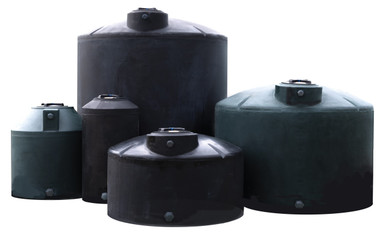
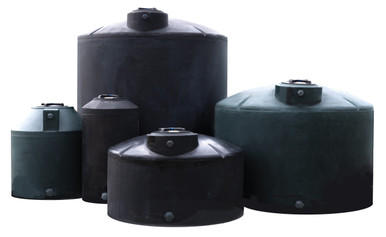
For polyethylene rotomolded tank systems, the dominant choices are the external earthen-bermed liner and the double-walled tank. Vaults are common in below-grade or partial-burial installations but uncommon in standard above-ground polyethylene installations. The "equivalent device" pathway is rarely invoked for routine installations.
Material Compatibility Requirements
Secondary-containment systems must be constructed of or lined with materials that are:
- Compatible with the wastes being stored — the containment liner can't dissolve or degrade if the inner tank fails and the waste contacts the liner. For acid waste, HDPE or LLDPE liners are typical. For solvent waste, fluoropolymer or specialty rubber liners may be required. Material compatibility is chemistry-specific and must be verified for the specific waste stream.
- Sufficient strength and thickness to prevent failure from pressure gradients (static head if filled, external hydraulic forces from groundwater if below grade), physical contact with the waste, climatic conditions, and stress of daily operation including stresses from nearby vehicular traffic.
- Supported on a foundation or base capable of providing structural support and resisting failure due to settlement, compression, or uplift.
For HDPE/LLDPE geomembrane liners on bermed earthen secondary containment, 60-mil (1.5 mm) thickness is the typical minimum and 80-mil (2.0 mm) is preferred for aggressive chemistry or high-volume service. Liner seam quality is controlled either by factory pre-fabrication (preferred — eliminates field-seam variability) or by certified field-welder installation with documented seam-quality testing.
Leak Detection: The 24-Hour Mandate
The secondary containment must include a leak-detection system designed and operated such that it will detect failure of either the primary or secondary containment, or any release of hazardous waste or accumulated liquid in the secondary containment, within 24 hours. The 24-hour standard can be relaxed only if the operator can demonstrate to the Regional Administrator that existing detection technology or site conditions will not allow detection within 24 hours.
The 24-hour mandate drives the design choice. For an external earthen-bermed liner, leak detection typically means a sump at the low point of the liner with a level switch or visual inspection cadence. For a double-walled tank, leak detection means an interstitial-space sensor (level switch, conductivity sensor, hydrocarbon sensor as appropriate to the chemistry) installed between the inner and outer walls. The sensor wires back to a panel that alarms when liquid is detected.
Leak-Detection Technology Options
- Interstitial level switch: simple float switch in the interstitial sump of a double-wall tank. Inexpensive, reliable for long-service applications. Limitation: it detects free liquid but does not differentiate between waste leakage and condensate.
- Interstitial conductivity sensor: detects ionic liquid in the interstitial space. Differentiates ionic waste from condensate. Mid-cost.
- Hydrocarbon sensor: chemical-specific sensor for hydrocarbon waste. Used for petroleum-product secondary containment applications.
- Sump pump with timer: an interstitial sump with an automatic pump that runs on a timer. If the pump runs longer than baseline, alarm triggers. Common for installations with chronic groundwater or condensate intrusion.
- Vacuum monitoring: maintain a slight vacuum in the interstitial space; loss of vacuum indicates a breach. More expensive, used for high-value or high-risk service.
- Visual inspection at sump: where automated detection is not feasible, daily visual inspection at the liner sump or at the interstitial drain valve substitutes for automated detection. Operator labor cost is the trade-off.
For new installations under the 24-hour detection mandate, automated detection is the right choice. Daily visual inspection achieves the regulatory standard but requires operator discipline and produces no audit trail without manual logging.
Snyder Industries Captor Double-Wall Tanks: 264.193-Friendly Architecture
The Snyder Industries Captor double-wall tank line provides the integrated double-wall architecture that satisfies the 264.193 secondary-containment mandate without requiring a separate berm or liner construction project. The inner tank is the primary containment storing the waste; the outer wall provides the secondary containment; the interstitial space accommodates the leak-detection sensor. For RCRA-permitted facilities looking to upgrade existing single-wall tank installations to 264.193 compliance, Captor is the cleanest engineering path.
Captor Tanks at OneSource for RCRA Hazardous-Waste Service
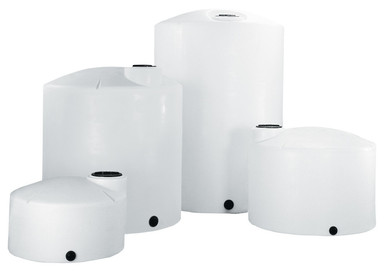
- Snyder Industries 1000 Gallon Plastic Vertical Double Wall Liquid Chemical Storage Tank in White (MPN 5990102N45, listed at $4,208.91) — small-batch hazardous-waste storage. HDPE inner and outer walls.
- Snyder Industries 1550 Gallon Vertical Double Wall XLPE Liquid Chemical Storage Tank in White (MPN 5490000N42, listed at $10,091.93) — XLPE inner wall for upgraded chemistry resistance, double-wall containment integrated. The 1.9 SG rating suits dense waste streams.
- Snyder Industries 10000 Gallon HDLPE Captor Double Wall Liquid Storage Tank, 1.5 SG (MPN 1006600N43, listed at $70,408.99) — large-volume Captor for centralized hazardous-waste storage at TSDF facilities.
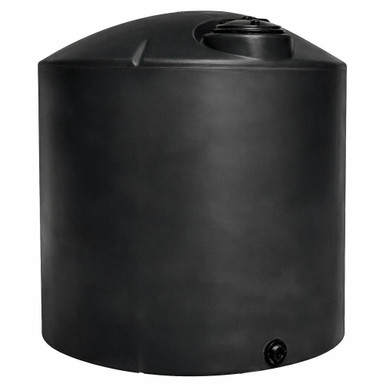
- Snyder Industries 10000 Gallon HDLPE Captor Double Wall Liquid Storage Tank in Black, 1.5 SG (MPN 1006600N49, listed at $70,398.99) — black pigmentation 10,000-gallon Captor.
- Snyder Industries 10000 Gallon XLPE Captor Double Wall Liquid Storage Tank, 1.9 SG (MPN 1006600N42, listed at $91,468.99) — XLPE inner wall variant for high-SG and high-aggression waste streams.
Used-Oil Containment Tanks (Companion Architecture)
Used oil is regulated under a separate framework (40 CFR Part 279) but the secondary-containment principles parallel 264.193. The Snyder used-oil double-wall tank line shares the engineering architecture:
- Snyder Industries 120 Gallon Plastic Vertical Double Wall Waste Oil Tank in Yellow (MPN 5700102N95703, listed at $1,628.23) — small-shop used-oil collection.
- Snyder Industries 275 Gallon Plastic Vertical Double Wall Waste Oil Tank in Yellow (MPN 5740102N95703, listed at $2,658.99) — mid-size shop or small-fleet used-oil tank.
- Snyder Industries 405 Gallon Used Oil Containment Tank (MPN 5990702N95703, listed at $3,098.99) — fleet-shop used-oil collection.
- Snyder Industries 500 Gallon Plastic Vertical Double Wall Waste Oil Tank in Yellow (MPN 5780102N95703, listed at $3,598.99) — larger used-oil collection or modest commercial-shop scale.
- Snyder Industries 1000 Gallon Plastic Vertical Double Wall Waste Oil Tank in Yellow (MPN 5990102N95703, listed at $5,091.07) — heavy-shop or commercial-scale used-oil double-wall.
Monthly Inspection Cadence for 264.193 Tanks
While 264.193 itself focuses on design and detection, the operational obligations under 40 CFR 264.195 (inspections) and the operator's permit conditions typically establish a monthly inspection cadence. A practical monthly inspection checklist for a Captor or bermed-secondary-containment hazardous-waste tank:
- Visual exterior inspection: inspect the tank shell for stress whitening, cracking, fitting leaks, vent integrity, label/placard condition. Document any anomalies.
- Secondary containment integrity: walk the berm or inspect the interstitial space. Check for liquid in the sump or interstitial space (any liquid is a finding requiring investigation).
- Leak-detection system test: verify the leak-detection sensor is operational by simulating an alarm condition (per the sensor manufacturer's instructions) or verifying alarm-panel status.
- Level instrumentation reading: log the tank level. Compare to prior month for unexplained changes that could indicate undetected leakage.
- Vent and overflow inspection: ensure vents are clear, vent screens intact, overflow piping unblocked.
- Fitting and valve inspection: visually inspect each fitting and valve for leakage. Tighten and document.
- Foundation and anchorage: verify the foundation is intact, anchor bolts are torqued, no settlement is evident.
- Documentation: log the inspection in the operator's RCRA inspection log. Photographs are good practice for any anomaly.
Annual inspection (in addition to monthly) typically adds:
- Internal visual inspection (drain to a low residual heel and use a manway-mounted camera or drain completely for direct entry where safe to do so)
- Ultrasonic wall-thickness gauging at a defined sample grid
- Liner seam inspection on bermed installations
- Foundation cracking inspection
- Vent and pressure-relief valve operational test
Response When Leak Is Detected
When the leak-detection system alarms or when monthly inspection identifies a release, 40 CFR 264.196 governs the response. The operator must:
- Immediately stop adding waste to the affected tank system
- Within 24 hours: remove waste from the affected tank system to prevent further release
- Contain the release to the maximum extent practicable
- Within 24 hours of confirmed release: report to the Regional Administrator orally
- Within 30 days of confirmed release: submit a written report describing the release, the cause, and the corrective action taken
- Repair or replace the affected tank system before returning to service
- Major repairs require a certification by a qualified Professional Engineer that the repaired tank is fit for service
For Captor double-wall tanks where the inner wall is breached but the outer containment is intact, the release is contained within the outer wall. The operator still has 264.196 obligations to remove the waste from the breached inner tank, repair or replace, and report — but the environmental release to soil/groundwater is prevented by the outer containment, dramatically reducing the regulatory and remediation cost of the failure.
Cost Comparison: Single-Wall + Berm vs Captor Double-Wall
For a 10,000-gallon hazardous-waste tank installation, the two architectures have different cost profiles:
Single-Wall + Bermed Secondary Containment
- Tank: $15,000-$25,000 for a 10,000-gallon HDPE single-wall storage tank
- Berm construction: $5,000-$15,000 for an earthen berm with 80-mil HDPE liner sized to hold 110% of tank volume
- Leak-detection sump and sensor: $2,000-$5,000
- Engineering and permitting: $5,000-$15,000
- Total: $27,000-$60,000 depending on site conditions
Captor Double-Wall Tank
- Tank with integrated double-wall: $60,374.62 for the HDLPE 10,000-gallon Captor (MPN 1006600N43)
- Leak-detection interstitial sensor: $70,408.99-$70,408.99 (often included with tank or supplied as accessory)
- Concrete pad foundation: $5,000-$10,000
- Engineering and permitting: $3,000-$10,000 (simpler than bermed because no liner construction project)
- Total: $69,000-$83,000
The Captor architecture is somewhat higher capital cost but lower lifecycle cost: no liner re-installation required at end of liner life (typically 20-30 years), simpler annual inspection (smaller secondary-containment volume to inspect), and lower risk of containment failure (the molded outer wall is more reliable than field-installed liner seams).
Permitting Considerations
RCRA tank-system permits typically include the secondary-containment design as an exhibit. Changes to secondary-containment architecture require permit modification, which is a substantial regulatory project. For new installations or for significant upgrades, the choice of secondary-containment architecture should be made early — in consultation with the operator's RCRA compliance staff and the EPA Regional Administrator (or state-delegated agency).
For TSDF operators in EPA Region 6 (Texas, Oklahoma, Louisiana, Arkansas, New Mexico, tribal lands), see the OneSource state-regulations pillar for Texas, Oklahoma, Louisiana, and Arkansas for state-level supplemental hazardous-waste regulations that may apply alongside the federal 264.193 framework.
Cross-References
For chemistry-compatibility verification on hazardous-waste tank specifications, see the chemical compatibility hub and the chemistry-specific pages including sulfuric acid, hydrochloric acid, sodium hydroxide, sodium hypochlorite, methanol, and nitric acid.
For pricing, freight, and configuration on Snyder Industries Captor double-wall tanks for RCRA 264.193 service, contact OneSource Plastics at 866-418-1777. For LTL freight quoting on Captor tank delivery to your TSDF or hazardous-waste storage site, use the freight estimator.
Recommended Tanks for This Guide
Live pricing, updated automatically · estimate freight to your ZIP.