Tank-Discharge Piping Material Selection: HDPE Versus CPVC Versus Schedule 80 PVC Versus Stainless Steel Comparison Across Chemistry Compatibility, Pressure Rating, Temperature Range, and Lifecycle Cost for Industrial Tank-to-Process Connections
The tank-discharge piping is the system that conveys chemistry from the tank discharge fitting to the next downstream destination, typically a transfer pump suction, a process inlet, a metering pump suction, or a tanker truck loading station. The piping length ranges from a few feet (where the tank is co-located with the destination) to several hundred feet (where the tank is positioned for delivery access and the destination is across the facility). The piping carries the chemistry under pressure (when a transfer pump or feed pump is downstream and pulls from the tank) or at atmospheric (when gravity feed delivers to a lower destination). The piping material selection determines chemistry compatibility, pressure capability, temperature range, service life, and total installed cost.
This article compares the four primary piping material technologies (HDPE, CPVC, Schedule 80 PVC, and stainless steel) across the selection criteria, identifies the chemistry-and-service combinations that select each, and provides a decision framework for matching the piping technology to the tank operation. The discussion is grounded in piping engineering practice, manufacturer chemistry-compatibility cross-references for the 5-brand catalog of Norwesco, Snyder, Chem-Tainer, Enduraplas, and Bushman, and field experience at industrial chemistry operations. List pricing on each tank product page; LTL freight quoted to your ZIP via the freight estimator or by phone at 866-418-1777.
1. The Tank-Discharge Piping Service Profile
The tank-discharge piping service profile establishes the operational context for material selection:
- The pressure profile. The piping pressure ranges from atmospheric (gravity feed) to several hundred psi (high-pressure transfer or metering applications). Most chemistry-service tank-discharge piping operates at 30-100 psi when a transfer pump is in service, with brief surge events to 150-200 psi during pump start-up or valve closure. The design pressure is typically the pump shut-off pressure plus a 20-30 percent margin.
- The temperature profile. The chemistry temperature in tank-discharge piping is typically ambient or slightly elevated. For ambient chemistry (most water-service and chemistry-service tanks), the temperature is 40-100 F. For heated process chemistry, the temperature may reach 140-180 F or higher. The piping material must hold its mechanical and chemical properties across the operating temperature range.
- The flow regime and velocity. Typical tank-discharge piping flow velocity is 3-7 ft/s. Lower velocities (below 3 ft/s) cause sediment accumulation in low points; higher velocities (above 8 ft/s) accelerate erosion-corrosion and increase pressure drop. Pipe diameter selection targets the velocity range across the design flow rate.
- The chemistry exposure. The piping interior surface is in continuous contact with the chemistry. The contact differs from tank-wall contact (where chemistry exposure is steady-state large-volume) in that the piping sees flowing chemistry with potential for erosion-corrosion and the piping experiences flow-induced shear at the wall. The chemistry compatibility criteria for piping include both chemical and erosion-corrosion considerations.
- The mechanical loading. The piping carries its own weight, the chemistry weight, and external loads (snow, ice, foot traffic, vehicle impact at exposed segments). The material selection accounts for the structural loading in addition to chemistry containment.
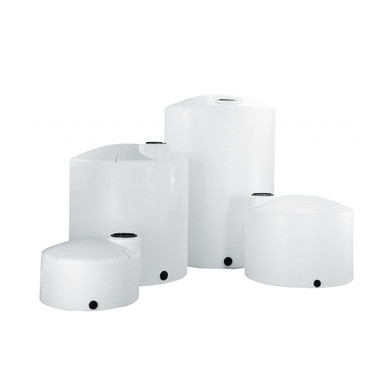
- Reference tank for piping connection. Reference N-40164 5000 gallon Norwesco vertical as the typical mid-volume tank where the discharge piping selection drives the operational decisions. The discharge fitting connects to a 2-inch or 3-inch piping run that may extend 50-200 feet to the downstream destination.
The service profile sets the engineering targets. The piping material that meets all the targets at the lowest lifecycle cost is the right selection.
2. HDPE Piping Material Profile
HDPE (high-density polyethylene) piping is the dominant choice for many tank-discharge applications:
- The construction. HDPE pipe is extruded from high-density polyethylene resin in standard SDR (Standard Dimension Ratio) classes. SDR 11 corresponds to 160 psi pressure rating; SDR 17 corresponds to 100 psi; SDR 26 corresponds to 65 psi. The pipe is butt-fused or socket-fused at joints; mechanical connections (flange adapters, transition fittings) are available where dissimilar materials must be joined.
- Chemistry compatibility. HDPE handles essentially all aqueous chemistry, brine, fertilizer solution, hypochlorite (12.5 percent), peroxide (35 percent), dilute acids (sulfuric to 50 percent, hydrochloric to 32 percent), and many oxidizers. HDPE does not handle hydrocarbons (gasoline, diesel, aromatic solvents) above brief exposure, hot oxidizers (concentrated peroxide above ambient), or strong organic solvents.
- Temperature range. HDPE working temperature range is approximately 0 F to 140 F sustained. Brief exposure to higher temperatures is tolerated; sustained operation above 140 F accelerates aging. Cold service down to 0 F is acceptable; below 0 F the material becomes brittle and pipe handling requires care.
- Pressure capability. HDPE pipe at SDR 11 handles 160 psi continuous; the burst rating is 4-to-1 above working. The pressure capability is adequate for typical chemistry-service tank-discharge applications.
- Cost profile. HDPE pipe is the lowest-cost of the four primary material options at equivalent pressure rating. A 100-foot run of 2-inch SDR 11 HDPE pipe costs typically $300-$500 in material; installed cost including butt-fusion is $1,200-$2,500. Lifecycle cost is favorable due to long service life (typical 30-50 years in chemistry service).
- Joining and installation. Butt-fusion joining requires a portable fusion machine and trained operators. The fusion produces a homogeneous joint stronger than the parent pipe. Socket-fusion is simpler for small diameters. Flange adapters allow connection to dissimilar materials but introduce mechanical joints with gaskets.
HDPE is the right choice for general aqueous chemistry tank-discharge piping at ambient temperature. The chemistry compatibility breadth, the cost, and the long service life suit most operations.
3. CPVC Piping Material Profile
CPVC (chlorinated polyvinyl chloride) piping extends the temperature range above PVC:
- The construction. CPVC pipe is extruded in standard schedule sizes (Schedule 40 and Schedule 80) with Schedule 80 the typical industrial selection. The pipe is solvent-cement bonded at joints with chemistry-compatible cement, or threaded at small diameters. CPVC fittings are extensive, allowing complex piping geometries.
- Chemistry compatibility. CPVC handles aqueous chemistry, dilute acids, hypochlorite, and many oxidizing chemistries. CPVC has narrower compatibility than HDPE for some specialty chemistries but has the advantage of higher temperature capability. The compatibility list typically excludes hydrocarbons, aromatic solvents, ketones, and certain chlorinated organics.
- Temperature range. CPVC working temperature range is 0 F to 200 F sustained; brief exposure to 220 F is tolerated. The temperature advantage over HDPE (140 F) makes CPVC the typical choice for warm chemistry applications.
- Pressure capability. CPVC Schedule 80 pipe pressure rating decreases with temperature. At 73 F the rating is 600 psi for 1-inch pipe and 230 psi for 6-inch; at 180 F the rating drops to 300 psi for 1-inch and 110 psi for 6-inch. The temperature derating must be applied in design.
- Cost profile. CPVC pipe costs typically 1.5-2.5x HDPE at equivalent pressure rating. A 100-foot run of 2-inch Schedule 80 CPVC pipe costs $500-$900 in material; installed cost including solvent-cement is $1,500-$3,000. Lifecycle cost can be favorable in warm chemistry applications where HDPE temperature limits exclude it.
- Joining and installation. Solvent-cement joining is straightforward and does not require specialized equipment. The cement-bonded joint cures to full strength in 24 hours and produces a permanent connection. The simplicity supports rapid installation. Threaded joints in small diameters add field flexibility.
CPVC is the right choice for warm chemistry tank-discharge piping where HDPE temperature limits exclude it. The cost premium is justified by the temperature capability.
4. Schedule 80 PVC Piping Material Profile
Schedule 80 PVC piping is the lower-cost cousin of CPVC for ambient-temperature service:
- The construction. PVC pipe is extruded in Schedule 40 and Schedule 80 sizes with Schedule 80 the typical industrial selection. Schedule 40 is acceptable for low-pressure applications. Solvent-cement bonded joints are standard. Fittings are widely available across diameters.
- Chemistry compatibility. PVC handles aqueous chemistry, dilute acids, hypochlorite, fertilizer solutions, and many oxidizing chemistries. The compatibility is broadly similar to CPVC but slightly narrower for some chemistries. The standard compatibility chart applies.
- Temperature range. PVC working temperature range is 32 F to 140 F sustained; brief exposure to 160 F is tolerated. The 140 F upper limit excludes warm chemistry applications. PVC is brittle below 32 F and requires care in cold service.
- Pressure capability. PVC Schedule 80 pressure rating decreases with temperature. At 73 F the rating is 630 psi for 1-inch pipe and 300 psi for 6-inch; at 140 F the rating drops to 140 psi for 1-inch and 65 psi for 6-inch. The pressure rating at ambient temperature is the highest of the polymer options.
- Cost profile. PVC pipe costs typically 60-80 percent of CPVC at equivalent pressure rating. A 100-foot run of 2-inch Schedule 80 PVC pipe costs $300-$600 in material; installed cost including solvent-cement is $1,000-$2,000. The cost is competitive with HDPE for many applications.
- Joining and installation. Solvent-cement joining is identical to CPVC procedure. The pipe is cut with standard tools, deburred, primed, cemented, and cured. No specialized equipment is required. Threaded joints in small diameters add field flexibility.
Schedule 80 PVC is the right choice for ambient-temperature aqueous chemistry tank-discharge piping where the cost-per-foot must be minimized. The temperature limit is the primary constraint.
5. Stainless Steel Piping Material Profile
Stainless steel piping is the premium option for aggressive chemistry, high pressure, or high temperature:
- The construction. Stainless steel pipe is welded or seamless in standard schedule sizes (Schedule 10S, 40S, 80S). The 304 alloy is the entry-level chemistry-service grade; 316L extends compatibility into chloride-containing chemistries; higher alloys (Hastelloy C-22, Alloy 20) handle the most aggressive chemistry. Welded joints are the standard for industrial piping; flanged joints accommodate disconnection and equipment integration.
- Chemistry compatibility. 304 stainless handles essentially all chemistry except specific aggressive cases (concentrated hydrochloric acid, hot fluoride compounds, high-chloride hot solutions). 316L extends compatibility to chloride brines and many oxidizers. Higher alloys handle the most aggressive cases. Stainless does not absorb chemistry like polymer materials and produces no chemistry leaching.
- Temperature range. 304 and 316L stainless handle continuous service from cryogenic temperatures to 1500 F. Tank-discharge applications never approach the upper limit; the temperature range is essentially unlimited for practical chemistry service. The cold-service temperature range covers all winter conditions.
- Pressure capability. Schedule 80 stainless pressure rating is several thousand psi for small diameters and 1000-2000 psi for 4-6 inch diameters. The pressure capability vastly exceeds typical tank-discharge requirements. The high pressure rating supports surge events without concern.
- Cost profile. Stainless steel pipe costs 5-10x polymer alternatives at equivalent diameter. A 100-foot run of 2-inch Schedule 80 304 stainless pipe costs $1,500-$3,000 in material; installed cost including welding is $4,000-$10,000. The lifecycle cost can be favorable for aggressive chemistry where polymer alternatives have shorter service life.
- Joining and installation. Welded joints require certified welders and welding equipment; the welding cost dominates the installation labor. Flanged joints with bolted connections are simpler but introduce gaskets that must be chemistry-compatible. The welded stainless system is mechanically the strongest and longest-lived option.
Stainless steel is the right choice for aggressive chemistry, high pressure, or high temperature applications where polymer alternatives are excluded. The capital cost premium is justified by the long service life and the chemistry-handling capability.
6. The Selection Decision Framework
The piping material selection follows a structured decision framework:
- Step 1: Chemistry compatibility cut. Identify the chemistry the piping will handle. Cross-check each chemistry against the candidate material chemistry-compatibility chart. Eliminate materials that cannot handle the chemistry. For multi-chemistry operations, use the most restrictive compatibility match or specify dedicated piping per chemistry.
- Step 2: Temperature range cut. Confirm the candidate material temperature range covers the operating chemistry temperature with adequate margin. Ambient chemistry suits all four materials; warm chemistry (140-180 F) drives selection toward CPVC or stainless; hot chemistry (above 200 F) excludes all polymers.
- Step 3: Pressure rating cut. Confirm the candidate material pressure rating exceeds the maximum operating pressure with adequate safety factor and adjusted for operating temperature. Most chemistry-service applications use modest pressure that all four materials handle; high-pressure applications drive selection toward stainless or thick-wall polymer.
- Step 4: Lifecycle cost analysis. Calculate the installed cost and the projected total cost over the planned operational period. HDPE typically wins on lifecycle cost for general aqueous chemistry; PVC wins for ambient cost-sensitive applications; CPVC wins for warm chemistry; stainless wins for aggressive chemistry or long-service-life requirements.
- Step 5: Joining and installation labor assessment. Confirm the joining method is feasible for the site labor and equipment. Solvent-cement and threading require minimal infrastructure; butt-fusion HDPE requires a fusion machine; welded stainless requires certified welders. The labor capability shapes the practical material selection.
- Step 6: Mechanical and environmental loading assessment. Confirm the candidate material handles the mechanical loading (snow, ice, vehicle traffic, foot traffic) at the installation site. Polymer materials are more susceptible to UV degradation and impact damage than stainless; UV-protected polymer or buried polymer extends service life.
- Reference 2500 gallon tank for typical procurement. Reference N-41524 2500 gallon Norwesco as the typical mid-volume tank where the piping selection drives the decisions. A 2-inch HDPE or PVC piping run from the tank discharge to the downstream destination is the typical specification at this scale.
The decision framework produces a defensible material selection. The selection is then implemented with the appropriate joining technology, support spacing, and protection details.
7. Installation Details and Common Pitfalls
The piping installation has recurring details that determine long-term service:
- The pipe support spacing. Polymer piping (HDPE, CPVC, PVC) sags between supports under its own weight, the chemistry weight, and any external loads. The support spacing must be tighter than for stainless at equivalent diameter. Manufacturer support spacing tables provide the maximum spacing as a function of diameter, schedule, temperature, and chemistry. Typical spacing for 2-inch Schedule 80 PVC at ambient is 6 feet maximum.
- The thermal expansion accommodation. Polymer piping expands and contracts with temperature change at higher rates than steel. A 100-foot run of PVC sees 1.5-2 inches of length change between summer and winter at outdoor exposure. Expansion loops, offsets, or expansion joints accommodate the length change. Stainless and CPVC have lower expansion coefficients but still benefit from accommodation.
- The UV protection on outdoor exposure. PVC and CPVC degrade under sustained UV exposure. Outdoor piping must be painted, jacketed, or buried to extend service life. HDPE has better intrinsic UV resistance but still benefits from protection in extreme exposure. Stainless requires no UV protection.
- The vibration isolation at pump connections. Pump-connected piping experiences vibration that can fatigue rigid piping connections. Flexible connectors (rubber bellows, braided stainless flex hoses) at pump suction and discharge isolate the vibration from the rigid piping. The flexible connector is sized for the operating pressure and chemistry.
- The drain provision at low points. Tank-discharge piping low points should include drain valves for system flushing, chemistry change-out, and freeze protection. The drain valves are chemistry-compatible and accessible from grade. The drain provision adds modest installation cost and substantial operational flexibility.
- The vent provision at high points. Tank-discharge piping high points should include vent valves for air release during fill, system commissioning, and chemistry change-out. The vent valves are similar to drain valves in specification but mounted at the top of the high point.
The installation details are well-known but easily overlooked. Operators who have experienced one piping failure event typically maintain rigorous attention to the installation details thereafter.
8. The Tank-Discharge Piping Material Selection Conclusion
Tank-discharge piping material selection balances chemistry compatibility, pressure rating, temperature range, lifecycle cost, joining and installation labor, and mechanical loading across the four primary material options: HDPE, CPVC, Schedule 80 PVC, and stainless steel. HDPE is the typical choice for general aqueous chemistry at ambient temperature; PVC serves cost-sensitive ambient applications; CPVC extends to warm chemistry; stainless serves aggressive chemistry and high-pressure or high-temperature applications. The installation details, particularly support spacing, thermal expansion accommodation, and UV protection, determine whether the selected material actually performs in field service.
OneSource Plastics ships polyethylene tanks across the 5-brand catalog (Norwesco, Snyder, Chem-Tainer, Enduraplas, Bushman) with manufacturer-published discharge fitting specifications that accommodate the piping material range described here. The piping selection is performed by the customer site engineer with reference to the chemistry, the temperature, the pressure, and the lifecycle cost analysis. List pricing on each product page; LTL freight to your ZIP via the freight estimator or by phone at 866-418-1777. For related plumbing engineering see tank plumbing system design and fitting and bulkhead sizing.
Recommended Tanks for This Guide
Live pricing, updated automatically · estimate freight to your ZIP.