Tank-Mounted Catwalk and Safety Railing Engineering for OSHA 29 CFR 1910.28 Fall Protection: Walking-Working-Surface Triggers, Guardrail Geometry, Anchor Load Math, and the Non-Penetrating Mount Discipline for Polyethylene Tank Tops
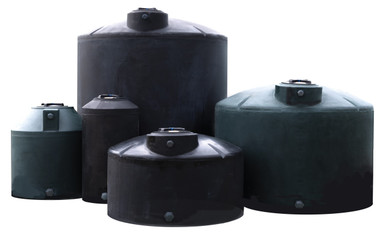
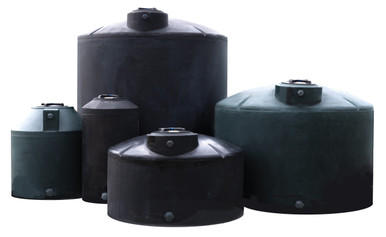
The 12,000-gallon vertical polyethylene tank with three top-mounted manways and a level-instrument cluster is a walking-working surface the moment an operator climbs the side ladder to access it. Once the operator's feet leave the ladder and land on the tank top, OSHA 29 CFR 1910.28 fall-protection requirements apply, and the question of whether the tank top has compliant guardrails or fall-arrest anchorage becomes immediate. This article walks the engineering basis for designing a real fall-protection system on a polyethylene tank — the OSHA 1910.28 trigger conditions, the guardrail geometry that meets the standard, the anchor load math for fall-arrest tie-off, and the non-penetrating mount discipline that preserves the tank's manufacturer warranty and avoids creating new leak paths.
The references cited are OSHA 29 CFR 1910.28 (walking-working-surface fall protection), OSHA 29 CFR 1910.29 (fall-protection systems and falling-object protection criteria), ANSI Z359 family (fall-protection system standards), ASTM F2502 (anchor connectors for fall arrest), and the manufacturer's tank-specific guidance for non-penetrating top-mount fittings. The intent is the field-operations engineering decision, not the laboratory or training-program treatment.
1. The Walking-Working-Surface Trigger
OSHA 29 CFR 1910.28 requires fall protection whenever an employee is exposed to a fall of 4 feet or more to a lower level on a walking-working surface. The phrase "walking-working surface" is broadly defined and includes any surface where work is performed, including the top of a tank if maintenance, sampling, or inspection occurs there.
The trigger conditions for a tank installation:
- Tank top access for any maintenance or inspection task — opening manways, sampling, level-instrument calibration, vent-line inspection, gauge reading. If any worker performs these tasks at heights exceeding 4 feet, fall protection is required.
- Routine access frequency. A tank that is accessed once per year for inspection still triggers the standard. The frequency of access does not waive the requirement; only the absence of access does.
- Permitted-entry vs continuous-presence distinction. The standard distinguishes between systems used during permitted infrequent entries (where personal fall-arrest is acceptable) and systems for continuous or routine access (where guardrails are typically required). A 6-foot tank top accessed quarterly is permitted-entry; an industrial tank top accessed weekly for batch operations is routine.
- Falling-object hazard. 1910.29(k) requires falling-object protection (toe boards, screens, or canopies) wherever workers below the elevated surface are exposed to falling objects. A tank top with tools, fittings, or sample containers requires toe boards if workers operate below.
The threshold height is the most-litigated element. Tank-top heights for typical polyethylene vertical tanks: a 1,000-gallon vertical is roughly 7 feet tall, a 5,000-gallon is roughly 12-14 feet, a 10,000-gallon is roughly 18-22 feet. Every one of these triggers 1910.28; only sub-4-foot horizontal tanks fall below the threshold.
2. Hierarchy of Fall-Protection Controls
OSHA 1910.28 establishes a hierarchy of acceptable fall-protection systems. The hierarchy matters because the chosen system drives the engineering scope:
- Tier 1: Eliminate the hazard. Design out the requirement to access the tank top. Side-mounted instruments, ground-level sample taps, remote-actuated manway devices. When elimination is feasible, no fall-protection hardware is needed.
- Tier 2: Passive fall protection — guardrails. A guardrail system around the tank-top working area meets 1910.29 with no active employee participation required. This is the highest-reliability solution and is preferred when access is routine.
- Tier 3: Active fall arrest — full-body harness with anchorage. The worker wears a harness and ties off to a rated anchor before stepping into the fall-exposure zone. Acceptable but lower reliability because it depends on consistent worker procedure compliance.
- Tier 4: Travel restraint. A short lanyard and anchor that prevents the worker from reaching the fall edge. Effective but requires careful work-zone planning.
- Tier 5: Safety nets, fall-restraint systems, and other engineered solutions. Used in special cases such as exterior tank-shell maintenance.
For the typical polyethylene tank installation, the choice is between Tier 2 (guardrails) and Tier 3 (anchorage for fall arrest). The decision drivers: access frequency (routine favors guardrails; rare favors anchorage), tank diameter (larger tanks have more usable top area for guardrail layout; smaller tanks may not have geometry to support guardrails), and budget (guardrail systems run higher initial cost but lower per-access cost; anchorage runs lower initial cost but requires harness equipment per worker).
3. Guardrail Geometry per OSHA 1910.29
OSHA 1910.29(b) specifies the geometry that a guardrail system must meet to qualify as fall protection. The dimensional requirements:
- Top rail height: 42 inches plus or minus 3 inches above the walking-working surface. The 39-45 inch range covers manufacturing tolerance and floor-mat thickness.
- Mid rail or equivalent intermediate member: midway between the top rail and the walking-working surface, such that the opening between the top rail and the working surface does not exceed 19 inches.
- Toe board (if falling-object hazard exists): minimum 3.5 inches high, securely fastened, gap to walking surface no more than 0.25 inch.
- Top rail load capacity: capable of withstanding a 200-pound force applied within 2 inches of the top edge in any outward or downward direction without failure.
- Mid rail load capacity: capable of withstanding 150 pounds applied at any point in any direction.
- Maximum rail deflection under load: top rail deflection under 200-pound load shall not bring the rail below 39 inches above the working surface.
The 200-pound design load represents a worker leaning or falling against the rail. The deflection limit ensures the rail still functions as a guard at maximum load. A guardrail that meets dimensional requirements but not load requirements is non-compliant; a properly engineered system must have documented load-rating evidence from the manufacturer.
4. Tank-Top Mounting Discipline: Non-Penetrating Hardware
The polyethylene tank top is rotomolded as a continuous shell. Drilling the top to mount a guardrail or anchor destroys the manufacturer's warranty, creates a potential leak path, and may compromise the tank's structural rating per ASTM D1998. The standard solution is non-penetrating hardware that mounts to the tank without breaching the shell.
Non-penetrating mount approaches for polyethylene tanks:
- Clamp-on top mount. A wide-area pad with a peripheral clamp that grips the tank's top knuckle. The clamp distributes load over a large surface area and applies friction-grip force without penetration. Used for instrument mounts, anchorage points, and short-section guardrails.
- Strap-around mount. A heavy nylon or steel strap that wraps around the tank circumference and ties down to a bottom anchor. Distributes catwalk and guardrail loads through the entire tank shell. Used for full catwalk installations.
- Saddle-bracket mount. A bracket that sits over the tank top with a fitted contour matching the tank's dome. Bolts through the bracket on each side ground via the strap-around system. Used for railed catwalks that span between two adjacent tanks.
- Free-standing mast and platform. An independent steel structure adjacent to the tank that carries the working platform and guardrails. The structure is grounded to the tank pad or a dedicated foundation, not to the tank shell. Used when the tank-shell mount would be inadequate or the tank is not designed for top-loading.
The decision between these approaches depends on tank diameter, top-load rating from the manufacturer (typically published as kPa or pounds per square foot), and the catwalk geometry. The tank manufacturer should be consulted for top-load rating and any restrictions; many manufacturers publish maximum point load and distributed load specifications for their tank-top fittings.
5. Anchor Point Engineering for Fall Arrest
When fall-arrest anchorage is the chosen control, the anchor point must meet OSHA 1910.140(c) and ANSI Z359.1 requirements:
- Static load rating: 5,000 pounds per attached worker, applied in any direction the fall could occur.
- Engineered anchor alternative: if the anchor is part of a system designed and supervised by a qualified person, the rating may be reduced to 2 times the maximum arresting force. For a typical fall-arrest deceleration limited to 1,800 pounds (per ANSI Z359.1), the anchor must rate to at least 3,600 pounds.
- Connection geometry: the anchor connector must allow the lanyard or self-retracting lifeline (SRL) to attach without lateral loading that could exceed the connector's rating.
- Anchor placement to limit fall distance: for 6-foot lanyards plus the worker's height, the anchor must be high enough that even at maximum fall extension, the worker does not strike a lower level. Typical: anchor must be 18-23 feet above the ground depending on lanyard configuration.
For a polyethylene tank top, the anchor point is typically a non-penetrating clamp-on bracket rated to 5,000 pounds, attached to a stand-up post that elevates the tie-off ring above the tank top. The stand-up post height is calculated from the anchor placement requirement: tank top at 14 feet, plus a 6-foot post, plus a 6-foot lanyard, gives a clearance of roughly 8 feet between worker and the lower level — adequate for a fall-arrest event without ground impact.
Self-retracting lifelines (SRLs) reduce the required clearance because the SRL locks within roughly 24 inches of fall and the deceleration distance is short. An SRL setup may reduce the required anchor height by 4-6 feet compared to a 6-foot lanyard setup.
6. Catwalk Engineering for Multi-Tank Farms
Multi-tank farms — 4, 8, or more tanks in a row or grid — often justify a permanent catwalk structure that spans between tank tops or runs along the tank-top elevation independent of the tanks. The engineering scope:
- Catwalk grating: bar grating or expanded metal that meets OSHA 1910.22 walking-working-surface requirements (no openings exceeding 1.5 inches in any direction, surface treatment for slip resistance).
- Load rating: minimum 100 pounds per square foot live load plus dead load. Higher ratings for catwalks supporting equipment movement or tool storage.
- Support structure: structural steel members anchored to the tanks via strap-around or saddle-bracket non-penetrating mounts, or to independent pad-mounted columns.
- Access points: caged ladders or stairways at one or both ends of the catwalk, meeting OSHA 1910.23 for ladder geometry.
- Guardrails along the entire catwalk length: 42-inch top rail, mid rail, and toe boards. The geometry follows 1910.29 throughout, including transitions at access points.
- Drainage: the catwalk surface must shed rainwater to prevent ice formation in cold-climate service. Either an integral slope or surface texture that channels water off the walking area.
A typical 4-tank farm with 8-foot tank diameter and 6-foot inter-tank spacing has approximately 50 linear feet of catwalk plus end-access ladders. Engineering and installation cost runs roughly $25,000-60,000 depending on whether the structure is tank-mounted or independently supported, plus the access ladder cost.
7. Rescue Plan Integration
OSHA 1910.140(c)(21) requires that anyone using personal fall-arrest equipment must have a rescue plan in place. After a fall is arrested, the worker is suspended in the harness; without prompt rescue, suspension trauma (orthostatic intolerance) can cause loss of consciousness within 5-30 minutes. The rescue plan must address:
- Rescue method: self-rescue (if the worker can reach a safe surface), assisted descent (lowering the worker via a controlled-descent device), or external rescue (mechanical lift, cherry picker, ladder truck).
- Rescue equipment availability: the equipment to perform the rescue must be on-site or rapidly available. A site that depends on external emergency services for rescue typically does not meet the "prompt rescue" requirement.
- Rescuer training: any worker performing rescue must be trained in the rescue procedure and the equipment. This includes the descent control, harness attachment, and post-rescue medical assessment.
- Communication system: the worker on the tank top must have communication capability with personnel on the ground (radio, voice, or tethered alert system).
The rescue plan documentation is part of the site fall-protection program and must be available to OSHA inspectors during an audit.
8. Polyethylene Tank Selection for Catwalk-Suitable Installations
Tank selection for catwalk-equipped installations considers tank-top load rating and access geometry:
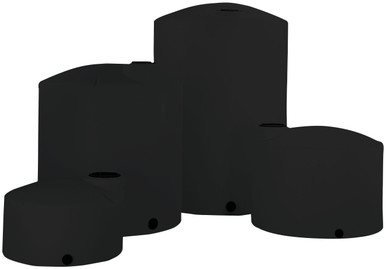
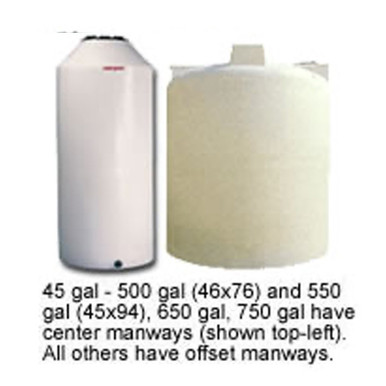
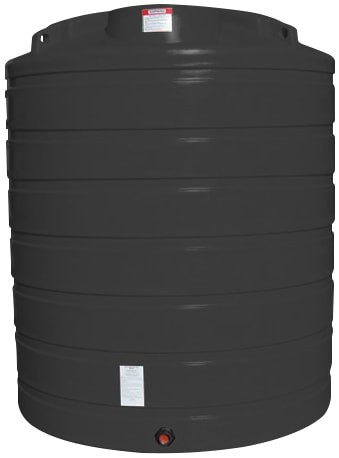
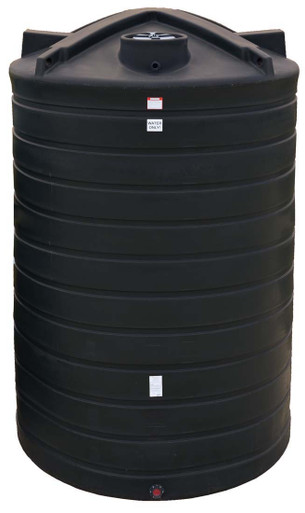
- Norwesco vertical bulk: the standard configuration for top-accessed bulk storage. Reference N-40164 5,000 gallon and N-43128 10,000 gallon; the manufacturer publishes top-load specifications and the tank top is dome-shaped to accept saddle-bracket mounts.
- Norwesco mid-volume: the 1,100 to 2,500 gallon range is common for chemical-feed installations where top access is required for batch operations. Reference N-40070 1,100 gallon and N-40051 2,500 gallon for mid-tier capacity. These tank heights (8-12 feet) trigger 1910.28 fall protection.
- Snyder Captor double-wall: the metal banding on Captor units provides a proven mounting interface for non-penetrating catwalk hardware. Reference SII-5990102N42 1,000 gallon; the secondary containment function is preserved while the catwalk supports OSHA-compliant top access.
- Norwesco cone-bottom: the elevated stand on cone-bottom tanks adds 4-6 feet to the access height and the catwalk geometry must account for the additional drop. Reference N-43852 1,000 gallon 45-degree cone.
The tank selection is upstream of the fall-protection decision; choosing a tank with a manufacturer-supported top-mount load rating is the first engineering step toward a compliant installation.
9. The Compliance Documentation Trail
An OSHA-compliant fall-protection installation requires documentation that survives audit:
- Fall-hazard assessment: documented identification of every fall-exposure point on the tank installation, including height, frequency of exposure, and chosen control measure.
- Engineering documentation: the guardrail and anchor system design, with manufacturer load ratings, installation drawings, and field-installed configuration confirmation.
- Anchor certification: for fall-arrest anchors, the qualified-person certification of the anchor's load rating and geometry.
- Inspection records: annual inspection of the fall-protection system per the manufacturer's recommendations, documented in writing.
- Worker training records: documented training on the fall-protection system, the rescue plan, and the equipment use.
- Rescue plan: written and posted, with rescue equipment available and rescuers trained.
The documentation set is the difference between a system that survives an OSHA audit cleanly and one that draws citations even if the hardware is in place. The audit looks for the documentation as much as the hardware.
10. The Honest Path Forward
Tank-mounted fall protection is not optional. Every tank tall enough to require a ladder triggers OSHA 1910.28, and every routine access creates the requirement for a permanent system. The choice between guardrails and fall-arrest anchorage depends on access frequency and budget, but the decision must be made and the system installed before the first ladder climb after the tank goes into service.
OneSource Plastics ships polyethylene chemical and water storage tanks across all 5 brands and supports the OSHA fall-protection design conversation including non-penetrating mount specification, top-load rating documentation from the manufacturer, and tank-top geometry analysis for guardrail layout. List pricing by SKU is published on each product page; LTL freight to your ZIP is quoted separately via the freight estimator or by phone at 866-418-1777. For related access-engineering content see tank ladder and manway access engineering and confined-space rescue plan documentation.
Recommended Tanks for This Guide
Live pricing, updated automatically · estimate freight to your ZIP.