10 Gallon Vertical Liquid Storage Tank: Complete Buyer's Guide
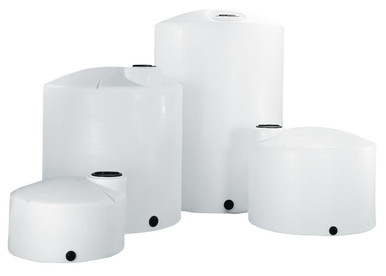
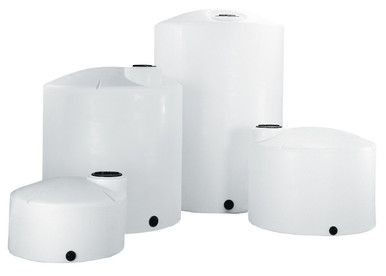
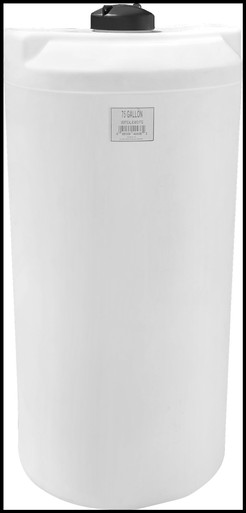
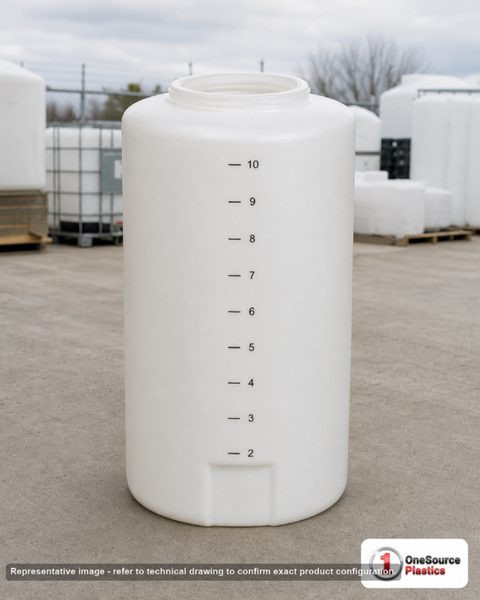
A 10-gallon poly tank is the smallest workhorse in the vertical line — a 26-inch-tall, 12-inch-wide column you can carry under one arm at 8 pounds empty, yet it carries the same 1.5 specific-gravity rating as its big brothers. That makes it a true small-batch chemical and concentrate vessel, not a toy: day tank, dosing reservoir, or bench-side mix pot for ag and treatment chemistry.
Specifications at a Glance
Every figure below is pulled straight from the live product record for this exact tank — the same data on the product page, so what you read here and what you buy never disagree.
Standards & Materials
- ASTM D1998 — Standard Specification for Polyethylene Upright Storage Tanks. Governs wall-thickness and hydrostatic design for vertical rotomolded poly tanks of this class.
- FDA 21 CFR 177.1520 — Olefin polymers. The food-contact regulation the FDA-grade resin in this tank is compounded to meet.
- Specific gravity rating 1.5 — the tank is engineered for liquids up to 1.5× the density of water (water is about 8.34 lb/gal). Confirm your fluid’s SG before storage.
Product Overview
Most tank guides start at the hundreds-of-gallons end. This one is the opposite problem: how do you get a properly engineered chemical tank when you only need ten gallons of capacity? Plenty of operations end up cobbling something out of a repurposed drum or a food bucket, and both are a mistake the moment real chemistry is involved. A 10-gallon Norwesco vertical solves it with the same rotomolded construction and the same 1.5-SG wall as the rest of the family, just scaled down to a 12-inch footprint.
The dimensions make it genuinely portable: 26 inches tall, 12 inches in diameter, 8 pounds dry. You can set it on a shelf, a cart, or a benchtop and move it full — a 10-gallon load of 1.5-SG product tops out around 133 pounds total, well within reach of a two-wheeler or a careful lift. The single-piece molding means there's no seam to leak even at this small scale, which matters more on a dosing tank than people expect; a weep at a metering pump's supply tank fouls the whole feed.
The 1.5 specific-gravity rating is identical to the larger verticals, so the tank handles liquids up to 12.5 pounds per gallon — concentrated fertilizers, treatment chemicals, and ag concentrates that you'd never trust to a thin-wall jug. The translucent natural-white wall is a real feature on a small dosing tank: you read the level at a glance to know when to refill the day tank, no float or sight-glass required. Maximum service temperature is 120°F, and the UV inhibitors are molded into the resin so the tank survives outdoor placement on a skid sprayer or trailer.
Plumbing is a 0.75-inch NPT outlet, factory-installed and leak-checked — sized right for a small metering or transfer pump rather than a fire-hose draw. The 8-inch lid takes a fill funnel, a vent, and a hand for cleaning. Norwesco's 3-year warranty applies just as it does to the large tanks, and because it's light it ships UPS or FedEx ground rather than freight — usually on your dock inside a week.
Technical Drawing
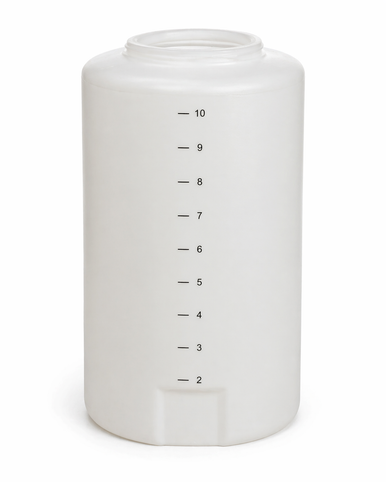
Official Norwesco technical drawing — 10 Gallon Vertical Liquid Storage Tank
Key Features and Specifications
- 10-gallon capacity — sized for agricultural chemical and fertilizer storage
- Constructed from virgin linear polyethylene (HDPE) with 1.5 specific gravity rating — handles liquids up to 12.5 lbs/gal
- 26" tall x 12" diameter — compact vertical footprint
- 8 lbs empty, approximately 133 lbs when full at rated specific gravity
- 0.75 NPT outlet fitting — factory installed and leak-tested
- 8" lid opening for fill, venting, and interior access
- FDA approved for potable water and food-grade liquid contact
- 3 Year Warranty from Norwesco against manufacturing defects
- Translucent white walls allow visual level monitoring without opening the tank and reflect sunlight to keep contents cooler
- Rated for continuous service up to 120 F / 48 C
- Seamless one-piece rotational molding — no seams, no welds, no leak points
- Manufactured by Norwesco — a leading name in rotomolded polyethylene tanks
- Place on a firm, level surface free of rocks or sharp objects that could damage the tank bottom. Ensure adequate ventilation if stored chemicals produce vapors
- Ships via UPS or FedEx ground — typically arrives within 5-7 business days
Installation and Setup Guide
A 10-gallon tank doesn't need a foundation in the civil-engineering sense, but it does need a stable, level home, and the small footprint actually makes it easier to tip than a wide tank if you're careless about where you set it.
Site Preparation
Pick a flat, solid surface that won't flex under 130-odd pounds — a workbench, a shelf rated for the weight, a cart deck, or a skid frame. The 12-inch base wants full contact; don't perch it on the lip of a drum or across a gap. If it lives outdoors on a sprayer or trailer, secure it against the base so highway vibration and cornering don't walk it off its mount. The tall-and-narrow proportion (26 inches over a 12-inch base) means its center of gravity is relatively high when full, so a strap or a bounded tray is cheap insurance.
Placement and Connections
The 0.75-inch outlet is built for a small pump, so keep the suction run short and don't neck it down further than you have to. Use a flexible link — a short length of chemical-rated tubing — between the bulkhead and any rigid line; even a small tank flexes as it drains, and a hard connection on a 0.75-inch boss strips easily. If this is feeding a metering pump, mount the pump below the tank's working level where you can so the head stays flooded and you avoid losing prime as the level drops.
Venting
Small tanks deform just as readily as big ones — arguably faster, because their thin column collapses under modest vacuum. If a pump pulls from the 0.75-inch outlet against a sealed lid, the wall will dimple inward. Leave a vent path in the 8-inch lid: a simple screened vent for benign liquids, or a small chemical-rated vent if the concentrate off-gasses. On an indoor dosing setup, route the vent so any vapor goes where you want it rather than into the operator's face.
Maintenance and Long-Term Care
The maintenance load on a 10-gallon chemical tank is light, but its job — often feeding a metering or dosing system — means a small problem here ripples downstream into the whole feed line. A quick weekly glance pays for itself.
Inspection Routine
- Level and clarity: Because the wall is translucent, a daily glance tells you the level and shows whether sediment or settled product is building near the outlet — the most common cause of a starved metering pump on a small day tank.
- Outlet fitting: Check the 0.75-inch bulkhead for weeping or dried chemical crust. On a small tank a slow seep empties it overnight, so don't ignore even a faint residue ring.
- Wall: Look for any inward dimple (a venting problem) or softening (heat or an over-spec product). At this scale defects are easy to spot through the clear wall.
- Vent: Confirm the vent is clear; a small tank plugs and collapses faster than a large one.
Cleaning and Changeover
Day tanks get changed over more often than bulk storage, so cleaning discipline matters more, not less. Drain fully, then flush per the outgoing chemical's instructions before you introduce a new product — residue from a previous concentrate can react with or contaminate the next feed, and on a dosing system that means an off-spec dose downstream. The 8-inch lid gives you a hand inside to wipe the floor and the lower wall. Verify the polyethylene is rated for the incoming chemistry before refilling.
UV and Heat
If the tank rides outside on a sprayer or sits in a sunny window, give the exposed side an occasional look for chalking. It's slow at this scale, but a small tank's thin wall has less material to spare, so don't let an outdoor unit bake unshaded for years without checking it.
Alternatives and Comparisons
Ten gallons is a deliberate choice, not a compromise — but it's worth knowing where the edges are:
Tank versus a carboy or jug: the win here is the molded-in 0.75-inch outlet and the 1.5-SG wall. A jug makes you pour or dip; this tank plumbs directly into a pump and is rated for concentrates a consumer container isn't. If you're hand-pouring once a week, a jug is fine; if a pump is drawing from it, you want the bulkhead.
Stepping up to 20 or 40 gallons: if you find yourself refilling this daily, the 20- and 40-gallon verticals share the same footprint family and 0.75-inch outlet and cut your refill frequency without changing your plumbing approach.
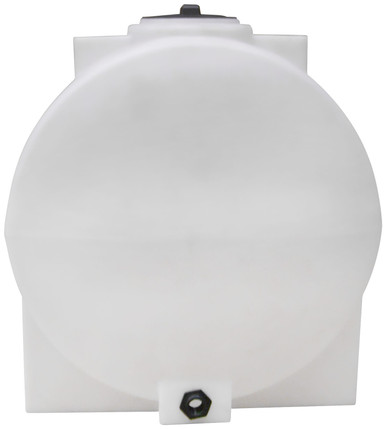
Other 10-Gallon Options
Frequently Asked Questions
How long will the 10 Gallon Vertical Liquid Storage Tank last?
The same fifteen-to-twenty-year window applies to the small tanks as to the large ones — the polyethylene and the seamless molding don't change with size. On a 10-gallon day tank the practical lifespan is usually decided by how aggressive the chemistry is and how often it cycles, not by the tank wearing out. Keep it within the 1.5-SG and 120°F limits and it long outlasts whatever you mounted it on.
What chemicals can I store in this tank?
It carries the full 1.5 specific-gravity rating, so it handles concentrates and treatment chemicals up to 12.5 pounds per gallon — the same chemistry the big verticals take, just in small batches. No fuels, solvents, or flammables. On a dosing tank especially, verify compatibility for the exact concentrate you're metering, since small day tanks often hold the most aggressive product in the system.
Does this tank come with a warranty?
Yes — the 3-year Norwesco warranty covers the small tanks identically: factory defects in material and workmanship. It won't cover an over-spec product, a chemical the poly isn't rated for, or a tank that fell off a sprayer because it wasn't secured. Keep your paperwork.
Can I install this tank underground?
No — it's an above-ground vertical, full stop, and there's no scenario where you'd bury a 10-gallon tank anyway. For any below-grade need, look at purpose-built underground cisterns engineered for soil load.
Buying Considerations
Quick gut-check before ordering. Confirm the 0.75-inch outlet matches your pump's suction port — on a small dosing tank a mismatched fitting is the most common annoyance. Verify the concentrate you're metering sits at or under 1.5 SG. And note this one ships ground, not freight, so there's no liftgate or pallet to deal with — it'll arrive boxed at your door, which is part of why it's such an easy add to an existing chemical-feed setup.
Related Products You May Need
Questions? Call (866) 418-1777 — our team knows these products inside and out and can help you select the right tank for your application.
Recommended Tanks for This Guide
Live pricing, updated automatically · estimate freight to your ZIP.