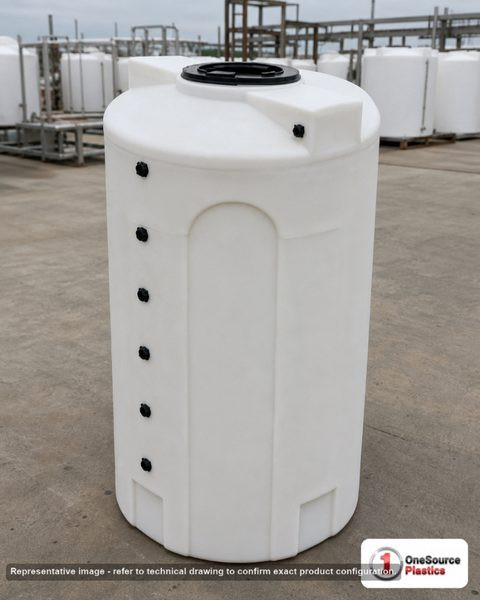
Cold-Climate Winterization Protocols for Above-Grade Polyethylene Tanks: Full Drain-Down Versus Partial Drain Versus Heat-Trace Plus Insulation Comparison and the Decision Framework for Seasonal Versus Year-Round Operations
Above-grade polyethylene tanks installed in cold climates face the freeze-prevention problem every winter. The chemistry inside the tank can freeze if the tank temperature drops below the chemistry freezing point; the freezing chemistry expands by 8-10 percent and can rupture tank fittings, crack tank walls at fittings, or distort the tank geometry. Tank owners have three principal winterization options: full drain-down (empty the tank for winter shutdown), partial drain-down (lower the chemistry level enough to leave headspace for ice expansion), and heat-trace plus insulation (keep the tank warm enough through the winter that the chemistry stays liquid). The selection between the three depends on chemistry value, operational pattern, climate severity, and the tank role in the broader process system.
This article walks the engineering and operational considerations for each approach, the decision framework that selects the appropriate protocol for a specific site, and the implementation details that make each approach actually work. The discussion is grounded in cold-climate tank operating experience, manufacturer freeze-tolerance specifications across the 5-brand catalog of Norwesco, Snyder, Chem-Tainer, Enduraplas, and Bushman, and field practice across northern industrial and agricultural sites. List pricing on each tank product page; LTL freight quoted to your ZIP via the freight estimator or by phone at 866-418-1777.
1. The Cold-Climate Freeze Risk Assessment
The freeze risk assessment establishes the operational urgency and the protocol scope:
- The chemistry freezing point identification. The chemistry freezing point depends on chemical composition. Pure water freezes at 32 F. Sodium hypochlorite 12.5 percent freezes at approximately 14 F. Brine solutions freeze well below 32 F depending on salt concentration (10 percent NaCl approximately 20 F, 20 percent approximately 7 F). Glycol solutions freeze at low temperatures determined by the glycol concentration. The chemistry-specific freezing point determines the temperature at which winter protection becomes mandatory.
- The local climate severity. The local climate severity is characterized by the design winter low temperature (the 99th percentile cold temperature for the location, available from ASHRAE design data) and the freeze duration profile (number of days per year below the chemistry freezing point, and the longest continuous below-freezing duration). The combination of low temperature and freeze duration determines the protection capacity needed.
- The tank thermal mass and surface area. Larger tanks have more thermal mass relative to surface area; they cool slower and warm slower than smaller tanks. A 5,000 gallon tank under freeze threat takes 2-4 days of continuous freezing weather to drop the chemistry below freezing; a 100 gallon tank can freeze in 8-12 hours. The thermal mass calculation establishes the time available to detect and respond to a freeze event.
- The chemistry freeze damage mechanism. Water-based chemistry expands approximately 9 percent on freezing. The expansion forces the tank wall outward and the chemistry up into headspace if available; if no headspace is available the expansion forces the tank wall and fittings to fail. The most common failure mode is fitting damage at the tank-wall penetration where the wall is constrained and cannot expand freely.
- The operational consequence of freeze damage. A frozen tank with damage typically requires complete tank replacement or major fitting replacement plus chemistry recovery and disposal. The cost of a single freeze-damage event commonly exceeds $5,000-$50,000 depending on tank size and chemistry. The cost of preventive winterization is typically a small fraction of the consequence cost.
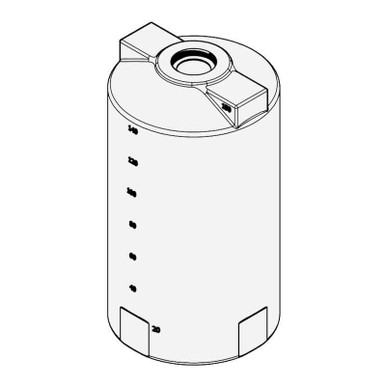
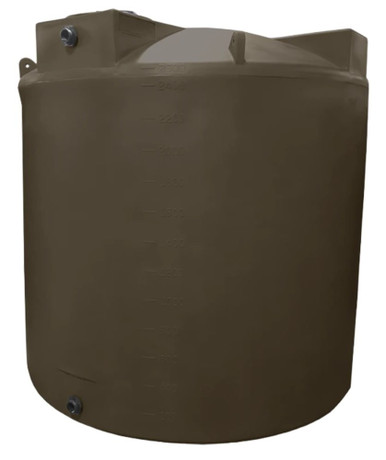
- Reference tank for cold-climate exposure. Reference N-41524 2500 gallon Norwesco as a typical mid-volume above-grade tank where the cold-climate winterization decision applies. The 2500 gallon class has thermal mass that gives 24-48 hour response time before freezing and presents enough surface area to require active protection in hard-freeze climates.
The freeze risk assessment establishes the protocol scope. Mild climates with brief freezes use minimal protection; severe climates with extended freezes require active heat-trace or full drain-down.
2. Full Drain-Down Winterization Approach
The full drain-down approach removes the chemistry from the tank for the winter:
- The drain-down procedure. The chemistry is pumped out of the tank through the discharge fitting into appropriate winter storage (heated indoor tank, transport to off-site storage, or chemistry-specific seasonal disposal). The tank is rinsed if the chemistry leaves residue (hypochlorite, peroxide, certain agricultural chemistry). The rinse water is then pumped out. The tank is left empty with the manway open or the vent open for air circulation.
- The fitting drain detail. Even after the bulk drain-down, residual chemistry remains in low-point fittings, bulkhead bores, and pipe connections. The residual chemistry can freeze and damage fittings. The drain procedure includes a fitting purge: each fitting is opened, residual liquid is drained, and the fitting is left in a position that does not collect water. Pipe connections to the tank may be disconnected for the winter to ensure complete drain-down.
- The empty-tank winter monitoring. An empty tank in winter requires minimal monitoring; condensation can accumulate inside but at modest volume. The vent should be open or the manway slightly cracked to allow air circulation and prevent condensate from accumulating in pockets. Monthly visual inspection confirms no unexpected ice or water accumulation.
- The spring re-commissioning. At spring start-up the tank is inspected, fittings re-installed and torqued to specification, the tank is rinsed if needed, and chemistry is loaded for the new operating season. The re-commissioning takes typically half a day for a 2500-5000 gallon tank.
- Suitability criteria. Full drain-down suits seasonal operations (agricultural fertilizer, irrigation, seasonal industrial process) where the tank is not needed during winter. It also suits operations where the chemistry is expensive enough to justify off-site winter storage but not so high-volume that off-site storage is impractical. Year-round operations cannot use full drain-down.
- Cost profile. Drain-down operational cost is the labor for drain and recommission (typically 4-8 hours each at site labor rates) plus the off-site storage if used. Capital cost is zero. Total annual winterization cost for full drain-down is typically $200-$1,500 depending on labor rates and storage logistics.
Full drain-down is the lowest-cost winterization protocol and the most reliable freeze-damage prevention. It is the right choice for seasonal operations where chemistry can be removed for winter.
3. Partial Drain-Down Winterization Approach
The partial drain-down approach lowers the chemistry level enough to leave headspace for ice expansion:
- The drain-down depth calculation. The chemistry expansion on freezing is approximately 9 percent of the chemistry volume. The drain-down must lower the chemistry level by at least 12-15 percent of the original level to provide a safety margin. For a 5,000 gallon tank operating at 80 percent fill (4,000 gallons), the partial drain takes approximately 600-700 gallons out, leaving 3,300-3,400 gallons.
- The chemistry headspace thermal protection limitation. The partial drain-down approach assumes the chemistry will fully freeze through to the tank center. The frozen chemistry then expands into the headspace without damaging the tank. The approach does not prevent freezing; it accommodates freezing without damage. The chemistry is not usable until thawed in the spring.
- The fitting drain consideration. Fittings in the lower portion of the tank still contain chemistry after partial drain-down. The lowered level removes chemistry from upper fittings, but the lower outlet, drain, and similar fittings remain chemistry-filled. These fittings can freeze and damage as they would on an undrained tank. The partial drain-down therefore protects only the tank wall and upper fittings.
- The chemistry property preservation. Many chemistries do not tolerate freezing without quality degradation. Hypochlorite, peroxide, and certain biological chemistry break down or separate on freezing. The partial drain-down assumes the chemistry will be discarded or significantly reformulated in the spring. The approach is not appropriate for chemistry that must retain quality through winter.
- Suitability criteria. Partial drain-down suits operations where the chemistry is low-cost or where freeze-degraded chemistry is acceptable for spring use. It also suits operations where full drain-down is impractical (no off-site storage available) but freeze damage to tank wall is unacceptable. The approach is rarely the optimal choice and is more often a fallback when other approaches are blocked.
- Cost profile. Partial drain-down operational cost is small (1-2 hours of labor). Capital cost is zero. The hidden cost is the chemistry value loss when frozen chemistry is discarded in the spring.
Partial drain-down is a niche protocol useful in specific cases where its limitations align with operational reality. The approach is not a primary recommendation for most operations.
4. Heat-Trace Plus Insulation Winterization Approach
The heat-trace plus insulation approach keeps the tank warm enough through winter that the chemistry stays liquid:
- The heat-trace cable specification. Self-regulating heat-trace cable rated for the climate temperature range is wrapped around the tank exterior or applied along the tank pad. Typical power density is 5-10 W per linear foot of cable, with cable laid in a serpentine pattern around the tank. Total power for a 5,000 gallon tank is typically 800-1,500 W continuous.
- The insulation jacket specification. The heat-trace cable is jacketed with closed-cell polyurethane foam insulation rated for the climate temperature range, with a weatherproof outer jacket. Typical insulation thickness is 2-4 inches with R-value of 12-25. The insulation reduces heat-trace power consumption by 60-80 percent versus uninsulated heat-trace.
- The control system. A temperature-sensing thermostat (mounted at the tank wall under the insulation) controls the heat-trace power. Setpoint is typically 5-15 F above the chemistry freezing point. The system runs as needed during cold weather and idles during warmer periods. Annual energy consumption is typically 4,000-12,000 kWh for a 5,000 gallon tank in a moderate cold climate.
- The fitting heat-trace extension. Tank fittings, vent lines, and discharge piping that exit the insulated tank zone require their own heat trace. The fitting heat trace may run continuously (no insulation jacket) or may be jacketed and controlled. The fitting heat trace is essential because the insulated tank wall does not protect the exposed fittings.
- Suitability criteria. Heat-trace plus insulation suits year-round operations where the tank must remain in chemistry service through winter. It also suits operations where the chemistry value is high enough that drain-down winter storage is impractical. The approach is the most common winterization for industrial chemistry tanks in cold climates.
- Cost profile. Heat-trace plus insulation capital cost is typically $3,000-$10,000 for a 5,000 gallon tank installation. Annual operating cost (energy plus inspection) is typically $400-$1,500. Total 10-year cost is $7,000-$25,000. The cost is several times the full drain-down cost but the operational continuity is preserved.
Heat-trace plus insulation is the standard winterization for year-round cold-climate operations. The capital and operating cost is justified by the operational continuity and the chemistry preservation.
5. Hybrid Approaches and Operational Considerations
Operational practice often combines elements of the three primary approaches:
- Heat-trace with reduced fill level for redundancy. A heat-traced insulated tank can be operated at 70-80 percent fill rather than 90-95 percent during winter, leaving headspace for any partial freezing event if the heat-trace fails. The combination provides defense in depth: the heat-trace handles normal winter operation, and the headspace handles the rare heat-trace failure.
- Drain-down for severe winter weeks only. Some operations drain down only during the worst 2-4 weeks of winter (the deepest cold periods), running the tank in heat-trace mode the rest of the winter. The approach reduces heat-trace operating cost during the worst weeks and avoids the heat-trace failure risk during those weeks.
- Indoor tank relocation for winter. A modest-sized tank can be relocated indoors for the winter, eliminating the freeze risk entirely. The approach requires tank size compatible with available indoor space and operational pattern that allows the relocation. Relocating a 100 gallon tank is practical; relocating a 5000 gallon tank rarely is.
- Solar-augmented heat-trace for cost reduction. Solar thermal panels or solar-electric arrays can supplement heat-trace power, reducing the grid-electricity consumption. The approach is cost-effective in some sun-belt cold climates (high winter solar with hard freezes) but requires capital investment and operational complexity.
- Process heat utilization. Where the tank chemistry is part of a process that produces waste heat (cooling water, condenser exhaust, exothermic reaction), the waste heat can be redirected to maintain tank temperature. The approach eliminates the heat-trace power consumption but requires process integration design.
- Reference 1500 gallon tank for hybrid implementation. Reference N-40144 1500 gallon Norwesco vertical as a typical mid-size tank where hybrid approaches are most practical. The 1500 gallon class is large enough to justify heat-trace investment but small enough that drain-down is also feasible if winter storage is available.
The hybrid approaches expand the toolkit beyond the three primary approaches. Most well-engineered cold-climate tank installations use multiple approaches in combination.
6. The Decision Framework
The decision framework for cold-climate winterization protocol selection:
- Step 1: Operational continuity assessment. Is the tank required to operate through winter? Year-round operations exclude full drain-down. Seasonal operations (agricultural, summer-only industrial) accept full drain-down.
- Step 2: Chemistry freeze tolerance assessment. Does the chemistry tolerate freezing without quality damage? Freeze-tolerant chemistry (some salts, some acids at certain concentrations) can use partial drain-down. Freeze-sensitive chemistry (most industrial chemistry) excludes partial drain-down.
- Step 3: Climate severity assessment. Is the climate severe enough to require active protection? Mild climates with brief freezes may use minimal protection (insulation only, no heat trace) and rely on chemistry thermal mass to ride out short freezes. Severe climates require full active heat trace.
- Step 4: Capital and operating cost comparison. Calculate the lifecycle cost of each viable approach. Drain-down is lowest if seasonal operation allows; heat-trace plus insulation is the next most common; partial drain-down rarely wins on lifecycle cost.
- Step 5: Failure-mode analysis. Consider the consequence of failure of each approach. Heat-trace failure during severe cold is the typical failure mode for the heat-trace approach; the failure mode is mitigated by hybrid approaches with reduced fill level or partial drain-down redundancy.
- Step 6: Selection and implementation. Specify the selected approach, install the required equipment, and document the operational procedure including monitoring frequency, response thresholds, and emergency response if a freeze threat develops faster than the protection can respond.
- Reference 1000 gallon tank for entry-level winterization. Reference N-40152 1000 gallon Norwesco vertical as the smaller mid-volume tank where the decision framework applies. Smaller tanks face more demanding freeze response (faster cooldown) and benefit from active heat-trace at lower power density per tank but higher power density per gallon.
The decision framework produces a defensible recommendation. The recommendation is implemented with the appropriate winterization approach and the appropriate operational procedure.
7. Implementation Details and Common Pitfalls
The implementation of cold-climate winterization has recurring details that determine success:
- The fitting and pipe heat-trace continuity. The most common heat-trace failure is incomplete coverage of fittings and pipe connections that exit the insulated tank. Each fitting and each pipe section must have continuous heat-trace cable coverage. Gaps where two heat-trace zones meet but do not overlap are the typical freeze points.
- The thermostat placement. The temperature-sensing thermostat must be placed where it senses the actual tank wall or chemistry temperature, not the heat-trace cable temperature directly. A thermostat directly on the cable reads the cable temperature regardless of chemistry condition. The correct placement is on the tank wall under the cable, with thermal contact to the wall surface.
- The insulation jacket integrity. The insulation jacket must remain weatherproof through the winter. Damage from animals (squirrels, raccoons), wind events (hail, debris impact), or human contact compromises the insulation. Annual fall inspection and repair before winter is essential.
- The power source reliability. The heat-trace power source must be reliable through winter. Loss of utility power during a winter storm (the typical cause of utility outage) coincides with the period when heat-trace is most needed. Backup power (generator, UPS) protects against the failure mode.
- The drain-down completeness on full drain. Incomplete drain-down leaves residual chemistry in low-point fittings or pipe segments that then freeze and damage. The drain-down procedure must be thorough; visual confirmation of dry tank and dry fittings is the standard.
- The spring start-up sequence. The spring start-up must include fitting re-torque (cold flow during winter empty-tank rest may have shifted preload), gasket inspection (cold-cycle damage or aging), and chemistry compatibility verification (chemistry stored off-site may have changed during winter).
The implementation details are well-known but easily overlooked. Operators who have experienced one freeze damage event typically maintain rigorous attention to the implementation details thereafter.
8. The Cold-Climate Winterization Conclusion
Cold-climate winterization of above-grade polyethylene tanks balances operational continuity, chemistry preservation, capital cost, and operating cost across the three primary approaches: full drain-down, partial drain-down, and heat-trace plus insulation. Full drain-down is the lowest-cost approach where seasonal operation allows; heat-trace plus insulation is the standard for year-round operations; partial drain-down is a niche approach for specific cases. Hybrid approaches that combine elements of two or three primary approaches expand the toolkit and provide defense in depth against single-mode failures. The implementation details, particularly fitting heat-trace continuity and insulation jacket integrity, determine whether the selected approach actually works in field service.
OneSource Plastics ships polyethylene tanks across the 5-brand catalog (Norwesco, Snyder, Chem-Tainer, Enduraplas, Bushman) suitable for cold-climate operation with appropriate winterization protocol. The tank selection for any specific cold-climate application is performed by the customer site engineer with reference to the climate severity, the chemistry freezing point, the operational pattern, and the lifecycle cost analysis. List pricing on each product page; LTL freight to your ZIP via the freight estimator or by phone at 866-418-1777. For related cold-climate engineering see tank insulation and heat tracing and heat trace cost-benefit by climate zone.
Recommended Tanks for This Guide
Live pricing, updated automatically · estimate freight to your ZIP.