NFPA 30 Class IB and Class IC Flammable Liquid Storage in Polyethylene Tanks: When Plastic Is Allowed, When It Is Not, and the AHJ Pathway for Approval
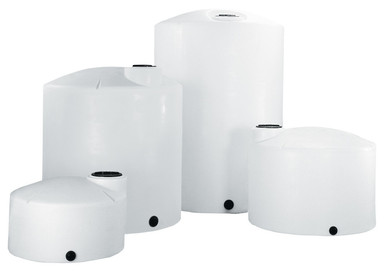
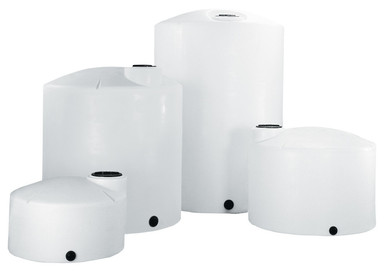
NFPA 30 Flammable and Combustible Liquids Code is the engineering standard adopted in some form by every state fire marshal in the United States and by every authority having jurisdiction (AHJ) responsible for fire-code enforcement. The 2024 edition of NFPA 30 includes provisions in Chapter 21 for storage tanks, with material-specific subsections covering steel (carbon and stainless), fiberglass-reinforced plastic (FRP), and other materials including polyethylene under specific listing and labeling conditions. The question we get most often from operators is "Can I store gasoline / diesel / methanol / ethanol in a polyethylene tank?" and the answer depends on three factors that this guide walks: the NFPA 30 liquid classification of the chemistry, the polyethylene tank's listing/approval status, and the local AHJ's interpretation and adoption of NFPA 30 for the specific application.
This guide is written for plant engineers, EHS managers, ag retailers, and facility operators who are evaluating whether plastic tank storage is a defensible engineering choice for flammable liquid duty. The references throughout are to NFPA 30 (2024 edition), UL 142 for steel tanks, UL 1316 for nonmetallic tanks for petroleum products underground, and the OSHA flammable liquid storage rules at 29 CFR 1910.106. The product applications discussed are within the OneSource Plastics 5-brand catalog scope (Norwesco, Snyder Industries, Chem-Tainer, Bushman, Enduraplas).
1. NFPA 30 Liquid Classification Refresher
NFPA 30 classifies liquids by flash point and boiling point into six categories. The flammable category (Class I) is liquids with closed-cup flash point below 100 deg F. The combustible categories (Class II, IIIA, IIIB) cover liquids with closed-cup flash point 100 deg F and above. The subdivisions:
- Class IA - flash point below 73 deg F, boiling point below 100 deg F. Examples: pentane, ether, acetaldehyde. Treated as the most hazardous flammable category.
- Class IB - flash point below 73 deg F, boiling point at or above 100 deg F. Examples: gasoline, ethanol, methanol, isopropyl alcohol, acetone, benzene, toluene.
- Class IC - flash point at or above 73 deg F and below 100 deg F. Examples: xylene (some grades), turpentine, isobutyl alcohol, butyl acetate.
- Class II - flash point at or above 100 deg F and below 140 deg F. Examples: diesel #2, kerosene, jet fuel A, mineral spirits, lower-flash fuel oils.
- Class IIIA - flash point at or above 140 deg F and below 200 deg F. Examples: many lubricating oils, hydraulic fluids, paint thinners.
- Class IIIB - flash point at or above 200 deg F. Examples: heavy fuel oils, motor oils, glycerin, vegetable oils, biodiesel B100 (depending on feedstock).
The polyethylene tank conversation centers on Class IB and IC and on Class II, because Class IA is generally outside the polyethylene service envelope (vapor pressure too high, fire risk too aggressive) and Class III liquids do not strictly require flammable-liquid storage tank construction. Class IB and IC are where the engineering question gets specific.
2. NFPA 30 Tank Material Provisions
NFPA 30 Chapter 21 sets material requirements for storage tanks. The general rule for above-ground atmospheric storage tanks is that the tank shall be constructed of steel meeting UL 142 requirements OR of materials specifically listed and approved for the intended service. Polyethylene tanks are NOT listed under UL 142 because UL 142 is a steel tank standard. The applicable nonmetallic standard is UL 1316 which covers underground petroleum tanks; UL 1316 generally does not apply to atmospheric above-ground polyethylene tanks for Class IB/IC service.
The practical engineering pathway for plastic above-ground storage of flammable liquids has three doors:
- UL 142 listed steel tank - the default and almost-always-acceptable option. Carbon steel construction with UL labeling. Aboveground UL 142 steel tanks are the standard for gasoline, diesel, and similar service. We do not catalog UL 142 steel; we point operators to specialty steel-tank fabricators.
- UL 2080 protected aboveground tank - vault or insulated/protected steel construction qualified for vehicle-impact and fire exposure. Used for fueling islands and unmanned dispensing.
- UL 142 supplement and material-specific listing - where the tank is FRP or polyethylene with material-specific listing and AHJ approval. This is where the polyethylene path opens, but only for very specific service: typically dilute alcohols, biodiesel, certain Class II combustible liquids with flash points 100 deg F or above, and specialty applications where the AHJ accepts a material-specific approval.
The bottom line: for Class IB liquids (flash point below 73 deg F - includes gasoline, ethanol, methanol, denatured alcohols, common solvents), polyethylene tank storage is generally not permitted by NFPA 30 absent a specific listing and AHJ approval. Operators wanting to store gasoline above-ground in a polyethylene tank are working against the code; UL 142 steel is the appropriate path.
3. Where Polyethylene Tanks Are Allowed for Flammable Liquid Service
The legitimate polyethylene service envelope for liquids that approach flammable category includes:
- Biodiesel B100 (B-100 fatty acid methyl ester) - Class IIIB (flash point typically 250-310 deg F depending on feedstock). NFPA 30 Class III treatment, polyethylene tank acceptable. This is a substantial market for HDPE and XLPE tanks for biofuel production and storage. Our catalog Norwesco vertical bulk tanks (N-40146, larger Norwesco vertical bulk tanks) are routinely specified for B100 storage at production sites.
- Diesel #2 - Class II (flash point 125-180 deg F depending on grade). NFPA 30 Class II. Polyethylene above-ground tanks are sometimes acceptable for Class II service depending on AHJ; the more common engineering choice is UL 142 steel for diesel because of the fueling-island and stationary-engine fuel supply use case.
- Aqueous ethanol below 25% concentration - typically below the flash-point threshold for Class IB depending on water content and temperature. Below 25% ethanol the flash point exceeds 100 deg F and the chemistry moves to Class IIIB. Polyethylene acceptable.
- Methanol-water mixtures below 25% methanol - same reasoning. Above 25% methanol the chemistry approaches the Class IB flash-point threshold and polyethylene is no longer the engineering choice.
- Glycerin (glycerol) - Class IIIB (flash point 320 deg F). Polyethylene acceptable. Common in pharmaceutical, food-grade, and biodiesel byproduct streams.
- Brake fluid, hydraulic fluid (Class IIIA or IIIB depending on grade) - polyethylene acceptable for most grades.
- Paint thinner / mineral spirits - typically Class IC (flash point 100-105 deg F). Polyethylene above-ground tank is generally not the appropriate engineering choice; UL 142 steel preferred.
The pattern: as the flash point rises into Class II and Class IIIA/B, polyethylene becomes a defensible engineering choice. As the flash point drops into Class IB and IC, polyethylene is generally not defensible without a specific listing and AHJ approval.
4. Indoor Storage Quantity Limits per NFPA 30 Chapter 9
NFPA 30 Chapter 9 sets indoor storage quantity limits for flammable and combustible liquids. The summary limits for unprotected indoor storage in industrial occupancies (warehouse, manufacturing) per control area:
- Class IA: 60 gallons per control area unprotected; 120 gallons in approved storage cabinets; 480 gallons in protected liquid storage rooms.
- Class IB: 120 gallons per control area unprotected; 240 gallons in approved storage cabinets; 1,600 gallons in protected liquid storage rooms.
- Class IC: 240 gallons per control area unprotected; 480 gallons in approved storage cabinets; 3,300 gallons in protected liquid storage rooms.
- Class II: 1,650 gallons per control area unprotected.
- Class IIIA: 13,200 gallons per control area unprotected.
- Class IIIB: not limited by NFPA 30 Chapter 9 absent local code.
"Control area" is a defined term meaning a space within a building bounded by fire-rated separation. The control area concept is how a single building can house multiple storage volumes by subdividing into fire-separated rooms. Outdoor storage uses different rules under NFPA 30 Chapter 22 covering distance to property line, building, and other tank.
5. Bonding and Grounding for Plastic Tanks in Solvent or Flammable Service
One of the operational issues that makes polyethylene tanks unsuitable for Class IB/IC service is static charge buildup. Polyethylene is an electrical insulator. Liquid moving through a polyethylene tank inlet, outlet, or filter generates a static charge that has no continuous conductive path to ground. The accumulated static charge can discharge as a spark to nearby grounded metalwork; in flammable vapor atmosphere this is a documented ignition source. NFPA 77 Recommended Practice on Static Electricity addresses this in detail.
Engineering controls for plastic-tank service near flammable atmospheres (even if the plastic tank itself is storing non-flammable chemistry):
- Bond all metal piping connected to the plastic tank with continuous bond wire to a single grounding electrode at the tank base.
- Use conductive (carbon-loaded) HDPE or XLPE if the chemistry stored is borderline flammable. Conductive polyethylene formulations have surface resistivity low enough to dissipate static (typically below 10^9 ohms/square).
- Slow-fill protocol - reduce inlet velocity below 1 m/s for the first 200% of tank volume to limit charge generation.
- Conductive-membrane bottom or grounded internal probe - some manufacturers offer conductive insert probes that span tank height to provide a static drain path.
- Avoid plastic-tank installation in NFPA 30 / NEC Class I Division 1 or Class I Division 2 electrical classified locations. The classification follows the chemistry, not the tank material.
For more detail on bonding/grounding engineering see our tank static electricity prevention guide, which covers the full electrical engineering for plastic-tank installations near flammable service.
6. The AHJ Approval Pathway for Marginal Cases
Operators sometimes have a legitimate need to store a marginal-flash-point liquid (Class IC or borderline Class IB) in a polyethylene tank. The pathway is not "skip the code" - it is "engage the AHJ early, document the chemistry and tank specification, and obtain written approval." The steps:
- Document the chemistry. Get the supplier safety data sheet (SDS) and confirm the closed-cup flash point per ASTM D93 or D3828. Flash-point data on the SDS is the regulatory basis for classification.
- Document the tank. Get the manufacturer's specification sheet showing material (HDPE, XLPE, conductive grade), wall thickness, fitting materials, vent ratings, and compatibility statement.
- Document the installation. Site plan, distance to property line and building, secondary containment volume, vent termination, electrical classification of surrounding area.
- Submit a code variance or alternative compliance request to the AHJ. Most AHJs accept a written engineering analysis that demonstrates equivalent fire protection.
- Obtain written approval before installation. Verbal approval is not adequate.
- Document the approval in the site Hazard Analysis or PSM file. AHJ approval is a perpetual obligation - if the chemistry, tank, or installation changes the approval is no longer valid.
The AHJ pathway is real and works for legitimate engineering cases. It does not work for "the steel tank is too expensive so I want plastic" - cost-only arguments are not equivalent engineering analysis.
7. Common Operator Mistakes
Patterns we see in customer inquiries where the engineering is wrong:
- "I want to store gasoline in a polyethylene tank to refuel farm equipment." NFPA 30 Class IB. UL 142 steel tank or UL 2085 protected tank required. Polyethylene not appropriate.
- "I want to store ethanol fuel in a polyethylene tank for a small distillery." E10/E15/E85 fuel ethanol is Class IB. Same answer - UL 142 steel.
- "I have a Class IIIB tank for biodiesel and want to convert it to gasoline service." Material is the same, classification is different. Conversion requires AHJ notification, possibly tank replacement, definitely electrical reclassification of the area.
- "My state fire marshal said it was OK." Get it in writing. State fire marshal verbal guidance is not a substitute for written AHJ approval at the local level.
- "The previous facility used plastic tanks for this service." Grandfather clauses vary by jurisdiction. New installations are evaluated under current code.
- "The chemistry has water in it so it cannot burn." Water-mixture flash points must be tested per ASTM D93. Some water-alcohol mixtures retain Class IB flash points up to 30-40% water content.
8. Catalog Choices for Flammable-Adjacent Polyethylene Service
OneSource Plastics catalogs the following polyethylene tank lines that ARE appropriate for the flammable-adjacent service categories (Class II, IIIA, IIIB liquids; non-flammable but solvent-adjacent chemistry):
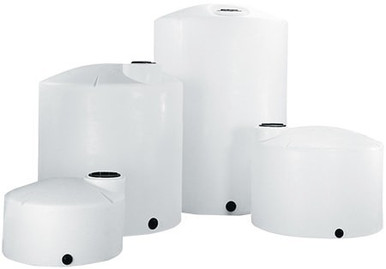
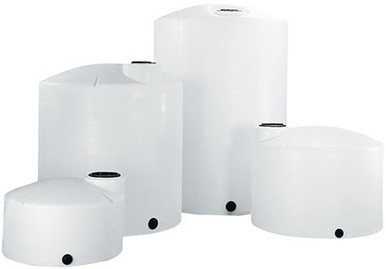
Norwesco vertical bulk for biodiesel and Class IIIB service. The Norwesco N-40146 1,500 gallon vertical is widely specified for B100 biodiesel storage at small production sites. Larger Norwesco vertical bulk tanks (5,000 to 15,500 gallon class) cover commercial biodiesel storage where the chemistry stays in Class IIIB.
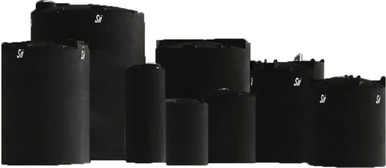
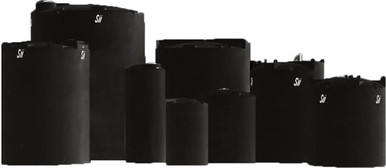
Snyder Industries Captor double-wall for solvent rinsate and waste-solvent collection. Class II rinsate from parts-washer operations or waste motor oil collection (Class IIIA/IIIB) commonly uses double-wall plastic. The Snyder SII-5990102N42 1,000 gallon XLPE Captor and SII-5490000N42 1,550 gallon Captor handle these duties with integrated 110% containment.
Norwesco horizontal leg tanks for distributed Class IIIB service. The N-40089 1,025 gallon and N-41877 1,325 gallon leg tanks are standard for hydraulic fluid, transmission fluid, and similar Class IIIB shop service.
Across the catalog, what we do NOT carry and do NOT specify is polyethylene above-ground storage for Class IA, IB, or IC liquids in unfortified service. That product class is UL 142 steel, sourced from steel-tank specialists. We tell customers this directly: it is the right answer for fire safety, code compliance, and insurance underwriting.
For chemistry-specific compatibility on biodiesel, ethanol blends, glycerin, and related fuel-grade chemistry see our ethanol blending tank compatibility guide and biodiesel tank selection guide. For NEC/NEMA electrical classification engineering see NEC/NEMA boundaries for tank service. Pricing for representative SKUs: Norwesco N-40146 1,500 gallon vertical at $2,837.16 list; Snyder SII-5990102N42 1,000 gallon Captor XLPE at $6,798.99 list. LTL freight quoted separately via the freight estimator. Call 866-418-1777 for tank specification on flammable-adjacent service - we will run NFPA 30 classification, AHJ pathway, and tank engineering against your specific application.
Recommended Tanks for This Guide
Live pricing, updated automatically · estimate freight to your ZIP.