Norwesco IAPMO and CSA B66 Septic Tank Approvals: Canadian Cross-Border Scope vs US Plumbing Codes
Plastic septic tanks crossing the US-Canada border face two parallel certification regimes. In the United States, IAPMO PS 1 (Material and Property Standard for Prefabricated Septic Tanks, referencing ASTM C1227 for septic-tank construction) is the dominant framework recognized by most state and county AHJs. In Canada, CSA B66 ("Design, material, and manufacturing requirements for prefabricated septic tanks and sewage holding tanks") is the standard recognized by provincial and territorial plumbing-code authorities. Norwesco rotomolded polyethylene septic tanks carry IAPMO certification on most models in the US line, and a subset of models also carry CSA B66 certification for Canadian-province installation. Understanding which certification applies, what each one tests, and how the cross-border product line maps to local AHJ requirements is the key to specifying the right tank for either market — without overspending on certifications you do not need or specifying a tank that fails inspection.
The Two Standards Side by Side
| Element | IAPMO PS 1 (US) | CSA B66 (Canada) |
|---|---|---|
| Issuing body | International Association of Plumbing and Mechanical Officials | Canadian Standards Association (CSA Group) |
| Material standard reference | ASTM C1227 (concrete), or material-specific test methods for plastic | Self-contained material and design provisions for plastic, fiberglass, and concrete |
| Capacity rating basis | Total tank shell volume | Working liquid capacity (volume below outlet invert), not total shell volume |
| Watertightness test | Hydrostatic 24-hr test, no leakage permitted | Hydrostatic 24-hr test plus vacuum test, no leakage permitted |
| Structural load test | Backfill simulation per IAPMO test protocol | Defined burial depth and live-load test conditions |
| Marking requirements | IAPMO listing mark, manufacturer ID, model, capacity | CSA mark, manufacturer ID, model, working liquid capacity, design burial depth |
| Recognized by | UPC and IAPMO-following jurisdictions; most US states | All Canadian provinces (often as adopted within provincial plumbing code) |
The capacity-rating basis is the most operationally important difference. A tank rated 1,000 gallons under IAPMO is rated by total shell volume. The same physical tank rated under CSA B66 is rated by working liquid capacity — the volume below the outlet invert that actually retains sewage for treatment. For the same physical tank, the CSA-marked working capacity is typically 80 to 90 percent of the IAPMO-marked total capacity. A tank labeled 1,000 gallons under IAPMO will typically be labeled 850 to 900 imperial gallons (or about 1,000 US gallons working capacity, since CSA marks in litres or imperial gallons) under CSA. Buyers cross-shopping between markets need to verify the rating basis on the spec sheet.
Why Most Canadian Provinces Require CSA B66
Canadian provinces operate plumbing code through provincial authority. The National Plumbing Code of Canada is a model code; each province adopts and amends. Most provinces' plumbing codes reference CSA B66 directly as the standard for prefabricated septic tanks. Without CSA B66 certification on the tank, provincial plumbing inspectors and on-site sewage system installers face a documentation gap at the inspection point.
Notable provincial-level adoption examples (verify current provincial code text for any specific installation):
- Ontario Building Code references septic tank standards through the on-site sewage system regulations; CSA B66 is the recognized certification framework.
- British Columbia Sewerage System Regulation uses CSA B66 for prefabricated tank certification.
- Alberta Private Sewage Systems Standard of Practice references CSA B66.
- Saskatchewan, Manitoba, and the Atlantic provinces similarly use CSA B66 as the recognized prefab-tank standard.
For a US tank manufacturer to sell into Canada, the tank model must carry CSA B66 certification, which requires CSA testing and listing. IAPMO-only certification does not satisfy provincial-AHJ requirements in any Canadian province in the typical case. The Norwesco approach is to maintain a subset of the septic line dual-listed (IAPMO and CSA) for cross-border distribution, with the full IAPMO-only line serving the broader US market.
Why Most US Jurisdictions Require IAPMO (or NSF)
In the United States, septic-tank approval is more decentralized. Most states delegate on-site wastewater system regulation to county or local health departments. The county health department typically references either the state plumbing code (often based on the IAPMO Uniform Plumbing Code, UPC) or a state-specific on-site sewage system manual. IAPMO PS 1 is the most widely recognized prefab-tank certification in the US.
NSF/ANSI 41 (Non-Liquid Saturated Treatment Systems) and NSF/ANSI 40 (Residential Wastewater Treatment Systems) cover treatment-system performance, NOT prefab tank construction. NSF/ANSI Standard 245 covers nitrogen reduction, again at the system level. For the tank shell itself, IAPMO PS 1 referencing ASTM C1227 (concrete) or the IAPMO plastic-tank protocol (rotomolded polyethylene) is the dominant certification.
State-by-state variation matters. A few patterns worth checking for any specific installation:
- California: California Plumbing Code (a UPC variant) recognizes IAPMO PS 1; county environmental health departments enforce.
- Texas: TCEQ on-site sewage facility rules under 30 TAC 285 reference manufacturing standards including IAPMO; the rule-set was substantially restructured in 2025-2026 (see related OneSource blog on Texas SWR-8 to Chapter 4 transition for context).
- Florida: Florida Department of Health on-site sewage rules under Chapter 64E-6 FAC reference IAPMO and ASTM standards.
- New York: NYS Department of Health on-site wastewater treatment system standards (Appendix 75-A) reference IAPMO and CSA in dual-listed installations.
- Ohio: Ohio Administrative Code 3701-29 references IAPMO and ASTM standards for prefab tanks.
For installations near the US-Canada border (Maine to Washington along the northern tier), dual-listed (IAPMO + CSA B66) tanks are useful because contractors and distributors carry inventory that serves both markets without dual stocking.
Norwesco IAPMO Septic Lineup at OneSource
The Norwesco rotomolded polyethylene septic line covers the standard sizing range for residential and small-commercial on-site sewage systems. All models below carry IAPMO certification (verify CSA B66 status by model on the OEM specification sheet for Canadian installation):
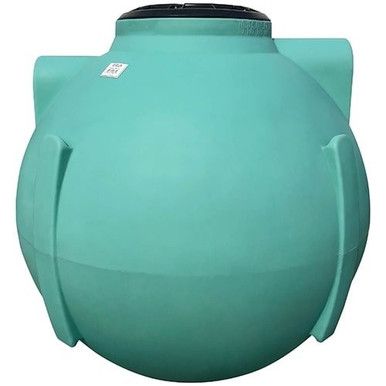
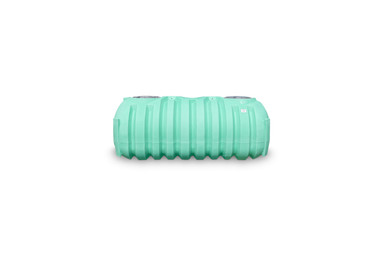
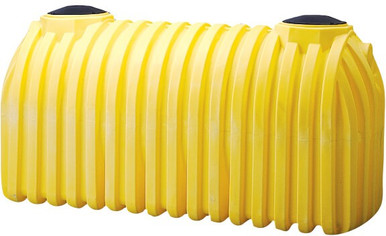
- Norwesco 1000 Gallon Plastic One Compartment Septic Tank — IAPMO Certified (MPN 41718, listed at $1,549.99) — single-compartment 1,000-gallon, IAPMO listed. Standard rural-residential sizing for a 3-bedroom home in most jurisdictions.
- Norwesco 1000 Gallon Plastic One Compartment Septic Tank — IAPMO Certified (MPN 44473, listed at $1,649.99) — alternate single-compartment configuration.
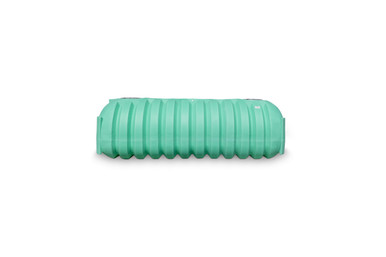
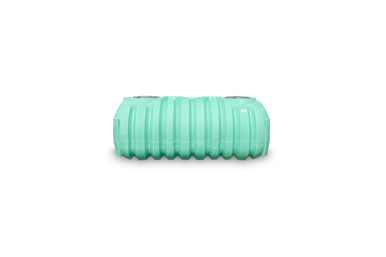
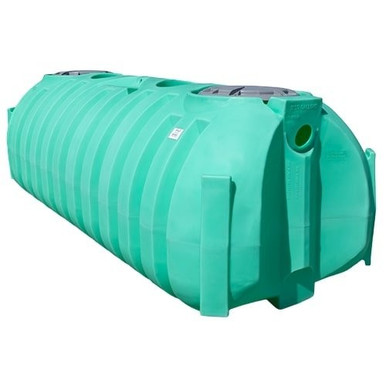
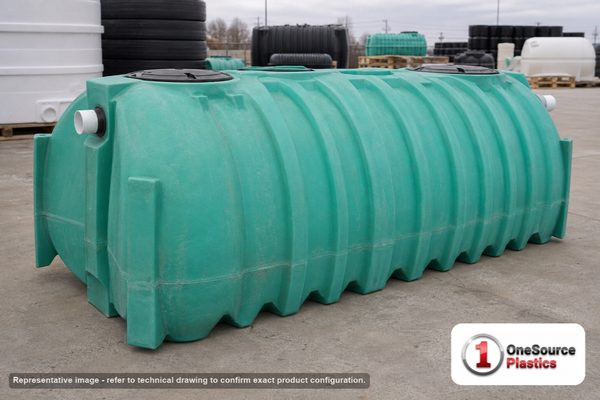
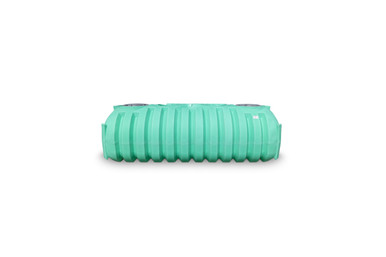
- Norwesco 1000 Gallon Plastic One Compartment Septic Tank with Loose Plumbing and Low Profile Design (MPN 43538, listed at $1,799.99) — low-profile single-compartment with shipped-loose plumbing for field assembly. The low-profile design suits high-water-table sites and shallow-burial installations.
- Norwesco 1000 Gallon One Compartment Septic Tank with Loose Plumbing and Low Profile Design (MPN 42405, listed at $1,799.99) — alternate low-profile single-compartment configuration.
- Norwesco 1000 Gallon Plastic Preplumbed One Compartment Septic Tank with Low Profile Design (MPN 43496, listed at $1,899.99) — preplumbed single-compartment, ready for inlet/outlet hookup.
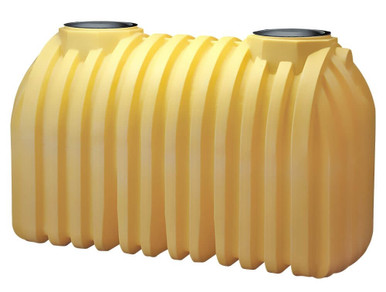
- Norwesco 1000 Gallon Plastic Two Compartment Septic Tank — IAPMO Certified (MPN 41720, listed at $1,749.99) — two-compartment 1,000-gallon. Many jurisdictions specify two-compartment for improved solids settling.
- Norwesco 1000 Gallon Plastic Two Compartment Septic Tank with Loose Plumbing and Low Profile Design (MPN 43517, listed at $1,949.99) — two-compartment low-profile, loose plumbing.
- Norwesco 1000 Gallon Low Profile Plastic Two Compartment Septic Tank — IAPMO Certified (MPN 44482, listed at $1,999.99) — low-profile two-compartment, IAPMO listed.
- Norwesco 1000 Gallon Plastic Preplumbed Two Compartment Septic Tank with Low Profile Design (MPN 42406, listed at $2,049.99) — preplumbed two-compartment.
- Norwesco 1250 Gallon Low Profile Two Compartment Septic Tank Loose Plumbing IAPMO Certified (MPN 43511, listed at $2,499.99) — 1,250-gallon two-compartment for larger residential or small-commercial sites.
- Norwesco 1500 Gallon Two Compartment Septic Tank with Loose Plumbing and Low Profile Design (MPN 43512, listed at $2,899.99) — 1,500-gallon two-compartment for 4 to 5-bedroom residential or small-commercial.
Sizing the Tank: US vs Canadian Approach
The two markets approach septic-tank sizing somewhat differently. In the US, the typical residential sizing convention is 1,000 gallons for up to 3 bedrooms, 1,250 gallons for 4 bedrooms, 1,500 gallons for 5 bedrooms (with state and county variation). The sizing is referenced to total tank capacity (the IAPMO basis), and the design daily flow is typically 100 to 150 gallons per bedroom.
In Canada under CSA B66, the working liquid capacity (the rated number on a CSA-marked tank) is the design value. Provincial codes typically specify minimum working capacity per bedroom or per design daily flow. For the same physical Norwesco rotomolded shell, the IAPMO total-capacity rating and the CSA working-capacity rating differ by 10 to 20 percent. The implication: a "1,000-gallon" tank under IAPMO sizing may correspond to roughly 850 to 900 imperial gallons of working capacity, which translates differently in Canadian sizing tables.
This is why dual-listed tanks have both IAPMO and CSA labels with different numbers on each. Both numbers are correct for their respective rating-basis convention. The installer specifying for Canadian installation should size to working capacity per the provincial sewage system regulation, not total capacity.
Installation Considerations Common to Both Markets
Regardless of certification regime, polyethylene septic tank installation engineering is similar:
- Bedding: 6 inches of clean granular material (pea gravel or washed sand), compacted level. The tank bears on the bedding; voids cause stress concentrations and shell deformation over time.
- Backfill: same granular material, placed in 12-inch lifts and tamped between lifts. The backfill provides lateral support for the tank shell against the soil column.
- Burial depth: model-specific maximum cover (typically 24 to 48 inches over the tank crown for low-profile rotomolded designs). Deeper burial requires upgraded model or alternate construction (concrete or fiberglass).
- Anti-flotation: in high-water-table sites, the empty tank floats. Hold-down strap to a deadman concrete pad below the tank, or fill the tank immediately after placement to ballast.
- Vehicle traffic: standard polyethylene septic tanks are not traffic-rated. For driveway or vehicle-access burials, a load-distributing concrete slab over the tank or upgrade to a traffic-rated model is required.
- Riser and lid: the tank's manway riser must extend to grade for inspection and pumping access. The OEM riser kit and a PolyLok or compatible bolt-down lid are the typical specification.
Frost Depth: The Northern-Tier Engineering Detail
For installations in the upper Midwest, New England, and most of Canada, frost depth dictates burial-depth minimums. Inlet and outlet piping must extend below frost depth. Frost depth varies dramatically: 24 inches in southern New England and the upper Midwest mid-belt, 48 inches across most of southern Canada and the northern US states, and 60 to 96 inches in northern Canada and Alaska. The septic tank itself is buried; the connecting piping is the freeze-vulnerable element. Insulated pipe trenching, deeper bedding, and freeze-protection details (heat trace where appropriate, polyurethane spray-foam jacketing, drain-back design preventing standing water in lift segments) become essential at high frost depth.
Five-Year Review
Both IAPMO and CSA listings require ongoing manufacturer compliance and periodic re-listing. The Norwesco rotomolded septic line maintains current IAPMO listing across the product family, with the dual-listed CSA models updated as the certification process completes for each model. Installers should verify current listing status on the OEM's published certification document for any tank specified for code-compliant installation.
Compartmentalization: Why Two-Compartment Tanks Matter
The functional difference between one-compartment and two-compartment septic tank designs is solids retention performance. In a single-compartment tank, sewage enters at the inlet, settles into a sludge layer at the bottom, and floats a scum layer at the top, with the clarified middle zone exiting through the outlet baffle. Short-circuiting (where inlet flow disturbs the settled solids and carries them out the outlet) is the dominant failure mode. A two-compartment tank places a baffle wall partway through the tank, creating a primary settling chamber (typically 60 to 67 percent of total volume) and a secondary clarification chamber. The secondary chamber experiences far less inlet-disturbance turbulence and produces dramatically cleaner effluent for the drainfield.
Many state and provincial codes have moved toward requiring two-compartment design for new installations. The cost premium between one-compartment and two-compartment Norwesco models is modest (typically $200 to $300) and the drainfield-protection benefit is substantial. For new installations where the AHJ allows either, the two-compartment specification is the longer-service-life choice.
Pumpout Cadence and Inspection
Polyethylene septic tanks under either IAPMO or CSA B66 listing have the same operational maintenance profile as concrete or fiberglass alternatives: pump out the accumulated sludge and scum periodically before the solids volume reduces effective working capacity. The typical cadence is every 3 to 5 years for a 1,000-gallon residential tank serving a 3-bedroom home with average occupancy. Heavier loading (larger household, garbage disposal use, increased water consumption) shortens the interval. Inspection at 1 to 2-year cadence with sludge-depth measurement is the engineering best practice; pump when sludge plus scum depth exceeds 30 to 40 percent of total tank depth.
Cross-References
For state-level septic regulation context in the US, see the OneSource state-regulations pillars including California, Texas, Florida, New York, Ohio, North Carolina, Washington, and Maine.
For pricing, freight, and configuration on Norwesco IAPMO-certified and dual-listed CSA B66 septic tanks, contact OneSource Plastics at 866-418-1777. For LTL freight quoting on septic tank delivery to your installation site (US lower-48 only — cross-border Canadian shipments require separate freight coordination), use the freight estimator.