Pump Priming and Dry-Run Protection for Tank-Fed Centrifugal Pumps: Suction Geometry and Foot-Valve Reliability and Low-Level Cutoff Sensors and the Mechanical-Seal Survival Engineering for Bulk-Storage Discharge Pumps
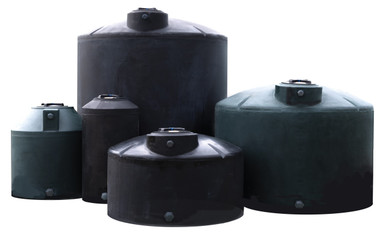
The centrifugal pump fed by a polyethylene bulk storage tank is the most common discharge configuration in industrial water and chemical service. The pump is simple, inexpensive, reliable when correctly applied, and produces the head and flow that the downstream process needs. The failure modes that take centrifugal pumps out of service are predominantly two: cavitation from inadequate suction conditions, and mechanical-seal damage from dry running. Both are preventable through suction geometry engineering, priming-system design, and dry-run protection. The site that engineers these correctly runs centrifugal pumps for years; the site that does not loses pumps to repeated mechanical-seal failures and cavitation damage.
This article walks the priming and dry-run protection engineering for centrifugal pumps fed from polyethylene bulk storage tanks across Norwesco, Snyder, Chem-Tainer, Enduraplas, and Bushman service. The structure follows the pump and tank geometry, the priming methods, the dry-run failure mechanisms, the sensor and control protections, and the maintenance practices that maximize pump service life. The references are Hydraulic Institute Standards (ANSI/HI 1.1 through 1.5 for centrifugal pumps), API 610 for chemical service pumps, manufacturer specifications for common chemical-pump lines, and operational data from over 200 tank-fed pump installations.
1. Pump and Tank Geometry: Flooded vs Lifted Suction
The pump-tank geometry determines the priming requirement. Two configurations:
- Flooded suction. The pump suction inlet is below the tank's lowest expected liquid level. Liquid flows by gravity from the tank into the pump suction; the pump is always full of liquid when the tank has any inventory. No priming required at startup. The simplest and most reliable configuration; should be the default whenever tank and pump elevation allow.
- Lifted suction. The pump suction inlet is above the tank's lowest expected liquid level. The pump must lift the liquid from the tank up to the pump elevation. At pump shutdown, the suction line and pump volute drain back to the tank; at startup, the pump must establish suction (prime) before it can pump. The configuration is unavoidable in some installations but introduces the priming requirement and the priming-failure failure mode.
For polyethylene bulk storage tanks, the flooded suction is achieved by installing the pump at grade with the tank elevated on a pad, by installing the pump in a pit below grade with the tank at grade, or by installing the pump at the tank's bottom outlet using a tank-side mounting bracket. The lifted suction occurs when the pump is on a higher pad than the tank or when the tank is below grade for some installations.
The geometry choice should be flooded whenever practical. The marginal site cost of arranging flooded suction (additional pad height for the tank, tank-side mounting for the pump) is small compared to the operational reliability advantage. Reference N-40164 5000 gallon Norwesco vertical and N-43128 10,000 gallon Norwesco vertical for the bulk-vertical envelope where pad height engineering enables flooded suction.
2. NPSH and Cavitation Prevention
The Net Positive Suction Head (NPSH) is the engineering parameter that prevents cavitation in centrifugal pumps. NPSH-Available is the suction-side pressure margin above the liquid vapor pressure; NPSH-Required is the manufacturer-specified minimum to avoid cavitation at the operating point. NPSH-Available must exceed NPSH-Required by at least the manufacturer's specified margin (typically 1-3 feet) for reliable operation.
NPSH-Available calculation for a flooded suction:
NPSH-Available = atmospheric pressure head + tank static head above pump suction - vapor pressure head - suction line friction losses
- Atmospheric pressure head. Approximately 33 feet of water at sea level; less at higher elevation (decreases by approximately 1 foot per 1000 feet of elevation). The atmospheric pressure pushes the liquid into the suction; pumps at high elevation have proportionally less atmospheric contribution.
- Tank static head. The vertical distance from the lowest expected tank liquid level to the pump suction centerline. Positive for flooded suction (tank above pump); negative for lifted suction (tank below pump).
- Vapor pressure head. The vapor pressure of the chemistry at the operating temperature, expressed in feet of head. Water at 20 C has approximately 0.8 feet of vapor pressure head; at 80 C has approximately 17 feet. Volatile chemicals have higher vapor pressure heads.
- Suction line friction losses. The pressure drop in the suction piping from the tank outlet to the pump suction, expressed in feet of head. Reducing friction (larger pipe, fewer fittings, shorter run) increases NPSH-Available.
For typical water service at moderate temperature, the NPSH calculation produces 25-30 feet of NPSH-Available with reasonable suction piping. Most chemical-service centrifugal pumps require 5-15 feet of NPSH-Required, leaving comfortable margin. Hot-fluid service (above 60 C) or volatile chemistry significantly reduces the available margin and may require flooded suction with extra elevation, larger suction piping, or pump models with low NPSH-Required. The engineering verification at design ensures cavitation-free operation across the full operating range.
3. Priming Methods for Lifted Suction
For installations where lifted suction is unavoidable, the priming system establishes the initial suction condition:
- Foot valve at the tank-side end of the suction line. A check valve at the suction line entry to the tank prevents the suction line from draining when the pump stops. The foot valve maintains the suction prime between pump cycles. Inexpensive, simple, but susceptible to debris fouling and seat wear over time.
- Manual priming with external water source. Fill the suction line and pump volute manually before startup using a hose connection or a priming pot. Reliable when correctly executed but requires operator action at every startup; impractical for automatic-cycling installations.
- Self-priming centrifugal pump. A pump model designed to establish suction by recirculating liquid in the volute to evacuate air from the suction line. More complex and expensive than standard centrifugal but eliminates the priming step. Common in fire-pump and irrigation applications where repeated startup is normal.
- Vacuum priming system. An auxiliary vacuum pump evacuates air from the suction line at startup, drawing liquid up from the tank. Adds equipment and control complexity but reliable for automatic operation.
- Liquid-level holdup tank above the pump. A small tank above the pump suction holds enough liquid to keep the pump primed between cycles. The tank refills from the main bulk tank during operation. Mechanical solution that eliminates the foot-valve reliability issue.
The selection depends on the pump operating pattern (continuous vs intermittent), the operator availability for manual priming, and the installation budget. Self-priming pumps are the most common solution for intermittent service; foot valves are common for continuous service with infrequent shutdown.
4. Dry-Run Failure Mechanism
The dry-run failure mode produces mechanical-seal damage that ends pump service life prematurely. The mechanism:
- The mechanical seal between the rotating pump shaft and the stationary pump casing depends on a thin liquid film between the seal faces for lubrication and cooling. The film is approximately 0.0001 inches thick in normal operation, hydrodynamically maintained by the rotating shaft and the contained liquid pressure.
- When the pump runs dry (no liquid in the volute), the seal faces have no lubricant. The faces contact directly under the seal-spring loading. The contact friction generates heat at the seal face.
- The heat causes thermal damage to the seal faces. Carbon faces (the soft seal element) crack from thermal shock. Ceramic or silicon-carbide faces (the hard element) develop heat-stress cracks or thermal-distortion. Elastomeric seal components (O-rings, spring carriers) degrade or fail.
- The damaged seal leaks immediately upon return to wet operation. The leak rate may start small but progresses as the damage propagates. The seal must be replaced; the pump is taken out of service for the repair.
The dry-run damage occurs in seconds to minutes of dry operation. A mechanical seal that runs dry for 30-60 seconds may survive with reduced service life; a seal that runs dry for 5-10 minutes is typically destroyed and requires replacement. The protection systems detect the dry-run condition early enough to shut down before destructive damage.
5. Dry-Run Protection Sensors and Controls
The dry-run protection layers:
- Tank low-level sensor with pump shutdown interlock. A level sensor in the tank trips the pump shutdown when the tank level drops to a calibrated low set point that corresponds to the suction loss point. The interlock is a hard-wired or PLC-based shutdown that prevents pump operation below the level. The most common and most reliable protection.
- Suction-line pressure sensor with low-pressure interlock. A pressure sensor on the pump suction line trips shutdown when the pressure drops below the priming threshold. Detects both empty-tank and air-locked-suction conditions. Independent of the level measurement; provides redundancy.
- Discharge-flow sensor with no-flow interlock. A flow sensor on the pump discharge trips shutdown when flow drops to zero with the pump commanded on. Detects suction loss, severe cavitation, or downstream blockage; protects against several failure modes simultaneously.
- Pump motor current monitor. The pump motor draws characteristic current at normal operation; dry-run produces a current signature change (typically lower current as the pump moves only air rather than liquid). The current monitor trips shutdown on the dry-run signature.
- Pump bearing temperature monitor. Bearing temperature rises during dry-run as the seal generates heat. Temperature trip provides last-line-of-defense protection; cost-effective for high-value pumps in critical service.
The layered protection uses multiple sensors so the failure of any single sensor does not leave the pump unprotected. Critical-service installations use at minimum the level sensor plus one or two additional protections; routine service may use only the level sensor with appropriate setpoint margin.
6. Setpoint Engineering and Margin
The protection setpoint engineering balances false-trip risk against the dry-run risk:
- Tank low-level setpoint. The setpoint is the level at which suction is reliably maintained. For a tank with a side-outlet, the setpoint is typically a few inches above the outlet centerline to provide submergence. For a tank with a bottom outlet plus a vortex breaker, the setpoint can be lower. The setpoint includes margin for measurement error and for the pump-shutdown delay between trip and pump stop.
- Vortex avoidance. At low tank level, the suction can develop a vortex (air-entraining whirlpool above the outlet). The vortex breaks suction and produces dry-run conditions even with measurable tank inventory. Setpoint margin above the vortex onset level prevents this. Vortex breakers (cross-shaped baffles installed at the outlet) reduce the level at which vortexing begins, allowing lower setpoints.
- Pressure setpoint. The suction-pressure setpoint is below the minimum priming pressure but above any expected normal-operation low pressure. The setpoint depends on the suction geometry and the operating fluid; engineered per installation rather than copied between sites.
- Flow setpoint. Zero flow with pump commanded on is the trip signature. False trips occur if the pump operates at very low flow (deadhead with a closed downstream valve) for extended periods; the deadhead operation has its own concerns and is typically protected separately.
The setpoints come from the pump and tank design data plus on-site verification at commissioning. The site-specific values are documented in the operations manual; the values are not changed casually because changes propagate to multiple control system files.
7. Foot-Valve Reliability and Maintenance
For installations using foot valves to maintain prime, the foot-valve reliability determines the overall priming reliability:
- Foot-valve construction. The valve is a check valve with a flapper or poppet that closes when flow reverses. The flapper material (rubber, polyethylene, PVC) and the seat material (similar materials) determine the chemistry compatibility. The valve sits at the tank-side end of the suction line, often submerged in the lower tank inventory.
- Debris fouling. The foot valve is at the tank bottom where any settled debris accumulates. Debris between the flapper and the seat prevents complete closure; the suction line drains slowly between pump cycles and the pump fails to prime at next startup. Prevention: routine inspection and cleaning of the foot valve at the tank-cleaning intervals; selection of the foot-valve location to minimize debris exposure.
- Seat wear. The flapper-seat contact wears over years of cycling. The wear creates leakage paths that allow slow drain of the suction line. Replacement at 5-15 year intervals depending on cycling frequency.
- Vortex inhibition near the foot valve. The foot valve at low tank level is itself subject to vortex effects similar to a side outlet. Vortex breakers in the tank near the foot valve location prevent this.
- Strainer protection upstream of foot valve. A strainer at the tank outlet protects the foot valve from large debris. The strainer requires its own maintenance but extends the foot-valve service life.
The foot-valve maintenance is small in absolute terms but high-impact: a failed foot valve prevents pump priming and leaves the pump out of service until the foot valve is repaired. The maintenance program treats the foot valve as a critical component despite its low individual cost.
8. Tank Selection That Supports Pump Operation
The tank selection affects the pump suction conditions:
- Bottom-outlet tanks for flooded suction installations. A bottom outlet provides the lowest possible suction elevation, maximizing flooded-suction NPSH. Bulk-vertical tanks with bottom outlets are the standard for flooded-suction service. Reference N-41524 2500 gallon.
- Side-outlet tanks at low side position. A side outlet near the tank bottom provides flooded suction across most of the tank inventory but loses suction at the last few inches of liquid level. Common configuration; the low-level setpoint is a few inches above the outlet to maintain submergence.
- Cone-bottom tanks for full drainage and pump feed. The bottom cone collects the residual inventory at the lowest point; the discharge fitting at the cone bottom feeds the pump suction with no residual heel. Best for chemistry that should not accumulate at the bottom (settling solids, biological substrate). Reference N-42064 15 gallon cone bottom.
- Doorway and specialty-shape tanks. Specialty tank shapes have specific outlet geometries that affect pump suction; verify the geometry supports the intended pump installation. Reference N-44800 100 gallon doorway tank.
- Cylindrical horizontal tanks for low-elevation flooded suction. A horizontal tank at grade can provide flooded suction to a pump installed in a small pit; the tank elevation is minimized while the flooded condition is maintained.
The tank-pump geometry decision is part of the system design. The tank choice that supports the desired pump operation simplifies the control engineering and improves the operational reliability. List pricing on each product page; LTL freight to your ZIP via the freight estimator or by phone at 866-418-1777.
9. Maintenance Practices for Pump Service Life
The pump-maintenance practices that maximize service life beyond just the priming and dry-run protection:
- Routine seal-leak inspection. Visual inspection at every shift or daily for any sign of seal leakage. Small leaks at first appearance indicate developing seal damage; replacement at this stage prevents catastrophic failure during operation.
- Bearing temperature trending. Routine bearing temperature measurement (handheld infrared at every shift, or continuous monitoring on critical pumps). Rising temperature trends indicate developing bearing wear; intervention before failure.
- Vibration measurement. Periodic vibration analysis (handheld or wireless monitor) at the pump bearings. Vibration signature changes indicate developing mechanical issues; bearing wear, alignment drift, impeller damage.
- Suction strainer cleaning. Routine cleaning of suction strainers at the documented interval. Clogged strainers reduce flow and produce cavitation conditions; the maintenance prevents both.
- Spare-pump availability. Critical service installations maintain a spare pump on the shelf, configured identically to the running pump. Failure of the running pump triggers swap-out within hours rather than days of equipment procurement and installation.
The maintenance program is the routine work that keeps the pump in service across years. The protection systems prevent acute damage; the maintenance program prevents gradual deterioration from accumulating to operational disruption.
10. The Pump Engineering Conclusion
Tank-fed centrifugal pumps in polyethylene bulk-storage service are reliable workhorses when correctly engineered. The two failure modes that take them out of service prematurely — cavitation and dry-run damage — are both preventable through engineering at design and operations: flooded-suction geometry whenever practical, NPSH verification across the operating range, foot-valve or self-priming pump for unavoidable lifted suction, and layered dry-run protection through tank low-level interlock plus suction-pressure or discharge-flow protection.
The maintenance program addresses the gradual wear that accumulates over years: seal-leak inspection, bearing temperature and vibration trending, suction strainer cleaning, and spare-pump availability for critical service. The engineered installation with the maintenance program runs centrifugal pumps for 10-20 year service life without major rebuild; the un-engineered or un-maintained installation produces repeat seal failures and unscheduled downtime.
OneSource Plastics ships polyethylene tanks across 5 brands — Norwesco, Snyder, Chem-Tainer, Enduraplas, Bushman — with the geometry and outlet configurations that support flooded-suction pump installation when site elevation allows. The pump selection, suction piping engineering, and protection-system design is operations engineering at the customer site; the tank's outlet location and dimensional drawings are the inputs the pump engineer uses for the suction calculation. List pricing on each product page; LTL freight to your ZIP via the freight estimator or by phone at 866-418-1777. For related operations engineering see secondary containment requirements and tank specification sheet reading.
Recommended Tanks for This Guide
Live pricing, updated automatically · estimate freight to your ZIP.