Tank Chemistry Sample Port Engineering and Operations: Stainless Ball Valve Construction, Tubing Isolation Design, Pre-Flush Discipline, and the Chain-of-Custody Documentation That Supports Quality Control and Regulatory Compliance
The chemistry sample port on a polyethylene storage tank is the engineered interface where representative chemistry is withdrawn for laboratory analysis, quality verification, regulatory submittal, or process control. The sample port engineering and the operational discipline around sampling determine whether the laboratory analysis represents the bulk chemistry in the tank or whether the analysis is contaminated by stagnant chemistry in the port, by atmospheric exposure during sampling, or by cross-contamination from previous sample events. The discipline matters because chemistry decisions, regulatory submittal, and quality verification all depend on the sample being truly representative of the bulk chemistry.
This article walks the engineering and operational practice of tank sample ports for polyethylene chemistry tanks across the 5-brand catalog of Norwesco, Snyder, Chem-Tainer, Enduraplas, and Bushman. The discussion covers ball valve material selection, tubing and fitting design, pre-flush procedure, sample container handling, and the chain-of-custody documentation that supports laboratory analysis traceability. References are to manufacturer fitting specifications, ASTM E300 for sample integrity, and 40 CFR 136 for environmental sample chain-of-custody. List pricing on each tank product page; LTL freight quoted to your ZIP via the freight estimator or by phone at 866-418-1777.
1. Sample Port Engineering Requirements
The sample port must satisfy several engineering requirements simultaneously:
- Representative sampling location. The sample port must access chemistry that represents the bulk tank inventory. Ports located near tank top capture the upper layer (which may have segregated due to settling or vapor exposure); ports near the bottom capture the lower layer (which may have settled solids or sediment). The standard placement is mid-elevation on the tank side wall where the chemistry is most representative of the bulk.
- Chemistry compatibility of all wetted surfaces. Every component contacted by chemistry from the tank wall through the sample container must be chemistry-compatible. Incompatibility at any point compromises the sample integrity. The tank wall is polyethylene; the port and tubing must match or exceed the chemistry compatibility envelope.
- Isolation between samples. The port must isolate the sample event from the bulk tank chemistry to prevent contamination flow back into the tank. The standard isolation is a positive-shutoff valve (typically ball valve) with reliable mechanical sealing.
- Drain volume sufficient for representative sample. The port plumbing has internal volume that holds chemistry between sample events. This stagnant volume must be flushed before each sample to ensure the sample represents current bulk chemistry rather than aged port chemistry. Larger port plumbing requires larger pre-flush volume.
- Operator safety during sampling. The port location and operation must support safe sample collection without operator chemistry exposure beyond the sample volume. Splash, spray, or unintended chemistry release during sampling are operational hazards that the port design must minimize.
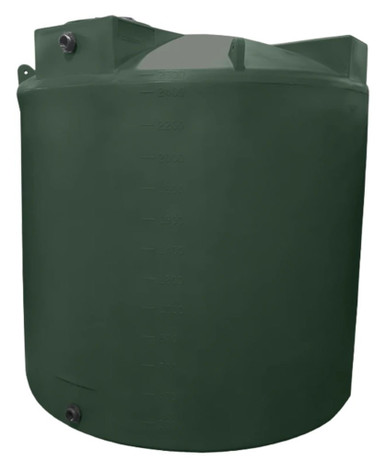
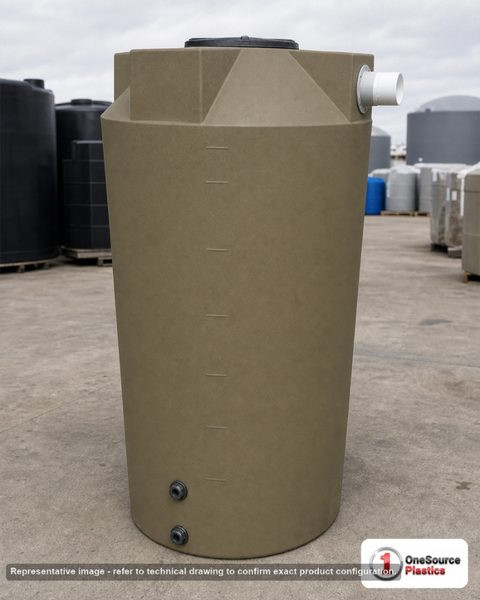
- Reference standard tank sample port. Reference N-40164 5000 gallon Norwesco vertical as a typical tank where a side-wall sample port is fitted at mid-elevation. The standard fitting size is 1/2-inch or 3/4-inch NPT into a polyethylene insert; the external sample plumbing builds outward from the tank fitting.
The engineering requirements together establish the design envelope. The implementation choices within that envelope balance cost, reliability, chemistry compatibility, and operational ergonomics.
2. Stainless Ball Valve Construction Selection
The ball valve is the primary isolation component:
- 316 stainless ball valve. The standard choice for chemistry sampling. The ball, stem, body, and end connections are 316 stainless. Compatibility envelope includes most aqueous chemistry, dilute and moderate acids, moderate caustic, and most petrochemical service. 316 stainless handles temperatures to 400 F and pressures to 1000+ psi. Cost is moderate; the lifecycle reliability justifies the choice for most chemistry tanks.
- 2-piece versus 3-piece body construction. 2-piece valves are more compact and lower cost; the body is two threaded halves that seal at the centerline. 3-piece valves separate into three pieces (two ends and a center body) for full disassembly, cleaning, and seat replacement without removing the valve from the line. 3-piece is preferred for chemistry sampling where periodic cleaning matters.
- Seat material selection. The seat creates the seal between the ball and the body when the valve is closed. PTFE (Teflon) seats are the standard for chemistry compatibility; the seat handles essentially all chemistry within the temperature limits. Reinforced PTFE (RPTFE) or filled PTFE (PTFE with glass fiber or carbon) extends the temperature and pressure envelope. For very aggressive chemistry, alternative seat materials (PFA, PEEK) are specified.
- Stem packing and stem seal. The stem passes through the body to the actuator (handle); the stem seal prevents chemistry leakage along the stem. PTFE stem packing is the standard. Live-loaded stem packing (with belleville washers or springs) maintains seal force as packing wears; this is preferred for high-cycle service.
- End connection compatibility. The valve end connections (NPT thread, BSP thread, flange, or butt-weld) must match the upstream tank fitting and the downstream sample plumbing. NPT to 1/4-inch or 1/2-inch is standard for chemistry sample service. The thread material is part of the wetted surface and must be chemistry-compatible.
- Reference smaller tank for sample port retrofit. Reference N-41524 2500 gallon Norwesco as a typical retrofit candidate where adding a side-wall sample port involves drilling and inserting a polyethylene fitting boss with the stainless ball valve threaded into it. The retrofit must respect the tank manufacturer's specifications for field-installed fittings.
The stainless ball valve is the heart of the sample port. The selection decisions establish the long-term reliability and the chemistry compatibility envelope.
3. Sample Tubing and Fitting Design
The tubing downstream of the ball valve carries chemistry from the tank to the sample container:
- Tubing material selection. 316 stainless tubing is the standard for chemistry sampling, matching the ball valve material. PTFE tubing is the alternative for chemistry where stainless is incompatible (concentrated chlorides at temperature, hydrofluoric acid). Tubing diameter is typically 1/4-inch or 3/8-inch outer diameter, sized to the sample volume requirement.
- Tubing length and routing. Tubing should be as short as practical to minimize stagnant volume between samples. Routing should drain freely; up-loops trap chemistry that ages between samples and contaminates the next sample. The drain at the end of the sample tubing should be at the lowest elevation point.
- Compression fittings versus threaded fittings. Compression (Swagelok-style) fittings provide consistent sealing and are easily disassembled for cleaning. Threaded NPT fittings are lower cost but harder to disassemble and reassemble without thread sealant residue. Compression is preferred for chemistry sampling where periodic disassembly is needed.
- Sample drain valve at tubing end. A second smaller ball valve at the tubing end provides the operator with the actual sample-control point. The first (tank side) ball valve isolates the bulk tank; the second (drain side) ball valve releases the sample volume into the container. The dual-valve arrangement is the standard for controlled sampling.
- Vent fitting for trapped vapor. Some sample plumbing accumulates vapor between samples. A small vent fitting at the highest point of the tubing allows vapor release during pre-flush; the vent must be chemistry-compatible and must close securely. For volatile chemistry the vent design includes vapor capture or odor control.
- Reference Snyder Captor for premium sampling integration. Reference SII-1006600N42 10000 gallon Snyder XLPE Captor double-wall as a tank where premium sampling integration is common. The double-wall design supports engineered sample port routing through the secondary containment without compromising the containment integrity.
The sample tubing and fitting design determines the sample integrity: short tubing with free drainage, compression fittings for serviceability, and dual-valve isolation for controlled sample release.
4. Pre-Flush Discipline for Representative Sampling
Pre-flush is the operational discipline that produces representative samples:
- The stagnant volume problem. Between sample events, the sample plumbing holds chemistry that ages. Aging produces chemistry change: oxidation, vapor loss, settling of suspended solids, dilution from ambient water ingress. The aged chemistry is not representative of the current bulk tank chemistry.
- Pre-flush volume calculation. The pre-flush volume is typically 3-5 times the stagnant volume to ensure complete displacement. Calculate the stagnant volume from tubing dimensions: 1/4-inch tubing has approximately 0.0026 gallons per foot internal volume; 3/8-inch tubing has approximately 0.0064 gallons per foot. A 6-foot run of 3/8-inch tubing holds approximately 0.04 gallons stagnant; pre-flush volume should be 0.12-0.20 gallons.
- Pre-flush execution procedure. Open the tank-side ball valve, then open the drain-side ball valve, allow the calculated pre-flush volume to discharge into a separate pre-flush container or drain, close the drain-side valve momentarily to allow the sample container to be positioned, then open briefly to fill the sample container, then close both valves. The procedure ensures the sample chemistry is current bulk chemistry rather than aged port chemistry.
- Pre-flush volume disposal. The pre-flush volume is chemistry, not waste in most cases. Standard practice returns the pre-flush volume to the bulk tank where possible, or directs to chemistry-appropriate waste handling where not. Casual disposal of pre-flush volume can violate chemistry handling regulations.
- Settling time before sample event. If the tank has been recently agitated (filled, recirculated, drained from), some settling time before sampling improves representativeness. Standard practice allows 30-60 minutes settling before sampling for chemistries that may have suspended solids or dissolved gas. The settling time is part of the sample procedure documentation.
- Ambient exposure during sampling. Atmospheric exposure during sample collection can cause chemistry change for volatile or oxidation-sensitive chemistry. Standard practice minimizes exposure: small sample container with tight cap, rapid transfer from sample tubing to container, immediate cap closure. For very sensitive chemistry, sample container is purged with inert gas before sampling.
The pre-flush discipline transforms reasonable sample port hardware into representative sampling. The discipline is captured in operational procedures and operator training.
5. Sample Container Handling and Labeling
The sample container and labeling supports laboratory analysis and chain-of-custody:
- Container material selection. Glass containers (typically amber for light-sensitive chemistry) are standard for laboratory chemistry. HDPE containers are alternative for chemistry incompatible with glass (hydrofluoric acid, fluorides). The container material must be chemistry-compatible to prevent leaching that contaminates the sample.
- Container volume sizing. Sample volume should match the laboratory analysis requirement plus margin (typical laboratory analysis requires 100-500 mL; sample container is typically 250-1000 mL). Excess sample volume creates handling burden; insufficient sample volume forces re-sampling.
- Container preparation before sampling. New containers are typically pre-cleaned for laboratory grade work. Reused containers require cleaning protocol to remove residue from previous sample. For trace-level analysis, container preparation is a documented step in the sample procedure.
- Sample label content. The sample label includes: tank identification, chemistry, sample date and time, operator initials, sample location (tank, port), and any relevant operational conditions (recently filled, recirculated, etc.). The label is permanent (waterproof marker or pre-printed adhesive); pencil or non-waterproof marker is unacceptable.
- Sample preservation and storage. Some chemistry requires preservation (acid addition, refrigeration, light protection) to maintain integrity between sampling and laboratory analysis. The preservation requirement is established by the analytical method and documented in the sample procedure. Reference 40 CFR 136 for environmental water sample preservation requirements.
- Chain-of-custody form initiation. Each sample initiates a chain-of-custody form. The operator records sample collection, transfers custody to the next handler, and documents the transfer with signatures. The form follows the sample to the laboratory and back to the records archive.
The container handling and labeling are the foundation for the laboratory analysis traceability. Sloppy handling at this step compromises all downstream analysis quality.
6. Chain-of-Custody Documentation Discipline
Chain-of-custody documentation supports analytical traceability and regulatory compliance:
- The chain-of-custody concept. Documentation that establishes who collected the sample, who transferred it to the laboratory, who performed the analysis, and what handling occurred at each step. The chain documents that the sample analyzed in the laboratory is the sample collected at the tank, without unauthorized handling or substitution.
- Standard chain-of-custody form content. Sample identifier (matching the container label), collection date and time, collection location, collector name and signature, analyses requested, sample preservation method, transfer history (each handler signs and dates the transfer), laboratory receipt confirmation. Standard forms are available from analytical laboratories or can be developed internally.
- Custody seal application. For samples requiring tight chain-of-custody (regulatory submittal, legal proceedings), tamper-evident seals are applied to the sample container. The seal must be broken to access the sample; broken seal indicates possible sample compromise. Seals are required for some EPA methods; check the regulatory requirements for the specific application.
- Transfer documentation. Each custody transfer is documented: sender, receiver, date, time, condition of sample. Common transfer points are operator-to-shift-supervisor, shift-supervisor-to-shipper, shipper-to-laboratory, laboratory-to-analyst, analyst-to-archive. Each transfer is captured in writing with signatures.
- Records retention period. Chain-of-custody forms are retained per the regulatory or quality system requirement. Common retention periods are 3-5 years for routine quality control, 10+ years for environmental compliance, indefinite for some regulatory submittals. Records retention is part of the document control system.
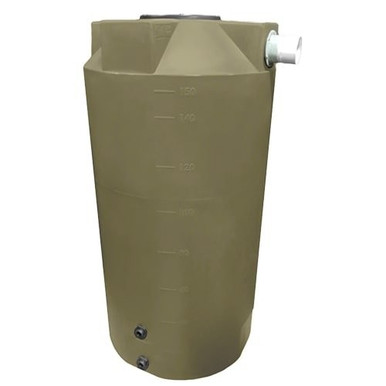
- Reference smaller-volume tank for routine quality sampling. Reference N-44800 100 gallon Norwesco doorway water tank as an example of a smaller tank where routine quality sampling supports chemistry verification before service. Even smaller tanks benefit from documented sample procedures and chain-of-custody discipline.
The chain-of-custody discipline is the documentation framework that supports laboratory analysis credibility. The discipline is required for some applications (regulatory) and is good practice for all.
7. Common Sampling Errors and Mitigation
Field experience documents common sampling errors and their consequences:
- Insufficient pre-flush. Sampling without pre-flush or with insufficient pre-flush volume produces samples representing aged port chemistry rather than current bulk. The analytical results may show chemistry degradation, oxidation products, or settling artifacts that do not reflect the bulk tank. Mitigation: documented pre-flush procedure with volume measurement.
- Cross-contamination between samples. Reusing sample containers without adequate cleaning, or sampling multiple tanks with the same plumbing without intermediate cleaning, transfers chemistry from sample to sample. The contamination is at trace level but affects sensitive analyses. Mitigation: dedicated sample plumbing per tank or thorough cleaning protocol between tanks.
- Atmospheric exposure during sampling. Volatile chemistry (ammonia, hypochlorite, peroxide) loses significant content during atmospheric exposure between sample tubing and container. The analytical results understate the bulk chemistry concentration. Mitigation: minimize exposure time, immediate container capping, inert gas purge for very sensitive samples.
- Temperature artifact during sampling. Sampling chemistry at significantly different temperature than the laboratory analysis temperature can affect results for temperature-sensitive analyses (dissolved gases, volatile organics). Mitigation: sample preservation that addresses temperature, documented sample temperature, laboratory temperature compensation.
- Sample container interaction. Glass containers leach silica into some samples; HDPE containers absorb hydrocarbon. The interaction is small but affects trace analyses. Mitigation: container selection appropriate to analytical method, container preparation per method specification.
- Operator-introduced contamination. Skin contact with sample, jewelry contact with chemistry, contaminated PPE shedding into sample. The contamination is operationally avoided through PPE discipline, hand-washing, jewelry removal during sampling. Mitigation: documented sampling PPE and hygiene protocol.
- Reference larger tank for high-frequency sampling discipline. Reference N-43128 10000 gallon Norwesco vertical as a tank scale where weekly or daily sampling for quality control demands disciplined sample procedures. The cumulative sample event count over the tank service life is high; small per-sample errors compound over the service life.
The common errors are well-documented and addressable through procedural discipline. Field operations that identify and address these errors produce reliable analytical results over the long term.
8. The Sample Port Engineering Conclusion
The tank chemistry sample port is engineered as a system: the ball valve construction, the tubing and fitting design, the pre-flush procedure, the container handling, and the chain-of-custody documentation all combine to produce representative chemistry samples that support laboratory analysis credibility. The 316 stainless ball valve with PTFE seats and 3-piece body construction is the standard for chemistry sample isolation. The dual-valve isolation arrangement (tank-side and drain-side) provides operator control over the sample release. The pre-flush discipline ensures the sample represents current bulk chemistry rather than aged port chemistry. The chain-of-custody documentation supports regulatory and quality system requirements.
OneSource Plastics ships polyethylene tanks across the 5-brand catalog (Norwesco, Snyder, Chem-Tainer, Enduraplas, Bushman) with side-wall fitting options that integrate with engineered sample port plumbing. The tank selection for any specific operation considers the planned sample procedure as one factor among the chemistry compatibility, volume requirements, and operational practices. List pricing on each product page; LTL freight to your ZIP via the freight estimator or by phone at 866-418-1777. For related tank operational engineering see secondary containment requirements and tank specification sheet reading.
Recommended Tanks for This Guide
Live pricing, updated automatically · estimate freight to your ZIP.