Tank Connection Engineering: Bulkhead vs Welded vs Threaded Insert Performance Trade-Offs
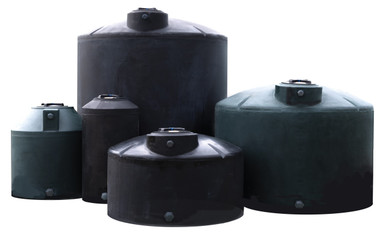
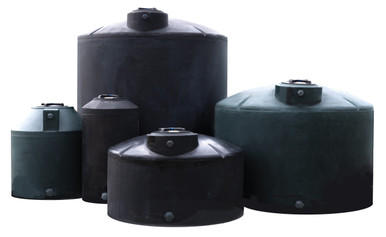
The tank shell is the easy part. Polyethylene rotomolders deliver consistent, code-compliant shells at predictable pricing across the major manufacturers. Where tank installations succeed or fail is at the connections — every penetration through the wall is a potential leak path, a thermal-cycling fatigue point, and a maintenance burden. Three competing technologies dominate the polyethylene tank connection market: bulkhead fittings, polyethylene-welded nipples, and threaded inserts. Each has a service envelope where it is the engineered correct choice and conditions where it fails predictably.
This guide walks the engineering trade-offs in operational terms — pressure rating, cyclic-load fatigue, chemistry compatibility, repairability, and total installed cost — and applies the analysis to real fitting selections on Norwesco and Snyder catalog tanks. By the end you will know when bulkhead is the right answer, when welded is engineering-mandatory, and when threaded inserts (often misused) earn their keep.
The Three Connection Technologies
Bulkhead Fittings
A bulkhead fitting is a two-part fitting (flange + locknut, or flange + back-nut) that sandwiches the tank wall between an internal flange (with gasket) and an external locknut. The wall is penetrated by a clean cylindrical hole sized to the fitting nominal. Threading on the inboard or outboard end (NPT typically) provides the pipe connection. EPDM, Viton, or PTFE gasket material is selected by chemistry.
Bulkheads are field-installable, field-removable, and the dominant connection method for water, fertilizer, and dilute chemistry on polyethylene tanks. Norwesco, Snyder, Chem-Tainer, Bushman, and Enduraplas all ship tanks with factory-installed bulkheads as standard.
Polyethylene-Welded Nipples (Hot-Plate or Extrusion Welded)
A welded fitting is a polyethylene nipple (typically Schedule 80 PE pipe stub) hot-plate or extrusion-welded directly to the tank wall. The welded joint is monolithic — same material as the tank itself. The pipe connection is typically a flange face or threaded transition adapter at the outboard end of the welded stub.
Welded fittings are factory-only on rotomolded tanks. Field-welding polyethylene to a finished rotomolded tank is technically possible but requires specialized fusion equipment and certified technicians; most tank manufacturers will not warranty field-welded modifications.
Threaded Inserts (Insert Couplings, Stainless Inserts)
A threaded insert is a stainless or brass coupling permanently bonded into a counterbored pocket in the tank wall. The bond is mechanical (threaded into the polyethylene with a sealing flange) or adhesive-assembled with epoxy. The pipe connection is NPT or BSP threaded directly into the insert.
Threaded inserts are common on smaller tanks (under 500 gallon), specialty totes, and applications where bulkhead profile is undesirable. They are a compromise between bulkhead serviceability and welded permanence.
Performance Comparison Matrix
| Property | Bulkhead | Welded Nipple | Threaded Insert |
|---|---|---|---|
| Pressure rating (atmospheric tank) | Static head only; typically 25-50 ft H2O | Highest — matches tank shell | Static head only; typically 20-40 ft H2O |
| Thermal cycling tolerance | Good — gasket compresses/relaxes | Excellent — monolithic with shell | Fair — different CTE causes fatigue |
| Chemistry compatibility | Limited by gasket material | Same as tank shell | Limited by insert metallurgy |
| Field installable | Yes | No (factory only) | Limited (epoxy installation) |
| Field replaceable | Yes | No | No |
| Vibration / mechanical load tolerance | Fair | Excellent | Poor (loosens over time) |
| Cost installed (3-inch nominal) | $25-75 fitting + 15 min labor | $80-200 factory upcharge | $45-120 fitting + epoxy + 30 min labor |
| Failure mode | Gasket weep, locknut backoff | Rare — typically shell failure first | Galvanic, thermal-cycle pull-out |
When Each Connection Wins
Bulkhead is the right answer when:
- Service is water, dilute chemistry, fertilizer, septic, or hauling under typical operating temperature (under 100F)
- Gasket material can be specified for the chemistry (EPDM for water, Viton for petroleum, PTFE for aggressive)
- Field serviceability is required (replace gasket or fitting without tank removal)
- Operating pressure is static-head only (tank is atmospheric, not pressurized)
- Connection size is 1/2-inch through 4-inch nominal
Welded nipple is the right answer when:
- Chemistry is aggressive enough that no gasket material is acceptable (concentrated oxidizers, hot caustic, certain solvents)
- Vibration or cyclic mechanical load on the connection (pump-discharge connections, agitated tanks)
- Long-term zero-maintenance is required (specify-and-forget for 20+ year service)
- Connection sizes 4-inch and above (bulkhead seal length scales unfavorably)
- Dished-bottom or cone-bottom tanks where the connection is in a curved-wall section
Threaded insert is the right answer when:
- Connection is small (1/4 inch through 1.5-inch nominal)
- Pipe connection requires standard NPT or BSP and bulkhead profile is undesirable
- Tank is small (under 500 gallon) where bulkhead hardware is oversized
- Rare-disconnect service (vent connection, sight-glass tap, instrument port)
- Compatibility with chemistry permits stainless or brass insert exposure
Catalog References by Connection Strategy
Bulkhead-equipped Norwesco vertical tanks (workhorse water/chemistry storage)
The Norwesco vertical water and liquid-storage line ships with factory-installed bulkhead fittings as standard. Examples from current catalog:
- MPN 40703 — 550 Gallon Vertical Water Storage Tank in Black, listed at $789.99. 1.5-inch bulkhead outlet standard.
- MPN 40704 — 1100 Gallon Vertical Water Storage Tank in Black, listed at $1,232.23. 1.5-inch or 2-inch bulkhead outlet.
- MPN 42040 — 2500 Gallon Vertical Water Storage Tank in Black, listed at $1,990.00. 2-inch bulkhead outlet standard.
- MPN 42044 — 5000 Gallon Vertical Water Storage Tank in Black, listed at $4,199.99. 2-inch or 3-inch bulkhead outlet.
- MPN 42382 — 2500 Gallon Vertical Liquid Storage Tank in White, listed at $2,700.00. 2-inch bulkhead outlet.
Welded-nipple Snyder dual-containment tanks (engineered chemistry service)
Snyder Industries' dual-containment and chemical-feed-station SKUs use polyethylene-welded nipples for the high-integrity connection between the inner tank and the outer containment, and for primary outlet connections on aggressive chemistry service:
- MPN 5700102N30 — 120 Gallon Vertical Dual Containment Double Wall (Sulfuric Acid resin), listed at $1,399.99. Welded 2-inch outlet at the base of the inner tank.
- MPN 5760102N52 — 360 Gallon HDLPE Double Wall Containment Tank (1.9 SG opaque resin), listed at $2,449.99. Welded primary outlet.
- MPN 5750103CF30 — 330 Gallon HDLPE Chemical Feed Station for Sulfuric Acid with Containment Basin, listed at $2,951.08. Multiple welded nipples on inner tank.
Threaded-insert applications (small tanks and instrument ports)
Smaller-format Norwesco and Snyder tanks under 200 gallon frequently use threaded inserts for the primary outlet because bulkhead hardware is profile-oversized at that scale. Examples:
- Norwesco MPN 44844 — 10 Gallon Vertical Liquid Storage Tank in White, listed at $99.99. 0.75-inch threaded outlet insert.
- Norwesco MPN 41464 — 100 Gallon Vertical Liquid Storage Tank in Black, listed at $393.86. Multiple insert ports.
- Snyder MPN 1000112N45 — 35 Gallon HDLPE Double Wall Dual Containment, listed at $629.99. Threaded inserts on small fittings; welded on primary outlet.
Gasket Material Selection for Bulkhead Fittings
The bulkhead-fitting failure mode in 80%+ of cases is gasket failure, not the polyethylene flange. Gasket selection drives service envelope:
| Gasket Material | Service Envelope | Avoid |
|---|---|---|
| EPDM | Water, dilute caustic, dilute acid, hot water to 250F | Petroleum, oils, aromatic solvents |
| Buna-N (Nitrile) | Petroleum, fuel oil, hydraulic fluid, dilute acid | Strong oxidizers, aromatic solvents |
| Viton (FKM) | Aromatic solvents, hot petroleum, oxidizers, broad chemistry | Hot caustic, ammonia, ketones |
| PTFE | Universal — almost all chemistries to 450F | Cold-flow under high mechanical load (use envelope spring-energized PTFE for cyclic service) |
| Silicone | High-temperature service, food contact (FDA grade) | Petroleum, aromatic solvents, steam (degrades) |
Bulkhead Torque and Installation Practice
Most bulkhead failures we see in field service traceable to over-tightening or under-tightening. Polyethylene tank flanges deform under excessive torque and lose seal integrity; under-torque allows gasket weep. Manufacturer-specific torque tables exist; general practice:
- Hand-tighten plus quarter-turn for 0.75-inch through 2-inch bulkheads
- Hand-tighten plus half-turn for 3-inch and 4-inch bulkheads
- Always tighten in alternating-bolt pattern on flanged-design bulkheads (cross-pattern, not sequential)
- Re-torque check 24-48 hours after first fluid fill (gasket creep settles)
- Annual visual inspection for weep and re-torque if needed
Welded Nipple Specification Details
When specifying welded nipples on a Norwesco or Snyder tank order, the order line items include:
- Nominal size (1, 1.5, 2, 3, 4 inch typical)
- Stub-out length (typically 4-8 inches outboard of tank wall)
- End connection (NPT thread, ANSI 150# flange face, or van Stone face)
- Polyethylene material match (HDPE for HDPE tanks; XLPE not directly weldable to HDPE — verify resin match)
- Reinforcement (some manufacturers offer doubled-wall welded outlets for high-stress connections)
Welded-nipple availability varies by manufacturer and SKU. Snyder offers welded-nipple options on most of the dual-containment and chemical-feed-station line. Norwesco offers welded outlets on the cone-bottom and select industrial lines. Always confirm at order entry — not all SKUs accept welded modifications.
Threaded Insert Failure Modes
Threaded-insert failures cluster around three mechanisms:
Galvanic corrosion at insert-water interface
A brass insert in contact with chlorinated water develops dezincification at long timescales. Stainless 304 or 316 inserts perform better; bronze and silicon-bronze inserts are an upgrade. For potable water service, NSF/ANSI 372 lead-content compliance also drives insert-material specification.
Thermal cycling pull-out
Polyethylene's coefficient of thermal expansion is roughly 6-10x stainless steel. Daily temperature cycling (outdoor sun + cool nights) creates expansion/contraction at the insert boundary. Over 5-10 years this can loosen the insert in its polyethylene seat, especially if epoxy bonding was used in lieu of mechanical retention. Mechanical-retention designs (T-shaped insert with under-flange engagement on the tank wall) tolerate cycling better than purely-bonded designs.
Over-torque on pipe installation
Threading a galvanized steel pipe into an insert with a 36-inch pipe wrench is the typical field-failure mode. The torque applied to the pipe transfers to the insert, which transfers to the polyethylene wall. Fracture or insert pull-out can result. Use thread sealant (PTFE tape or paste) and hand-plus-two-wrench-turns torque limit; never apply maximum mechanical advantage when threading into a polyethylene insert.
Code and Standard References
- ASTM D1998 — Standard Specification for Polyethylene Upright Storage Tanks. Section 6 covers fitting and connection requirements.
- ASTM F412 — Standard Terminology Relating to Plastic Piping Systems. Defines bulkhead, fitting, NPT, and connection terminology.
- ASTM F2620 — Standard Practice for Heat Fusion Joining of Polyethylene Pipe and Fittings. The reference for hot-plate welding methodology.
- ASTM D2657 — Standard Practice for Heat Fusion Joining of Polyolefin Pipe and Fittings (legacy reference, paralleled by F2620).
- ANSI B1.20.1 — Pipe Threads, General Purpose (Inch). NPT thread specification for tank fittings.
- ASME B16.5 — Pipe Flanges and Flanged Fittings. Flange face dimensions for van Stone and ANSI flange connections.
- NSF/ANSI 61 — Drinking Water System Components: Health Effects. Required for fittings on potable water tanks.
- NSF/ANSI 372 — Drinking Water System Components: Lead Content. Restricts wetted-surface lead content; drives brass-insert chemistry.
- FDA 21 CFR 177.1520 — Olefin Polymers, food-contact compliance for tank polyethylene and welded fittings.
Common Mistakes
Mistake 1: Specifying bulkhead with default gasket
Bulkhead fittings ship with EPDM gasket as default unless otherwise specified. EPDM is fine for water; it fails predictably on petroleum, hot oils, and aromatic chemistry. Always specify gasket material based on chemistry, not on default.
Mistake 2: Over-torquing bulkhead locknuts
"Tighter must be better" is intuitive and wrong on polyethylene flanges. Over-torque deforms the flange and creates a worse seal than properly-torqued installation. Hand-tighten plus quarter-turn is the engineered standard for most sizes.
Mistake 3: Field-welding a finished rotomolded tank
Hot-plate or extrusion welding to a finished rotomolded polyethylene tank requires specialized fusion equipment and certified technicians. Manufacturer warranties typically void on field-welded modifications. If you need a welded fitting, specify it at factory order; do not retrofit-weld in the field.
Mistake 4: Threading galvanized steel into a polyethylene insert
Galvanic potential between zinc and stainless or brass inserts is small but non-zero, and the high mechanical leverage on a 36-inch pipe wrench can fracture the polyethylene around the insert. Use brass or stainless pipe nipples to mate with insert connections, and limit torque.
Mistake 5: Using threaded insert in vibration service
Inserts are not engineered for sustained vibration. Pump-discharge connections, agitated-tank inlet/outlet, and connections subject to fluid hammer should be welded or specified with engineered bulkhead. The insert configuration loosens over months under cyclic mechanical load.
How OneSource Specifies
Our default connection-method recommendation flow:
- Match chemistry to gasket material (water = EPDM; petroleum = Buna-N; aggressive = PTFE; oxidizer/hot caustic = welded with no gasket).
- If gasket-acceptable, specify bulkhead — field-replaceable, lowest installed cost.
- If gasket-unacceptable or 4-inch+ size, specify factory welded nipple at order entry.
- For small ports under 1.5-inch on tanks under 500 gallon, threaded insert is acceptable when chemistry permits the insert metallurgy.
- Verify connection size against the drain-time engineering (see our cone-bottom drain-time guide for outlet sizing).
- Specify gasket material, torque protocol, and re-inspection cadence in the BOM.
SKUs referenced: Norwesco MPN 40703 / 40704 / 42040 / 42044 / 42382 / 41464 / 44844; Snyder Industries MPN 5700102N30 / 5760102N52 / 5750103CF30 / 1000112N45. All BC list prices exclude LTL freight; quote freight separately per ZIP via the Freight Estimator or by phone at 866-418-1777.
Internal Resources
- Fitting and Bulkhead Sizing Engineering Guide
- Cone Bottom Discharge Engineering: Bulkhead Sizing for Drain Time
- Plumbing System Design for Tank Installations
- Multi-Tank Manifolding Engineering
- Repair, Reline, or Replace Decision Tree
- Spec Sheet Engineering Guide
- Chemical Compatibility Database (309 chemicals)
- Freight Cost Estimator
Source Citations
- ASTM D1998 — Standard Specification for Polyethylene Upright Storage Tanks (Section 6 fittings)
- ASTM F412 — Standard Terminology Relating to Plastic Piping Systems
- ASTM F2620 — Standard Practice for Heat Fusion Joining of Polyethylene Pipe and Fittings
- ASTM D2657 — Standard Practice for Heat Fusion Joining of Polyolefin Pipe and Fittings
- ANSI B1.20.1 — Pipe Threads, General Purpose (Inch)
- ASME B16.5 — Pipe Flanges and Flanged Fittings
- NSF/ANSI 61 — Drinking Water System Components: Health Effects
- NSF/ANSI 372 — Drinking Water System Components: Lead Content
- FDA 21 CFR 177.1520 — Olefin Polymers
- OneSource Plastics master catalog data, 2026-03-26 snapshot (9,419 products)
Recommended Tanks for This Guide
Live pricing, updated automatically · estimate freight to your ZIP.