Tank Fitting Selection by Service: Bulkhead and Threaded and Flanged and Polyethylene-Welded Penetration Decision Matrix, Pressure and Chemistry and Maintenance Drivers, and the Service-Matched Connection Engineering
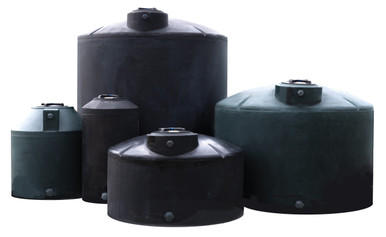
The tank shell is the easy part. The polyethylene that the tank manufacturers rotomold is well-characterized, well-tested, and consistent across the industry. The challenges in tank service concentrate at the fittings — the penetrations through the tank wall where the contained chemistry connects to the outside piping. The fitting choice determines the service life, the maintenance burden, the pressure handling, the chemistry compatibility, and the installation cost. The choice between bulkhead fitting, threaded fitting, flanged fitting, and polyethylene-welded fitting is engineered, not defaulted, and the right choice for one service is the wrong choice for another.
This article walks the fitting-type decision matrix for polyethylene bulk storage tanks across Norwesco, Snyder, Chem-Tainer, Enduraplas, and Bushman product lines. The structure follows the four common fitting types, the service drivers that select between them, the failure modes specific to each type, and the engineering decision matrix that takes a service description and produces the appropriate fitting selection. The references are the manufacturers' published fitting specifications, ASTM F1893 and F1668 for thermoplastic fittings, and operational data from over 1500 fitting installations across multi-decade service.
1. The Four Common Fitting Types
The four fitting types that connect to a polyethylene bulk storage tank:
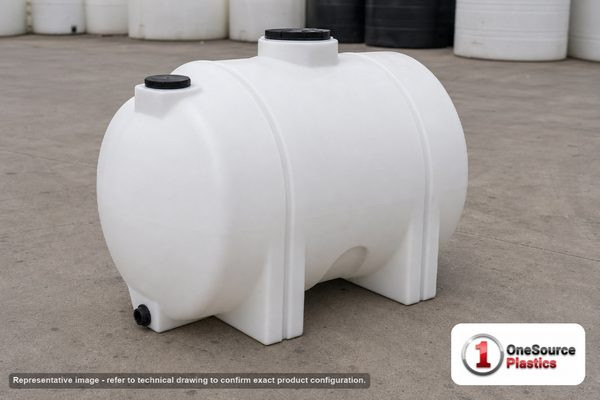
- Bulkhead fitting (also called PRA or Polyethylene Receptacle Adapter). A two-piece compression fitting with a flange on the inside of the tank, a flange on the outside, and a threaded center section that compresses an EPDM, Viton, or Teflon-encapsulated gasket against the tank wall. The wall is sandwiched between the two flanges. The fitting can be installed by drilling a hole through the tank wall and tightening the two halves; no welding or specialized equipment required. The most common fitting type for polyethylene tanks; suitable for most low-pressure liquid service.
- Threaded fitting (factory or field-installed). A threaded male or female pipe-thread connection molded into or installed into the tank wall. Factory-installed threaded fittings are part of the tank's original construction, with the threading either molded directly into the polyethylene or with a metal insert. Field-installed threaded fittings are bulkhead fittings with threaded outer connections or are PVC threaded fittings socket-fused into the tank wall. Suitable for low to moderate pressure service.
- Flanged fitting (ANSI Class 150 standard). A flat-faced or raised-face flange installed into the tank wall, mating to a bolted flange on the connecting pipe with a gasket between. Higher pressure capability than bulkhead or threaded, easier to disassemble for maintenance, but more expensive and requiring more wall thickness for proper installation. Suitable for higher-pressure service or for installations requiring frequent disassembly.
- Polyethylene-welded fitting. A polyethylene fitting fusion-welded to the tank wall (butt fusion, electrofusion, or socket fusion). The weld creates a seamless polyethylene-to-polyethylene connection with no gasket or mechanical joint to fail. Highest reliability and longest service life when properly executed; but requires specialized welding equipment, requires field welding skill, and is permanent (cannot be disassembled without cutting). Suitable for permanent installations where chemistry, pressure, or service-life requirements justify the welding cost.
The four types span the cost-reliability-flexibility spectrum. Bulkhead is the workhorse low-cost choice. Threaded is similar but with different installation. Flanged is higher-cost-higher-capability. Welded is highest-reliability for permanent service. The selection matches the service requirements to the fitting capability.
2. Pressure Service Driver
The pressure capability of each fitting type:
- Bulkhead fitting pressure rating. Typical 50-100 psi at the fitting itself, but limited by the tank wall pressure rating. Polyethylene bulk storage tanks are designed for atmospheric or low-positive-pressure service (typically 0-5 psi at the tank top during use). The bulkhead fitting capability exceeds the tank capability for most service; the limiting factor is the tank, not the fitting.
- Threaded fitting pressure rating. Similar to bulkhead at 50-100 psi for the fitting itself. The pipe-thread sealing depends on the thread engagement length, the thread quality, and the sealing method (Teflon tape, pipe dope). A properly-executed pipe-thread connection in clean service holds its rating for years; a poorly-executed connection leaks at first pressurization.
- Flanged fitting pressure rating. ANSI Class 150 flanges rated to 150 psi at standard temperature. Higher classes (300, 600) available for higher pressure service. The flange capability exceeds typical polyethylene bulk-tank pressures by a wide margin; the flange is appropriate when the connecting pipe pressure rating is high (e.g., a discharge pipe pressurized by a pump) or when the disassembly capability is the driver.
- Welded fitting pressure rating. The weld matches the polyethylene wall capability. A properly-welded polyethylene connection is essentially as strong as the surrounding wall. The pressure capability is the tank wall capability at the fitting location.
For typical atmospheric polyethylene bulk-storage service (0-5 psi tank operating pressure), all four fitting types have adequate pressure rating. The pressure driver selects the fitting only at higher-pressure service: pump discharge piping at 50-100 psi, pneumatic conveying systems at 30-50 psi, or specialty processes at unusual pressure conditions.
3. Chemistry Service Driver
The chemistry compatibility of each fitting type:
- Bulkhead fitting chemistry. The fitting body is typically polypropylene or polyethylene; the gasket material varies (EPDM, Viton, Teflon-encapsulated). The chemistry compatibility depends on the gasket choice. EPDM compatible with most aqueous chemistry but not with hydrocarbons. Viton compatible with most hydrocarbons and many acids but not with strong bases. Teflon (PTFE) compatible with virtually all chemistry but more expensive and stiffer (less forgiving of misalignment). Selection of the right gasket for the chemistry is critical.
- Threaded fitting chemistry. Pipe-thread sealing uses Teflon tape or pipe dope; both have their own chemistry compatibility. Teflon tape is broadly compatible. Pipe dope chemistry varies by formulation. The sealing material has to be compatible with the contained chemistry; otherwise the seal degrades and the joint leaks.
- Flanged fitting chemistry. Similar to bulkhead in gasket-driven chemistry compatibility. The flange face material (polyethylene or polypropylene flange face) is broadly compatible; the gasket material is the limiting factor.
- Welded fitting chemistry. The weld is polyethylene-to-polyethylene, with the same chemistry compatibility as the tank wall. No gasket, no thread sealant, no compatibility-limited components. The fitting compatibility matches the tank shell compatibility.
For aggressive chemistry (strong acids, strong bases, oxidizers, hydrocarbons), the welded fitting eliminates the gasket-compatibility risk. For routine aqueous chemistry, the bulkhead fitting with appropriately-selected gasket is adequate at much lower cost. The chemistry driver selects the welded fitting when the gasket compatibility is uncertain or when the service-life impact of gasket replacement intervals is significant.
4. Maintenance and Service-Life Drivers
The maintenance burden of each fitting type:
- Bulkhead fitting maintenance. Periodic torque check (re-tighten as gasket relaxes), gasket replacement at 5-15 year intervals depending on chemistry and temperature, fitting body replacement on physical damage. The fitting can be replaced in-service with minimal downtime: drain to below the fitting, remove and replace the bulkhead, return to service. The maintenance is routine and well-understood.
- Threaded fitting maintenance. Periodic verification of joint integrity (visual leak inspection); thread sealant replacement on disassembly. Threaded joints in service for years can develop bound threads that resist disassembly; the maintenance often involves cutting and replacing rather than disassembling. The fitting body itself is durable but the joint integrity is sensitive to disturbance.
- Flanged fitting maintenance. Periodic torque check at the flange bolts, gasket replacement at intervals (similar to bulkhead), fitting and flange face inspection. The disassembly capability is the maintenance advantage: a flanged fitting can be opened for tank cleaning, inspection, or modification without affecting the surrounding piping.
- Welded fitting maintenance. Minimal during service; the weld either holds or fails. End-of-service maintenance involves cutting out the failed fitting and welding a new one in. The weld inspection (visual, plus ultrasonic at major service intervals) confirms continued integrity. The maintenance burden during service is the lowest of the four types; the end-of-service intervention is the highest because it requires welding equipment and skill.
For installations with frequent maintenance access requirements (tank cleaning between batches, periodic process modifications, instrumentation changes), the flanged fitting reduces the disassembly time and disruption. For permanent installations where the fitting is set once and run for decades, the welded fitting eliminates routine maintenance. The bulkhead fitting balances cost and maintenance for the typical installation.
5. Installation Cost and Skill Drivers
The installation considerations for each fitting type:
- Bulkhead fitting installation. Drill the tank wall to the manufacturer-specified hole size, install the fitting with proper gasket orientation, tighten to specified torque. No specialized equipment beyond standard hand tools. Most field installers can complete a bulkhead installation reliably in 15-30 minutes.
- Threaded fitting installation. Factory-installed: no field installation; the fitting is molded or installed at the manufacturer. Field-installed: similar to bulkhead with the addition of pipe thread connection. Standard plumbing skills required.
- Flanged fitting installation. Drill the tank wall, install the flanged fitting (often a flanged bulkhead variant), bolt the connecting flange with proper gasket and torque sequence. Slightly more complex than bulkhead due to bolt-pattern alignment, but still standard skills. 30-60 minutes per fitting.
- Welded fitting installation. Specialized equipment (electrofusion machine, butt-fusion machine, or socket-fusion tools) and trained welders. The weld parameters (temperature, time, pressure) are specific to the materials and joint type. Mistakes (cold weld, contamination, misalignment) produce weak joints that fail in service. The installation requires equipment that may not be available at every field site.
For installations that have to be completed in the field with general plumbing skills, the bulkhead, threaded, or flanged fittings are appropriate. For installations where polyethylene welding equipment and skill are available (typically larger contractor jobs or factory-built modular skids), the welded fitting becomes accessible at competitive cost.
6. The Service-Matched Decision Matrix
The combined-driver decision matrix for fitting selection:
- Routine aqueous service, atmospheric pressure, periodic maintenance access. Bulkhead fitting with EPDM gasket. Standard cost, standard installation, standard maintenance. The default choice for typical water and routine chemistry storage.
- Aggressive chemistry, atmospheric pressure, periodic maintenance access. Bulkhead fitting with Viton or Teflon-encapsulated gasket OR welded fitting depending on chemistry intensity and the gasket-replacement maintenance burden. For chemistry that destroys gaskets in 1-3 years, welded fitting is more economical despite higher install cost.
- Higher-pressure service, atmospheric tank pressure but pressurized discharge piping. Flanged fitting at the pressurized connection. The flange handles the pressure; the disassembly capability supports periodic maintenance.
- Frequent disassembly required (process modifications, instrumentation changes). Flanged fitting. The bolt-up disassembly is faster than removing-and-reinstalling a bulkhead.
- Permanent installation with no expected disassembly. Welded fitting if welding capability available; otherwise bulkhead with extended-life gasket. The welded fitting eliminates the gasket maintenance.
- Sample ports, drain valves, vent connections. Threaded or bulkhead fittings sized for the small-flow application. Lower-cost choice; service life adequate for the intermittent service.
- Large-bore connections, manways, large-volume transfer. Flanged or welded fitting at the larger sizes. Bulkhead options become physically constrained at very large diameters.
The matrix is the starting point; specific service may have additional drivers. The site engineer combines the matrix output with site-specific knowledge of the chemistry, the operational patterns, and the maintenance capability to produce the final fitting specification.
7. Tank Configuration and Available Fitting Options
The polyethylene tank product family across the 5 brands ships with multiple fitting configurations:
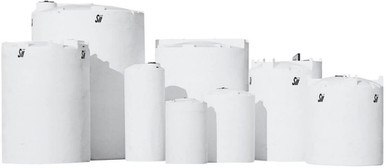
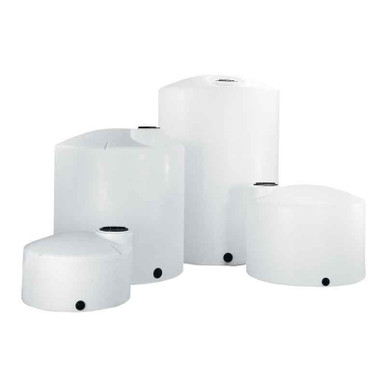
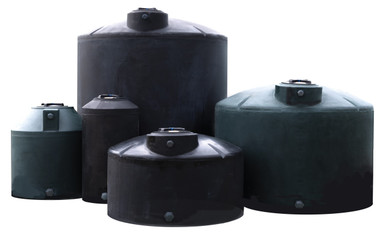
- Standard pre-fit tank with bulkhead fittings at common locations. Inlet at top, outlet at bottom, vent at top, possibly a manway at top. The standard configuration covers most water and routine-chemistry applications. Reference N-40164 5000 gallon Norwesco vertical and N-41524 2500 gallon Norwesco for the standard bulk envelope.
- Custom-fitted tank with site-specific fitting locations and types. Manufacturer can install fittings at customer-specified locations and types at additional cost. The customer specifies the fitting layout based on the site piping plan; the manufacturer pre-installs at the factory. Reduces field installation time and ensures consistent quality.
- Fitting-blanked tank with no factory fittings. The customer installs fittings in the field at the site-specific locations. Maximum flexibility but requires field installation labor and skill. Reference N-43128 10,000 gallon Norwesco vertical for the bulk-storage envelope where field-fitting flexibility may matter.
- Snyder Industries XLPE Captor double-wall with specialized fittings. The double-wall construction requires fittings that connect through both walls without compromising the secondary-containment integrity. Specialized welded or interstitial-monitoring-compatible fittings. Reference SII-1006600N42 10,000 gallon XLPE Captor.
- Cone-bottom tanks with bottom-discharge fittings. The bottom cone terminates at a fitting that handles discharge under gravity. Selection of the discharge fitting matches the chemistry and the discharge piping. Reference N-42064 15 gallon cone bottom.
The fitting decisions can be made at order (factory pre-fit) or in the field (post-delivery installation). The factory pre-fit reduces field labor and improves quality consistency at modest additional cost; the field installation provides flexibility at the cost of installer time and possible quality variation. List pricing on each product page; LTL freight to your ZIP via the freight estimator or by phone at 866-418-1777.
8. Common Fitting Failure Modes and Prevention
The fitting failure modes that produce service-life shortfalls:
- Gasket relaxation in bulkhead fittings. The gasket compresses over time and the original installation torque becomes inadequate. Prevention: scheduled torque verification annually; re-torque to specification.
- Thread sealant degradation in threaded fittings. The pipe-thread sealant degrades from chemistry exposure or thermal cycling; the joint develops slow leakage. Prevention: select chemistry-compatible sealant at installation; inspect for leakage signs at routine maintenance; re-do the joint if leakage develops.
- Flange bolt loosening. The flange bolts loosen from thermal cycling and gasket relaxation. Prevention: scheduled bolt torque verification; use of locknuts or thread-locking compound; gasket replacement at scheduled intervals before failure.
- Cold weld in polyethylene-welded fittings. A cold weld (insufficient heat or time during welding) produces a joint that looks fused but is weak. Prevention: trained welders, calibrated equipment, weld-parameter verification, and visual + non-destructive testing at acceptance.
- Tank wall thinning at fitting locations from chemistry attack. Some chemistry attacks polyethylene at the fitting penetration where stress concentration accelerates the degradation. Prevention: chemistry compatibility verification before service; ultrasonic thickness measurement at fitting locations during periodic inspection; fitting replacement and possibly tank shell repair if thinning detected.
Each failure mode has detection methods and prevention practices. The condition-based inspection program flags developing failures before they become operational disruptions; the preventive maintenance program addresses the routine wear before it produces leaks.
9. The Fitting Engineering Conclusion
The tank fitting selection is engineering work that matches the fitting type to the service requirements: pressure, chemistry, maintenance access, installation skill, and service-life expectations. No single fitting type is right for all services; the bulkhead fitting handles the routine workhorse service, the threaded fitting handles small-flow connections, the flanged fitting handles maintenance-access-driven service, and the welded fitting handles permanent installations where chemistry or service life justifies the welding investment. The decision matrix combines the drivers and produces the appropriate selection; the site-specific engineering refines based on local operations.
The fitting failure modes are well-understood and preventable through scheduled inspection and maintenance. The fittings degrade gradually; the maintenance program detects the degradation through routine torque checks, visual inspection, and chemistry-aware gasket replacement at appropriate intervals. The site that maintains the fittings achieves the manufacturer-published service life; the site that ignores the fittings until they leak achieves much shorter intervals and incurs the unplanned-leak operational and environmental consequences.
OneSource Plastics ships polyethylene tanks across 5 brands — Norwesco, Snyder, Chem-Tainer, Enduraplas, Bushman — with factory-pre-fit fittings or fitting-blanked options to match site-specific requirements. The fitting selection guidance above is the engineering framework; the specific fitting options for any tank model are documented in the manufacturer drawings and in the order-configuration options. List pricing on each product page; LTL freight to your ZIP via the freight estimator or by phone at 866-418-1777. For related operations engineering see secondary containment requirements and tank specification sheet reading.
Recommended Tanks for This Guide
Live pricing, updated automatically · estimate freight to your ZIP.