Tank Foundation Pad Engineering: Concrete vs Gravel vs Sand Compaction Decision Tree
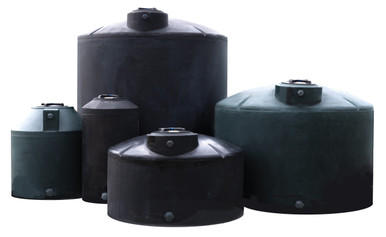
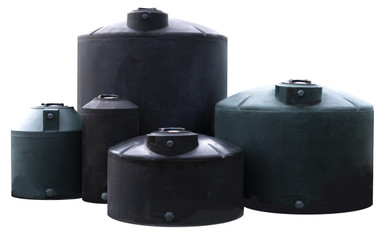
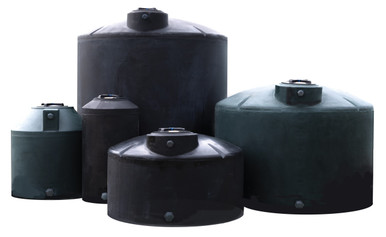
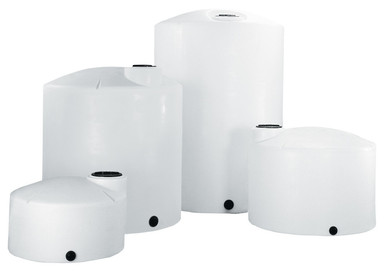
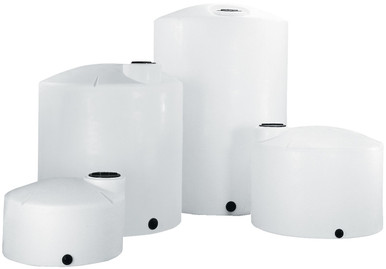
The foundation under a polyethylene tank is the most under-engineered component of most tank installations. Customers spend weeks comparing brands, agonize over fitting locations, calculate freight to the dollar, and then drop a 2,500 gallon tank weighing 21,000 pounds-full onto whatever happens to be available at the install location. The tank then either fails prematurely (warranty-voiding stress concentration), drifts out of plumb (causing fitting strain and lid seal failure), or becomes a frost-jacked liability that nobody wants to address until it cracks.
This guide is the engineering-grade decision tree that should run before any vertical, cone-bottom, or horizontal tank is set. We cover the four real foundation options: poured concrete pad, compacted gravel, compacted sand, and native-soil-only (which is almost never correct). For each, we cover when it is the right call, when it is wrong, the OEM specifications that govern the warranty, and the actual SKUs in our catalog whose installation depends on this decision.
Why Foundation Choice Determines Tank Service Life
Polyethylene is a stress-redistributing material under steady load. Sit a flat-bottom 2,500 gallon vertical tank on a perfectly flat surface and the tank wall and floor distribute the 21,000 pound full-water load uniformly across the footprint. Sit the same tank on a surface with a 3/4 inch high-spot near the center and the wall material redistributes around the high-spot in a way that creates a permanent stress concentration. Over years of fill-drain cycles plus thermal cycling plus UV-driven embrittlement (see our UV degradation curve post), that stress concentration becomes a stress crack and then a failure.
Norwesco, Snyder, Chem-Tainer, Enduraplas, and Bushman all publish nearly identical foundation requirements in their installation manuals: a level surface, capable of supporting the full-water load uniformly, free of point-load stress concentrators (rocks, debris, broken concrete), with the tank footprint extending at least 12 inches beyond the tank diameter on all sides. Failure to meet the foundation specification is one of the documented warranty-voiding installation conditions in every manufacturer's published installation manual.
The tank manufacturer's spec is the floor, not the ceiling. The actual engineering decision is which of the four foundation options is appropriate for your specific load, soil, climate, and budget.
Step 1: Calculate Your Load
The full-water load is straightforward: capacity in gallons times 8.34 pounds per gallon (water at 60F) for water service, or capacity times 8.34 times specific gravity for chemistry service. The wetted footprint of the tank is the floor area in contact with the foundation, typically pi times radius squared for flat-bottom verticals.
The number that matters is pounds per square foot (PSF). That's what you compare against the foundation's bearing capacity. A few representative cases from our catalog:
| Tank | Capacity | Diameter | Full Load | Footprint | PSF |
|---|---|---|---|---|---|
| N-43092 (Norwesco) | 3,000 gal | 95″ | 25,020 lb | 49.2 ft² | 509 |
| N-45246 (Norwesco) | 3,000 gal | 102″ | 25,020 lb | 56.7 ft² | 441 |
| SII-1012700N42 (Snyder) | 100 gal | 30″ | 834 lb | 4.9 ft² | 170 |
| N-43852 (Norwesco cone-bottom) | 1,000 gal | 72″ | 8,340 lb | 28.3 ft² (stand) | 295 |
A 3,000 gallon vertical at full water is roughly 500 PSF on the foundation. That number comfortably exceeds the bearing capacity of most uncompacted topsoil but sits well within the capacity of any properly compacted granular base or concrete pad. The decision tree that follows assumes you've calculated the actual PSF for your specific tank.
Option 1: Poured Concrete Pad
When it is correct: permanent installations, tank capacity above 2,500 gallons, freeze-prone climates with frost line below 36 inches, code-required commercial or industrial installations, any installation where the tank serves life-safety function (fire reserve, potable water primary).
Specification: minimum 4 inches reinforced concrete (most installs spec 6 inches for tanks above 2,500 gallons), 3,000 PSI minimum compressive strength, #4 rebar at 12 inches on center each way, foundation extends a minimum 12 inches beyond tank footprint on all sides, surface trowel-finished smooth (no float texture, no broom finish), level to within 1/8 inch over the entire tank footprint.
Cost: typical contractor pricing in 2026 runs $8 to $14 per square foot for a residential pad and $14 to $22 per square foot for a commercial-grade pad with engineered drawings. A 10x10 pad for a 3,000 gallon vertical at the upper commercial rate runs roughly $1,400 to $2,200 plus excavation and form work.
Frost considerations: in climates where the frost line is below grade (most of the northern US, Canada, mountain west), the concrete pad should be tied to a footing extending below the frost line, OR set on a layer of insulation board (typically 2 inches XPS rated for ground contact) and a 12-inch compacted gravel sub-base. Pads built without frost protection in freeze-prone soil will heave, crack, and tilt the tank within 5 to 10 winters.
Common mistakes:
- Broom finish on the surface. Brooming the wet concrete creates micro-grooves that concentrate point loads under the tank floor. Always trowel finish.
- Insufficient cure time before tank set. Concrete reaches 70% of its rated strength at 7 days and full strength at 28 days. Setting a full tank on a 3-day-old pad is a common cause of pad cracking. Wait 14 days minimum before fill.
- Skipping the rebar. Plain concrete cracks under thermal stress regardless of load. Rebar holds the cracked sections aligned and prevents differential settlement.
- No expansion joint between pad and adjacent slab. The tank pad and any adjacent driveway, walkway, or building foundation must be isolated by a flexible expansion joint. Otherwise differential settlement will telegraph into pad cracking.
Option 2: Compacted Gravel
When it is correct: tanks 100 to 2,500 gallons, agricultural and rural installations, water-storage applications where the tank is occasionally relocated, situations where local building code does not require concrete (most agricultural and most non-commercial installations), well-drained soils.
Specification: minimum 6 inches of well-graded crushed stone (typical specifications are 3/4-inch-minus or "ASTM D2940 Class 2 base course" or local DOT crushed-aggregate base), compacted to 95% modified Proctor density (ASTM D1557), surface graded level to within 1/4 inch over the tank footprint, footprint extending 12 inches beyond tank diameter on all sides, contained by a perimeter berm or edging to prevent erosion of the gravel pad.
Cost: 6 inches of compacted 3/4-inch base for a 10x10 footprint takes roughly 2 cubic yards of material. Delivered crushed stone runs $40 to $80 per cubic yard depending on region. Contractor labor with a plate compactor or vibratory roller adds $200 to $500. Total typical cost $300 to $700, often half or less than the concrete option.
Why gravel is often correct: a properly compacted gravel pad provides adequate bearing capacity (typically 2,000+ PSF), drains rapidly (no frost-jacking from trapped subsurface water), and self-corrects minor settling because the granular medium redistributes around point loads. The Norwesco installation manual specifically lists "compacted granular base" as an acceptable foundation for vertical tanks up to the manufacturer's published capacity range.
Common mistakes:
- Using pea gravel or river rock. Rounded stone does not lock in place under compaction. Specify crushed stone with angular particles. Crushed limestone, crushed granite, or crushed traprock is correct. Pea gravel is not.
- Insufficient compaction. A wheelbarrow-and-shovel install with no plate compactor produces a gravel pad at 70 to 80% Proctor, which will continue settling for 6 to 18 months under load. Specify mechanical compaction.
- No perimeter containment. Loose gravel piled higher than the surrounding grade will erode laterally. Use treated lumber edging, paver-block edging, or excavate the pad below grade so the surrounding soil contains the gravel.
- Skipping the geotextile fabric in soft-soil applications. If your native soil is clay, silt, or organic, the gravel will sink into the soil over time. A non-woven geotextile fabric (typical specification: 6 oz/sq yd, ASTM D4632 grab strength 160 lb minimum) under the gravel separates the layers and prevents migration.
Option 3: Compacted Sand
When it is correct: below-grade or partially-buried tank installations (cisterns, septic tanks, some agricultural pits), installations where the tank shape is non-flat (cone-bottom tanks set into a sand cradle), corrosive-soil environments where gravel particles might damage the tank floor.
Specification: minimum 6 inches of clean, well-graded sand (ASTM C33 fine aggregate or local equivalent "concrete sand"), compacted to 95% standard Proctor (ASTM D698), shaped to match the tank bottom geometry. For flat-bottom tanks, sand is rarely the right choice above grade because it migrates under cyclic loading. For below-grade or buried applications, sand is the standard cradle material because it redistributes around the curved tank surface without point-loading.
Use case 1: cone-bottom tank in a sand cradle. A cone-bottom tank without a steel or polyethylene stand can be set into a 12-to-18-inch deep sand cradle shaped to match the cone angle. The sand fully supports the curved cone surface, eliminating the point-load stress on the cone tip. This is uncommon for above-grade installs (steel stands are easier and more reliable) but it shows up in agricultural pit installations.
Use case 2: buried potable water cistern bedding. Buried polyethylene cisterns rated for below-grade service (Norwesco's NSF-61 cistern line, for example) require sand bedding under the tank and sand backfill against the side walls. The sand prevents rock damage to the tank wall and distributes external soil load uniformly. See our companion post on below-grade tank storage for the full bedding specification.
Common mistakes:
- Using sand under an above-grade flat-bottom tank. Sand migrates under cyclic load. The tank will settle, tilt, and develop edge-of-footprint stress concentrations within a year. Use compacted gravel for above-grade flat-bottom tanks.
- Using mason sand or play sand instead of concrete sand. The fine particles in mason sand do not interlock under compaction. Specify ASTM C33 concrete sand.
- Not contouring the cradle to the tank shape. A sand cradle for a cone-bottom tank must be shaped to the cone angle (15 degrees, 30 degrees, or 45 degrees, see our cone selection guide). A flat sand bed under a 45-degree cone will leave the cone tip unsupported and concentrate load on the cone-to-cylinder transition.
Option 4: Native Soil Only (Almost Always Wrong)
Setting a tank directly on native soil is correct in exactly one scenario: temporary installations of small tanks (less than 500 gallons) on dense, well-drained native soil with bearing capacity exceeding 2,000 PSF, with no freeze-thaw cycle, with the install lasting less than 12 months. Anything else, the native soil will deform or migrate and the tank will settle non-uniformly.
Why native soil rarely works:
- Bearing capacity variability. Most undisturbed native soils are 1,000 to 2,000 PSF. A 3,000 gallon vertical at 500 PSF is within the capacity, but the variability across the footprint (one corner over a buried root, another over a buried rock, another over loose backfill from previous excavation) creates differential settlement.
- Frost heave. Any frost-susceptible soil (silt, fine sand, clay-with-water-table) will heave 1 to 6 inches per winter cycle. Tanks tilt and crack.
- Vegetation regrowth. Roots find moisture under tanks. Within 2 to 5 years, root pressure can lift one corner of the tank by 2 to 4 inches.
- Insect and rodent burrowing. Ants, termites, voles, and groundhogs all dig under tanks. The void grows, the tank tilts, the seal fails.
If your install is permanent, do not skip the foundation pad. The "I'll just set it on the dirt" approach is the leading installation cause of premature tank failure outside chemical incompatibility.
Decision Tree by Tank Size and Application
| Scenario | Foundation | Why |
|---|---|---|
| Less than 500 gal, agricultural, mild climate | Compacted gravel, 6″ | Cost-effective, adequate capacity, drains well |
| 500 to 2,500 gal, residential or rural commercial | Compacted gravel, 6 to 8″ | Standard manufacturer-approved foundation |
| 2,500 to 5,000 gal, commercial | Concrete pad 4″ or compacted gravel 8″ | Code may require concrete; gravel still permitted by OEM |
| 5,000 gal+, commercial or industrial | Reinforced concrete 6″, frost-protected | Load and code generally require engineered foundation |
| Cone-bottom on poly stand, any size | Concrete pad sized to stand footprint | Stand legs concentrate load, concrete required |
| Cone-bottom on steel frame, any size | Concrete pad with embedded anchor bolts | Frame requires anchorage to a rigid foundation |
| Buried cistern | Compacted sand bedding, 12″ | Sand cradles the curved bottom and prevents rock damage |
| Hurricane-prone coastal | Concrete pad with anchor bolts, frost depth or 36″ minimum | Tie-down anchorage requires rigid foundation (see hurricane post) |
Frost Depth Reference Table (US)
Foundations in freeze-prone climates must extend below the local frost line, OR be insulated to prevent frost penetration, OR rest on a sufficiently deep granular sub-base that frost does not heave the foundation. Approximate frost depths by region (verify against your local building code, which is the authoritative source):
| Region | Approximate Frost Depth | Foundation Implication |
|---|---|---|
| coastal, southern Florida | 0″ (no frost) | No frost protection required |
| Texas Hill Country, central FL | 0 to 6″ | Standard foundation depth adequate |
| Mid-Atlantic, mid-South | 12 to 24″ | Footings to 24″ or insulated slab |
| Ohio Valley, lower Midwest | 30 to 36″ | Footings to 36″ or engineered frost-protected slab |
| Upper Midwest, Northeast | 42 to 48″ | Footings to 48″, engineered slab, or skid foundation |
| Northern Plains, mountain west | 48 to 60″ | Engineered foundation required |
| Alaska, far northern Canada | 60 to 100″ | Permafrost-aware engineered foundation required |
The IRC (International Residential Code) Table R301.2(1) and your local jurisdiction's adopted frost depth are the authoritative reference. Always confirm before excavation.
Specific OEM Foundation Requirements
Norwesco
From the Norwesco Storage Tank Installation and Maintenance Manual: "The location upon which the tank is set must be smooth, level, and capable of supporting the tank when filled with the appropriate liquid. Any rock, debris, or other material that could potentially harm the tank is to be removed before placement of the tank... A minimum of 12 inches of clearance around the tank is recommended for service and maintenance access." Concrete, asphalt, and compacted granular base are all listed as acceptable. Direct placement on grass, dirt, or non-compacted soil is specifically disallowed.
Snyder Industries
Snyder's installation specification requires a smooth, level surface free of sharp objects with bearing capacity exceeding the full-tank PSF load. Snyder explicitly recommends concrete for tanks above 3,000 gallons and notes that compacted gravel pads must be contained to prevent erosion at the perimeter.
Chem-Tainer
Chem-Tainer's installation manual mirrors Norwesco's requirements and adds specific guidance for chemical-service tanks: the foundation must be chemically inert to the stored material in case of leak (concrete pads should be sealed against acid attack for acid-service tanks; gravel should be selected against the chemistry, e.g., limestone gravel will dissolve under acid leak conditions and silica-based crushed granite is preferred).
Enduraplas
Enduraplas requires a level, structurally adequate base with explicit prohibition of installation on un-compacted soil. Enduraplas vertical tanks are commonly installed on compacted gravel for agricultural water storage and concrete for industrial service.
Bushman
Bushman tanks (predominantly cisterns and rainwater storage) follow the same general requirements with specific guidance for buried installations: 6 inches of compacted sand bedding under the tank, sand or pea-gravel backfill around the tank to grade, no rocks within 6 inches of the tank wall.
What to Verify Before Foundation Construction
- Local building code requirements. Many jurisdictions require permits for permanent above-ground tanks above a threshold capacity (commonly 1,000 or 2,500 gallons). The permit drives the foundation specification.
- Soil bearing capacity at the install location. A geotechnical investigation is overkill for a residential 1,000 gallon tank but mandatory for industrial tanks above 5,000 gallons. For mid-size installs, use the bearing-capacity table in the IBC for the local soil class.
- Frost depth. Your local building department publishes the frost depth for your jurisdiction.
- Drainage. The foundation must shed water away from the tank. A foundation that ponds water against the tank wall will accelerate UV-driven embrittlement at the waterline (see our UV degradation analysis) and creates a freeze-thaw cycle that damages the foundation itself.
- Anchor requirements. Hurricane-prone, high-wind, and seismically active regions require anchoring the tank to the foundation. The foundation must be designed to accept the anchorage hardware (embedded bolts in concrete; ground-anchor cables for gravel installs).
Internal Resources
- Water Storage Tanks Catalog — full catalog with PSF and dimensional data per SKU
- Cone Bottom Tanks Catalog — cone-bottom tanks requiring stand-and-pad foundation
- Cone Bottom Tank Stand Selection — companion post on stand-to-foundation interface
- Below-Grade Tank Storage Engineering — sand bedding for buried tanks
- Hurricane Tie-Down Engineering — foundation anchor specs for high-wind zones
- Freight Cost Estimator — LTL quote to your install ZIP
How to Order
The SKUs referenced in the load-calculation table are live in our catalog. Click into the product page from the water storage or cone-bottom categories. For specification assistance on the foundation requirement for your specific tank, call us at 866-418-1777 or use the contact form. We'll send the OEM installation manual for your specific MPN.
Source Citations
- Norwesco Storage Tank Installation and Maintenance Manual (current production)
- Snyder Industries Polyethylene Tank Installation Specification
- Chem-Tainer Industries Tank Installation Manual
- ASTM D1557 — Standard Test Methods for Laboratory Compaction Characteristics of Soil Using Modified Effort
- ASTM D698 — Standard Test Methods for Laboratory Compaction Characteristics of Soil Using Standard Effort
- ASTM C33 — Standard Specification for Concrete Aggregates
- ASTM D2940 — Standard Specification for Graded Aggregate Material for Bases or Subbases
- ASTM D4632 — Standard Test Method for Grab Breaking Load of Geotextiles
- International Residential Code Table R301.2(1) — Climatic and Geographic Design Criteria
- OneSource Plastics master catalog data, 2026-03-26 snapshot
Recommended Tanks for This Guide
Live pricing, updated automatically · estimate freight to your ZIP.