Tank Gauge Calibration for Inventory Reconciliation: Adapting the 40 CFR 280.43 UST Monthly Accountability Discipline to Above-Ground Polyethylene Tanks for Loss-Detection, Theft Prevention, and Audit-Defensible Throughput Records
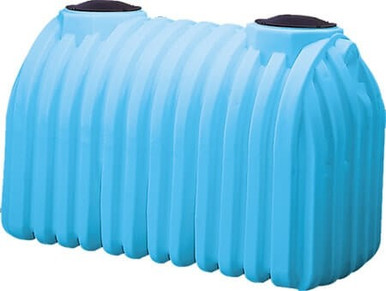
Underground storage tank operators have lived under 40 CFR 280.43 monthly inventory reconciliation for thirty years. The discipline is unglamorous: every operating day, record what came in, record what went out, measure what is left, reconcile the three numbers against each other, and at month-end produce a signed statement that the system is not leaking faster than the regulatory threshold of one percent of flow-through plus 130 gallons over a 30-day window. The discipline is also one of the most effective leak-detection methods ever deployed on petroleum infrastructure, and it costs almost nothing to operate once the gauging hardware is calibrated and the spreadsheet is built. Above-ground polyethylene tank operators are not legally required to follow the UST discipline. Many of them should adopt it anyway, because the same procedure detects pump-loss, employee theft, gauge drift, and slow-leak failure modes that no other monitoring catches at the same cost. This guide walks the calibration and reconciliation procedure adapted for AST polyethylene service.
Reference rules cited: 40 CFR 280.43(a) inventory control method for petroleum UST; 40 CFR 280.43(i) statistical inventory reconciliation; API MPMS Chapter 3 manual gauging; API MPMS Chapter 4 tank prover calibration; ASTM D4057 manual sampling of petroleum and petroleum products; NIST Handbook 44 specifications for weighing and measuring devices. The numerical thresholds quoted below come from 40 CFR 280.43(a) and 40 CFR 280.43(i) and apply by regulation only to UST; the same numerical thresholds make engineering sense as voluntary targets for AST operators who want comparable loss-detection sensitivity.
1. Why AST Operators Should Care About a UST Rule
The argument for voluntary adoption of UST-style reconciliation on above-ground tanks is straightforward. A 1,500-gallon vertical polyethylene tank holding diesel for fleet refueling has the same theft and leakage exposure as a 1,500-gallon UST under a fueling island. The above-ground tank may be slightly easier to visually inspect for wall failure, but the daily throughput and the human-error attack surface are identical: drivers misreport pump tickets, attendants pocket cash for off-the-books fills, the meter on the dispenser drifts out of calibration, and the slow-leak failure mode at a fitting goes undetected until the surrounding soil is contaminated. The UST monthly reconciliation discipline catches all four failure modes within 30 days. No other commonly-deployed AST practice does.
The economic argument is cleaner. A typical fleet diesel tank dispenses 30,000-60,000 gallons per year. At a list price of three dollars per gallon, that is 90,000-180,000 dollars in annual product flow. A one-percent unaccounted loss is 900-1,800 dollars per year, which is a small number relative to the tank purchase but a large number relative to the cost of the gauge calibration and reconciliation procedure that detects it. Reconciliation discipline pays for itself within the first year on most fleet tanks, and within the first month on a tank that turns out to have a slow-leak fitting or a metering pump drift.
The audit-defensibility argument matters for regulated facilities. SPCC plans under 40 CFR 112 do not require monthly reconciliation, but they do require monthly inspections under 40 CFR 112.8(c)(6) that include tank integrity verification. A signed monthly reconciliation log is the cleanest documentary evidence that the tank is not leaking, and it protects the facility owner under a Phase I environmental site assessment review during property transactions.
2. The 40 CFR 280.43 Detection Thresholds
The UST inventory control method under 40 CFR 280.43(a) detects a release of at least 1.0 percent of flow-through plus 130 gallons on a monthly basis. The statistical inventory reconciliation method under 40 CFR 280.43(i) detects a leak rate of 0.2 gallon per hour or a release of 150 gallons within 30 days. Both thresholds are achievable with manual stick gauging if the gauging procedure is disciplined; both are achievable more easily with electronic level instrumentation provided the instrument is properly calibrated.
The math behind the 1-percent-plus-130-gallons threshold is worth understanding. The 1 percent term scales with throughput: a tank dispensing 30,000 gallons per year detects a leak as small as 300 gallons per year (annualized), or 25 gallons per month, or about 0.83 gallons per day. The 130-gallon constant covers measurement error: stick-gauge error at the 1/8-inch resolution required by 40 CFR 280.43(a)(2) on a 64-inch-diameter horizontal cylinder is approximately 7-12 gallons per measurement; over 30 daily measurements that compounds to a few hundred gallons of measurement noise that the 130-gallon constant absorbs. The threshold is calibrated to be the smallest leak that exceeds plausible measurement error, not the smallest possible leak.
For AST operators applying this voluntarily, the practical implication is that monthly reconciliation will detect a 25-50 gallon-per-month loss reliably; smaller losses are inside the measurement noise floor and require statistical inventory reconciliation software to detect. Most off-the-shelf SIR software for UST is licensable for AST use and runs about 200-400 dollars per tank per year.
3. Gauge Hardware Selection for Reconciliation Service
The gauge hardware determines the achievable reconciliation accuracy. Three categories work for polyethylene AST:
- Manual stick gauging: a graduated dipstick lowered through a fill or gauge port. 40 CFR 280.43(a)(2) requires accuracy to the nearest 1/8 inch over the full tank height. For polyethylene tanks, a fiberglass or stainless stick with chemical-compatible gauge paste is standard. Stick gauging is cheap (under 100 dollars in hardware), accurate when done correctly, and dependent on operator discipline. It also requires opening the tank daily, which is operationally intrusive.
- Hydrostatic pressure transmitter at the bottom: a 4-20 mA pressure sensor mounted on a bottom or low-side bulkhead reading hydrostatic head and converting to liquid level. Accuracy is typically plus-or-minus 0.25 percent of full scale, which translates to plus-or-minus 0.5 inches on a 200-inch-tall tank or plus-or-minus 4 gallons on a 1,500-gallon vertical at full scale. Calibration drift is the main failure mode; quarterly recalibration against a stick-gauge reference is required.
- Radar level gauge from the dome: non-contact microwave radar reading the liquid surface from a top fitting. Accuracy is typically plus-or-minus 0.1 percent of full scale, which is the gold standard for plastic-tank service. Calibration is stable for years; the failure mode is dome obstruction (foam, condensation, tank-wall echo) rather than drift. Capital cost is 1,500-3,000 dollars per gauge installed.
For tanks dispensing under 10,000 gallons per year, manual stick gauging plus a calibrated dispenser meter is adequate and cheapest. For tanks dispensing 10,000-100,000 gallons per year, hydrostatic transmitter plus calibrated meter is the practical middle ground. For tanks dispensing over 100,000 gallons per year or holding high-value chemistry where reconciliation discipline directly protects margin, radar gauge is the right answer regardless of capital cost.
4. Tank Strapping and the Volume-vs-Height Curve
Every tank reconciliation procedure depends on a calibrated volume-vs-height curve - the strapping table that converts a stick reading or radar reading into gallons. Polyethylene tanks present three challenges that steel UST do not:
First, polyethylene wall thickness varies with rotational mold cycle. Two tanks of the same SKU produced six months apart can have wall thicknesses that differ by 5-10 percent, which translates to volume differences of 1-2 percent. The factory calibration table from the manufacturer is generic; the field calibration on the specific tank is what matters for reconciliation.
Second, polyethylene tanks deflect under load. A vertical tank filled to 90 percent capacity bulges at the lower third by approximately 0.5-1 percent of the diameter, which translates to a 1.5-3 percent volume increase at the deflected zone relative to the unloaded geometry. The strapping curve at half-full is not linear with the strapping curve at full.
Third, dome and floor geometry on rotational-molded tanks deviates from the engineering drawing by approximately plus-or-minus 0.5 inches at the apex. This affects the top 5 percent and bottom 5 percent of the strapping curve, which is exactly the range where small changes have outsized volume implications.
The mitigation is field strapping by water fill. Pump a known volume of water (metered through a calibrated flow meter accurate to plus-or-minus 0.5 percent) into the empty tank, record the gauge reading at each 100-gallon increment, and build a tank-specific strapping table. Field-strapped accuracy is typically plus-or-minus 0.3 percent of full volume, compared to plus-or-minus 1.5-3 percent for the factory generic table. Field strapping costs 2-4 hours of labor and the flow meter rental fee, and pays for itself the first time a reconciliation discrepancy needs to be defended.
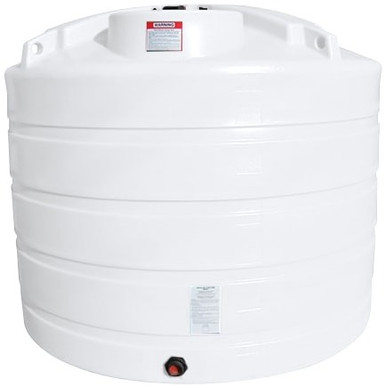
The Snyder SII-5490000N42 1,550 gallon double-wall is a candidate SKU for reconciliation-service deployment because the double-wall geometry adds a second-tier integrity check beyond gauge reconciliation. The Norwesco N-40146 1,500 gallon vertical and the N-40164 5,000 gallon vertical are also common reconciliation-service tanks for fleet diesel applications. All three should be field-strapped before placing in inventory-controlled service.
5. The Daily Reconciliation Procedure
The daily procedure that 40 CFR 280.43(a) requires for UST and that adapts directly to AST:
- Opening reading at start of operating day. Stick-gauge or read the level transmitter before any dispensing. Record date, time, and reading. Consistency on time-of-day is important because thermal expansion changes liquid volume by approximately 0.05 percent per degree F for diesel and similar petroleum products.
- Receipt logging during the day. Every product receipt (delivery from supply truck) is logged with delivery ticket number, supplier, gross gallons per ticket, and tank-level reading before and after the delivery. The before-after delta is the actual delivered volume; the ticket gallons is the supplier-claimed volume; the difference is the supplier reconciliation that catches under-deliveries.
- Dispense logging during the day. Every dispense event records the dispenser meter totalizer before and after, the recipient (vehicle ID, employee ID, or customer account), and the corresponding sales record. The dispenser meter must be calibrated to NIST Handbook 44 standards (typically 6 cubic inches per 5 gallons accuracy, which is 0.5 percent).
- Closing reading at end of operating day. Stick-gauge or read the level transmitter after the last dispense event. Calculate the reconciliation: opening reading + receipts - dispenses = expected closing reading. Compare to actual closing reading. Document the variance.
- Daily variance log entry. Variance over plus-or-minus 1 percent of daily throughput plus 5 gallons triggers an investigation log entry. Variance over plus-or-minus 5 percent triggers an immediate stop-flow until the discrepancy is resolved.
The daily procedure takes approximately 5 minutes per tank when the gauging hardware is electronic and the receipts/dispenses are auto-logged from a dispenser controller. With manual stick gauging and paper receipts, expect 15-20 minutes per day. The procedure is more efficient when the records flow into a reconciliation spreadsheet that auto-calculates the variance; off-the-shelf templates from API MPMS Chapter 3 are available.
6. Monthly Reconciliation and Statistical Analysis
The 30-day reconciliation summary that closes the month:
- Cumulative throughput: sum of all receipts (or sum of all dispenses, which should match within the variance band).
- Cumulative variance: sum of daily variances, with sign preserved (positive = unaccounted gain, negative = unaccounted loss).
- Variance as percent of throughput: cumulative variance divided by cumulative throughput, expressed as percent.
- Threshold check: compare variance percent and absolute value to the 1.0 percent + 130 gallons threshold. If exceeded, investigation required.
- Trend analysis: compare current month variance to prior 6 months. A trend toward increasing negative variance is the signature of a slow-developing leak; a trend of stable variance with sudden one-month excursion is the signature of a discrete event (theft, gauge calibration drift, or fitting failure).
The signed monthly reconciliation log is the audit deliverable. It should include: tank ID, period, opening volume, closing volume, total receipts, total dispenses, calculated variance in gallons and percent, threshold determination, gauge calibration verification statement, dispenser meter calibration verification statement, and signature of the responsible operator. File the log for 5 years minimum (the UST recordkeeping requirement under 40 CFR 280.45).
7. Calibration Verification Cadence
The gauging system needs periodic calibration verification to remain trustworthy:
- Daily zero-check on the dispenser meter: dispense a known volume (typically a 5-gallon test container) and verify the meter reading matches within 6 cubic inches. NIST Handbook 44 requires this monthly minimum, but daily during active service is best practice for high-throughput tanks.
- Weekly stick-gauge cross-check on electronic level instrumentation: compare the radar or hydrostatic reading to a manual stick-gauge reading. Variance over 0.5 inches indicates calibration drift; recalibrate the electronic instrument.
- Quarterly water-draw test on diesel tanks: stick-gauge with water-finding paste detects bottom water that displaces fuel volume and creates an apparent loss. Water present over 1 inch should be drained.
- Annual full meter calibration to NIST Handbook 44: certified calibration by a state weights-and-measures inspector or third-party meter calibration service. Required for retail fueling operations; voluntary but recommended for fleet operations.
- Annual full tank strapping verification: compare current strapping table to original field strapping. Variance over 1 percent indicates wall deformation, which on polyethylene is usually associated with prolonged over-temperature service or chemistry change. Investigate.
8. Investigation Triggers and Failure-Mode Diagnosis
When a daily or monthly variance exceeds the threshold, the investigation flowchart:
Step 1: Verify gauge calibration. Cross-check stick gauge against electronic instrument. Cross-check dispenser meter against test container. Apparent variance is often gauge drift, not actual loss.
Step 2: Verify dispense records. Reconcile dispense logs against fuel-card records, vehicle fueling logs, or driver mileage logs. Apparent variance is often missing dispense logs (driver dispensed but did not record), not actual loss.
Step 3: Verify receipt records. Reconcile delivery tickets against supplier invoices and tank-level deltas before and after delivery. Apparent variance is often supplier under-delivery, which is a chargeback against the supplier rather than a tank issue.
Step 4: Verify environmental conditions. Thermal expansion explains plus-or-minus 0.5 percent of inventory swings on petroleum products in tanks subject to 30+ degree F daily temperature swings. The variance band must be expanded for tanks in unconditioned spaces.
Step 5: Suspect actual loss. Only after steps 1-4 are exhausted. Visual inspection of all fittings, secondary containment, and surrounding soil. Pressure testing of bulkhead fittings. Acoustic emission testing on the tank wall if integrity is suspect.
The 5-step flowchart routinely identifies the variance source within the first 3 steps. Actual tank failure is rare; gauge drift, missing records, and supplier under-delivery account for the bulk of variance investigations. The discipline of running the investigation captures the dollar value of those operational issues which is otherwise lost in the noise.
9. Brand-by-Brand Notes for Reconciliation-Service Configuration
- Norwesco vertical tanks for fleet diesel: standard 2-inch top fittings accept manual stick gauging with chemical-compatible paste. Hydrostatic transmitter installation requires a 1-inch bottom port specified at order. Reference: N-40635 3,000 gallon for fleet diesel; N-40164 5,000 gallon for high-throughput fueling.
- Snyder Captor double-wall: integrated dome ports support radar gauging out of the box; double-wall annulus monitoring provides independent leak detection that complements reconciliation. Reference: SII-5490000N42 1,550 gallon.
- Snyder waste oil tanks: double-wall waste oil SKUs are common reconciliation-service candidates because waste oil theft is a documented industry issue. Reference: SII-5740102N95703 275 gallon double-wall waste oil.
- Enduraplas vertical tanks: dome configurations support radar gauging on the larger SKUs. Confirm port locations at quote. Reference: EP-THV02500FG 2,500 gallon.
- Chem-Tainer and Bushman vertical tanks: standard configurations accept manual stick gauging; specify dome and bottom ports for electronic instrumentation at order entry.
OneSource Plastics quotes complete inventory-control packages that include tank, calibrated meter, level transmitter, mounting hardware, and field-strapping service. List pricing on a 1,500-gallon Norwesco vertical with reconciliation-ready instrumentation runs $3,200 and up depending on instrumentation level. LTL freight to your ZIP is quoted via the freight estimator or by phone at 866-418-1777.
For complementary reading on related operational disciplines, see our tank level gauge selection guide for instrumentation deeper-dive, and our tank inspection SOP for the supporting visual-inspection cadence that complements reconciliation discipline.
Recommended Tanks for This Guide
Live pricing, updated automatically · estimate freight to your ZIP.