Tank Lock-Out Tag-Out (LOTO) Procedures: 5-Step Process for Confined-Space Entry
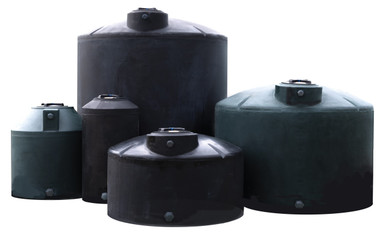
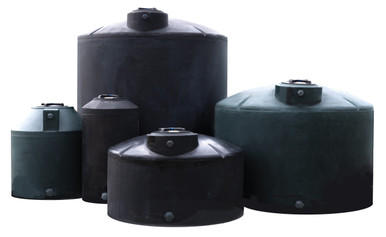
Lock-Out Tag-Out (LOTO) is the single most important safety procedure on any industrial tank. The procedure is short — five steps — and the rule is absolute: every energy source feeding the tank is positively isolated, locked, tagged, and verified before any operator enters the tank or performs work on its piping. OSHA 29 CFR 1910.147 ("The Control of Hazardous Energy") is the binding federal standard; 29 CFR 1910.146 ("Permit-Required Confined Spaces") is the entry-side standard; ANSI Z244.1 ("Lockout / Tagout and Alternative Methods") and NFPA 326 ("Safeguarding of Tanks for Cleaning, Repair, or Construction") add the chemistry- and tank-specific layers. This pillar walks the 5-step LOTO process as it applies to Norwesco, Snyder, Bushman, Chem-Tainer, and Enduraplas tanks in actual industrial service.
OSHA cites LOTO violations at the top of its Top 10 Most Frequently Cited Standards every year. The reason is operational: nearly every facility has multi-energy-source equipment (electrical + pneumatic + hydraulic + thermal + chemical pressure), and the discipline to isolate every source on every entry is hard. Tanks specifically combine all five energy categories — pump electrical drive, pneumatic agitator drive, hydraulic actuator on remote-operated valves, thermal energy (steam coils or heat-trace), and stored chemical pressure (residual chemistry). Every category must be addressed in the LOTO procedure or the procedure is incomplete.
The Energy Source Inventory: What You're Locking Out
Step zero of any LOTO is identifying every energy source. For an industrial tank, the standard inventory is:
| Energy Class | Tank-Specific Source | Isolation Device | Verification |
|---|---|---|---|
| Electrical | Supply pump, agitator motor, level transmitter, heat-trace circuit | Disconnect switch / circuit breaker with hasp | Try-start / voltmeter at terminals |
| Mechanical / kinetic | Mixer / agitator rotating shaft | Mechanical block or pin | Manual rotation test |
| Pneumatic | Air-operated valve (AOV), pneumatic agitator, blowdown air | Air supply ball-valve with hasp; bleed downstream | Pressure gauge zero / actuate test |
| Hydraulic | Hydraulic-actuated valve, hydraulic agitator | Hydraulic shut-off ball-valve with hasp | Pressure gauge zero |
| Chemical / fluid pressure | Inlet supply pressure (could backfill from header) | Inlet ball-valve + drain (double block-and-bleed) | Pressure gauge zero on tank side |
| Thermal | Steam coil, heat-trace circuit | Steam ball-valve + condensate drain; electrical isolate trace | Temperature probe ambient |
| Gravity / hydrostatic | Tank fluid head pressure on outlet piping | Drain to atmospheric; depressurize tank | Bottom drain runs clear; tank vented |
| Stored / residual | Compressed air receiver, accumulator, chemistry vapor pressure | Manual relief / vent to atmospheric | Bleed valve runs / atmospheric-balance verified |
A typical tank may have 8-12 distinct energy sources to lock out. The LOTO procedure document at the facility should list each one, by tank, with the specific isolation device, lock location, and verification step.
The 5-Step LOTO Process (29 CFR 1910.147)
Step 1: Notify and Prepare
Per 1910.147(c)(9), the authorized employee notifies all affected employees that LOTO is about to begin and the equipment will be unavailable. The notification covers:
- Equipment identification (specific tank by tag and ID).
- Time the LOTO will begin and projected duration.
- Reason for LOTO (cleaning, inspection, repair, gasket replacement, etc.).
- Authorized employee name(s) — only authorized employees apply / remove locks.
- Affected employees who must clear the area or coordinate alternate operations.
Preparation includes pulling the written LOTO procedure for the specific tank, gathering tagout / lockout devices (locks, hasps, valve covers, breaker locks), confirming the work plan, and confirming personnel rescue plan if confined-space entry is involved.
Step 2: Shut Down Equipment
Normal shutdown sequence per the equipment's standard operating procedure. For a tank, this typically means:
- Stop incoming flow at the supply pump or upstream isolation valve.
- Close inlet block valve at the tank.
- Stop outgoing flow at the discharge pump or downstream block valve.
- Close outlet block valve at the tank.
- Stop agitator / mixer if running.
- Allow steam coil or heat-trace to cool to ambient (may require 1-4 hours depending on service).
This is normal shutdown — not yet locked. The equipment is in a "safe-to-isolate" state.
Step 3: Isolate the Energy Sources
Per 1910.147(c)(4), isolation means physically positioning each energy source so the equipment cannot energize. For each source on the inventory list:
- Electrical: open the disconnect switch or breaker. Disconnects must be in the off position; breakers must be tripped or open. Positive isolation, not just "turn off the switch at the panel." (Local switch is the wrong place for LOTO; the upstream disconnect or breaker is the correct location.)
- Pneumatic / hydraulic: close the supply ball valve. Open the downstream bleed to atmosphere. Verify the actuator is depressurized.
- Fluid / chemistry: close inlet and outlet block valves. For high-consequence chemistry, install double block-and-bleed configuration: two block valves with a bleed between them. The bleed verifies no leakage past the upstream block.
- Thermal: close steam supply, open condensate drain. Electrically isolate heat-trace circuit at the disconnect.
- Hydrostatic: drain the tank or relieve to non-pressure state. Pressurized tank with closed outlet still has stored energy; gravity drain or full vent first.
Step 4: Apply Locks and Tags
Per 1910.147(c)(5)(i), each isolation device must be locked in the safe position by the authorized employee. Each lock has the following:
- Individually-keyed lock: the only key is held by the authorized employee. Master-keyed systems are non-compliant for LOTO.
- Tag: identifies the authorized employee, date / time of lockout, equipment, and reason. Tag stays attached to the lock (1910.147(c)(5)(ii)(C)).
- Group lock-box (if multiple authorized employees): primary authorized employee places one lock per energy source on each isolation device, places the keys in a group lock-box, and each authorized employee places their personal lock on the box. No employee can remove their personal lock until the work is complete; the group keys come out only when the last employee removes the last lock.
Step 5: Verify Isolation
Per 1910.147(d)(6) — and this is the step most often skipped — the authorized employee verifies that the equipment is actually de-energized. Verification means physical confirmation, not assumed:
- Electrical: "try-start" the equipment from the local switch. The pump or motor should not run. Then verify zero voltage at terminals using a calibrated voltmeter (which is itself verified live-dead-live on a known live circuit before and after).
- Pneumatic / hydraulic: read pressure gauge — should be zero on the locked side. Actuate the actuator manually; should not move.
- Chemistry / fluid: open the bleed between the double block-and-bleed valves. No flow = upstream block is sealed. Tank-side pressure gauge must read atmospheric.
- Thermal: confirm temperature has dropped to safe contact (under 140F per ANSI Z358.1).
- Hydrostatic: confirm tank drained or fluid level below the work area.
Verification is documented on the LOTO permit / log. If verification fails (i.e., equipment still energized after lockout), STOP. Investigate the failure mode — wrong isolation device, leaking valve, or backfeed source. Correct and re-verify before proceeding.
Confined-Space Entry: After LOTO is Complete
Once LOTO is verified, confined-space entry per 1910.146 is a separate procedure with its own permit. Combined LOTO + confined-space entry is the standard for tank cleaning, internal inspection, and any work requiring an operator inside the tank.
The pre-entry sequence (1910.146(d))
- Atmospheric monitoring: oxygen 19.5-23.5%; flammables under 10% LEL; toxics under PEL. Use a calibrated 4-gas (or higher) monitor. Sample at top, middle, and bottom of the tank — vapor stratification is real.
- Ventilation: forced-air at minimum 4-6 air changes per hour through the manway. Position blower at entry, exhaust at far penetration.
- Permit issuance: written confined-space entry permit per 1910.146(e), signed by the entry supervisor. Contains: hazard list, atmospheric test results, communication procedure, retrieval system, rescue plan, names of entrants, attendant, supervisor.
- Attendant: a second qualified person remains outside the tank, in continuous voice or visual contact with the entrant, with retrieval line attached if vertical entry.
- Retrieval system: tripod with mechanical winch and full-body harness for vertical entry; horizontal lifeline for horizontal entry.
- Rescue plan: written and rehearsed. The OSHA standard requires that rescue not depend on entrant self-rescue; an external team must be ready to extract the entrant if they are incapacitated.
- Continuous monitoring: atmospheric monitor either remains in the tank with the entrant or samples continuously through a probe at the entry.
- Communication: entrant and attendant in continuous voice contact (radio or hardline). If contact is lost, attendant declares emergency.
Removing Locks and Returning to Service
The reverse sequence
Per 1910.147(e), removing the LOTO follows a specific sequence:
- Inspect the work area: confirm work is complete, tools removed, no personnel inside the tank or on the equipment.
- Notify affected employees: equipment is about to be re-energized.
- Each authorized employee removes their own personal lock (and tag). Locks may not be removed by anyone other than the authorized employee who applied them, except per the documented 1910.147(e)(3) exception (employee unavailable).
- Verify isolation devices return to operational state: ball valves to operating position, breakers to on, etc.
- Re-energize per startup procedure. Start sequence reverses shutdown.
- Verify equipment returns to operational state without anomaly.
- Document permit closure on the LOTO log.
The "lock-removal-by-someone-else" exception
Per 1910.147(e)(3), if the authorized employee who applied a lock is unavailable (off-shift, off-site, ill), the lock may be removed by the employer through documented procedure. The procedure must include:
- Documented attempts to contact the absent employee.
- Confirmation that the absent employee is no longer at the facility.
- Removal by a qualified person other than the original applier.
- Notification of the absent employee that their lock was removed before they return to service.
This exception is the most-violated provision in 1910.147 inspections. Locks routinely "disappear" between shifts because someone needed to start equipment. The ESH/safety program must enforce the documented procedure or the LOTO program loses its integrity.
Training Requirements (1910.147(c)(7))
OSHA requires training in three categories:
- Authorized employees: employees who apply / remove locks. Annual training including the recognition of hazardous energy sources, the magnitude of energy available, and the methods and means necessary for energy isolation.
- Affected employees: employees who operate the equipment that is being LOTO'd, but who do not apply or remove locks. Annual training on the purpose and use of the energy control procedure.
- Other employees: all employees in the work area; awareness of the LOTO program and the prohibition against operating locked equipment.
Periodic inspection per 1910.147(c)(6) is required at least annually for each energy control procedure to verify employees are following it correctly. Document each inspection.
Specialty LOTO Cases for Tanks
Multi-tank manifold LOTO
When tanks share a common header (see Multi-Tank Manifold Design pillar), LOTO must isolate the work tank from all connected tanks. This means: close and lock the work tank's isolation valves on every common line (suction, fill, vent, drain, vapor). Verify atmospheric isolation at the tank-side of each isolation valve. Cross-tank energy transfer is the most common multi-tank LOTO failure.
Heat-traced tank LOTO
Heat-trace circuits include the contactor, the trace cable, and the controller. Isolate at the contactor (electrical disconnect), and verify zero voltage at the trace splice. The controller may have backup power (battery for setpoint retention) — that's not the energy source, but confirm the controller is safe before any work near it.
Steam-coil LOTO
Steam coils inside tanks are particularly hazardous. Block the steam supply with double-block-and-bleed; verify the bleed runs clear (steam-side condensate must be drained). Confirm coil temperature drops to under 140F before any work involving contact. Steam-trapped condensate inside the coil holds heat for hours after isolation; do not assume cooling is immediate.
Pneumatic agitator LOTO
Air-operated agitators are particularly easy to overlook. The agitator may not be running, but compressed air is still in the supply line. Close the air supply ball valve at the manifold, open the bleed downstream, verify zero pressure on the downstream side before work.
Acid / caustic / chemistry-pressure LOTO
Pressurized chemistry behind a closed isolation valve can rupture the valve seal under thermal expansion. Best practice: drain or relieve the chemistry pressure to atmospheric before performing any work that could compromise valve integrity. If draining is impractical, install a temporary relief valve set below the chemistry-side seal rating.
Common LOTO Mistakes
Mistake 1: Locking only the local switch, not the upstream disconnect
The local switch can be bypassed by a maintenance worker re-wiring or by a control-system override. Always lock the upstream disconnect or breaker.
Mistake 2: Skipping the verification step
Lock applied, but no try-start or voltage check. The equipment may still energize when released. Verification is non-negotiable per 1910.147(d)(6).
Mistake 3: Single-block isolation on chemistry tanks
One ball valve between a high-consequence chemistry header and the tank is not sufficient. Use double-block-and-bleed for any chemistry that creates serious hazard (acid, caustic, anhydrous, fuel).
Mistake 4: Removing someone else's lock
Routine violation in shift-change scenarios. Always follow the 1910.147(e)(3) documented removal procedure if the authorized employee is unavailable.
Mistake 5: Master-keyed locks on LOTO
Multiple keys to the same lock means another person can remove the lock. Individually-keyed locks only.
Mistake 6: Skipping group lock-box on multi-employee work
Each authorized employee must control their own LOTO. Group lock-box ensures no equipment re-energizes until every employee personally removes their lock.
Mistake 7: LOTO without confined-space permit on tank entry
LOTO addresses energy isolation; confined-space addresses atmospheric and rescue hazards. Both required for tank entry.
Mistake 8: Skipping annual procedure inspection
1910.147(c)(6) requires annual review of every energy control procedure. Without it, the program is non-compliant even if locks are applied correctly.
Mistake 9: Tags without locks on energy isolation
Tags alone are non-compliant for LOTO when locking is feasible. Tags-only isolation requires demonstration that locking is impossible — rare. Lock + tag is the standard.
Mistake 10: Hot work inside tank without gas-free verification
Petroleum, solvent, and any flammable-residue tank must be gas-free verified per NFPA 326 before any hot work. LOTO without atmospheric verification leaves explosive hazard intact.
Internal Resources
- Tank Cleaning + Maintenance Protocols
- Multi-Tank Manifold Design
- Tank Plumbing System Design
- Tank Color Coding for Industrial Service
- Tank Weather Protection
- Chemical Compatibility Database
- Freight Cost Estimator
Source Citations
- OSHA 29 CFR 1910.147 — The Control of Hazardous Energy (Lockout/Tagout)
- OSHA 29 CFR 1910.146 — Permit-Required Confined Spaces
- OSHA 29 CFR 1910.333 — Selection and Use of Work Practices (electrical safety-related)
- OSHA 29 CFR 1910.1200 — Hazard Communication Standard
- OSHA 29 CFR 1910.120 — HAZWOPER
- ANSI Z244.1 — Control of Hazardous Energy (Lockout / Tagout and Alternative Methods)
- ANSI Z358.1 — Emergency Eyewash and Shower Equipment
- NFPA 326 — Standard for Safeguarding of Tanks for Cleaning, Repair, or Construction
- NFPA 70E — Standard for Electrical Safety in the Workplace
- OSHA Technical Manual Section IV Chapter 4 — Permit-Required Confined Spaces
- OSHA Top 10 Most Frequently Cited Standards (annual; LOTO at #5-#7 historically)
Recommended Tanks for This Guide
Live pricing, updated automatically · estimate freight to your ZIP.