Underground vs Aboveground Polyethylene Tank Selection: The Chemistry and Operations Envelope That Determines When to Bury, When to Stay Above Grade, and the Buried-Tank Failure Modes That Make Underground the Wrong Default for Industrial Service
The decision to install a tank underground versus above grade is treated by most engineering specifications as a footprint or aesthetic question. It is not. Underground tank service is a different chemistry, mechanical, and operations envelope from aboveground service, and the underground installation introduces failure modes that the aboveground installation simply does not have. The buried-tank operator who calls in a leak event learns this the hard way; the engineering specification that defaults to underground because the site is short on real estate finds out the same lesson on a longer time scale.
This article walks the engineering and operational tradeoffs between underground and aboveground polyethylene tank installations across Norwesco, Snyder, Chem-Tainer, Enduraplas, and Bushman product lines. The references are 40 CFR 280 and 281 (the Underground Storage Tank rule), API 1631 (interior lining of existing steel underground storage tanks — the analogous practice for polyethylene retrofit), API 1604 (closure of underground petroleum storage tanks), the NACE International tank-corrosion practices, the manufacturer technical bulletins from each of the 5 brands on burial depth and ballast specifications, and field forensic data from over 150 underground polyethylene tank installations across petroleum, agricultural, septic, water-storage, and chemical-distribution applications. The objective is the chemistry, depth, and operational envelope where underground installation is the right answer and the much larger envelope where above grade is the right answer.
1. What the Underground Installation Actually Is
An underground polyethylene tank installation is a structural and chemical engineering problem that has nothing to do with the parent material's ability to hold the contained product. Polyethylene that handles a chemistry above grade handles the same chemistry below grade; the chemistry envelope of the polymer does not change with burial depth. What changes is everything else.
The mechanical loading changes. The buried tank sees soil pressure on every square inch of its exterior, which adds to the pressure of the contained fluid in compounding ways depending on tank geometry. The hydrostatic groundwater pressure changes through the year as the water table fluctuates. The differential settlement of the soil column on each side of the tank produces shear loads on the tank's structural shell. The traffic loading from above-grade vehicles propagates through the soil column to the tank top, and unlike the aboveground tank where the loading is direct and predictable, the buried tank's loading is filtered through the load-distribution properties of whatever fill material was placed during installation.
The thermal envelope changes. The above-grade tank sees ambient air temperature with the seasonal swings, the diurnal swings, and the solar radiation effects. The buried tank sees soil temperature, which lags ambient by weeks at depth and converges toward the regional groundwater temperature (typically 50-65 F across the continental United States). For chemistries where temperature stability matters — biological process, temperature-sensitive enzymes, chemistries with narrow degradation envelopes — the buried installation provides a meaningfully more stable thermal environment than the above-grade installation.
The inspection envelope changes. The above-grade tank shell is visible, the fitting connections are accessible, the drip pans and the secondary containment can be walked through during routine inspection. The buried tank shell is invisible. The fitting connections are accessible only at the manway and access risers. The leak detection has to be engineered into the system rather than observed visually. This is the change that produces most of the regulatory and operations difficulty around underground installations.
2. The 40 CFR 280 Regulatory Backbone
The federal underground storage tank rule (40 CFR 280) applies to underground tanks containing petroleum products and certain hazardous substances above threshold quantities. The rule does not apply to most water tanks, septic tanks, or low-volume agricultural tanks, but the engineering practices the rule codifies are the practices that make any underground installation work over time.
- Corrosion protection. The buried tank exterior has to resist corrosion from soil chemistry, groundwater, and stray electrical current. Polyethylene is inherently corrosion-resistant; metallic appurtenances (manway covers, fitting flanges, structural fasteners) are not. The engineered solution is cathodic protection on metallic components, dielectric isolation between metallic components and the steel reinforcement of any concrete vault around the tank, and verification that the tank installation does not introduce galvanic couples that accelerate corrosion of buried piping or other infrastructure.
- Leak detection. 40 CFR 280.43 requires monitoring methods that detect leaks before they become regulatory releases. Approved methods include automatic tank gauging (continuous level monitoring with a tightness threshold), interstitial monitoring on double-wall tanks, vapor monitoring in the soil around the tank, groundwater monitoring in observation wells, statistical inventory reconciliation, and tank tightness testing. Each method has its accuracy envelope and its limitations; the operator selects from the menu based on the contained product and the site sensitivity.
- Spill and overfill prevention. Catchment basins around fill connections, automatic shutoff devices in the fill pipe, and overfill alarms that warn the operator when the tank reaches 90 percent capacity. These devices have to be engineered into the installation; they cannot be retrofitted to a buried tank that did not anticipate them.
- Closure procedures. When the buried tank reaches end of service, the closure has to follow API 1604 or equivalent: empty the tank to residual concentrations below the regulatory threshold, clean the interior, remove or fill in place with inert material (typically sand or controlled-density fill), and document the closure for the regulatory file. The closure cost can equal or exceed the original installation cost.
The non-regulated installations (water, agricultural, septic) do not have to meet the 280 requirements but have analogous failure modes. The operations discipline that makes regulated installations work is the same discipline that makes unregulated installations work; the only thing that changes is who is paying attention.
3. The Burial Depth Mathematics
The burial depth of a polyethylene tank is constrained at both ends. Too shallow and the tank top is exposed to traffic loading without adequate soil-distributed cushion; the tank top experiences point loads that produce localized stress and eventual fatigue. Too deep and the soil column above the tank produces buoyancy issues during high-water-table events (the empty tank floats) and the access depth makes routine maintenance impractical.
The manufacturer technical bulletins from Norwesco, Snyder, and the other XLPE producers specify burial-depth ranges for each tank model. The typical envelope: minimum cover of 12-18 inches over the top of the tank for non-traffic areas, 30-36 inches under H-20 traffic loading; maximum cover of 5-8 feet depending on tank geometry and the soil density. Within the envelope the tank operates within its rated structural margin; outside the envelope the manufacturer warranty does not apply and the field failure rate climbs steeply.
The high-water-table case is the failure mode operators do not anticipate. An empty polyethylene tank in a buried installation with the water table rising above the tank bottom experiences upward buoyancy force equal to the displaced water weight. A 1,500 gallon tank displaces approximately 12,500 pounds of water at full submergence; if the tank weight plus the soil column weight above the tank does not exceed this buoyancy, the tank lifts out of the ground, breaking fittings and rupturing the inlet and outlet plumbing. The engineered solution is a concrete ballast slab (poured underneath or around the tank) sized to overcome the worst-credible buoyancy plus a safety factor, with the tank strapped to the slab with tank-manufacturer-approved tie-down hardware.
The traffic loading case is the failure mode that comes from changing the site usage after installation. A tank installed in a non-traffic location with 18 inches of cover that subsequently becomes a parking lot or vehicle access route is now under-designed for the loading. The retrofit options are limited: increase the cover depth (which requires excavation around the tank with all the associated risk of damaging the existing installation), or restrict the traffic loading with bollards or pavement markings that physically prevent vehicles from driving over the tank. Neither option is appealing; the better answer is to anticipate the future site usage during the original design.
4. When Underground Is the Right Answer
The applications where underground installation is the right engineering answer are narrower than most procurement specifications assume. The categories where the underground installation actually pays off:
- Petroleum service stations and similar high-volume retail liquid distribution. The aesthetic and traffic-flow constraints of a retail site, the regulatory framework that already accommodates underground petroleum tanks, and the established service infrastructure for buried tank inspection and maintenance combine to make underground the right answer here. This is the application the 40 CFR 280 rule was written for and the application where the engineering ecosystem is most mature.
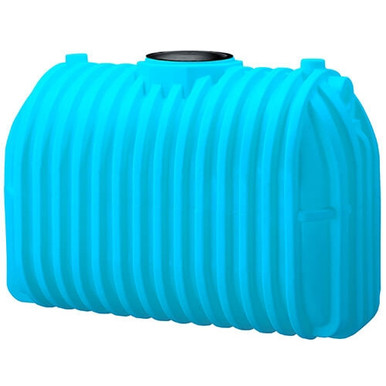
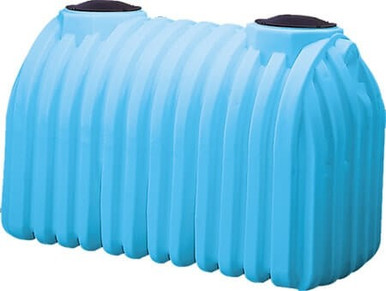
- Septic tanks at residential and small-commercial sites. The solids-handling characteristics of septic-tank service, the gravity-flow inlet and outlet plumbing that requires below-grade installation, the freeze-protection benefit of soil-cover thermal mass, and the long-established residential-septic regulatory framework make underground the default for this application. Reference Norwesco septic tank product lines for the envelope.
- Cold-climate water-storage where freeze protection above grade requires extensive heat-trace and insulation systems. A buried water-storage tank with 4-6 feet of cover stays above freezing year-round in most US zones without active heat input. The capital cost differential between a buried water-storage tank installation and an above-grade tank with full insulation and heat-trace can favor the buried installation in zones 3-4.
- Sites with extreme aesthetic constraints or seismic-zone setback requirements. Some sites simply cannot accommodate above-grade tanks: historic-district visual impact restrictions, seismic-zone tank-distance-from-building setbacks that exceed the available footprint, urban infill sites where the tank footprint conflicts with required parking. In these cases the underground installation is not optimal but is the only feasible installation.
- Cisterns and rainwater-collection systems where the buried installation captures the natural drainage geometry. Below-grade cisterns work with the gravity flow of the rainwater collection rather than against it; the engineered solution captures water at depth and pumps it as needed for use, rather than collecting at depth and lifting to an above-grade storage tank.
The applications where underground is selected by default but is not the right answer are far more numerous: most chemical-distribution sites, most water-treatment installations, most agricultural-bulk applications. The default in these applications should be above grade with the underground option requiring affirmative engineering justification.
5. The Buried-Tank Failure Modes That Make Above-Grade the Default
The failure modes that distinguish underground from above-grade installations:
- Undetected leaks. A small leak in an above-grade tank produces a visible drip, a stain on the containment pad, or a measurable inventory shrinkage that the operator notices on the next inventory check. The same small leak in a buried tank produces a soil-contamination plume that may not be detected for months or years until it reaches a monitoring well, a basement, or a drinking-water source. The cost differential between a 50-gallon detected-and-stopped leak and a 50-gallon undetected plume that becomes a Superfund site can be six orders of magnitude.
- Difficult fitting maintenance. An above-grade tank fitting that develops a weep can be addressed in 30 minutes with a wrench and a fresh gasket. The same fitting on a buried tank requires excavating the access riser, gaining entry to the tank top, performing the maintenance in the confined space of the riser, and restoring the access. The time and cost differential is 10-50x.
- Unobservable mechanical damage. Tanker-truck wheel rolling over a soil-cover that turns out to be inadequate produces a structural deflection that the operator cannot see. The deflection may not produce immediate leakage but accumulates fatigue at the loaded point until eventual cracking. The above-grade tank that takes a forklift impact shows the damage immediately and the operator can address it.
- Inability to relocate or upgrade. A site that needs to expand, change product mix, or adopt new regulatory requirements faces orders-of-magnitude higher cost to modify a buried installation than an above-grade installation. The above-grade tank can be unbolted from its containment pad, lifted onto a trailer, and replaced in days; the buried tank closure follows API 1604 procedures and takes weeks plus the cost of regulatory documentation.
- Environmental liability tail. The buried tank installation produces a long environmental liability tail: any future contamination detected near the site triggers a regulatory inquiry into the buried installation, even if the inquiry concludes the buried tank was not the source. The above-grade installation has a much shorter and more manageable liability profile.
The cumulative effect of these failure modes is the engineering judgment that above-grade installation is the default for most industrial polyethylene tank service, with underground reserved for the specific applications where the above-grade installation is genuinely infeasible or where the underground installation has regulatory and operational ecosystem support (retail petroleum, residential septic).
6. The Above-Grade Default and Its Engineering Envelope
When above-grade is the right default, the installation envelope expands to capture the engineering benefits:
- Visual inspection during routine operations. The operator walking past the tank during normal activities sees the tank shell, the fittings, the containment pad, and the surrounding ground for any sign of leakage or mechanical damage. Inspection becomes integrated with operations rather than a discrete event.
- Direct access for maintenance. Fitting replacement, gasket service, instrument calibration, and shell inspection are all minutes of work rather than hours of confined-space-entry procedure. The maintenance budget for an above-grade tank installation runs 30-50 percent lower than a comparable underground installation over a 10-15 year service life.
- Easier modification for changing service. A tank initially installed for one chemistry that needs to migrate to another can be drained, cleaned, inspected, and re-commissioned in the same physical position. The above-grade configuration accommodates this; the buried configuration generally does not.
- Easier replacement at end of service life. The above-grade tank is replaced by removing the existing tank, replacing it with the new tank, and re-connecting the inlet and outlet plumbing. The buried tank replacement is a multi-week construction event with regulatory documentation.
- Compatibility with secondary containment. The above-grade installation accepts an engineered secondary containment that the operator can inspect, maintain, and modify. The buried installation has to bury its secondary containment with the tank, which makes the secondary containment effectively un-inspectable.
The engineered above-grade installation is the default. The exceptions are documented and engineered for the specific application.
7. Above-Grade Tank Selection Across the 5 Brands
The above-grade tank selection covers the full chemistry, capacity, and dimensional envelope of industrial polyethylene tank service:
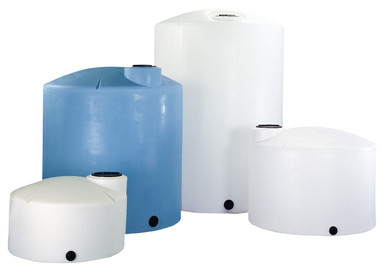
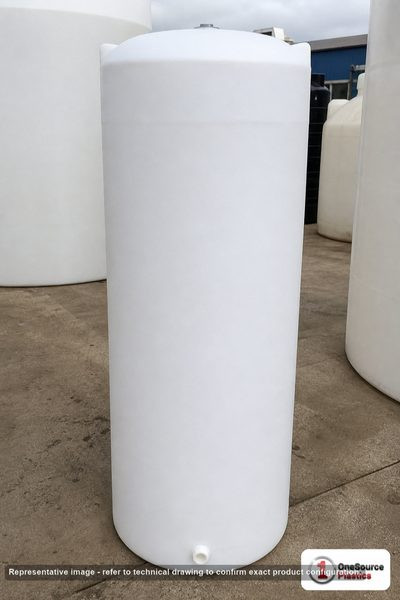
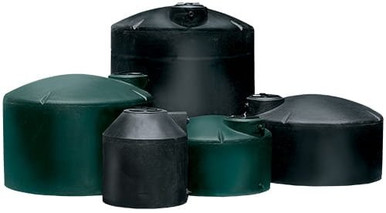
- Norwesco vertical bulk tanks. The workhorse above-grade installations from 25 gallons to 12,500 gallons in vertical configuration. Reference N-41867 25 gallon at the small-batch end and N-43128 10,000 gallon Norwesco vertical at the bulk end.
- Snyder Industries XLPE Captor double-wall tanks. The double-wall construction integrates the secondary containment into the tank itself, which works particularly well in above-grade installations where the interstitial space is accessible for monitoring. Reference SII-1006600N42 10,000 gallon XLPE Captor.
- Cone-bottom tanks for solids-handling chemistries. The cone bottom drains the tank completely and is essentially impossible in a buried configuration where the tank bottom is at or below the surrounding grade. Reference N-43852 1000 gallon 45 degree cone bottom.
- Doorway tanks for retrofit installations into existing buildings. The doorway-pass-through dimensional envelope is purely an above-grade design constraint; the buried installation context does not apply. Reference N-44800 100 gallon doorway tank.
The brand and model selection follows the chemistry, capacity, and dimensional requirements; the above-grade default frees the engineer to optimize across the 5-brand catalog without the constraints that a buried installation imposes.
8. The Underground-When-Necessary Configuration
For the applications where underground is the right answer, the configuration discipline:
- Tank model rated by the manufacturer for burial. Not every above-grade tank model is rated for underground installation. The rated models have shell construction, fitting design, and ballast attachment provisions specific to the buried installation; using an above-grade-rated model in an underground application voids the warranty and produces predictable failure modes.
- Engineered ballast. Concrete deadman or full-perimeter slab sized for the worst-credible buoyancy event with at least 1.5 safety factor. The ballast design is part of the civil engineering scope, not part of the tank purchase.
- Engineered fill material. The bedding and backfill around the tank uses a manufacturer-specified material (typically clean pea gravel or coarse sand) at a specified compaction rating. The wrong fill material — clay backfill that swells with moisture, oversized rock that produces point loads on the tank shell, fines-laden material that consolidates over time — produces the structural failure modes that buried installations are vulnerable to.
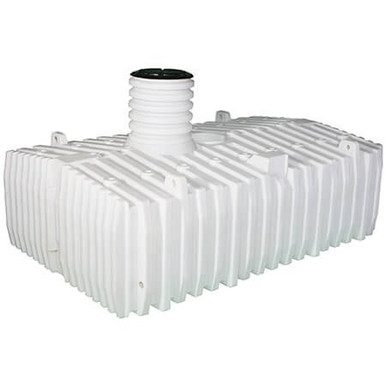
- Multiple access risers. The buried tank installation has access risers for the manway, for any fill connection, and for any monitoring instrument. Each riser is engineered for the expected traffic loading at its location and has a watertight cover.
- Engineered leak detection. The leak-detection method specified at design rather than added as an afterthought. Interstitial monitoring on double-wall tanks, vapor or groundwater monitoring on single-wall tanks, automatic tank gauging integrated into the site control system. The detection threshold and the response procedure documented in the operations manual.
- Documented closure plan. The end-of-service plan documented at installation, with the closure cost estimated and reserved as a future financial obligation. The buried-tank installation is a long-term capital commitment; the closure obligation is part of that commitment.
The buried installation done correctly is a major civil-engineering scope; done incorrectly it is a regulatory liability tail that exceeds the original capital cost by orders of magnitude.
9. The Procurement Discipline Around the Decision
The procurement conversation around the underground-vs-above-grade decision should follow a specific sequence:
- Document the affirmative reasons that drive the underground option (regulatory, aesthetic, freeze-protection, gravity-flow). If no affirmative reason exists, the default is above grade.
- Verify the manufacturer-rated burial envelope for the candidate tank models. Tanks not rated for burial are removed from the candidate list.
- Cost the underground installation completely: tank, ballast, engineered fill, access risers, leak detection, monitoring instrumentation, documentation. Compare to the above-grade installation including any required containment and weather-protection scope.
- Cost the closure obligation 15-25 years out and reserve the present value as a future capital commitment. The closure cost is part of the lifecycle cost of the underground installation.
- Document the inspection and maintenance plan for the buried installation. The plan defines the monitoring cadence, the access procedure, the response procedure for any monitored anomaly, and the budget for routine and contingent maintenance.
- Make the procurement decision based on lifecycle cost (capital plus operating plus closure) and lifecycle risk (regulatory, environmental, operational), not on capital cost alone.
The procurement discipline that follows this sequence selects the right configuration for the application; the procurement discipline that defaults to capital cost or to footprint convenience makes the wrong selection routinely.
10. The Lifecycle Engineering Conclusion
Underground polyethylene tank installation is the right answer for a narrow set of applications: petroleum retail, residential septic, certain cold-climate water-storage configurations, sites with extreme aesthetic or footprint constraints, and gravity-flow cistern installations. For these applications the engineering ecosystem is mature, the regulatory framework is established, and the lifecycle economics favor the underground option.
For the much larger set of industrial polyethylene tank applications — chemical distribution, water treatment, agricultural bulk, process service — the right answer is above grade. The above-grade installation provides direct visual inspection, accessible maintenance, easy modification for changing service, and a manageable environmental liability profile. The underground installation in these applications produces undetected leaks, expensive maintenance, difficult modifications, and a long liability tail that often exceeds the initial capital cost when the lifecycle is fully accounted.
OneSource Plastics ships the polyethylene tanks across both envelopes — above grade and underground where the manufacturer rates the model for burial — across all 5 brands (Norwesco, Snyder, Chem-Tainer, Enduraplas, Bushman). The product page lists list pricing by SKU; the burial rating, the dimensional envelope, the fitting layout, and the specific gravity rating are documented for each model so the engineer can verify the candidate tank against the application envelope. LTL freight to your ZIP and the civil-engineering scope of underground installations are quoted separately. Reference the freight estimator or call 866-418-1777 to coordinate the procurement scope. For related infrastructure engineering see tank foundation guide and secondary containment requirements.
Recommended Tanks for This Guide
Live pricing, updated automatically · estimate freight to your ZIP.