
3-A Sanitary Design & Surface Finish
3-A Sanitary Design & Surface Finish
In hygienic processing, geometry is the first line of defense. A vessel that cannot fully drain or be reached by cleaning solution will harbor product residue no matter how aggressive the wash.
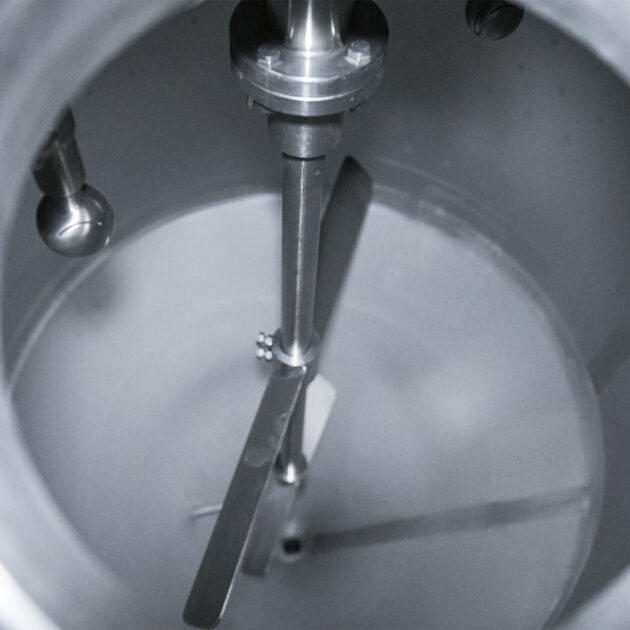
What Hygienic Design Actually Means
Sanitary, or hygienic, design is the discipline of building process equipment so that it can be reliably cleaned, drained, and inspected — and so that the materials touching product do not contaminate it. The governing framework in North America is the body of 3-A Sanitary Standards, developed for dairy and food equipment, alongside FDA requirements under 21 CFR for food-contact materials. In Europe and globally, the principles of the European Hygienic Engineering & Design Group (EHEDG) cover similar ground. These documents share one core idea: contamination risk is designed out of the equipment, not scrubbed out afterward.
The practical consequence is that a hygienic vessel is engineered around cleanability from the first sketch. Every internal feature is evaluated for whether cleaning solution can reach it, whether soil can accumulate, and whether the surface itself can be sanitized. A beautifully polished tank with a flat bottom and a dead-leg outlet is not a sanitary tank. The discipline applies equally to the vessel, its nozzles, its agitator seals, its instruments, and the gaskets that join everything together — a single overlooked crevice can undermine an otherwise excellent design.
It is also useful to distinguish between cleanability and sterility. Most food and beverage equipment must be cleanable and sanitizable to a defined standard, while pharmaceutical and biotech equipment may additionally need to be sterilizable, typically by steam-in-place. The design principles are the same; the demands simply tighten as the consequence of contamination rises.
Crevice-Free, Drainable Geometry
The single most important rule of hygienic design is the elimination of crevices, dead spaces, and pockets where liquid or product can stagnate. Stagnant zones are where microbial biofilms establish themselves, and biofilms are remarkably resistant to cleaning chemistry once formed. A biofilm only a few cells thick can shield organisms from sanitizer and reseed the system after every clean, so the goal is to give it nowhere to start.
- Self-draining slope. Interior surfaces and the vessel bottom must pitch toward the outlet so that the tank empties completely under gravity. A sloped dish, cone, or pitched flat bottom with the outlet at the low point is standard; a true flat bottom that holds a puddle is not acceptable for sanitary service.
- Radiused corners. Internal corners are filleted with a generous radius rather than left as sharp angles. Sharp internal corners shed cleaning energy and trap soil, and they are difficult to inspect.
- No dead legs. A dead leg is a length of pipe or a branch with no flow, where cleaning solution cannot circulate. The classic guideline limits the length of any unswept branch to no more than the bore diameter of the pipe so that turbulent cleaning flow still reaches it.
- Flush-mounted fittings. Instruments, valves, and nozzles are mounted flush with the tank wall so no recess collects product. Recessed gaskets, threaded connections in product zones, and protruding bolt heads are all avoided.
- Properly oriented welds and overlaps. Lap joints and faying surfaces are minimized; where panels meet, they are seal-welded so no gap can wick liquid by capillary action.
These rules extend to the agitator as well. The shaft entry, whether top or bottom, must use a hygienic seal — commonly a single or double mechanical seal that can itself be cleaned — rather than a packing gland that harbors product. Baffles, when used, are mounted with standoffs from the wall so cleaning solution can pass behind them.
Materials of Construction
Austenitic stainless steels dominate sanitary fabrication because they are corrosion resistant, non-shedding, non-absorbent, and tolerant of repeated aggressive cleaning. Type 304/304L is common for less corrosive duties, while 316/316L — with added molybdenum for chloride and pitting resistance — is preferred where salts, acids, or chlorides are present, including brines and many cleaning chemistries. Elastomers used for gaskets and seals (such as EPDM, silicone, and fluoroelastomers) must themselves be FDA-compliant and rated for the cleaning chemistry and temperature; the wrong elastomer swells, cracks, or sheds particles into product.
Material selection is not only about the alloy grade but about its condition. Surfaces must be free of laps, pits, inclusions, and embedded contaminants. Even the right grade of stainless will corrode if its protective layer is compromised, which is why surface treatment after fabrication is part of the material specification, not an afterthought.
Surface Finish and Roughness (Ra)
Surface finish is quantified by average roughness, or Ra, usually expressed in micro-inches or micrometers. A rougher surface has more micro-peaks and valleys that shelter soil and microorganisms from cleaning solution and that are harder to rinse. Smoother surfaces clean faster, drain more completely, and resist corrosion better, because there are fewer sites for soil and chloride to concentrate.
| Finish | Typical Ra | Description & Use |
|---|---|---|
| Mill / 2B | ~32–40 micro-in or higher | Cold-rolled mill finish; non-product-contact areas or general industrial. |
| #4 polish | ~32 micro-in (~0.8 µm) or better | Common product-contact sanitary finish; brushed appearance. |
| #7 / #8 polish | ~15 micro-in and below | High-polish, near-mirror; demanding pharma/biotech surfaces. |
| Electropolished | Often < 15 micro-in | Electrochemically smoothed; lowest Ra, enriched chromium oxide layer. |
A frequently specified benchmark for food and dairy product-contact surfaces is a finish of 32 Ra (micro-inches) or smoother. Pharmaceutical and biotech applications routinely demand 20 Ra or finer, often with electropolishing on top of mechanical polishing. It is important to note that Ra describes only the average height of surface irregularities, not their shape; two surfaces with the same Ra can clean differently, which is one reason electropolishing — which removes peaks preferentially and leaves a smoother profile — is valued where the cleanest possible surface is required. Specifying a finish therefore means stating both the Ra value and, often, the method by which it is achieved.
Sanitary Welding
Welds are a common failure point in hygienic equipment because a poor weld introduces porosity, cracks, discoloration, and roughness exactly where product flows. Sanitary welds are made by the gas tungsten arc welding (GTAW / TIG) process, frequently as automated orbital welds for tube and as carefully controlled manual welds for vessels.
- Argon back-purge. The reverse side of the weld is shielded with inert argon gas so the molten root does not oxidize. Without purging, the underside develops a brittle, sugared oxide that traps soil and corrodes.
- Full penetration, ground flush. Product-contact welds are fully penetrated and then ground and polished flush with the surrounding surface so there is no protruding bead or crevice.
- Heat-tint control. Excessive heat tint (the rainbow discoloration along a weld) indicates a degraded chromium-oxide layer and is removed by passivation or electropolishing to restore corrosion resistance.
- Inspection and documentation. Critical welds are visually inspected, and high-purity applications may require borescope inspection or documented weld logs that record purge gas, current, and operator for each joint.
Cleanability Is the Whole Point
Hygienic design, materials, finish, and welding all converge on one objective: a vessel that can be cleaned predictably and validated as clean. A tank designed this way pairs naturally with clean-in-place spray devices because the cleaning solution can reach every internal surface, sheet off cleanly, and drain to the outlet. When geometry, finish, and welds are right, sanitation becomes a repeatable, documentable process rather than a hope.
That repeatability is what protects product safety, shelf life, and regulatory standing across food, beverage, dairy, nutraceutical, and personal-care manufacturing. It also protects the equipment investment: a properly designed and finished stainless vessel withstands decades of aggressive caustic and acid cleaning, where a poorly finished one corrodes, pits, and ultimately fails inspection. The cost of building hygiene in at the design stage is always lower than the cost of contamination, recalls, and premature replacement that follow when it is left out.
Inspection, Maintenance, and Documentation
A hygienic vessel is not finished when it leaves the fabrication shop; it must remain hygienic throughout its service life, and that depends on routine inspection and disciplined maintenance. Surfaces are inspected periodically for the early signs of trouble: pitting, rouging (a thin reddish or amber iron-oxide film that can appear even on well-built stainless in high-purity service), scratches that raise local roughness, and damaged or worn gaskets that begin to harbor product. A scratch from a dropped tool or an abrasive cleaning pad can locally destroy the finish and create a soil trap, so the choice of cleaning tools and operator training are part of hygiene, not separate from it.
Gaskets, seals, and elastomers are wear items and are replaced on a schedule rather than run to failure, because a cracked or swollen gasket is both a leak path and a contamination harbor. Spray devices are checked to confirm they have not become blocked or worn, since a partially blocked spray ball quietly leaves part of the tank uncleaned. Where finishes degrade over years of service, re-passivation can restore corrosion resistance without rebuilding the vessel.
Underlying all of this is documentation. Hygienic equipment carries records — material certifications, weld logs, surface-finish reports, and passivation certificates — that prove the vessel was built to specification, and those records continue with inspection and cleaning logs through its operating life. In regulated industries this documentation is not paperwork for its own sake; it is the evidence that demonstrates control of the process to auditors and customers. A vessel that is well designed, well built, well finished, and well documented is the quiet foundation on which safe, consistent production rests, year after year.
Frequently asked questions
- What does a 32 Ra surface finish mean?
- Ra is the average roughness of a surface, and 32 typically refers to 32 micro-inches. It is a common benchmark for food and dairy product-contact surfaces because a finish that smooth resists soil retention and cleans and rinses readily. Pharmaceutical work often requires finer finishes, such as 20 Ra or below, frequently combined with electropolishing.
- Why is a self-draining bottom required on a sanitary tank?
- If liquid pools in a tank after it empties, that residue can support microbial growth and cross-contaminate the next batch. A self-draining bottom — sloped, dished, or coned toward an outlet at the low point — ensures the vessel empties completely by gravity, which is fundamental to both product safety and effective clean-in-place cycles.
- What is a dead leg and why does it matter?
- A dead leg is a section of pipe or a branch with little or no flow, such as an unused tee or an over-long valve stub. Cleaning solution cannot circulate through it, so soil and bacteria persist there even after a full wash. Hygienic design limits unswept branch length, commonly to roughly the bore diameter, so turbulent cleaning flow still reaches the entire surface.
- Why must sanitary welds be argon purged?
- When stainless is welded, the back side of the weld will oxidize if exposed to air, forming a rough, discolored, corrosion-prone oxide layer. Shielding the reverse side with inert argon gas prevents this so the root stays smooth and bright. The weld is then ground flush and the heat tint removed by passivation to maintain a cleanable, corrosion-resistant surface.
Scope your custom build
Send us your volume, service chemistry, dimensions, and finish or code requirements. We return a full engineering package, firm lead time, and a fixed quote — freight quoted separately to your ZIP.
Request a Custom QuoteCall 866-418-1777