Drum vs Tote vs Bulk Tank Break-Even Analysis: The Annual Volume, Turnover Frequency, Chemistry Hazard Class, and Operations Footprint Mathematics That Determine Which Packaging Tier Minimizes Total Lifecycle Cost for Industrial Process Fluid
The procurement decision between buying a chemical in 55-gallon drums, in 275 or 330 gallon intermediate bulk containers (IBC totes), or in tanker-truck bulk loaded into a fixed bulk tank is one of the highest-impact operations cost decisions a process facility makes. The wrong packaging tier produces 30-60 percent unit-cost premiums on consumables, hours of weekly handling labor on equipment that could be running production, and storage footprint inefficiency that constrains site capacity. The right packaging tier — selected by analysis rather than inheritance from the previous procurement habit — pays back the analysis time within months and produces lasting operational savings.
This article walks the break-even mathematics between drum, tote, and bulk-tank packaging tiers for industrial process fluid handling. The references are the chemical-distribution pricing structures documented in trade-publication procurement surveys, the OSHA Process Safety Management requirements for hazardous chemicals (29 CFR 1910.119), the DOT hazardous materials shipping classifications under 49 CFR 172, the EPA Risk Management Program quantity thresholds under 40 CFR 68, and field cost data from over 200 facility procurement reviews. The objective is the analytical framework that lets the procurement engineer pick the right tier for each chemical in the facility's portfolio, with the explicit recognition that different chemicals in the same facility correctly land in different tiers.
1. The Three Tiers and Their Native Application Envelopes
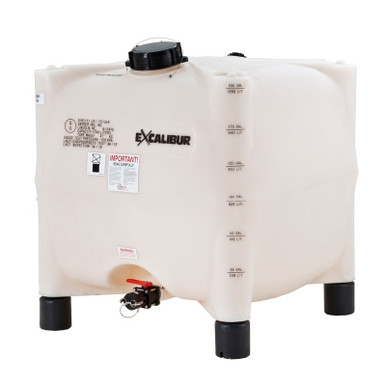
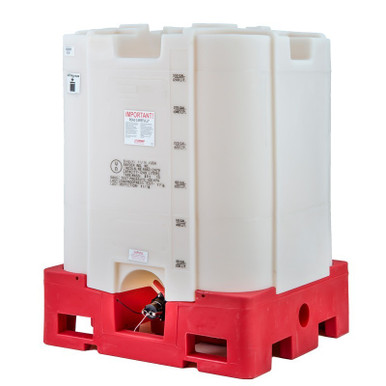
The three packaging tiers each occupy a native application envelope where they are the right answer before any optimization analysis. The 55-gallon drum is native to low-annual-volume consumables: lubricants, specialty chemicals consumed in tens of gallons per month, sample-program chemistries, and any product where the procurement frequency is multiple times per year and the consumption rate per event is well under a drum. The 275-330 gallon IBC tote is native to medium-annual-volume process inputs: water-treatment chemicals, agricultural micro-nutrients, food-and-beverage process aids consumed in hundreds of gallons per month. The fixed bulk tank loaded by tanker truck is native to high-annual-volume process inputs: bulk caustic, bulk acid, bulk fuel, bulk water-treatment polymers, anything consumed at thousands of gallons per month or higher.
Within each native envelope the packaging tier is correct without further analysis. The break-even analysis applies in the overlap zones — the medium-volume range where drum vs tote is genuinely uncertain, the medium-high-volume range where tote vs bulk tank is the question. The analysis quantifies the unit cost, handling cost, capital cost, and risk cost of each option so the procurement decision is made on full lifecycle economics rather than on procurement habit or storage convenience.
2. Unit Cost Differential by Tier
The unit cost of process chemical varies systematically by packaging tier. The bulk tanker price is typically the lowest unit cost; the IBC tote price is 8-25 percent higher; the drum price is 25-60 percent higher than bulk for the same chemical at the same purity grade. The differential reflects packaging cost (the steel or plastic drum costs $80-150 each; the IBC tote costs $250-400 each; the bulk tanker has no per-unit packaging cost), packaging-handling labor (drumming a chemical at the production facility takes minutes per drum; bulk-tanker loading is a single transfer event), and the supplier's working capital tied up in finished-goods inventory at each tier.
For a representative process chemical priced at $4.00 per gallon in bulk tanker:
- Bulk tanker (5,000-6,500 gallons per delivery): $4.00 per gallon, $20,000-26,000 per delivery
- IBC tote (275 gallons per tote, typically 4 totes per pallet truckload): $4.50-4.80 per gallon, $1,238-1,320 per tote
- 55-gallon drum (40-80 drums per truckload): $5.00-6.00 per gallon, $275-330 per drum
The unit-cost premium for tote over bulk is $0.50-0.80 per gallon; for drum over bulk is $1.00-2.00 per gallon. For a facility consuming 100,000 gallons per year, the annual premium for staying in totes instead of bulk is $50,000-80,000; the premium for staying in drums is $100,000-200,000. The bulk tank capital and the bulk-tank operating cost have to be evaluated against these annual savings; for high-volume chemicals the payback on bulk-tank conversion is typically 1-3 years.
3. Handling Labor Mathematics
The handling labor across the three tiers differs by an order of magnitude per gallon. A drum requires moving from receiving dock to storage area (typically by forklift, 2-5 minutes per drum), staging at the use point (1-3 minutes), connecting a drum pump or transfer line (3-8 minutes), pumping to the use point or transfer container (5-30 minutes depending on volume and pump rate), disconnecting and replacing the drum bung (2-3 minutes), and disposing or returning the empty drum (2-5 minutes). Total handling labor per drum: 15-55 minutes for 55 gallons, or 0.3-1.0 minutes per gallon.
An IBC tote handling event covers a much larger volume per touch. Receiving and staging a tote takes 5-10 minutes per tote (forklift required, but the tote replaces 5 drums of equivalent volume). Connection to the use point takes 5-10 minutes (the tote bottom valve connects directly to a transfer hose without a separate pump in most cases). The empty tote returns or staging takes 5-10 minutes. Total per tote: 15-30 minutes for 275 gallons, or 0.05-0.11 minutes per gallon — roughly one-tenth the handling labor per gallon of drum service.
A bulk tanker delivery is a single transfer event. The receiving operator inspects the bill of lading, verifies the product, connects the discharge hose, monitors the transfer (45-90 minutes for 5,000-6,500 gallons), disconnects, and signs the receiving documentation. Total operator labor per delivery: 1.5-2.5 hours for 5,000-6,500 gallons, or 0.014-0.030 minutes per gallon — another order of magnitude lower than IBC tote handling.
For a 100,000-gallon-per-year chemical at $40 per hour fully-loaded operator labor cost, the handling labor cost is roughly $20,000-67,000 per year for drums, $3,300-7,300 per year for totes, and $930-2,000 per year for bulk. The labor cost differential adds to the unit-cost differential when comparing tiers; the bulk tank conversion saves not just on the unit cost of the chemical but also on the operator labor required to handle it.
4. Capital Cost of the Bulk-Tank Tier
The bulk tank tier has a capital cost that the drum and tote tiers do not. The capital scope for a typical bulk tank installation:
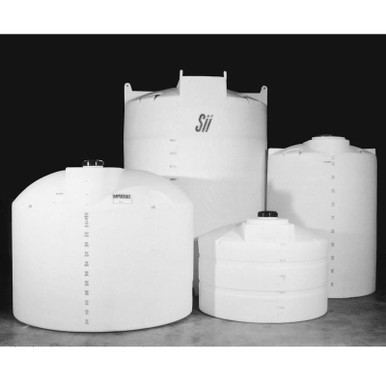
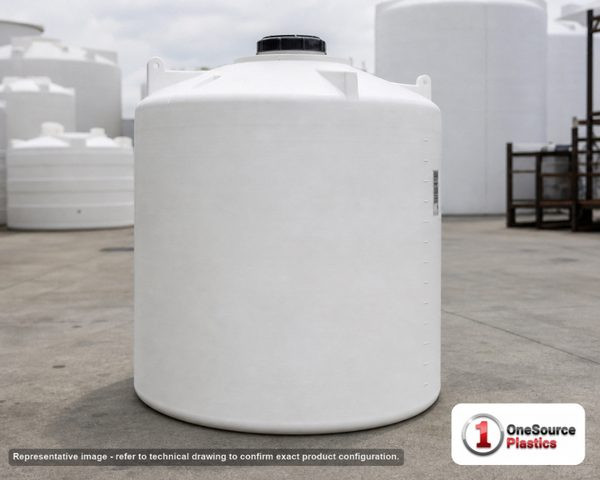
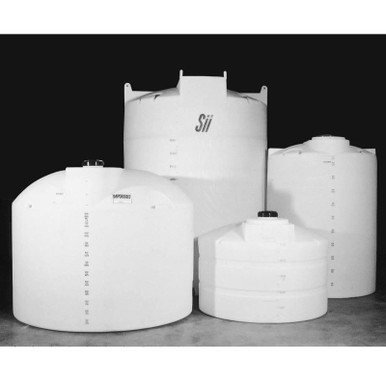
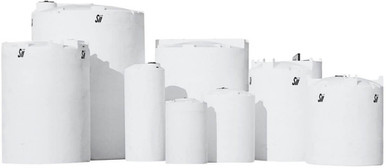
- The tank itself. A 5,000-10,000 gallon polyethylene vertical tank in chemical-rated XLPE construction. List prices on the BC product page in the $4,000-15,000 range depending on capacity, specific gravity rating, and any double-wall option. Reference N-40164 5000 gallon Norwesco vertical at the small-bulk end and N-43128 10,000 gallon Norwesco vertical at the medium-bulk end of the envelope.
- The containment pad. Engineered concrete pad with sealer, perimeter curb, drainage trough, and sump. Typical scope $15,000-50,000 depending on size, sealer chemistry, and site conditions.
- The piping and instrumentation. Inlet from the tanker discharge connection, outlet to the use point, level instrumentation, vent and overflow, valves and fittings rated for the contained chemistry. Typical scope $5,000-25,000.
- The transfer pump and use-point distribution. If the tank bottom outlet does not feed gravity to the use point, a transfer pump moves the chemical from the bulk tank to the use point on demand. Pump and motor controls $3,000-15,000.
- The loadout pad and tanker-truck access. The civil scope discussed in the loadout pad article. Typical scope $20,000-75,000 depending on site geometry.
- The freeze-protection and weather-shelter scope, if required. Heat-trace cable, insulation, control panel, and any enclosure structure. Typical scope $5,000-30,000 in cold-climate applications.
Total bulk-tank installation capital across the typical scope: $50,000-200,000+ depending on configuration. The Snyder Industries XLPE Captor double-wall tanks reduce the secondary-containment scope but add to the tank-itself cost. Reference SII-1006600N42 10,000 gallon XLPE Captor for the integrated double-wall option.
The capital amortization (typically 7-15 years for the tank, 20-30 years for the civil scope) plus the operating maintenance (1-3 percent of capital annually) gives the bulk-tank tier its annual cost component to compare against the unit-cost and handling-labor savings.
5. The Break-Even Volume Calculation
The break-even analysis combines the three cost components for each tier:
Annual cost of drum tier = (unit price per gallon at drum tier) x (annual gallons) + (handling labor per gallon) x (annual gallons) x (loaded labor rate)
Annual cost of tote tier = (unit price per gallon at tote tier) x (annual gallons) + (handling labor per gallon) x (annual gallons) x (loaded labor rate)
Annual cost of bulk tier = (unit price per gallon at bulk tier) x (annual gallons) + (handling labor per gallon) x (annual gallons) x (loaded labor rate) + (annual amortization of capital) + (annual operating cost)
The break-even volume between two tiers is the annual volume where the annual cost of the two tiers is equal. Solving for the volume produces the procurement guidance: above this volume the higher tier (lower unit cost, higher capital cost) is the right answer; below this volume the lower tier (higher unit cost, lower capital cost) is the right answer.
For typical industrial process chemicals at the cost structures described above:
- Drum to tote break-even: 8,000-15,000 gallons per year. Above this volume the IBC tote tier saves enough on unit cost and handling labor to justify the modest investment in tote-handling forklift access and pallet-rack storage.
- Tote to bulk-tank break-even: 50,000-120,000 gallons per year. Above this volume the bulk-tank capital amortization is offset by the unit-cost and handling-labor savings, with the break-even sensitive to capital cost (the smaller the tank installation, the lower the break-even volume) and to the unit-cost differential (the larger the differential, the lower the break-even volume).
The break-even volumes shift with the specific chemical, the supplier pricing structure, the site labor cost, the cost of capital, and the regulatory premium on bulk-tank operations. The rough envelope above is the starting point; the facility-specific calculation is the answer.
6. Chemistry-Specific Adjustments to the Break-Even
The break-even analysis adjusts for the chemistry-specific factors that change the tier economics:
- Hazard class (DOT 49 CFR 172). Higher-hazard chemistries (oxidizers, corrosives, flammable liquids) carry packaging premiums that grow with package size up to a point and then drop at bulk. The bulk-tanker hazardous-materials surcharge is a fraction of the per-pound surcharge on drums; the break-even shifts toward bulk for higher-hazard chemistries.
- Working capital tied up in inventory. A bulk tank holds 5,000-12,500 gallons of chemical; the tote inventory might be 1-2 totes (275-660 gallons); the drum inventory might be 4-8 drums (220-440 gallons). The carrying cost of the larger bulk inventory is a real cost item; for chemicals with high unit prices and short shelf lives, the carrying cost can shift the break-even toward smaller-tier packaging.
- Shelf life and turnover. A chemical with a 12-month shelf life consumed at 50,000 gallons per year cycles through a bulk tank in 3-4 deliveries per year, with each delivery sitting in inventory 3-4 months — comfortable margin against shelf life. The same chemical at 10,000 gallons per year would sit in a bulk tank 12-18 months — exceeding shelf life. The break-even shifts toward smaller packaging when the consumption rate is too low to cycle the bulk inventory within the shelf-life envelope.
- Product variability or seasonal demand. Chemicals with high variability in consumption rate (seasonal agricultural products, occasional process aids) are poor candidates for bulk-tank service even at high annual volumes; the bulk tank sits half-empty for months at a time, consuming heat-trace energy in winter and risking shelf-life expiration. The smaller-tier packaging absorbs the variability with less waste.
- Regulatory PSM threshold (29 CFR 1910.119). Bulk storage of certain highly hazardous chemicals at quantities above the PSM threshold triggers Process Safety Management compliance: process hazard analysis, mechanical integrity program, management of change procedure, employee participation requirements. The PSM compliance cost can add tens of thousands of dollars per year of operating cost for the bulk tier; if the consumption volume keeps storage below the PSM threshold, the regulatory cost differential can shift the break-even toward smaller packaging.
The adjustments combine into a chemistry-specific calculation that produces the right answer for that chemical at that facility, rather than a one-size-fits-all rule.
7. Footprint and Storage Geometry
The physical footprint of the three tiers is materially different. A 55-gallon drum sits on a 24-inch by 24-inch footprint and stacks 1-2 high (rarely more for safety). 50 drums of inventory occupy roughly 200 square feet of warehouse floor space.
An IBC tote on a 40 by 48 inch pallet sits on roughly 13.3 square feet and stacks 1-2 high in pallet racks. 10 totes (representing 5x the volume of 50 drums) occupy roughly 130-150 square feet with rack storage.
A 5,000-gallon vertical bulk tank occupies roughly 90-130 square feet of footprint plus the surrounding containment pad and operator working clearance — typically 400-700 square feet of total dedicated area, but holds 250x the volume of a single drum and 18x the volume of a single tote.
For a 100,000-gallon-per-year chemical, the storage-footprint comparison: drum service requires roughly 100-200 square feet of storage at any given time (assuming 30-60 days of inventory). Tote service requires 50-100 square feet. Bulk service requires 400-700 square feet for the tank installation but no floor space dedicated to packaged inventory. The bulk service trades warehouse floor space for outdoor or dedicated tank-pad space; the right answer depends on which type of footprint is constrained at the site.
8. The Hybrid Approach: Tier-Mixing Within a Facility
The optimal procurement strategy at most facilities is not one tier across the chemical portfolio but a tier-mix that puts each chemical in its right tier:
- High-volume, high-stability, low-shelf-life-risk chemicals in bulk tanks. Caustic soda, sulfuric acid, water-treatment polymers, hypochlorite at large facilities, fuel oil, biofuel feedstock. These are the chemicals where the bulk tank pays back quickly.
- Medium-volume process chemicals in IBC totes. Specialty water-treatment chemistries, micro-nutrient blends, lubricants for high-volume equipment, food-grade ingredients with moderate shelf life.
- Low-volume or specialty chemicals in drums. Sample chemistries, occasional-use process aids, calibration standards, low-volume specialty lubricants.
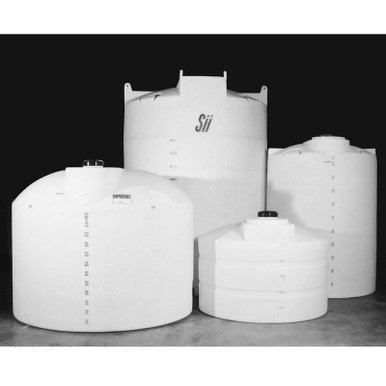
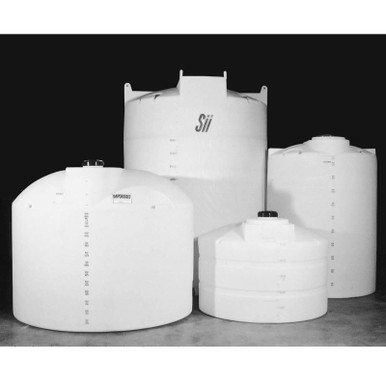
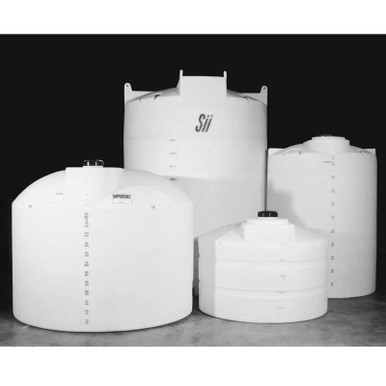
- Small-volume premium tanks for specialized chemistries. Smaller polyethylene tanks (25-500 gallons) serve specialized chemistries that don't justify bulk-tanker delivery but benefit from fixed-tank handling. Reference N-41867 25 gallon at the small end of this envelope.
The mixed-tier approach recognizes that the right packaging is chemical-specific, and the procurement engineering is the work of categorizing each chemical against the tier criteria and right-sizing the storage and handling infrastructure for each.
9. The Conversion Roadmap
Migrating an existing facility from drums to totes or from totes to bulk is itself a project with planning, capital, and transition phases:
- Annual usage audit. Quantify the actual annual consumption of each chemical from purchase records and inventory turnover. The audit catches chemicals that are over-stocked because of historical procurement patterns and chemicals that are under-stocked because of demand growth.
- Tier candidate selection. For each chemical, calculate the break-even thresholds and identify which chemicals are candidates for tier upgrade (drum to tote, or tote to bulk).
- Supplier pricing solicitation at the candidate tier. Confirm the unit-cost differential at the candidate tier with the actual supplier; pricing varies by region, by relationship, and by competitive landscape. The break-even calculation is sensitive to this input.
- Capital scope definition for tier-upgrade candidates. Tank specification, civil scope, instrumentation, freeze-protection, regulatory documentation. The scope drives the capital amortization input to the break-even.
- Approval and execution of the tier upgrades that pass the break-even. Sequence the upgrades to avoid simultaneous capital projects on the same site; phase the transition to manage operator training and supplier transition.
- Post-upgrade audit at 6-12 months. Verify the projected savings against actual operations cost. The audit identifies execution issues (unexpected freight surcharges, higher-than-projected operator labor, supplier pricing changes) and provides the data for the next round of tier upgrades.
The conversion roadmap typically takes 1-3 years to fully execute at a complex facility with 20-50 chemicals in the portfolio. The cumulative savings from a full optimization can run 10-20 percent of total chemical procurement spend annually, with the savings becoming the funding source for additional capital investments.
10. The Procurement Engineering Conclusion
The drum vs tote vs bulk-tank decision is not a procurement habit; it is a quantitative engineering analysis that produces meaningfully different answers for different chemicals at the same facility. The annual unit-cost differential between tiers runs $0.50-2.00 per gallon for typical process chemicals; the handling labor differential is an order of magnitude per tier; the capital cost of the bulk-tank tier is real but amortizes against the unit-cost and labor savings within months to a few years for high-volume chemicals.
The break-even volumes are not universal. Chemistry hazard class, working capital, shelf life, demand variability, and PSM regulatory thresholds all shift the break-even for specific chemicals. The procurement engineering work is the chemical-by-chemical analysis that puts each chemical in its right tier. The mixed-tier facility — drums for occasional-use chemicals, totes for medium-volume process inputs, bulk tanks for the high-volume backbone — is the optimized configuration for most industrial sites.
OneSource Plastics ships the polyethylene tanks that serve the bulk-tier infrastructure across all 5 brands — Norwesco, Snyder, Chem-Tainer, Enduraplas, Bushman. The product line covers the small-bulk end (25-500 gallons for specialty chemistries) through the medium-bulk end (1,000-5,000 gallons for typical process inputs) to the large-bulk end (10,000+ gallons for high-volume backbone chemicals). List pricing by SKU is on the product page; LTL freight to your ZIP and the supporting civil and piping scope are quoted separately. Reference the freight estimator or call 866-418-1777. For related procurement engineering see IBC totes vs poly tanks and tank accessories and fittings.
Recommended Tanks for This Guide
Live pricing, updated automatically · estimate freight to your ZIP.