IBC Totes vs Poly Tanks: Which Is Better for Your Application?
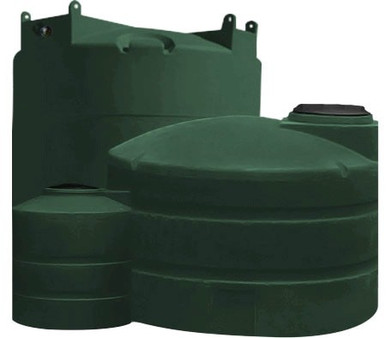
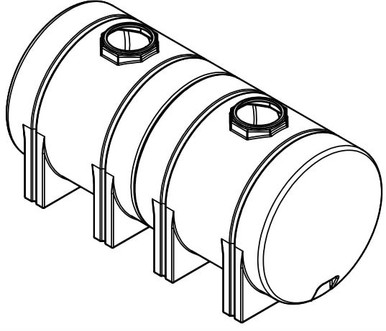
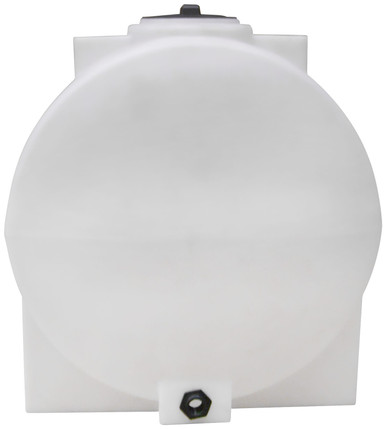
Intermediate Bulk Containers (IBCs) and dedicated polyethylene storage tanks serve similar functions but are designed for very different use cases. IBCs are shipping containers meant for transport and temporary storage. Poly tanks are permanent installations designed for years of stationary service. Using the wrong one costs you money and creates unnecessary risk.
This is one of the most common questions we get from customers. The answer depends on your specific application, budget, site constraints, and future needs. Let's break down the differences so you can make an informed decision rather than guessing.
IBC Totes (275-330 gallons)
Blow-molded polyethylene bottles inside a steel cage frame, mounted on a pallet base. Designed for shipping and short-term storage of industrial liquids.
Advantages
- Low initial cost (especially used)
- Built-in pallet base for forklift handling
- Stackable for space efficiency
- Standard sizes for logistics
- Easy to replace and rotate
Disadvantages
- Not designed for permanent outdoor storage
- UV damage is rapid — thin walls degrade quickly in sunlight
- Limited to ~330 gallons maximum
- Used IBCs may have unknown chemical history
- Steel cage corrodes over time
- Not FDA approved (used)
Best For
Temporary chemical storage, transport, short-term projects, and applications where the container will be used and replaced within 1-2 years.
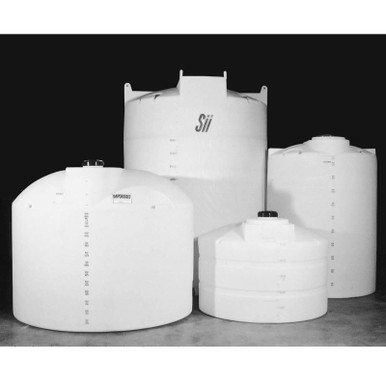
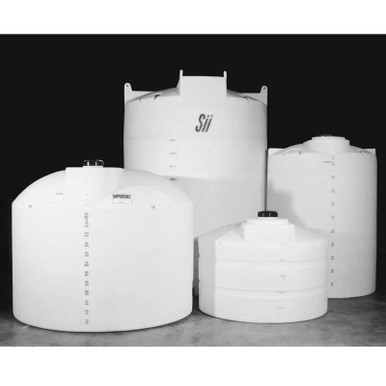
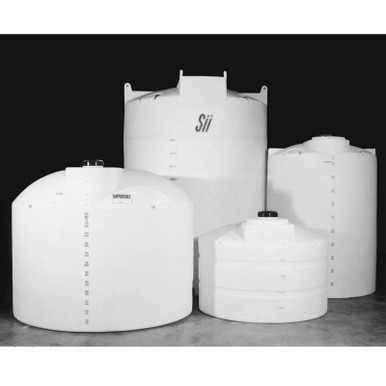
Polyethylene Storage Tanks
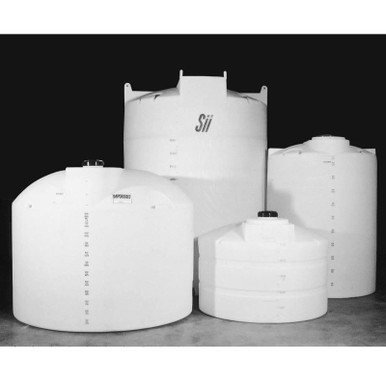
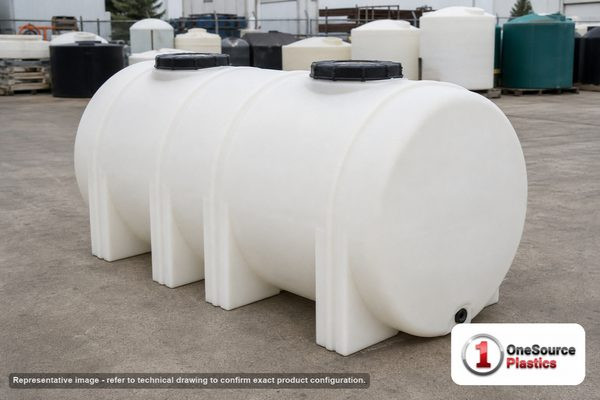
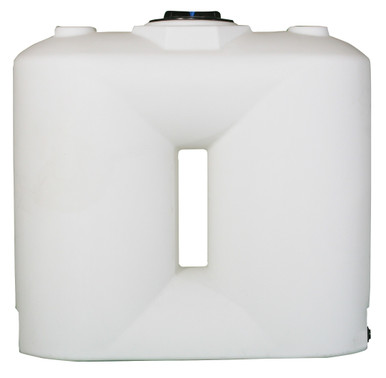
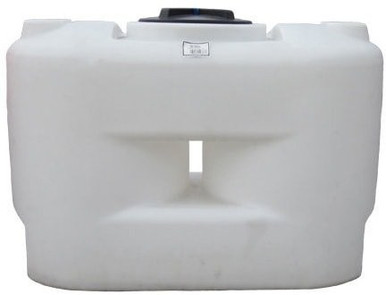
Purpose-built rotomolded HDPE tanks designed for permanent above-ground liquid storage. UV-stabilized, chemically rated, and warrantied for years of outdoor service.
Advantages
- Designed for 15-20+ year outdoor service
- UV-stabilized resin
- Available in any size from 10 to 15,000 gallons
- Proper fittings and connections
- Manufacturer warranty
- FDA-approved options for potable water
Disadvantages
- Higher initial cost than used IBCs
- Not easily moved once installed
- Requires foundation preparation
- Dedicated delivery and placement
- Fixed in one location
Best For
Any permanent storage application. If the tank will be in place for more than 2 years, a dedicated poly tank is always the better investment.
Shop Polyethylene Storage Tanks
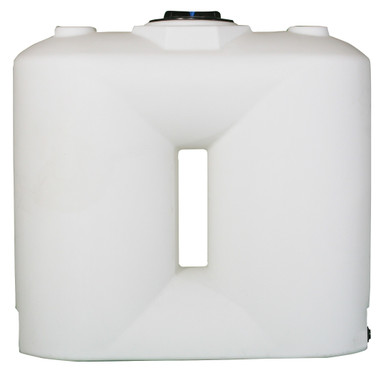
Side-by-Side Comparison
| Feature | IBC Totes (275-330 gallons) | Polyethylene Storage Tanks |
|---|---|---|
| Cost | $ | $$ |
| Durability | Fair | Excellent |
| Weight | Light | Medium |
| Chemical Resistance | Good | Excellent |
| UV Resistance | Poor | Excellent |
| Installation Ease | Very Easy | Moderate |
| Maintenance | Replace | Minimal |
Our Recommendation
For most residential and agricultural applications, the value proposition is clear — but every installation has unique requirements. If you are unsure which option is right for your specific situation, call us at (866) 418-1777. We'll ask about your application, site conditions, and budget, then recommend the best option with specific product suggestions.
Frequently Asked Questions
Can I switch later if I choose wrong?
Above-ground tanks can be replaced, but it means buying a new tank and paying for removal of the old one. Underground tanks are much harder to replace. Take the time to choose correctly now — the cost of research is zero, the cost of replacing a tank is significant.
Is the more expensive option always better?
No. The best option is the one that matches your actual requirements — not the one with the highest rating in every category. Paying for chemical resistance you don't need or UV protection on an indoor tank wastes money that could go toward a larger capacity or better accessories.
How do I know which specifications matter for my application?
Focus on three things: specific gravity rating (must match or exceed your liquid's density), chemical compatibility (verify against the compatibility chart), and physical dimensions (must fit your space with clearance for maintenance). Everything else — color, fitting configuration, lid size — is secondary and can usually be customized or adapted.
Understanding Polyethylene Tank Construction
Every polyethylene tank in our catalog is manufactured through rotational molding — a process that creates a seamless, one-piece structure from powdered HDPE resin. The mold rotates on two axes simultaneously while heated, distributing molten resin evenly across all interior surfaces. The result is a tank with no seams, no weld lines, and no potential leak points. This seamless construction is the primary advantage of rotomolded tanks over welded or fabricated alternatives — joints are where tanks fail, and rotomolded tanks have no joints.
The resin itself is not generic plastic. It is a specially formulated compound that includes UV stabilizers (to prevent sun degradation), antioxidants (to prevent thermal degradation during processing and service), and pigments. For potable water applications, the resin meets FDA 21 CFR 177.1520 requirements for food-contact materials. These additives are compounded directly into the resin — not applied as surface coatings — which means the protection extends through the full wall thickness and lasts the life of the tank.
Why Buy from OneSource Plastics?
OneSource Plastics is not just another tank reseller. We are a specialized industrial tank dealer with deep product knowledge, competitive pricing from direct manufacturer relationships, and a commitment to helping you select the right tank for your specific application. Our team handles tank inquiries every day — we know the product lines, the specifications, the common pitfalls, and the solutions.
When you call us, you talk to someone who knows the difference between a 1.5 SG and a 1.9 SG tank, who can explain why a cone bottom is worth the extra cost for your mixing application, and who can tell you exactly what foundation your 2,500-gallon tank needs on your specific soil type. We don't just process orders — we solve liquid storage problems.
Every tank we sell ships with the full manufacturer warranty. We handle freight logistics to all 50 states, and we can coordinate delivery equipment for sites with challenging access. If something goes wrong — a shipping damage claim, a warranty issue, a specification question — we handle it directly. One call to (866) 418-1777 connects you to a real person who can actually help.
Shipping and Delivery Information
We ship polyethylene tanks to all 50 states via the most cost-effective method for each order size. Small tanks (under 150 lbs) ship via UPS or FedEx ground — typically 3-7 business days. Medium tanks ship via LTL freight on pallets — schedule a delivery appointment and request liftgate service if you don't have a loading dock. Large tanks ship via flatbed — you'll need a forklift or equipment for unloading.
Freight cost for polyethylene tanks is driven by size (cubic feet), not weight. A 1,000-gallon tank is physically large — over 5 feet in diameter and 6 feet tall — and takes significant truck space even though it weighs only 100-200 pounds empty. We quote freight individually for each order because rates vary significantly by destination, carrier, and accessorial services like liftgate and residential delivery.
For the most accurate freight quote, call us with your zip code and the products you're considering. We ship daily and know which carriers provide the best rates and service to each region of the country.
Recommended Tanks for This Guide
Live pricing, updated automatically · estimate freight to your ZIP.