Tank Accessories and Fittings: The Complete Guide to What You Need
Tank Accessories: Everything Between the Tank and Your Plumbing System
The tank is the main event, but accessories are what make it functional. The right fittings, valves, gauges, and accessories transform a bare polyethylene tank into a complete liquid storage and distribution system. This guide covers every accessory category, when you need each one, and how to select the right specifications.
Ball Valves
Ball valves are the most common shut-off valves for polyethylene tanks. A quarter-turn handle rotates a ball with a hole through it — aligned for flow, perpendicular to shut off. Ball valves provide full-port flow when open (no restriction) and positive shutoff when closed.
- Polypropylene ball valves: Standard for most polyethylene tank applications. Chemical resistant, lightweight, no corrosion. Use for water, agricultural chemicals, and most industrial liquids.
- PVC ball valves: Slightly lower cost than polypropylene but less impact-resistant. Fine for water and mild chemicals in protected installations.
- Stainless steel ball valves: For high-pressure applications, hot liquids, or aggressive chemicals that attack plastics. Higher cost but essentially indestructible in normal service.
Bulkhead Fittings
Bulkhead fittings create a sealed connection through the tank wall. They consist of a threaded body, a flange, a gasket, and a locknut. Install through a drilled hole in the tank wall to create an inlet, outlet, drain, or instrument connection at any location you need.
- Sizes: Available from 1/2" to 4" NPT. Match to your plumbing system requirements.
- Materials: Polypropylene (standard), PVDF (aggressive chemicals), stainless steel (high pressure).
- Gaskets: EPDM (general purpose), Viton (chemicals and heat), PTFE (maximum chemical compatibility).
Tank Lids and Covers
The lid provides access for filling, inspection, cleaning, and venting. Standard lids are threaded or bolted. Vented lids include built-in pressure/vacuum relief. Lockable lids prevent unauthorized access or tampering.
- Standard screw-on: Basic threaded lid for general storage. Provides access but minimal sealing.
- Bolted lid: For larger openings (16" and up). More secure closure, better seal, allows gasket replacement.
- Vented lid: Includes a screened vent opening for atmospheric tanks. Prevents vacuum and pressure buildup during filling and draining.
- Spring-loaded P/V vent: For chemical tanks where vapor containment is required. Opens at set pressure and vacuum thresholds.
Level Indicators and Gauges
Knowing how much liquid is in your tank prevents run-dry situations, overfilling, and inventory miscounting.
- Sight gauge (external tube): A clear tube mounted outside the tank, connected at top and bottom. Liquid level in the tube matches the tank level. Simple, reliable, no moving parts.
- Float gauge: A float inside the tank connected to an external dial indicator. Shows fill percentage without requiring clear plumbing.
- Ultrasonic level sensor: Mounts on top of the lid and measures liquid level using sound waves. No tank penetration required. Can connect to remote monitoring systems.
- Dipstick: The simplest option. Mark a dowel with gallon increments based on the tank's diameter and shape. Free, always works, never needs batteries.
Hose Barbs and Adapters
Hose barbs connect flexible tubing to NPT threaded fittings. Available in polypropylene, nylon, brass, and stainless steel. Match the barb material to your chemical compatibility requirements — brass is NOT compatible with ammonia-based chemicals (fertilizers).
Pipe Nipples and Couplings
Short threaded pipe sections (nipples) and couplings connect fittings together and extend connections to the required length. Schedule 80 PVC or polypropylene is standard for polyethylene tank systems. Schedule 80 provides thicker walls than Schedule 40 for better thread engagement and pressure rating.
Strainers and Filters
Y-strainers installed on the outlet line catch debris before it reaches pumps, valves, and downstream equipment. Essential for any tank that stores liquids with sediment potential (water, agricultural chemicals, process fluids). A clogged pump is expensive — a $20 strainer prevents it.
Float Valves
Automatic fill control. When the tank level drops below a set point, the float valve opens to refill. When full, it closes. Same principle as a toilet fill valve, scaled up for tank applications. Essential for livestock watering systems, cooling tower makeup, and any application with continuous consumption and automatic refill.
Selecting the Right Accessories
Match every accessory to three parameters: chemical compatibility, pressure rating, and temperature rating. A fitting that's perfect for water may fail with fertilizer. A valve rated for 50 PSI may not survive a 100 PSI pump. A gasket rated for 120°F may not seal at 180°F. Check the specs — don't assume.
Need fittings and accessories? Browse our complete catalog or call (866) 418-1777 for sizing and compatibility help.
Understanding Polyethylene Tank Construction
Every polyethylene tank in our catalog is manufactured through rotational molding — a process that creates a seamless, one-piece structure from powdered HDPE resin. The mold rotates on two axes simultaneously while heated, distributing molten resin evenly across all interior surfaces. The result is a tank with no seams, no weld lines, and no potential leak points. This seamless construction is the primary advantage of rotomolded tanks over welded or fabricated alternatives — joints are where tanks fail, and rotomolded tanks have no joints.
The resin itself is not generic plastic. It is a specially formulated compound that includes UV stabilizers (to prevent sun degradation), antioxidants (to prevent thermal degradation during processing and service), and pigments. For potable water applications, the resin meets FDA 21 CFR 177.1520 requirements for food-contact materials. These additives are compounded directly into the resin — not applied as surface coatings — which means the protection extends through the full wall thickness and lasts the life of the tank.
Why Buy from OneSource Plastics?
OneSource Plastics is not just another tank reseller. We are a specialized industrial tank dealer with deep product knowledge, competitive pricing from direct manufacturer relationships, and a commitment to helping you select the right tank for your specific application. Our team handles tank inquiries every day — we know the product lines, the specifications, the common pitfalls, and the solutions.
When you call us, you talk to someone who knows the difference between a 1.5 SG and a 1.9 SG tank, who can explain why a cone bottom is worth the extra cost for your mixing application, and who can tell you exactly what foundation your 2,500-gallon tank needs on your specific soil type. We don't just process orders — we solve liquid storage problems.
Every tank we sell ships with the full manufacturer warranty. We handle freight logistics to all 50 states, and we can coordinate delivery equipment for sites with challenging access. If something goes wrong — a shipping damage claim, a warranty issue, a specification question — we handle it directly. One call to (866) 418-1777 connects you to a real person who can actually help.
Shop Our Most Popular Tanks
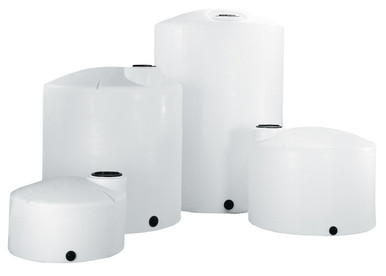
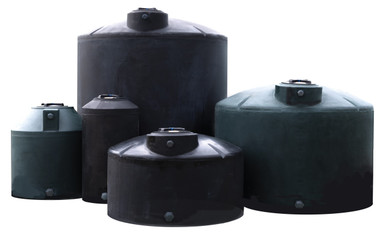
Recommended Tanks for This Guide
Live pricing, updated automatically · estimate freight to your ZIP.