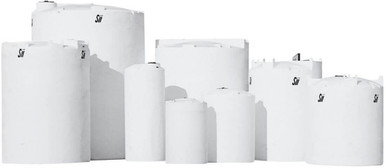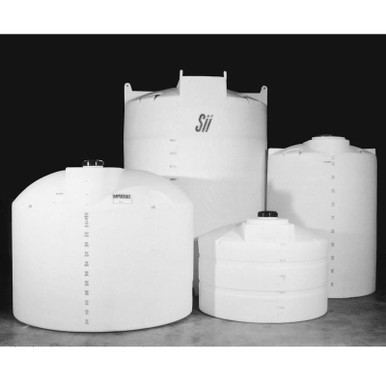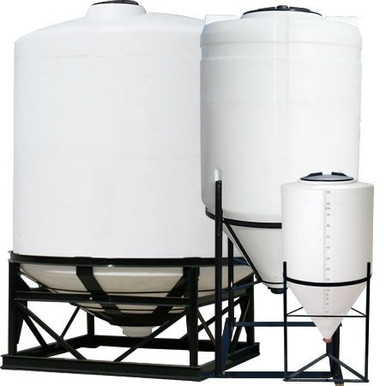
Rotational Polyethylene Tank Seam and Knit-Line Inspection: A Field Methodology for Environmental Stress-Crack Detection Before Catastrophic Failure
Rotationally molded polyethylene tanks fail by environmental stress cracking far more often than they fail by impact, abrasion, or wall-thickness erosion. The crack initiates at a knit line, a fitting interface, or a load-concentration point on the lower hemisphere, propagates slowly along the molecular orientation, and at some point the residual wall ligament tears in a single event that releases the tank's contents in seconds. The failure is not random. It is preceded by visible and measurable precursors that show up months before the rupture if anyone is looking. This article walks the field inspection methodology that catches stress-crack initiation early enough to plan a tank replacement on the operator's schedule rather than the failure mode's schedule.
References cited: ASTM D1693 standard test method for environmental stress-cracking of ethylene plastics; ASTM D1998 standard specification for polyethylene upright storage tanks; ASTM F412 terminology relating to plastic piping systems; the published Poly Processing analysis of sodium hypochlorite tank failures; and OSHA 1910.106 atmospheric storage tank inspection guidance. The numerical thresholds and field signatures described below are drawn from these sources and from the consolidated rotomolder field-failure databases that Snyder, Norwesco, Chem-Tainer, Bushman, and Enduraplas maintain on returned-product analysis.
1. The Three Failure Modes of Rotomolded Polyethylene
Polyethylene tanks fail by three distinct mechanisms, and each has its own inspection signature. Understanding which mode is operative on a given tank dictates where to inspect, how often, and what to look for.
The first mode is environmental stress cracking (ESC). ESC is the slow-crack-growth response of polyethylene under the combination of static tensile stress and a chemically aggressive environment. The chemistry does not have to be aggressive in the conventional acid/base sense; surfactants, sodium hypochlorite, certain alcohols, and even concentrated soap solutions accelerate ESC dramatically. ASTM D1693 quantifies the susceptibility by exposing a notched bent strip to a surfactant at controlled temperature and reporting the time to crack-through. Linear polyethylene tanks rated F0 (lowest ESC resistance) crack through within hours; the cross-linked polyethylene specified by ASTM D1998 Type II resists ESC through the test duration without failure. The field implication: linear polyethylene tanks holding hypochlorite, surfactants, or polar solvents have a finite service life measured in years, not decades, and the failure mode is ESC. Cross-linked polyethylene tanks in the same service have substantially longer field life because the covalent crosslinks across chain segments arrest crack propagation.
The second mode is oxidative degradation. Sodium hypochlorite is the textbook case: hypochlorite generates active chlorine radicals that attack polyethylene chain ends and antioxidant additives. Once the antioxidant package is consumed, oxidative chain scission proceeds, the polymer molecular weight drops, and tank-wall toughness collapses. The field signature is wall yellowing or browning at the liquid contact surface, surface tackiness or chalking, and a measurable density increase from 0.94 to 0.96+ as crystallinity rises with chain shortening. The published industry data attributes 10-15 million dollars in annual hypochlorite tank failures to this exact mechanism in the United States.
The third mode is mechanical fatigue at fitting interfaces. Bulkhead penetrations are stress concentrators by geometry. Cyclic loading from fill-and-drain cycles, thermal expansion-and-contraction, and vibration from adjacent pumps drives crack initiation at the inside corner of the fitting bore. Inspection here is straightforward: any crack visible at a bulkhead reinforcement is an immediate replace-the-tank trigger; the crack will not arrest.
2. Knit Lines and Where to Find Them on a Rotomolded Tank
A knit line is a region of the tank wall where two flowing polyethylene fronts met during the rotational mold cycle without complete molecular interpenetration. Knit lines are weaker than the surrounding wall by approximately 20-50 percent in tensile strength, depending on mold cycle parameters. They are the preferred crack initiation sites for ESC.
Knit lines on a vertical rotomolded tank typically appear at the following locations: the dome-to-sidewall transition (a circumferential band approximately 4-8 inches below the dome apex); the sidewall-to-floor transition (a circumferential band approximately 2-4 inches above the floor seam, often the visible parting line); the bulkhead reinforcement boss (an annular zone around each factory-installed fitting); the fill-port reinforcement (the dome-mounted thicker region around the primary fill port); and any feature where the mold cavity geometry forced two flow fronts to converge.
The field-identification trick is to look for the parting line of the rotomold, which appears as a faint horizontal seam on the tank exterior. The seam itself is generally not the weakest point on a properly cycled tank, but the seam is a reliable visual reference for where the manufacturer's mold split, and the knit lines correlate with mold features adjacent to that split. On a Norwesco vertical, on a Snyder vertical, on a Chem-Tainer vertical, and on a Bushman water tank, the parting-line geometry differs slightly but the underlying physics is the same. The Norwesco N-40146 1,500 gallon vertical shows a typical mid-sidewall parting line on the north-south axis; the dome-to-sidewall transition is the highest-priority inspection band.
3. The Three-Stage Visual Inspection Procedure
Field inspection for stress-crack initiation does not require expensive equipment. The procedure can be completed by any trained operator in 30-45 minutes per tank.
Stage 1: Macro-scale visual scan. Walk the full tank exterior at arm's length under bright daylight or 1,000-lumen flashlight. Look for visible craze patterns (a network of fine surface crazes radiating from a feature), surface gloss anomalies (a dull patch in an otherwise glossy wall, indicating subsurface stress whitening), wall-color changes (yellowing, browning, or chalking at the liquid-contact band on the interior visible through translucent tanks), and any visible hairline cracking at fittings, mounting points, or transition geometry. Mark any anomaly with a paint pen for re-inspection at higher magnification. Macro scan catches advanced ESC; it will not catch initiation-stage crazing.
Stage 2: Magnified inspection at flagged zones and high-priority bands. Use a 10x or 20x loupe at the dome-to-sidewall transition, the sidewall-to-floor transition, every bulkhead fitting, every mounting bracket interface, and any zone flagged in Stage 1. Look for the silver/white branched craze pattern that is the unambiguous fingerprint of ESC initiation. The crazes appear as fine bright lines arranged in a fern or river-tributary pattern, oriented perpendicular to the principal stress axis. A single isolated craze is normal manufacturing variation; a branched cluster of crazes 1-3 mm long is initiation-stage ESC and warrants immediate engineering review. The cross-linked polyethylene grades (XLPE) on Snyder Captor, Chem-Tainer XLPE, and Norwesco XLPE specifications resist craze propagation but do not eliminate craze initiation; the same inspection applies, but the timeline from craze visibility to functional failure is significantly longer.
Stage 3: Tactile and dimensional inspection. Run a gloved hand over the entire wall surface. Surface tackiness, chalking residue on the glove, or any soft-feeling zone indicates oxidative degradation regardless of color. Measure the tank diameter at three heights (10 percent, 50 percent, 90 percent of fill height) at the same time-of-day in two consecutive months. Diameter growth over 0.5 percent month-over-month indicates wall creep or chemical swelling and triggers a chemistry-compatibility re-review. Diameter shrinkage indicates loss of resin volume from chemical extraction and is a more serious finding.
4. Ultraviolet Light Inspection for Subsurface Crazing
UV-A light at 365 nm wavelength reveals subsurface crazing that is invisible under white light. The technique is borrowed from aerospace polymer NDT and translates directly to polyethylene tank inspection. A handheld 365 nm UV-A flashlight (under 100 dollars from inspection-equipment suppliers) shines through translucent natural-color polyethylene walls, and subsurface crazes scatter the UV preferentially relative to the bulk polymer. The crazes appear as bright lines visible against a darker background.
The technique has limitations. Pigmented tanks (black, green, mocha, faint-green Enduraplas) absorb UV and reveal nothing through the wall; UV inspection on pigmented tanks is limited to the inside surface visible through the manway. Heavy soiling on the exterior also interferes. Properly cleaned natural-color tank exteriors give excellent UV results, and the method routinely catches crazes 30-60 days before they are visible under white light. For high-value or high-consequence tanks, monthly UV inspection at the dome-to-sidewall band and the sidewall-to-floor band is justified.
The Snyder SII-5490000N42 1,550 gallon double-wall XLPE in white pigment is a UV-cooperative geometry: the inner primary tank is visible through the open annulus from the integrated inspection ports, allowing both inside-surface and outside-surface UV inspection of the primary tank wall without entering confined space. This is one of the underappreciated advantages of double-wall geometry for high-consequence chemical service.
5. Hypochlorite Service: A Special Inspection Case
Sodium hypochlorite at 12.5 percent concentration is the single highest-volume cause of premature polyethylene tank failure in industrial service. The mechanism is well-understood: active chlorine radicals consume the antioxidant package at a rate that scales with concentration and temperature, and once the antioxidant is depleted, oxidative chain scission proceeds rapidly. Predictable signatures appear in a predictable sequence:
- 0-12 months of service: normal appearance, no visible degradation. Antioxidant package still intact.
- 12-24 months: first appearance of yellowing at the liquid-contact band. Degradation starting. No structural concern yet.
- 24-48 months: yellowing intensifies, may transition to brown. Surface chalking begins. Wall toughness measurably reduced. Plan replacement now.
- 48-72 months: wall thickness on linear polyethylene tanks may have lost 20-40 percent of impact strength. ESC initiation common at fittings. Catastrophic failure risk increases sharply.
- 72+ months: linear polyethylene service life essentially exhausted. XLPE may continue to 84-120 months depending on service conditions.
The operational discipline for hypochlorite tanks: 6-month formal inspection cadence with documented findings, mandatory replacement at 60 months on linear polyethylene regardless of visible condition, mandatory replacement at 96 months on XLPE regardless of visible condition. The replacement cost amortized over the service life is small; the failure cost is substantial. Many operators specify XLPE specifically for hypochlorite service to extend the replacement interval; Snyder Captor and the cross-linked Norwesco grades are the common selections.
6. Bulkhead Fitting Inspection Detail
Bulkhead penetrations concentrate stress at the bore corner where the cylindrical fitting threads emerge from the planar tank wall. The corner geometry generates principal stresses 2-3x the membrane stress in the surrounding wall, and over fill-drain cycles the corner sees fatigue loading that the bulk wall does not see. Crack initiation here is the most common precursor to bottom-fitting failure.
Inspection at each bulkhead during every formal inspection cycle:
- Visible inspection at the inside corner. If accessible, the inside surface around each bulkhead penetration should show smooth radius without visible crazing. Any radial crack pattern emanating from the bore is immediate-action.
- Outside inspection at the reinforcement boss. The factory-installed reinforcement boss (the thicker doughnut of polyethylene around the fitting) should be uniform color and texture. Yellowing concentrated at the boss is a sign that gasket compression is permitting hypochlorite or other aggressive chemistry to wet the boss; tighten or re-gasket.
- Gasket compression check. Bulkhead gaskets relax over time per the cold-flow creep behavior covered in our bulkhead torque progression article. Verify gasket compression by torque check at the documented cadence.
- Leak test at minimum 30-day intervals. A simple visual check around each fitting catches weep leaks before they become structural cracks.
The N-40146 1,500 gallon, the N-40164 5,000 gallon, and the N-43128 10,000 gallon Norwesco verticals all use the standard threaded-bulkhead fitting hardware family; the inspection procedure is identical across SKUs.
7. Documenting Inspections for Audit and Insurance Defensibility
Inspection records have value beyond the operational decision they support. They establish the facility's discipline for insurance underwriting, environmental due diligence under Phase I site assessment, and SPCC plan compliance under 40 CFR 112.8(c)(6). The minimum documentation per inspection cycle:
- Tank ID, manufacturer, SKU, installation date, age in months at inspection.
- Service chemistry, current concentration, current temperature.
- Inspection date, inspector name, weather conditions.
- Findings by zone: dome-to-sidewall, sidewall-to-floor, each bulkhead, each mounting interface, mid-sidewall parting band.
- Photographs of each flagged zone, dated and labeled.
- Disposition: continue service, increased inspection frequency, planned replacement window, immediate take-out-of-service.
- Inspector signature.
The recordkeeping is not regulatory but it is operationally essential. Every tank that ever fails will be the subject of a forensic root-cause analysis and an insurance claim review; the inspection records become the documentary evidence that the facility followed industry best practice and is not liable for negligent operation. The cost of the recordkeeping is trivial compared to its defensive value.
8. When to Replace Versus When to Continue Service
The replacement decision flowchart that consolidates the inspection findings into action:
Continue service (no action): No visible crazes, no yellowing or color change, no surface chalking, gasket compression at spec, no fitting weeps, age below 60 percent of service-life expectation for the chemistry.
Continue service with increased inspection frequency: Isolated crazes at non-critical zones (mid-sidewall, away from fittings), early-stage yellowing without chalking, age 60-80 percent of service-life expectation. Move from annual inspection to quarterly inspection.
Plan replacement within 90-180 days: Branched craze clusters at any high-priority zone, intensified yellowing with surface chalking, wall thinning measured by ultrasonic gauge, age over 80 percent of service-life expectation. Begin sourcing replacement tank, plan tie-in window, transition to monthly inspection until replacement.
Immediate take-out-of-service: Visible hairline crack of any length, weeping at any fitting that does not respond to torque adjustment, structural deformation visible to the eye, wall thinning over 20 percent at any measured location, any chemistry change incident that may have exceeded the tank rating. Drain-down and replace before refilling.
The decision authority on take-out-of-service should rest with the facility engineer or designated tank-program owner, not with shift operations. Pressure to keep production running has caused many predictable tank failures that the inspection regime had already identified.
9. Brand-by-Brand Inspection Cadence Defaults
- Norwesco linear polyethylene (water and non-aggressive chemistry): annual visual + quarterly fitting inspection. Reference: N-40635 3,000 gallon, N-41500 1,000 gallon.
- Snyder Captor double-wall XLPE for aggressive chemistry: annual visual + monthly annulus inspection (gain double-wall integrity check) + quarterly fitting inspection. Reference: SII-5490000N42 1,550 gallon, SII-5990102N42 1,000 gallon.
- Snyder waste oil double-wall: annual visual + monthly annulus inspection. Heavy hydrocarbon service is permeation-active but not ESC-aggressive; cadence is conservative. Reference: SII-5740102N95703 275 gallon.
- Enduraplas vertical for industrial water and ag chemistry: semi-annual visual + quarterly fitting inspection. Reference: EP-THV02500FG 2,500 gallon.
- Chem-Tainer vertical for general industrial: annual visual + quarterly fitting inspection. Reference: TC6446IA 500 gallon HDPE.
- Bushman water-only: annual visual; ESC risk is low on water service. Reference: BM-WW-1500-GL-NAT 1,500 gallon.
- Any tank in hypochlorite, surfactant, or polar-solvent service: 6-month visual inspection regardless of brand, mandatory replacement at the brand-specified service life on linear polyethylene.
OneSource Plastics ships replacement tanks from the same manufacturer line as the original specification to minimize the engineering review on tie-in. List pricing on common replacement SKUs is published on each PDP; LTL freight to your ZIP is quoted via the freight estimator or by phone at 866-418-1777.
For complementary reading, see our bulkhead fitting torque progression for the gasket-cadence side of fitting inspection, and our cold-weather XLPE failure modes for the impact-resistance discipline that complements ESC inspection on cross-linked tanks.
Recommended Tanks for This Guide
Live pricing, updated automatically · estimate freight to your ZIP.