Snyder Captor Double-Wall Freeboard Sizing per ASTM D1998: Thermal Expansion, Chemistry Density, and the Real Volume You Can Actually Use
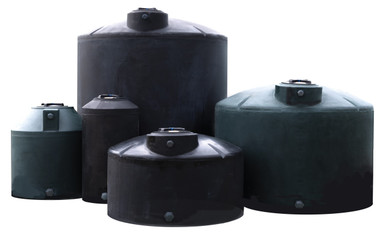
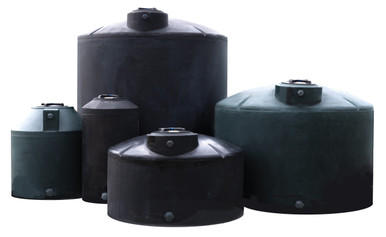
The freeboard problem on Snyder Captor double-wall tanks looks simple - leave some headspace at the top so the tank does not overflow when the chemistry warms up or when you fill it a little too aggressively. The engineering reality is more layered. Freeboard sizing is governed by thermal expansion of the contained chemistry, density and specific gravity of the chemistry versus the design SG rating of the tank, the inlet flow rate during fill, the venting capacity to handle pressure equalization, and the operational margin needed for liquid level fluctuation under agitation or pump cycling. Get the freeboard wrong and you either overfill and breach the secondary containment in normal operation, or you under-fill and leave 8 to 12 percent of the tank volume permanently unused. Both outcomes are expensive. This guide walks the freeboard calculation methodology referenced in ASTM D1998 (Standard Specification for Polyethylene Upright Storage Tanks), applied to the Snyder Captor double-wall tank product line, with worked examples for sulfuric acid, sodium hypochlorite, sodium hydroxide, and 32% UAN fertilizer service.
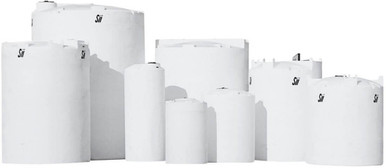
What the Snyder Captor Tank Is
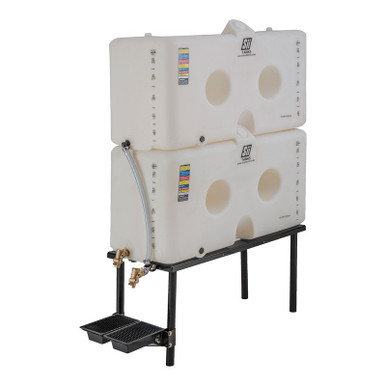
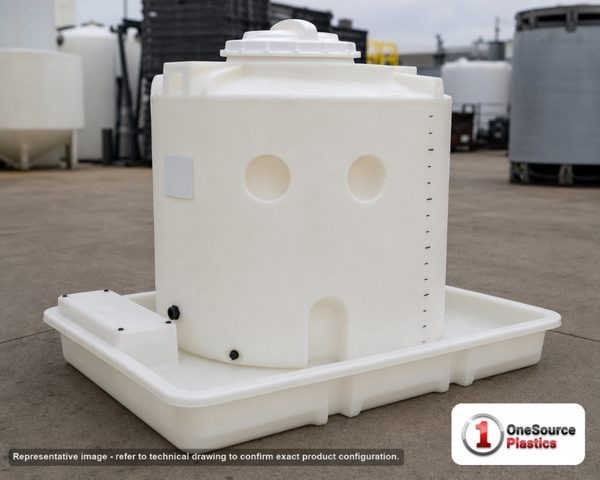
The Snyder Captor is a double-wall polyethylene chemical storage tank. The primary tank is a rotomolded HDPE or XLPE inner shell. The secondary containment is an outer rotomolded HDPE shell sized to hold a minimum of 110 percent of the inner tank volume per the EPA SPCC 40 CFR 112.7(c) general containment requirement. The annular space between primary and secondary is monitored visually through a sight slot or instrumented with a leak detector. If the primary cracks or develops a slow leak, the chemistry collects in the annular space without escaping the tank assembly and without contacting the surrounding earth or floor.
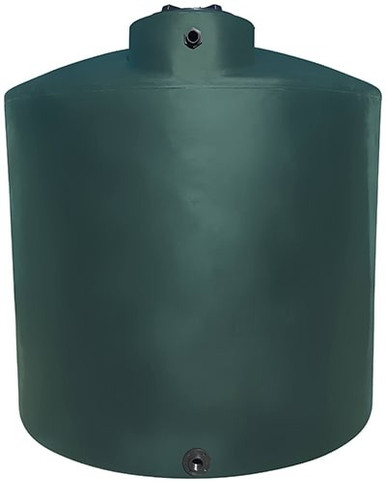
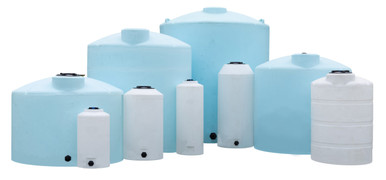
OneSource Plastics stocks the Snyder Captor double-wall product line including SII-1006600N42 (10,000 gallon XLPE Captor at 1.9 SG rating), SII-1006600N43 (10,000 gallon HDLPE Captor), SII-1006600N49 (10,000 gallon HDLPE Captor with alternate fitting package), SII-5990102N42 (1,000 gallon XLPE vertical double-wall), SII-5990102N45 (1,000 gallon vertical double-wall), and SII-5490000N42 (1,550 gallon XLPE vertical double-wall). Each tank has a published gross volume, a working volume, and a freeboard volume. The relationship between those three numbers is what this guide unpacks.
ASTM D1998: The Governing Specification
ASTM D1998 is the Standard Specification for Polyethylene Upright Storage Tanks. The specification covers materials, dimensions, fittings, testing, and marking for one-piece seamless rotomolded polyethylene tanks for above-ground vertical service. D1998 sets:
- Resin requirements (HDPE per Type II Class A or C, or crosslinked PE per Type III)
- Wall thickness as a function of tank diameter, height, and design specific gravity
- Hydrostatic test requirements (D1998 Section 8 - water fill to design level for a minimum 24 hour proof test)
- Mark-up requirements - tank serial number, manufacturing date, design SG, manufacturer ID
- Fitting and accessory requirements
D1998 does NOT explicitly mandate a freeboard percentage. Instead, D1998 references the design fill level - the height to which the tank is hydrostatically tested and certified for service. The freeboard is the difference between the tank shell maximum height and the design fill level. The freeboard volume is determined by the manufacturer based on the design SG, inlet conditions, and operational practice for the chemistry class.
The Three Components of Required Freeboard
Component 1: Thermal Expansion Allowance. Liquid chemistries expand with temperature. The thermal expansion coefficient (alpha) for water is approximately 0.00021 per deg C in the 15 to 35 deg C range. For a 10,000 gallon tank filled with water at 15 deg C, a 25 deg C temperature rise (warm summer day) produces a volume increase of:
delta V = V * alpha * delta T = 10,000 * 0.00021 * 25 = 52.5 gallons
That is a 0.5 percent volume increase. For sulfuric acid (alpha = 0.00057 per deg C), the same 25 deg C rise produces 142.5 gallons of expansion - 1.4 percent. For sodium hypochlorite, the chemistry decomposes and releases gas (oxygen and chlorine) under elevated temperature; expansion is dominated by gas evolution rather than thermal expansion of the liquid. For 32% UAN nitrogen fertilizer, alpha is approximately 0.00045 per deg C, producing 112.5 gallons of expansion in a 10,000 gallon tank for a 25 deg C temperature swing.
The thermal expansion freeboard component should be sized at the maximum credible temperature swing the tank will experience. For outdoor tanks in the continental US, design for a 30 deg C swing (10 to 40 deg C operating range). For indoor tanks in climate-controlled facilities, 10 deg C is sufficient.
Component 2: Fill Splash and Operational Surge Allowance. When chemistry enters the tank through a top or side inlet at typical pump-fill rates of 100 to 500 GPM, the inlet stream creates splashing, surface waves, and a transient surface elevation higher than the static fill level. For a 10,000 gallon tank filling at 200 GPM through a 3 inch top inlet, the splash height is typically 2 to 4 inches above the static surface, which translates to 50 to 100 gallons of transient overshoot above the static fill level. Tanks with bottom inlets and quiet-fill diffusers eliminate splash; tanks with top inlets and direct discharge have the maximum splash. Specify quiet-fill at the inlet to reduce required splash freeboard from 1 percent to 0.2 percent of tank volume.
Component 3: Vent Sizing Margin. When chemistry enters the tank, displaced air must vent. When chemistry leaves the tank, atmospheric air must enter. Inadequate vent sizing creates pressure or vacuum that can deflect the tank wall, draw chemistry up the vent line, or cause the inner shell to push against the secondary containment. Per API 2000 (Venting Atmospheric and Low-Pressure Storage Tanks), the vent capacity required equals the maximum fill or empty rate plus thermal venting capacity. For a Snyder Captor 10,000 gallon tank with maximum fill rate of 250 GPM, vent capacity must be at least 2,500 SCFH at less than 0.2 psi differential pressure. Standard 4 inch vent on the Captor product line provides approximately 8,000 SCFH at 0.1 psi - adequate for fill rates up to 800 GPM. The freeboard impact of inadequate venting is bow of the tank top, not direct overflow, but the consequence is the same: tank shell distress.
Working the Freeboard Math: 10,000 Gallon Captor for 98% Sulfuric Acid
Worked example. The Snyder SII-1006600N42 is a 10,000 gallon XLPE Captor double-wall tank rated for 1.9 SG service - appropriate for 98% sulfuric acid (SG = 1.84) with margin. Calculate required freeboard:
- Thermal expansion: 10,000 gal * 0.00057 (sulfuric alpha) * 30 deg C max swing = 171 gallons. Round up to 200 gallons.
- Fill splash: Specify quiet-fill at the bottom inlet. Splash freeboard = 0.2 percent * 10,000 = 20 gallons. With top inlet direct discharge, this would be 100 gallons.
- Vent sizing margin: Standard 4 inch vent handles up to 800 GPM fill. Margin not needed if vent is properly sized; otherwise add 50 gallons safety.
- Operational level swing: Account for level sensor hysteresis and operator practice. Recommend 100 gallons.
Total required freeboard: 200 + 20 + 100 = 320 gallons, or 3.2 percent of gross volume. The Snyder Captor 10,000 gallon tank typically has 400 to 500 gallons of nameplate freeboard between the design fill mark and the tank top - exceeding the calculated requirement by 25 to 50 percent margin. Working volume is 9,500 to 9,600 gallons.
The chemistry compatibility piece: for 98% sulfuric acid storage, XLPE is required - HDPE softens and yields under high-SG sulfuric. See the sulfuric acid storage and tank selection guide for the full chemistry envelope.
Working the Freeboard Math: 1,000 Gallon Captor for Sodium Hypochlorite
Worked example two. The Snyder SII-5990102N42 is a 1,000 gallon XLPE vertical double-wall tank rated for 1.9 SG service. Sodium hypochlorite (12.5% trade chlorine, SG = 1.21) decomposes thermally and releases gas. Freeboard math:
- Thermal expansion: alpha for hypochlorite solution approximately 0.00045 per deg C. 1,000 * 0.00045 * 30 = 13.5 gallons.
- Gas evolution allowance: Hypochlorite decomposes to release oxygen at approximately 0.5 to 2 percent per month at ambient temperature, more at elevated temperature. Gas evolution requires venting, not freeboard - but require an adequately sized vent (minimum 2 inch on a 1,000 gallon tank).
- Fill splash: Quiet-fill bottom inlet. 0.2 percent * 1,000 = 2 gallons.
- Operational margin: 20 gallons.
Total required freeboard: 35.5 gallons, or 3.6 percent. Snyder Captor 1,000 gallon tank typically delivers 50 to 70 gallons of freeboard, working volume 930 to 950 gallons. For hypochlorite, the more important spec is venting and tank color (white or light-gray to minimize solar gain - black tanks accelerate hypochlorite decomposition). See sodium hypochlorite decay rate engineering guide for the full hypochlorite service-life math. For chemistry compatibility, see sodium hypochlorite tank selection.
Working the Freeboard Math: 1,550 Gallon Captor for 50% Sodium Hydroxide (Caustic)
Worked example three. The Snyder SII-5490000N42 is a 1,550 gallon XLPE vertical double-wall tank. 50% sodium hydroxide (caustic soda) has SG = 1.525 at 20 deg C and is well within the 1.9 SG rating. The complication: 50% caustic crystallizes at approximately 12 deg C, which means tanks in unheated outdoor service in northern climates require either insulation, heat tracing, or dilution to 25% to maintain liquid state. For freeboard:
- Thermal expansion: alpha for 50% caustic approximately 0.00072 per deg C. 1,550 * 0.00072 * 25 = 28 gallons (use 25 deg C swing for indoor tank with heat trace).
- Density change with temperature: 50% caustic SG drops from 1.525 at 20 deg C to 1.500 at 50 deg C - a 1.6 percent volume increase due to thermal density change separate from straight expansion. 1,550 * 0.016 = 25 gallons.
- Operational margin: 30 gallons.
Total: 83 gallons, 5.4 percent. Snyder Captor 1,550 gallon tank delivers approximately 100 gallons freeboard - margin is adequate. For caustic service, the more critical spec is heat tracing and insulation. See sodium hydroxide tank selection and tank insulation engineering guide.
Working the Freeboard Math: 32% UAN for Ag Bulk Storage
Final worked example. 32% UAN (urea ammonium nitrate) is the dominant nitrogen fertilizer for ag bulk storage. SG = 1.32 at 20 deg C, corrosive to mild steel, compatible with XLPE and HDPE. UAN crystallizes at approximately -1 deg C - tanks in northern climate field service require winter dilution, heat trace, or seasonal off-loading. For a Snyder Captor 1,000 gallon double-wall tank holding 32% UAN:
- Thermal expansion: alpha 0.00045 per deg C. 1,000 * 0.00045 * 30 = 13.5 gallons.
- Crystallization buffer: If temperature drops below -1 deg C, UAN starts to crystallize. Crystals occupy slightly more volume than the dissolved form, but the practical issue is that crystallized chemistry blocks valves and vents. Freeboard does not solve this; heat trace does.
- Fill splash: 2 gallons with quiet-fill.
- Operational margin: 30 gallons.
Total: 45.5 gallons, 4.5 percent. Adequate freeboard on the standard Captor design. Critical spec for UAN is the freight-only consideration in winter - cannot ship in unheated trailers. See state ag-chemical pillars for state-specific UAN regulations including Iowa, Nebraska, Kansas, and Texas.
Vent Sizing - The Companion Calculation
Freeboard math assumes the vent is correctly sized. Per API 2000:
- Outbreathing during fill: Vent capacity must equal max fill rate. 250 GPM = 33.4 SCFM = 2,000 SCFH air displacement.
- Inbreathing during empty: Vent capacity must equal max draw rate. Same calculation reversed.
- Thermal outbreathing/inbreathing: For a 10,000 gallon tank with 1,000 cubic feet headspace, a 30 deg C temperature change generates approximately 100 SCFM thermal venting - small compared to fill/empty rates but additive.
- Emergency venting: For external fire exposure scenarios, API 2000 calls for emergency vent sizing based on heat input rate and chemistry vapor pressure. Beyond scope here but required for OSHA-listed flammables.
Standard Snyder Captor product line vent sizing meets API 2000 for fill rates up to 800 GPM at the 10,000 gallon class and 200 GPM at the 1,000 gallon class. If your fill rate exceeds these, specify upgraded vent at order time.
Common Freeboard Specification Errors
The four mistakes OneSource Plastics Engineering sees most often:
- Filling to the top of the shell. Operators new to chemical storage assume the gross volume is the working volume. It is not. Always fill to the design fill mark, never above.
- Ignoring temperature swing in outdoor service. Indoor designs at 22 deg C ambient that get redeployed to outdoor service in Texas summer experience 35 to 45 deg C maximum tank wall temperature. Thermal expansion freeboard requirements double or triple from indoor design assumptions.
- Top inlet direct discharge with high fill rate. Splash freeboard requirements increase 5x with direct top discharge versus quiet-fill bottom inlet. Always spec quiet-fill diffuser if top inlet is required.
- Vent line undersized or partially blocked. A vent line with corrosion, ice plug, or small bore acts as a flow restrictor - tank can pressurize during fill or vacuum during draw, deforming the shell. Inspect vent path quarterly. Verify vent screen has not been blocked by insects, debris, or chemical residue.
Pricing and Procurement
OneSource Plastics ships Snyder Captor double-wall tanks across the 1,000 to 10,000 gallon class. Listed pricing for the 1,000 gallon class starts at $3,200; the 10,000 gallon Captor class lists at $15,500. Larger sizes available custom-fab through the custom tank fabrication hub. LTL freight is quoted to your ZIP via the freight estimator separately - large Captor tanks ship as oversized and freight typically runs $800 to $2,500 depending on origin and destination geography.
Call OneSource Plastics at 866-418-1777 for freeboard sizing on a specific chemistry, fill rate, and operating temperature range. We will run the ASTM D1998, API 2000, and chemistry-specific math against the catalog and recommend the right Captor size with verified freeboard margin for your duty cycle.
Recommended Tanks for This Guide
Live pricing, updated automatically · estimate freight to your ZIP.