Tank Buyback + Trade-In Programs: When Returning a Used Tank Makes Economic Sense
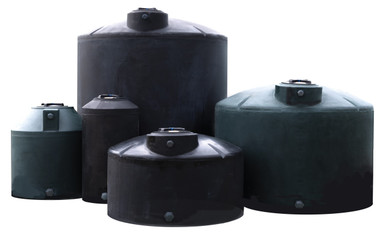
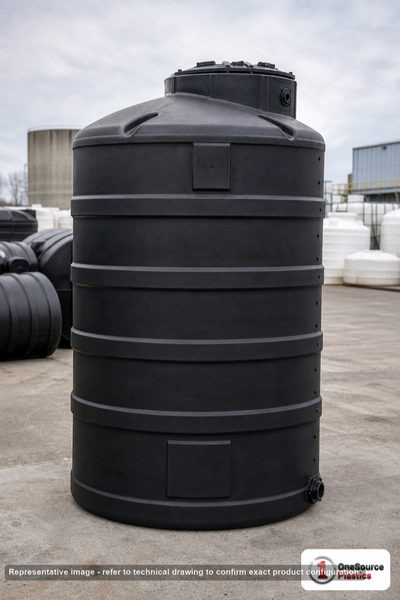
Most tank buyers don't think about end-of-life until the tank is sitting in the yard at year 18 with a hairline crack at the outlet bulkhead. At that point, the operator has four options: scrap it for HDPE recycling at $0.05-$0.15 per pound, repurpose it as a non-pressurized rainwater catch, sell it secondhand to a neighbor at $200-500, or roll the asset into a buyback or trade-in program if the original manufacturer or distributor offers one. The fourth option is rare but real, and the math behind it is rarely understood.
This guide explains how tank buyback and trade-in economics actually work in 2026: who offers programs, what they pay, what disqualifies a tank, when the math works for the operator vs when scrap-and-replace is better, and how to set up an exit-value plan at the time of original purchase so you're not negotiating from a weak position 15-25 years later. We'll cite real numbers from the polyethylene resin recycling market (per the Association of Plastic Recyclers and per ASTM D7611 / D7209 standards), HDPE post-industrial scrap pricing, and the manufacturer warranty programs from Norwesco, Snyder, Chem-Tainer, and Enduraplas as published in their 2026 commercial terms.
The Four End-of-Life Pathways
Pathway 1: Manufacturer / Distributor Buyback
Buyback is when the OEM or its authorized distributor takes the used tank back, typically as credit toward a new tank purchase, sometimes for cash. As of 2026, no major US polyethylene tank OEM (Norwesco, Snyder Industries, Chem-Tainer, Enduraplas, Bushman) offers a national, standing buyback program for general-service rotomolded tanks. Limited-scope programs exist:
- IBC tote rebottling and reconditioning programs (Snyder, Mauser, Schutz, Greif) accept used 275/330-gallon IBC totes for rebottling. Credit ranges $30-$120 per returned tote against new-tote purchase, depending on cage condition and tote serial. This is the closest thing to a real buyback program in commodity tank distribution.
- DEF tank exchange programs (regional fuel distributors, sometimes Snyder dealers) exchange a returned 100-500 gallon DEF tote for a refilled one at a unit-exchange fee, typically $25-$75 per swap, not a sale-back.
- Custom-fab + spec-tank trade-ins are negotiated case-by-case for high-value chemistry tanks (XLPE 1,500+ gallon, double-wall containment systems, specialty alloy stainless). Trade-in credit is 5-15 percent of new-purchase price when the OEM can refurbish and resell to a secondary market.
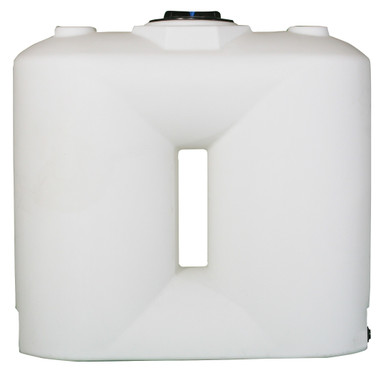
The general-service rotomolded vertical or horizontal commodity tank below 5,000 gallons does not have a standing OEM buyback. The economics don't work: shipping a 4,000-pound used tank back to the factory for inspection, surface refurbishment, certification, and resale costs the OEM more than the recovered margin on a new sale.
Pathway 2: HDPE Recycling Scrap
This is the dominant end-of-life pathway and the cleanest. A virgin-spec HDPE rotomolded tank cut into pieces is post-industrial #2 recyclable per the SPI resin identification code (ASTM D7611). Recyclers grind, wash, and re-pelletize for recycled HDPE feedstock used in non-food-contact applications like drainage pipe, plastic lumber, road barriers, and lower-grade rotomolding.
- Scrap value (2026 USD/lb): $0.05-$0.18/lb at the recycler, depending on contamination. Clean white HDPE pulls highest; black HDPE with carbon black is mid-range; chemistry-stained or oily tanks are at the low end or rejected outright.
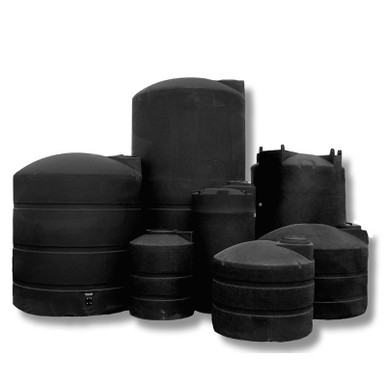
- Tank weight reference: 1,500-gal vertical = ~600 lb. 2,500-gal = ~900 lb. 5,000-gal = ~1,500-1,800 lb. 10,000-gal = ~3,200-4,000 lb.
- Realized scrap value: 1,500 gal = $30-$108. 5,000 gal = $75-$324. 10,000 gal = $160-$720.
- Cutting + transport cost: $200-$800 typical to chainsaw-cut a tank in place and haul to a recycler. Net realized scrap for a 1,500-gal tank is typically negative.
For tanks under 3,000 gallons, scrap value rarely covers cut-and-haul cost. The scrap pathway is often "haul-it-away-for-free" in practice — the recycler accepts the tank but pays nothing.
Pathway 3: Repurpose / Secondary Market
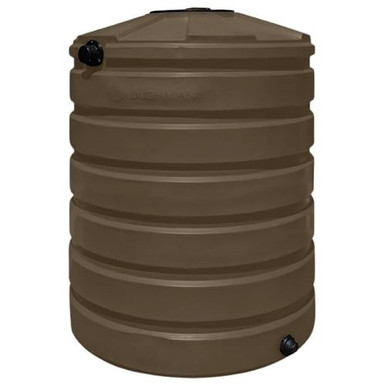
The healthiest market for used commodity tanks is the rural and agricultural secondary market. Craigslist, Facebook Marketplace, and farm auctions move 1,000-2,500 gallon used water tanks at $300-$800 each, primarily as non-potable irrigation, livestock water, or rainwater storage on rural property. The original chemistry service is generally disclosed and sometimes capped (e.g. "ag-only, was used for liquid fertilizer; not potable").
- Realistic resale price (2026): $0.15-$0.40/gallon of capacity for clean tanks; $0.05-$0.15/gallon for stained or repaired tanks; rare for any used tank to fetch over $0.50/gallon.
- Buyer pickup is standard; seller does not deliver. This eliminates the freight cost on the seller side that kills scrap economics.
- Disclosed service history drives or kills the deal. A tank with documented life-history (potable water service only, single-owner, no chemistry) sells fast at top of market. A tank with unknown history sits.
For most operators retiring a tank, this is the highest-realized-value pathway, beating both scrap and OEM buyback by 2-10x.
Pathway 4: On-Site Repurpose
The tank stays on the property and shifts service: from primary chemistry to secondary containment, from process water to rainwater catchment, from potable to fire-suppression reserve. No transaction, no recovery cost, no freight.
- Best repurpose chemistries: rainwater catchment (any clean tank), non-potable irrigation, fire-reserve cistern, livestock water, gray-water from roof or AC condensate.
- Disqualifying conditions: chemistry contamination that survives cleaning (chlorinated solvents, polymer-impregnated surfaces, brominated chemistry), structural compromise (cracks, UV-stress whitening, impact damage), or NSF-regulated service requirements where the prior chemistry disqualifies potable-water re-use.
- Economic value: avoiding the cost of a new tank for the secondary purpose. A 2,500-gallon retired water tank repurposed as fire-reserve avoids $1,800-$3,200 in new-tank cost.
What a Real Buyback Program Looks Like (When They Exist)
The closest thing to a true tank buyback program in US commodity distribution is the IBC tote reconditioning model, run by IBC service centers (regulated under 49 CFR 178 and inspected per ASTM E2933 reconditioner certification). Here's how it actually flows:
- End user accumulates 5-50 used 275/330-gallon IBC totes.
- End user calls the local IBC reconditioner. Reconditioner picks up at no charge if there are 4+ totes per stop.
- Reconditioner inspects each tote: cage condition, bottle condition, valve, lid, and prior service. Tote falls into one of three classes:
- Class A (rebottle-and-reuse): pays $40-$120 credit to the customer. The cage is reused with a new HDPE bottle.
- Class B (refurbish-only): pays $20-$60 credit. Cage and bottle both reusable after cleaning.
- Class C (scrap): no credit. Tote is parted out for HDPE bottle recycling and steel cage recycling.
- Credit is applied against a future tote purchase or paid in cash for high-volume customers.
This program exists because the IBC tote is intrinsically a multi-trip container, designed for 50+ refill cycles, and the salvage value of cage + reconditioning labor is higher than virgin-tote production cost. The same economics simply don't apply to a 5,000-gallon stationary tank.
Decision Math: Sell vs Scrap vs Repurpose
For a typical end-of-life decision, the operator should run a four-way comparison. Take a 2,500-gallon used HDPE vertical tank as the example (~900 lb).
| Option | Gross recovery | Cut/haul cost | Net realized | Time investment |
|---|---|---|---|---|
| OEM buyback (rare for stationary) | $150-$400 credit | $300-$700 freight | -$300 to +$100 | 2-4 weeks |
| HDPE scrap recycler | $45-$162 | $200-$500 | -$155 to -$338 | 1-2 weeks |
| Secondary market sale (FB / Craigslist) | $400-$1,000 | $0 (buyer hauls) | +$400 to +$1,000 | 2-12 weeks listing |
| On-site repurpose (rainwater / fire) | Avoids $1,500-$2,500 new-tank cost | $200-$600 plumbing rework | +$1,300 to +$1,900 | 1-2 weeks rework |
The ranking: on-site repurpose > secondary market sale > OEM buyback (when offered) > HDPE scrap. The scrap pathway only wins when (a) the tank is structurally compromised and unsellable, (b) chemistry contamination disqualifies it for any other use, or (c) the operator simply needs the property cleared on a deadline.
What Disqualifies a Tank from Buyback / Resale
Structural disqualifiers
- Cracks longer than 6 inches at any wall location (unrepairable in HDPE).
- Bulkhead pull-out with surrounding wall deformation (typically the result of unsupported pipe load, indicates broader stress damage).
- UV stress-whitening across more than 30 percent of wall (indicates resin degradation; service life essentially exhausted).
- Impact deformation with permanent set (forklift collision, vehicle impact).
- Roof collapse from snow load or vacuum implosion (indicates either undersized vent or under-spec'd top dome).
Chemistry disqualifiers (eliminates resale or repurpose, especially for water service)
- Petroleum or solvent service: hydrocarbon residue migrates into HDPE wall and bleeds out for years; disqualifies all water service permanently.
- Chlorinated chemistry above 12 percent active chlorine (sodium hypochlorite, calcium hypochlorite) for extended service: leaves residual Cl2 absorbed in PE wall.
- Brominated or fluorinated process chemistry: stains the resin and may not be removed by standard cleaning.
- Pesticide / herbicide service: regulated cleaning required per 40 CFR 165 / state pesticide programs; many operators dispose rather than clean.
- Heavy metal slurry (e.g. lead-acid battery process, silver recovery): cleaning costs typically exceed scrap value.
Documentary / chain-of-custody disqualifiers
- No service history records (kills resale value to commercial buyers; rural ag market may still buy).
- Prior potable-water service that was downgraded to non-potable mid-life (NSF-61 certification doesn't restore once contaminated).
- Manufacturer label removed or unreadable (kills warranty transfer + makes spec verification impossible).
Setting Up Exit-Value Planning at Original Purchase
The single biggest predictor of end-of-life value is the documentation discipline at the start of life. Operators who run a tank for 18 years without records realize $50-$200 of scrap value. Operators who run the same tank with documentation realize $400-$1,000 in secondary market.
Day-one paperwork that drives exit value
- OEM datasheet + serial number recorded in the asset register. Photo of the manufacturer plate.
- Specific gravity rating documented for the chemistry the tank carries (per ASTM D1998, the tank wall is engineered for a specific design SG).
- Chemistry service log — what went in, when, at what concentration. A simple spreadsheet kept by the maintenance team.
- Fitting + bulkhead modifications log — every penetration added or modified after install, with date and contractor.
- Inspection log per the standard 30-day visual / annual / 5-year UT thickness schedule (see ASTM D2563 visual defect classification standard for guidance).
Mid-life decisions that protect exit value
- Don't downgrade chemistry mid-life casually. Going from potable water to fertilizer is a one-way trip; the tank is now ag-only forever.
- Repair cracks promptly via certified HDPE rotomolded repair (extrusion welding per ASTM F2620 / DVS 2207-1 procedure). A repaired crack is acceptable; a propagating crack kills resale.
- Maintain the manufacturer label. Apply clear UV-protective tape over the plate at year 5 and year 12 to keep it readable.
- Document any near-miss incidents (vacuum events, freeze-thaw cycle damage, vehicle bumps). These will be discovered in a buyer inspection and undisclosed prior incidents kill deals.
Common Buyback / Trade-In Mistakes
Mistake 1: Calling the OEM expecting a buyback program for a stationary commodity tank
Norwesco, Snyder, Chem-Tainer, Enduraplas, and Bushman do not run general buyback programs on commodity rotomolded vertical or horizontal tanks below 5,000 gallons. Calling and being told "no" is not a sign you're missing something — there's nothing to miss.
Mistake 2: Hauling a tank to a recycler without pricing first
Recycler pricing varies 3-4x between facilities and changes monthly with HDPE resin commodity prices. Get a verbal quote before transport. The price you got six months ago is rarely the price today.
Mistake 3: Listing a chemistry tank as "clean" without cleaning it
Buyers always assume worse than reality. A tank advertised as "previously held caustic, professionally cleaned" sells; one advertised as "previously held caustic" doesn't. The word "professionally cleaned" is a $300-$500 boost in realized price.
Mistake 4: Cutting the tank for scrap before checking secondary market
Once cut, the tank's secondary-market value drops to zero. Cutting takes 2 hours; listing on Marketplace takes 10 minutes. Always list first, set a 30-day deadline, and only cut if the deadline passes.
Mistake 5: Ignoring on-site repurpose because "it's old"
An 18-year-old HDPE tank that's structurally sound is still a 1,500+ gallon container worth $1,500-$2,500 at replacement cost. Repurpose for rainwater, fire reserve, or non-potable irrigation captures that asset value without a transaction. Always evaluate this option before considering scrap.
Mistake 6: Selling a tank with chemistry residue without disclosure
This is a legal liability. The buyer suffers an injury or contamination event tied back to undisclosed prior chemistry, the seller is exposed under product liability and state environmental statutes. Always disclose service history in writing on the bill of sale.
Mistake 7: Paying to have a worthless tank hauled away when a free haul-off is available
Most regional plastic recyclers will accept a clean HDPE tank for free pickup if the operator has 3+ tanks ready or is on a haul-off route. Call before paying for a roll-off dumpster or commercial junk-removal service.
Quick-Pick Reference
| Tank condition | Best pathway | Realistic recovery |
|---|---|---|
| Sound, water-only history, <15 yr | Repurpose on-site or sell secondary | $400-$1,200 or $1,500+ avoided cost |
| Sound, ag chemistry history | Sell ag secondary market | $200-$600 |
| Used IBC totes (275/330 gal) | OEM rebottling program | $30-$120 per tote |
| Cracked or impact-damaged | HDPE recycler scrap | $0 to negative |
| Petroleum / solvent history | Hazardous waste disposal channel | Cost only ($300-$1,200) |
| Custom-spec stainless or XLPE | Negotiate trade-in with OEM | 5-15% of new-purchase price |
Internal Resources
- Tank Decommissioning + Disposal
- Tank Replace vs Reline Decision
- Tank Replacement Decision Framework
- Tank Lifecycle Cost Math
- Tank Lifecycle ASTM D1998
- Tank Inspection SOP
- Tank Failure Mode Analysis
- Freight Cost Estimator
- Contact OneSource
Source Citations
- ASTM D7611 - Standard Practice for Coding Plastic Manufactured Articles for Resin Identification (SPI #2 = HDPE)
- ASTM D7209 - Standard Guide for Waste Reduction, Resource Recovery, and Use of Recycled Polymeric Materials and Products (withdrawn 2015 but referenced)
- ASTM D1998 - Standard Specification for Polyethylene Upright Storage Tanks (specific gravity rating, service life)
- ASTM D2563 - Standard Practice for Classifying Visual Defects in Glass-Reinforced Plastic Laminate Parts (analog visual inspection guidance)
- ASTM F2620 - Standard Practice for Heat Fusion Joining of Polyethylene Pipe and Fittings (HDPE field repair procedure)
- ASTM E2933 - Standard Practice for Reconditioning of Steel and Plastic Drums (IBC reconditioner basis)
- 49 CFR 178 - Specifications for Packagings (UN/DOT marking, IBC reconditioning regulation)
- 40 CFR 165 - Pesticide Storage, Disposal, and Use (chemistry-tank disposal restrictions)
- NSF/ANSI 61 - Drinking Water System Components (potable-water re-certification limits)
- Association of Plastic Recyclers - Design Guide for Plastics Recyclability (2026 edition reference)
- OneSource Plastics master catalog data, dated 2026-03-26 snapshot
Recommended Tanks for This Guide
Live pricing, updated automatically · estimate freight to your ZIP.